
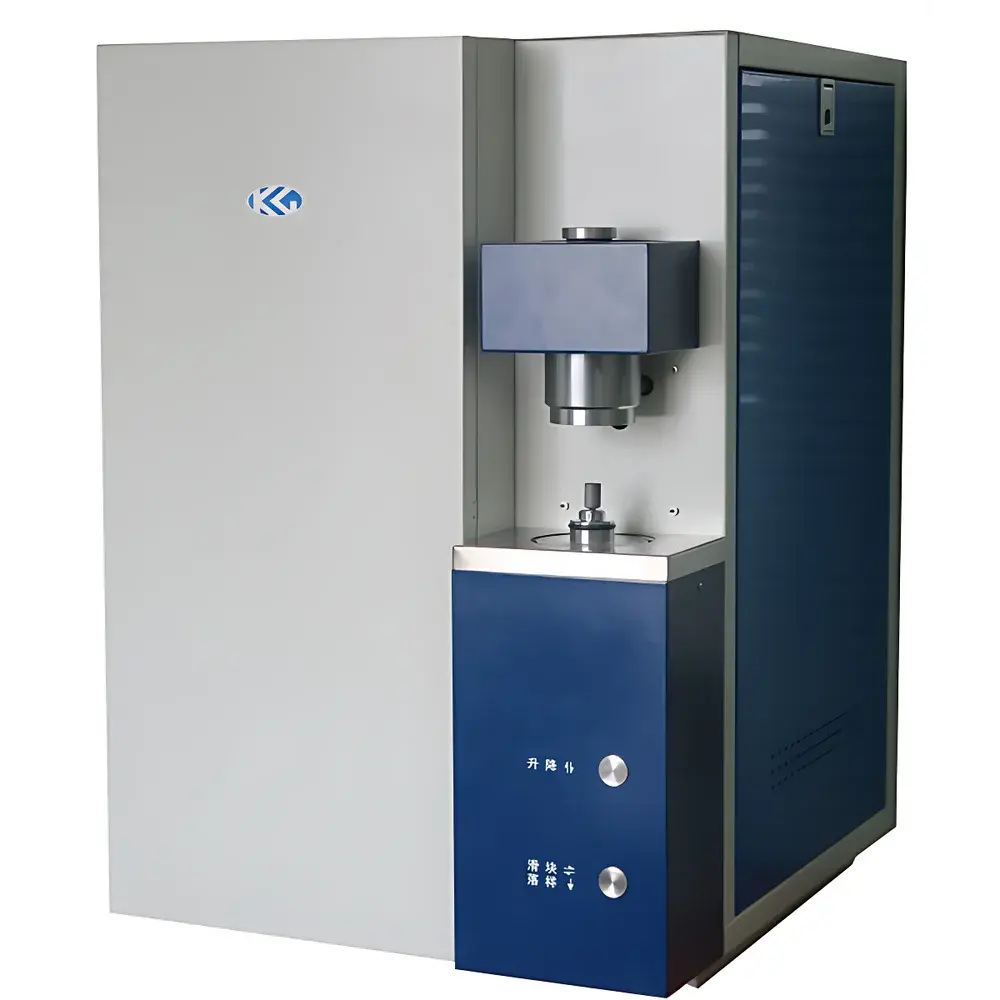
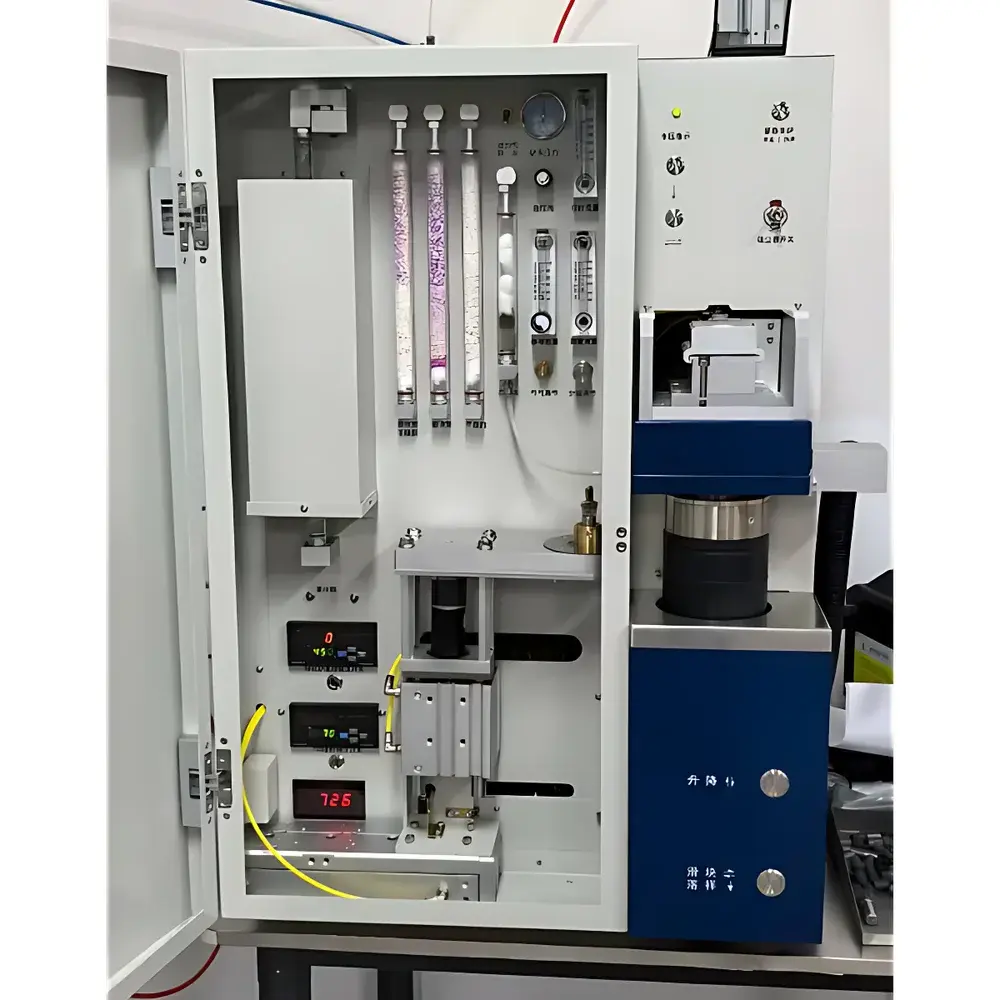
KEGUO ONH-506S Oxygen-Nitrogen-Hydrogen Analyzer (Fusion Method)
| Brand | KEGUO |
|---|---|
| Origin | Shanghai, China |
| Model | ONH-506S |
| Instrument Type | O/N/H Elemental Analyzer |
| Hydrogen Detector | Thermal Conductivity Detector (TCD) |
| Analytical Range | O: 0.1 ppm – 20 wt% |
| N | 0.1 ppm – 50 wt% |
| H | 0.01 ppm – 2.0 wt% |
| Precision | O: ±1 ppm or RSD ≤ 1.0% |
| N | ±1 ppm or RSD ≤ 1.0% |
| H | ±0.2 ppm or RSD ≤ 2.0% |
| Sensitivity | 0.001 ppm |
| Analysis Time | 120–240 s |
| Pulse Furnace Power | 8.5 kVA |
Overview
The KEGUO ONH-506S Oxygen-Nitrogen-Hydrogen Analyzer is a high-performance elemental analyzer engineered for precise, simultaneous quantification of oxygen, nitrogen, and hydrogen in inorganic solid materials—including metals (e.g., steel, titanium, zirconium, copper), rare-earth alloys, ceramics, refractory powders, and advanced composites. It operates on the inert gas fusion principle: samples are thermally decomposed in a high-temperature graphite crucible under controlled helium or nitrogen carrier gas flow, releasing interstitial and bound gaseous elements. Oxygen reacts with graphite to form CO and CO₂; nitrogen evolves as molecular N₂; hydrogen is liberated as H₂. The evolved gases are sequentially separated, converted, and detected using non-dispersive infrared (NDIR) absorption for oxygen (via CO₂ at 4.26 µm) and hydrogen (via H₂O after catalytic oxidation), and thermal conductivity detection (TCD) for nitrogen—enabling trace-level quantification with metrological rigor and full compliance with ISO 14284, ASTM E1019, and GB/T 11261 standards.
Key Features
- Integrated pulse-heated graphite furnace with closed-loop power feedback control (max. 3000 °C, 8.5 kVA), ensuring stable thermal output and reproducible decomposition kinetics.
- Dual-mode gas routing architecture: helium-based for O/N analysis with CuO catalytic converter; nitrogen-based for H analysis with Schütz reagent tube—eliminating cross-interference and enabling true independent calibration.
- Patented automatic electrode cleaning system (CN117824980A & CN220854322U): fully motorized upper/lower electrode actuation removes graphite residue without manual intervention, reducing downtime by >85%, preventing particulate carryover, and mitigating operator exposure to carbonaceous aerosols.
- High-stability infrared detection: German-sourced pyroelectric CO₂ sensor with Pt filament IR source and narrow-band optical filtering; TCD module with platinum wire filament, guarded by fail-safe gas-flow interlock to prevent filament burnout.
- Real-time thermal management: integrated temperature monitoring of cooling water, furnace, and TCD oven (±0.1 °C stability); optional 2 HP external chiller (5200 W cooling capacity) ensures consistent operation under extended duty cycles.
- Intelligent baseline compensation: achieves operational readiness within 30 minutes post-startup; dynamic baseline tracking and multi-point drift correction ensure <0.01 ppm instrument blank over 8-hour continuous runs.
Sample Compatibility & Compliance
The ONH-506S accommodates solid specimens up to 1.0 g (mass range scalable via method configuration), including castings, ingots, machined chips, pressed powders, and sintered compacts. Sample introduction uses a precision-loading mechanism compliant with GLP sample integrity requirements. All gas-handling components—including solenoid valves, pneumatic cylinders, and tubing—are sourced from Camozzi (Italy) for long-term reliability and leak-tight performance. The system meets ISO/IEC 17025 documentation requirements for calibration traceability and supports audit-ready electronic records per FDA 21 CFR Part 11 when paired with validated software configuration. Reagent cartridges (anhydrous Mg(ClO₄)₂, alkaline absorbent, rare-earth CuO catalyst) are pre-packed and certified for batch consistency.
Software & Data Management
Controlled via Windows-based analytical software (compatible with Windows 7–11), the platform provides full method scripting—including ramped vs. constant-power furnace heating profiles, auto-ranging detection, and real-time parameter logging (furnace current, gas pressure, detector voltage, coolant temperature). Data handling includes multi-point calibration (single/multi-standard), user-defined curve fitting (linear, quadratic, polynomial), and statistical reporting (RSD, SD, confidence intervals). Audit trails record all user actions, method changes, and calibration events with timestamped digital signatures. Export formats include CSV, PDF, and XML for LIMS integration. Helium consumption optimization algorithms reduce carrier gas usage by ≥50% versus conventional designs—critical given helium’s scarcity and cost volatility.
Applications
- Metallurgical QC/QA: verification of interstitial O/N/H levels in aerospace-grade Ti-6Al-4V, nuclear-grade Zr-4, and ultra-low-carbon steels per ASTM E1447 and ISO 15350.
- Powder metallurgy: quantification of residual hydrogen in additively manufactured (AM) metal feedstocks to prevent porosity and embrittlement.
- Advanced ceramics: oxygen stoichiometry assessment in YSZ electrolytes and SiC sintering aids.
- Research laboratories: kinetic studies of dehydrogenation in Mg-based hydrides and diffusion-controlled oxygen uptake in oxide dispersion strengthened (ODS) alloys.
- Third-party testing labs: accredited analysis for ISO 17025 scope expansion in elemental impurity profiling of battery cathode precursors and semiconductor-grade silicon carbide.
FAQ
What carrier gases are required, and what purity specifications apply?
Helium (≥99.99% purity, 0.20 MPa) is mandatory for oxygen/nitrogen analysis; high-purity nitrogen (≥99.999%) is used for hydrogen determination. All gases must be oil-free and moisture-scavenged.
Is external cooling water necessary?
Yes—either a continuous municipal water supply (15–30 °C inlet) or a dedicated 2 HP recirculating chiller (5200 W cooling capacity) is required to maintain thermal equilibrium in the furnace transformer and detector housings.
How does the automatic electrode cleaning system improve measurement reproducibility?
By eliminating manual electrode wiping, it prevents micro-particulate contamination, reduces inter-run baseline drift, and ensures consistent electrical contact resistance—directly improving RSD performance for sub-ppm hydrogen measurements.
Can the instrument comply with FDA 21 CFR Part 11 requirements?
Yes—when deployed with validated software configuration, electronic signature enforcement, and audit-trail-enabled data archiving, the ONH-506S supports regulated environments under GMP/GLP frameworks.
What maintenance intervals are recommended for consumables?
Graphite crucibles (inner/outer) should be replaced after 100–300 analyses depending on sample matrix; CuO catalyst tubes every 500–1000 runs; desiccant and CO₂ absorbent cartridges every 2–4 weeks under continuous operation.
Related Products






