
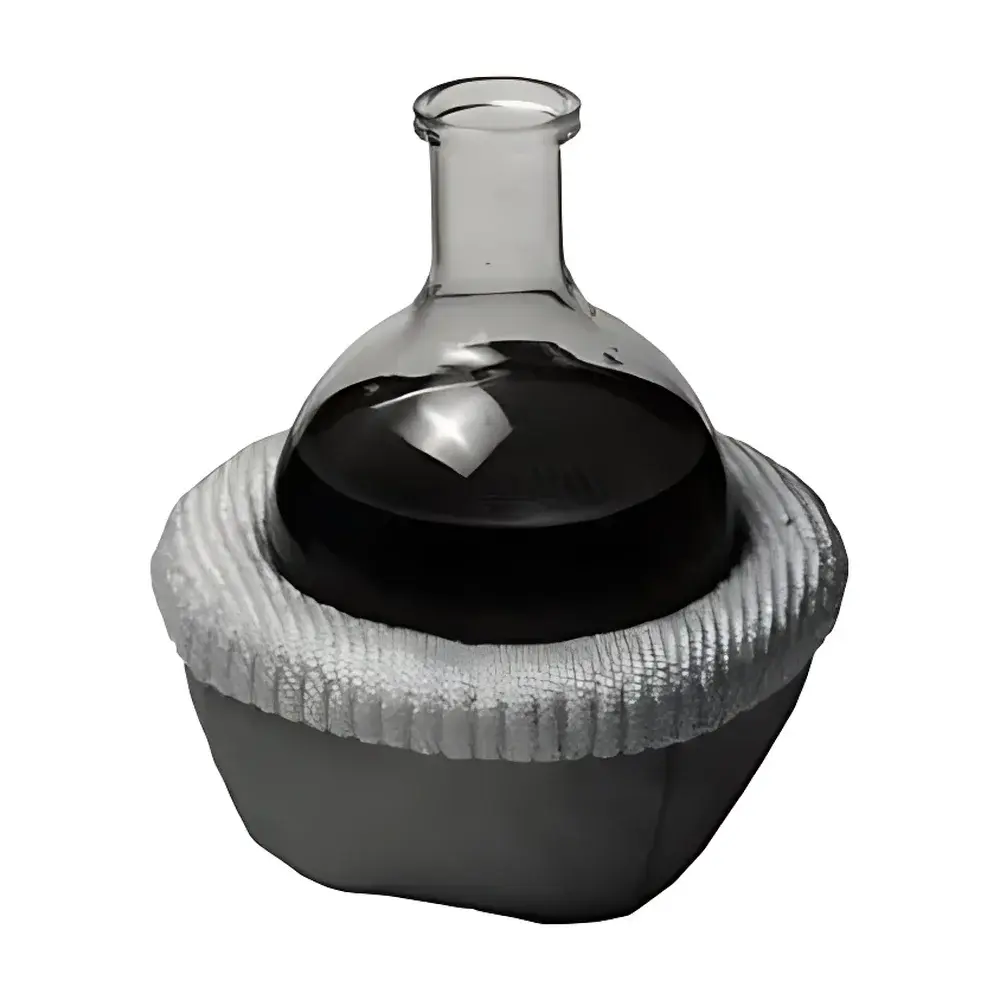
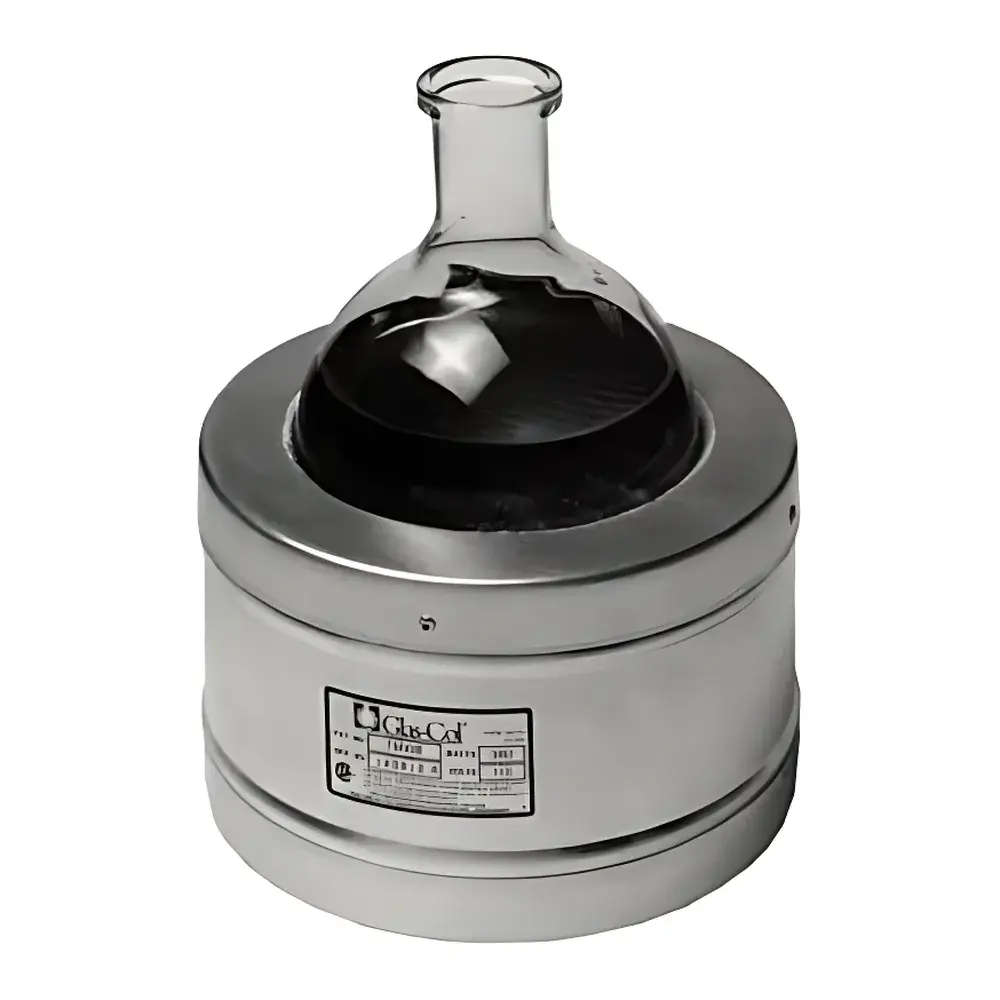
J-KEM So Series & TM Series Electric Heating Mantles
| Brand | J-KEM |
|---|---|
| Origin | USA |
| Product Line | So Series, TM Series |
| Temperature Capability | Up to 450 °C (TM Series), Surface-Safe Operation |
| Control Requirement | External Temperature Controller & Probe Required |
| Compliance | Designed for GLP-compliant laboratory environments |
Overview
The J-KEM So Series and TM Series Electric Heating Mantles are precision-engineered thermal accessories designed for safe, uniform, and controllable heating of round-bottom flasks, reaction vessels, and other cylindrical glassware in research, quality control, and pilot-scale synthesis laboratories. Unlike open flame or oil bath heating methods, these mantles utilize embedded resistive heating elements within a flexible, chemically inert fiberglass-insulated shell—operating on the principle of resistive conduction heating with optimized thermal distribution. The So Series is engineered for direct integration with magnetic stirrers, enabling simultaneous heating and stirring without mechanical interference or thermal coupling loss. The TM Series features a rigid anodized aluminum support housing with multi-layer insulation, allowing stable placement on benchtops while maintaining surface temperatures below 60 °C even at internal setpoints up to 450 °C—a critical safety advantage in high-temperature organic synthesis, reflux, distillation, and polymerization workflows.
Key Features
- Thermally stable fiberglass-reinforced silicone rubber construction ensures chemical resistance to common solvents (e.g., acetone, ethanol, toluene) and mechanical durability under repeated thermal cycling.
- So Series mantles feature low-profile geometry and non-magnetic materials, permitting full compatibility with standard magnetic stirrers—including those with integrated temperature sensors—without inducing eddy current losses or field distortion.
- TM Series units incorporate dual-stage thermal insulation: a high-density ceramic fiber inner layer and an outer aluminum heat-sink chassis, delivering Class I surface safety per ASTM E119 criteria for lab equipment enclosures.
- Both series accept standardized J-KEM digital temperature controllers (e.g., Model TC-3000) with Pt100 RTD probe inputs, supporting ramp-soak programming, over-temperature cutoff (±2 °C accuracy), and real-time data logging via RS-232/USB interface.
- UL-listed power supplies (120 V AC, 60 Hz; optional 230 V AC versions available) meet IEC 61010-1 requirements for laboratory electrical safety.
Sample Compatibility & Compliance
These heating mantles accommodate standard borosilicate glassware sizes from 25 mL to 5 L (including 24/40, 29/32, and 45/50 ground joints). The flexible So Series conforms tightly to flask curvature, minimizing radial heat loss; the TM Series offers fixed-diameter variants (100–250 mm ID) with adjustable height collars for vertical vessel alignment. All models comply with ISO/IEC 17025 documentation requirements when paired with traceable calibration certificates for associated controllers and probes. They are routinely deployed in environments governed by USP , FDA 21 CFR Part 11 (when used with validated controller firmware), and GMP Annex 15 analytical method validation protocols—particularly where thermal consistency directly impacts reaction kinetics or impurity profile reproducibility.
Software & Data Management
When operated with J-KEM’s TC-3000 or TC-5000 temperature controllers, the mantles support full audit-trail functionality including user login, parameter change logs, alarm event timestamps, and exportable CSV datasets compliant with ALCOA+ principles. Optional LabVIEW™ and Python SDKs enable integration into automated reaction platforms (e.g., ChemSpeed, Unchained Labs) for closed-loop process control. Data integrity safeguards include write-protected historical records, electronic signatures, and password-protected configuration modes—facilitating regulatory inspections under MHRA, EMA, or PMDA frameworks.
Applications
- Controlled-temperature reflux and solvent removal in API intermediate synthesis.
- High-boiling-point solvent reactions (e.g., DMF, NMP, DMSO) requiring sustained 180–400 °C operation.
- Distillation setups with fractional columns, where mantle uniformity prevents localized superheating and bumping.
- Calibration of thermocouple reference junctions and validation of thermal mapping procedures per ISO/IEC 17025 Section 5.10.
- Stability-indicating assays under ICH Q1A(R3) conditions requiring precise thermal ramp profiles.
FAQ
Do J-KEM heating mantles include built-in temperature control?
No. All So and TM Series mantles are analog heating devices requiring external proportional-integral-derivative (PID) temperature controllers and compatible RTD or thermocouple probes for accurate thermal regulation.
Can the So Series be used with hotplate-stirrers that have integrated temperature sensors?
Yes—provided the hotplate’s sensor does not rely on direct contact with the flask base. So mantles maintain sufficient thermal separation to avoid interference with optical or capacitive sensing mechanisms.
Is surface temperature monitoring required during GLP validation?
Yes. Per OECD GLP Principles Section 1.2.11, external surface temperature verification must be performed using calibrated IR thermometers or contact probes at three points (top, mid, base) prior to each qualification cycle.
Are replacement heating elements available for field service?
J-KEM provides OEM-certified replacement assemblies with factory calibration reports; however, end-user replacement voids UL listing unless performed by authorized service technicians.



