
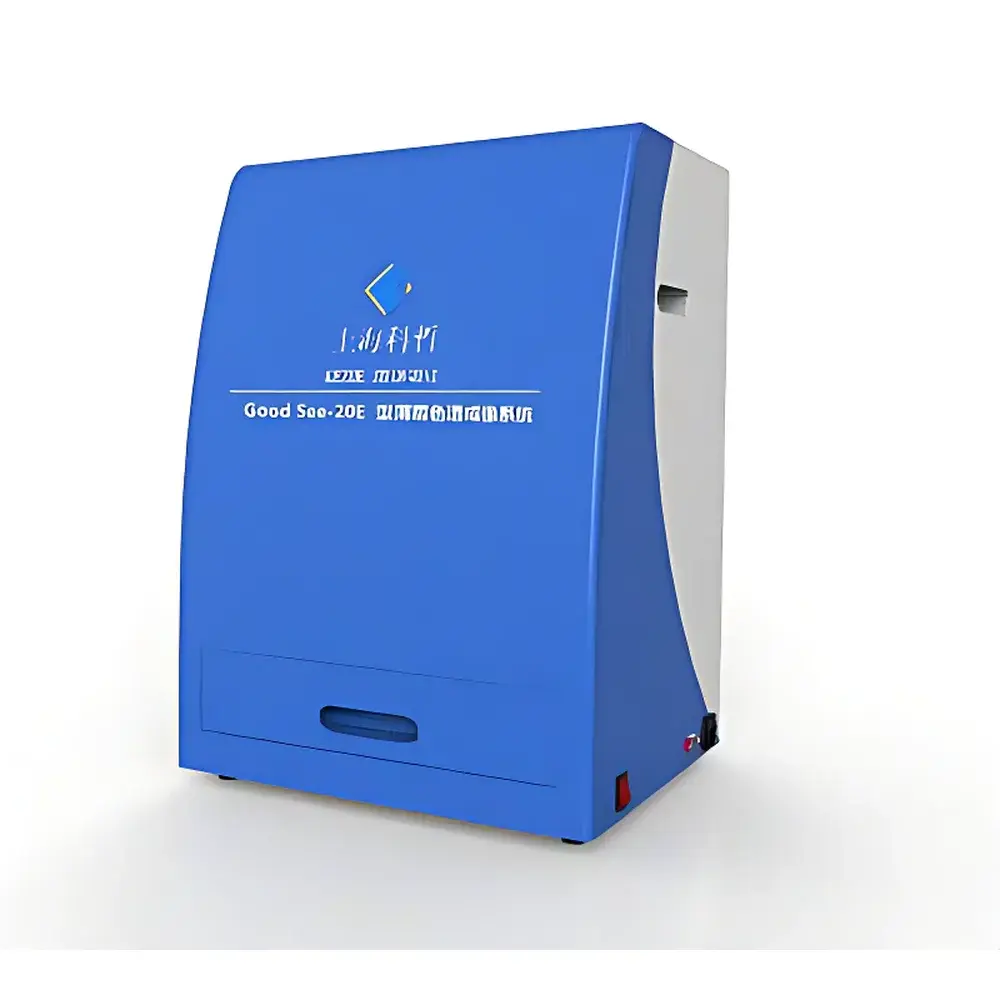
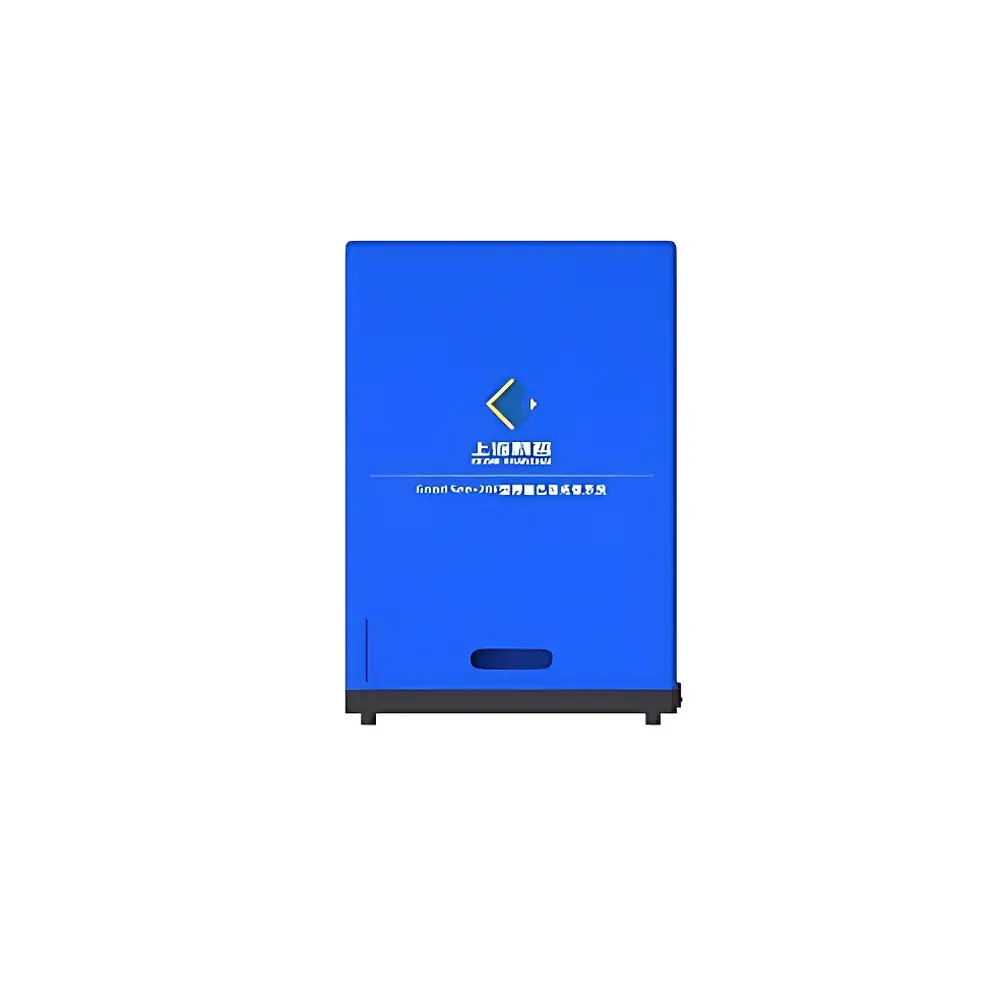
KEZHE GoodSee-20E Thin Layer Chromatography Imaging System
| Brand | KEZHE SHANGHAI |
|---|---|
| Origin | Shanghai, China |
| Manufacturer Type | Direct Manufacturer |
| Product Category | Domestic |
| Model | GoodSee-20E |
| Instrument Type | TLC Imaging System |
| Imaging Wavelengths | 254 nm UV, 365 nm UV, Visible Light |
| Maximum Imaging Area | 200 × 200 mm |
| Camera Resolution | ≥12 MP |
| Power Supply | 220 V, 50 Hz, 90 W |
| Light Source Power | 30 W per channel |
| Scanning Speed | Up to 100 mm/s |
| Interface | USB |
| Software Platform | Windows 7 / 10 |
Overview
The KEZHE GoodSee-20E Thin Layer Chromatography (TLC) Imaging System is an integrated, computer-controlled digital imaging platform engineered for high-fidelity acquisition, correction, and quantitative analysis of TLC plates. Designed in strict alignment with the methodology requirements of the Chinese Pharmacopoeia (2005 Edition), Section 3.5 – Thin Layer Chromatography, the system captures chemically resolved separation patterns under standardized illumination conditions—UV 254 nm, UV 365 nm, and white light—and converts them into reproducible, archive-ready digital images. Its core measurement principle relies on controlled, uniform wide-field illumination coupled with a high-resolution monochrome or color CMOS sensor, enabling accurate Rf calculation, background-subtracted peak integration, and semi-quantitative densitometric evaluation. The system does not perform chromatographic separation itself; rather, it serves as a validated post-run documentation and analytical extension to manual or automated TLC workflows—particularly critical in herbal medicine fingerprinting, new TCM drug registration, and QC/QA laboratories operating under GLP-aligned practices.
Key Features
- Fully automated dark chamber with programmable LED-based illumination sources (254 nm, 365 nm, visible), each delivering 30 W optical output for enhanced detection sensitivity and spatial uniformity
- High-resolution imaging capability (≥12 megapixels) supporting maximum plate dimensions of 200 × 200 mm without geometric distortion
- Real-time image correction algorithms for lens-induced distortion, uneven illumination (flat-field correction), and chromatic aberration
- Integrated Rf calculation engine that auto-detects solvent front and origin line, then computes and overlays Rf values directly onto annotated images
- Densitometric quantification using high-precision background modeling—enabling area-under-curve (AUC) integration, relative peak area comparison, and semi-quantitative concentration estimation
- Comprehensive report generation including annotated images, Rf tables, peak area summaries, and exportable CSV/PDF outputs compliant with internal audit trails
- USB 2.0 interface and native compatibility with Windows 7 and Windows 10 operating systems
Sample Compatibility & Compliance
The GoodSee-20E accommodates standard silica gel, alumina, cellulose, and reversed-phase TLC plates—including pre-coated and handmade plates—within the 200 × 200 mm capture window. It supports both fluorescent quenching (254 nm) and fluorescence excitation (365 nm) modes, making it suitable for visualization of a broad range of natural products, alkaloids, flavonoids, terpenoids, and synthetic intermediates commonly encountered in traditional Chinese medicine (TCM) research and quality control. While the system meets functional requirements outlined in the Chinese Pharmacopoeia, users conducting regulated submissions to NMPA or international agencies (e.g., EMA, FDA) should validate its performance against relevant ICH Q5A/Q5B guidelines for analytical method verification. For laboratories requiring full 21 CFR Part 11 compliance—including electronic signatures, audit trail logging, and user access controls—the optional GoodLook-1000 or GoodLook-2000 series is recommended due to their enhanced software architecture and GxP-ready feature set.
Software & Data Management
The bundled TLC Image Analysis Software provides a fully localized English-language interface (with optional Chinese UI toggle) and operates as a standalone Windows application. All image acquisition, correction, annotation, measurement, and reporting functions are executed within a single unified environment—eliminating third-party dependencies. Raw image data is stored in lossless TIFF format; processed results—including calibrated Rf values, peak areas, and normalized intensity profiles—are saved in structured XML metadata containers. Export options include PDF reports with embedded images and tabular data, as well as CSV files compatible with Excel, GraphPad Prism, or statistical process control (SPC) platforms. The software maintains a local activity log tracking user ID, timestamp, image filename, and applied corrections—supporting basic traceability requirements for non-GMP laboratory environments.
Applications
- Herbal fingerprint profiling for batch-to-batch consistency assessment in TCM manufacturing
- Regulatory submission support for new TCM drug applications requiring pharmacopoeial-compliant TLC documentation
- Rapid qualitative screening of plant extracts, fermentation broths, and purification fractions
- Semi-quantitative purity assessment during method development and stability testing
- Teaching and training in undergraduate and graduate chromatography laboratories
- Comparative analysis of structurally similar compounds (e.g., glycosides, saponins, coumarins) where Rf differentials and spot morphology provide discriminative power
FAQ
Does the GoodSee-20E support fluorescence intensity calibration?
No. The system performs relative densitometry—not absolute fluorescence quantification. Calibration requires external reference standards and instrument-specific response curves, which fall outside its design scope.
Can it image multi-track or over-loaded plates reliably?
Yes, provided spots remain resolvable at ≥12 MP resolution and solvent fronts are clearly defined. Overloading may reduce Rf accuracy and complicate background subtraction; optimal loading is determined empirically per analyte class.
Is USB 3.0 supported?
No. The system uses USB 2.0 for host communication and image transfer. Bandwidth is sufficient for full-frame 12 MP acquisitions at typical exposure durations (≤2 s).
What maintenance is required for long-term operation?
Annual verification of UV lamp output intensity using NIST-traceable radiometric standards is recommended. Optical path cleaning (lens, filters, mirror surfaces) should be performed quarterly with lint-free wipes and spectroscopic-grade ethanol.
How does it compare to CAMAG DigiStore-2 in terms of regulatory readiness?
Both systems deliver comparable image fidelity and Rf reproducibility. However, the DigiStore-2 includes built-in 21 CFR Part 11 features (electronic signatures, role-based permissions, immutable audit logs); the GoodSee-20E requires supplementary procedural controls to meet equivalent validation expectations.
Related Products





