
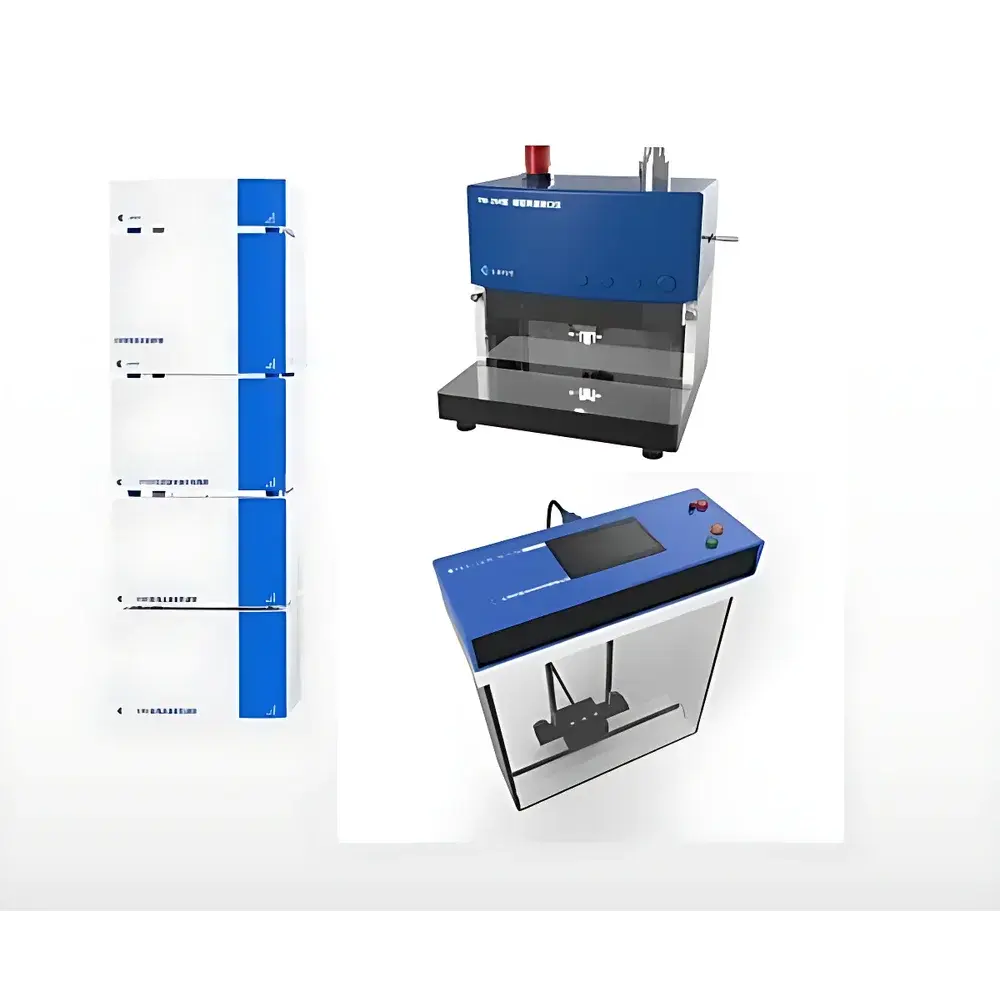
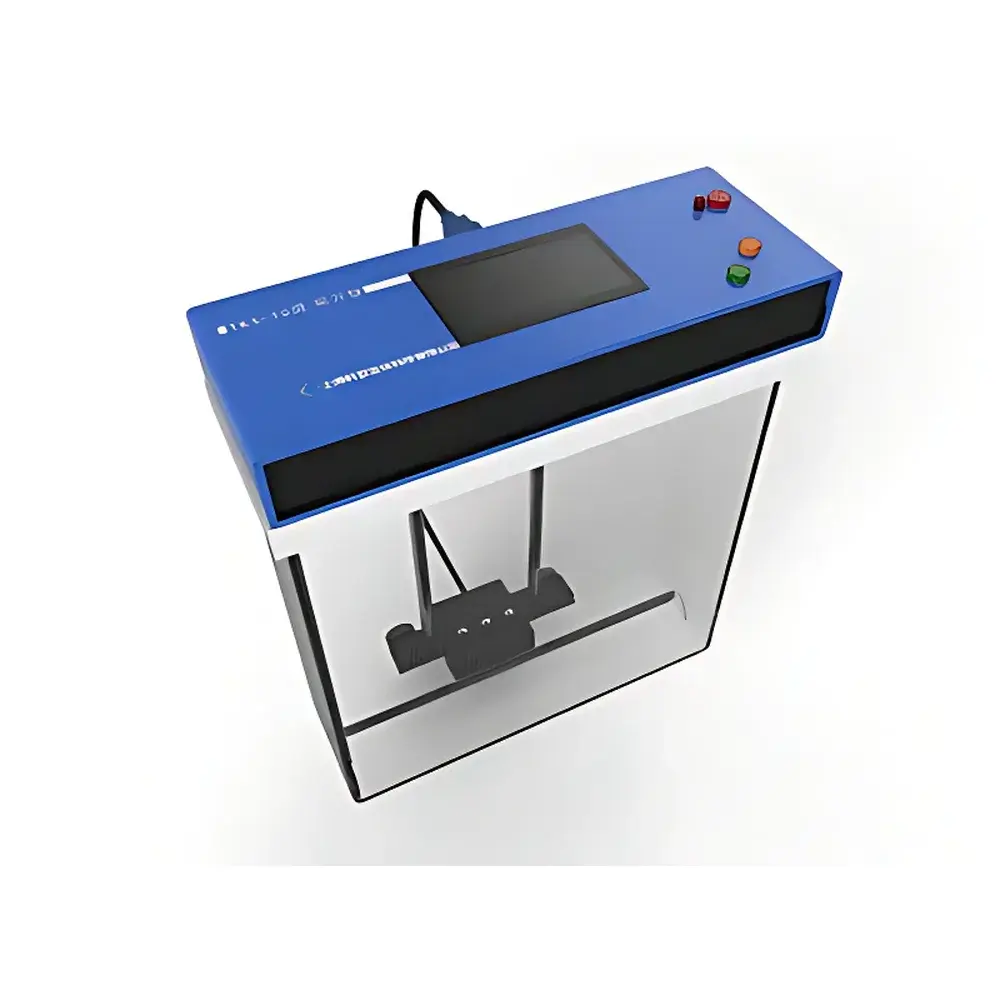
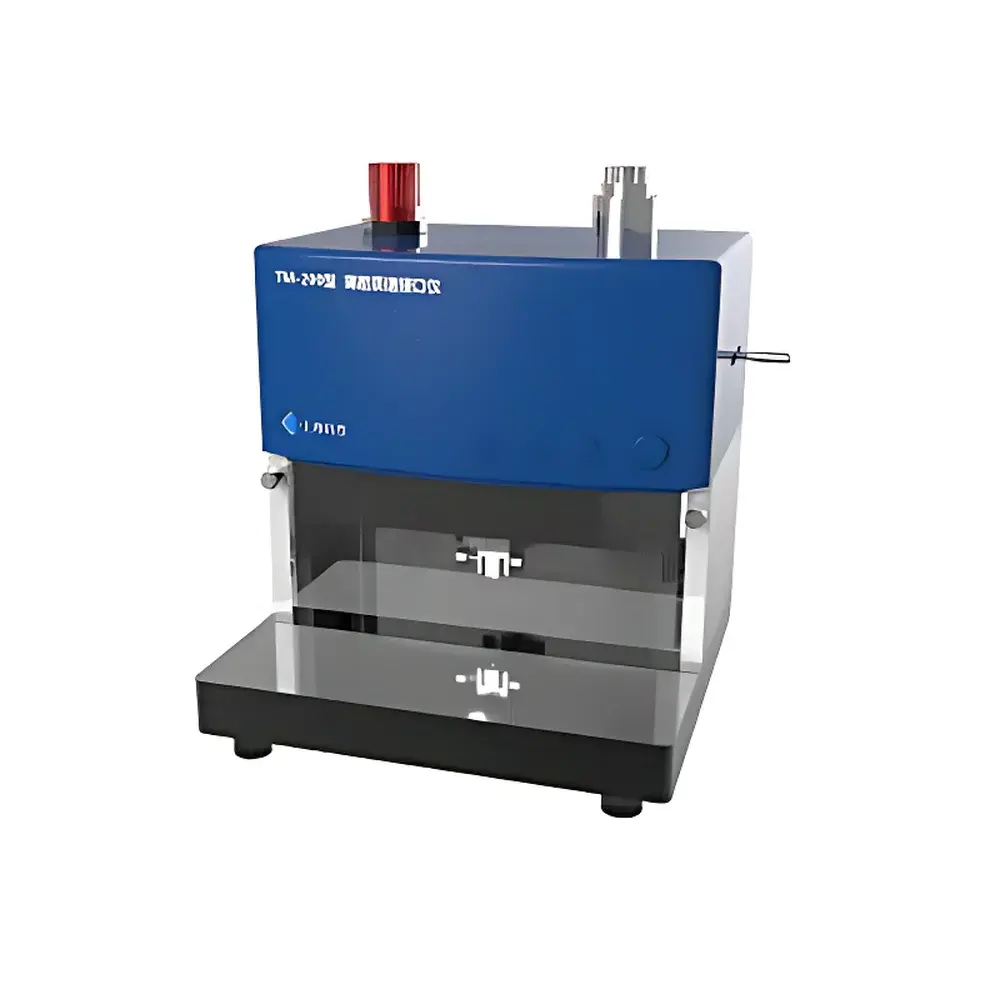
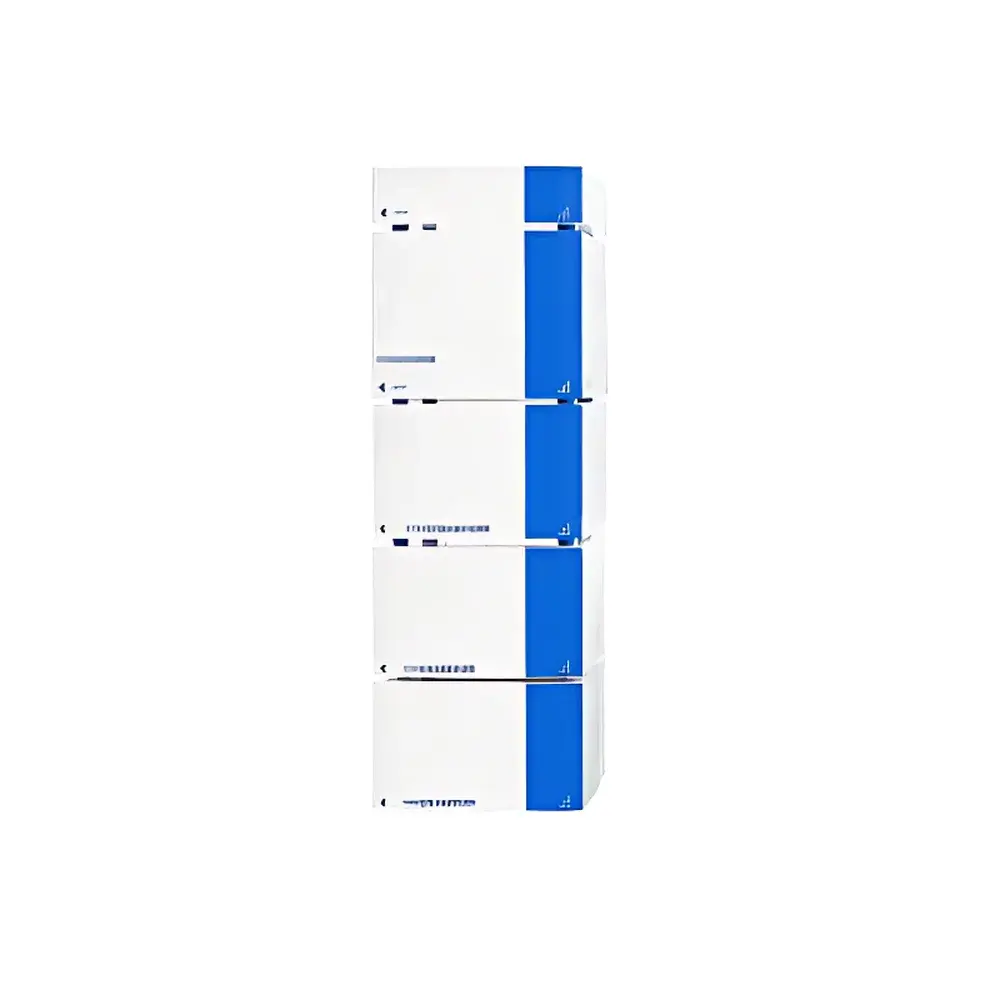
KEZHE SHANGHAI 2DMax1500A1/P1 Thin-Layer Chromatography–High-Performance Liquid Chromatography (TLC–HPLC) Two-Dimensional Hybrid System
| Brand | KEZHE SHANGHAI |
|---|---|
| Origin | Shanghai, China |
| Manufacturer Type | Original Equipment Manufacturer (OEM) |
| Model | 2DMax1500A1 / 2DMax1500P1 |
| TLC Plate Max Size | 200 × 200 mm |
| Laser Power | 5 mW |
| Sealing Force | Up to 500 N |
| Solvent Flow Rate (Extraction) | 0.05–0.3 mL/min |
| Extraction Probe Options | Ø4 mm, Ø5 mm circular |
| HPLC Flow Range | 0–100 mL/min (customizable) |
| Pressure Range | 0–10,000 psi (A1) / 0–4,000 psi (P1) |
| UV-VIS Detection | Four simultaneous wavelengths, 190–900 nm |
| Wavelength Accuracy | ±0.2 nm |
| Monochromator | 1200-line grating |
| Light Source | Deuterium–Tungsten dual lamp |
| Quantitation Loop | 20 µL (A1) / 2 mL (P1) |
| Autosampler | Integrated |
| Fraction Collector Capacity | 160 positions |
| Gradient Composition | 0–100% linear A:B |
| Software Platform | Windows 7/8/10 |
| Communication Interface | Ethernet |
| Power Supply | 110–220 V AC, 500 W |
Overview
The KEZHE SHANGHAI 2DMax1500A1/P1 is a purpose-engineered two-dimensional hybrid chromatographic platform integrating planar thin-layer chromatography (TLC) with high-performance liquid chromatography (HPLC). Unlike conventional offline coupling methods—such as manual scraping and solvent extraction—the 2DMax system enables direct, automated, on-plate analyte elution from resolved TLC zones into an online HPLC separation and detection workflow. This architecture leverages the high sample throughput, visual resolution, and low solvent consumption of TLC for rapid pre-fractionation, followed by the quantitative precision, reproducibility, and method robustness of HPLC for secondary separation and quantification. The system operates on a micro-extraction principle: a laser-guided, pneumatically actuated probe seals against the TLC plate surface under controlled force (up to 500 N), delivering precise volumes of eluent at defined flow rates (0.05–0.3 mL/min) to selectively desorb target bands or spots. Extracted analytes are transferred directly—without intermediate handling—into the HPLC flow path via inert tubing, minimizing adsorption loss, cross-contamination, and operator variability.
Key Features
- Laser-guided, non-contact positioning system (5 mW diode laser) ensures micron-level spatial accuracy for spot selection on TLC plates up to 200 × 200 mm.
- Modular probe design with interchangeable extraction heads: Ø4 mm and Ø5 mm circular probes for discrete spot isolation; 4 × 2 mm elliptical probe optimized for narrow bands and streaked zones.
- Integrated high-pressure binary gradient HPLC module supporting pressures up to 10,000 psi (2DMax1500A1) or 4,000 psi (2DMax1500P1), compatible with standard analytical (e.g., C18, 5 µm, 4.6 × 250 mm) and preparative columns (e.g., C18, 10 µm, 4.6 × 250 mm).
- Four-wavelength UV-VIS detector with simultaneous acquisition across 190–900 nm, utilizing a 1200-line grating monochromator and deuterium–tungsten dual-lamp source for broad-spectrum sensitivity and ±0.2 nm wavelength accuracy.
- Fully automated fraction collection (160-position carousel) with customizable tube rack configurations (standard 15 mm diameter; optional 20 mm, 30 mm, or large-volume vials up to 480 mL).
- Modular software architecture supporting method development, sequence control, spectral library matching, peak integration, and audit-trail-enabled data export compliant with GLP/GMP documentation requirements.
Sample Compatibility & Compliance
The 2DMax1500 series accommodates diverse sample matrices commonly encountered in natural product analysis, pharmaceutical QC, and synthetic chemistry workflows—including crude herbal extracts, reaction mixtures, degradation products, and impurity profiles. Its open-platform design supports silica gel, amino, cyano, and reversed-phase TLC plates, as well as custom-coated layers. The system meets essential regulatory expectations for analytical instrument qualification: all critical parameters—including wavelength calibration, flow rate verification, pressure transducer linearity, and autosampler precision—are traceable via built-in diagnostic routines. Data integrity is reinforced through time-stamped, user-logged operations and exportable .csv/.pdf reports aligned with FDA 21 CFR Part 11 readiness when deployed with validated software configuration and network authentication protocols. While not certified to ISO/IEC 17025 out-of-the-box, the platform is engineered for seamless integration into accredited laboratory quality systems through documented IQ/OQ/PQ protocols.
Software & Data Management
The modular liquid chromatography workstation provides unified control of both TLC extraction and HPLC modules via a single Windows-based interface (compatible with Windows 7, 8, and 10). Core functionalities include real-time video-assisted probe alignment, multi-step gradient programming, spectral overlay and deconvolution, peak purity assessment, and customizable report templates. Raw chromatographic and spectral data are stored in vendor-neutral formats (.cdf, .txt) and support batch processing for comparative analysis across multiple plates or batches. Audit trail logs record every user action—including method edits, run initiation, parameter overrides, and data export—with immutable timestamps and operator ID attribution. Remote monitoring and control are enabled via standard Ethernet communication, allowing integration into centralized laboratory information management systems (LIMS) through configurable API endpoints or OPC UA gateways.
Applications
This hybrid system is routinely deployed in settings where orthogonal separation power and minimal sample handling are critical: identification and quantification of marker compounds in Traditional Chinese Medicine (TCM) formulations; tracking of intermediates and side-products in multistep organic syntheses; profiling of photolytic or hydrolytic degradation pathways per ICH Q1 guidelines; and targeted isolation of trace impurities prior to structural elucidation by MS or NMR. Its capacity to extract and inject sub-microliter quantities directly from TLC plates makes it especially valuable for precious or low-yield samples—such as isolated natural products or radiolabeled compounds—where recovery efficiency and analytical fidelity are paramount. The P1 variant, with its larger loop volume (2 mL) and integrated fraction collector, extends utility into semi-preparative applications, enabling direct scale-up from analytical TLC to milligram-level purification without re-injection.
FAQ
Can the system interface with mass spectrometry?
Yes—the TM-200 TLC–MS interface module (included) enables direct coupling to electrospray ionization (ESI) or atmospheric pressure chemical ionization (APCI) sources, supporting real-time MS detection of extracted analytes.
Is method transfer between TLC and HPLC conditions supported?
The software includes retention prediction tools based on Rf values and mobile phase composition, facilitating empirical correlation between TLC migration behavior and HPLC k′ values for rational method translation.
What maintenance is required for the extraction probe seal mechanism?
The pneumatic sealing system uses wear-resistant elastomeric gaskets; routine inspection and replacement every 6–12 months (depending on usage frequency) are recommended to maintain consistent contact pressure and solvent containment.
Are validation documents available for GxP environments?
KEZHE provides comprehensive URS, FRS, and test protocols for IQ/OQ/PQ execution; final validation must be performed by the end-user’s qualified personnel in accordance with internal SOPs and applicable regional regulations.
Can the system operate unattended overnight?
Yes—fully programmable sequences, automatic shutdown, and hardware interlocks (e.g., low-solvent level detection, overpressure cutoff) enable extended unattended operation for multi-plate screening campaigns.





