
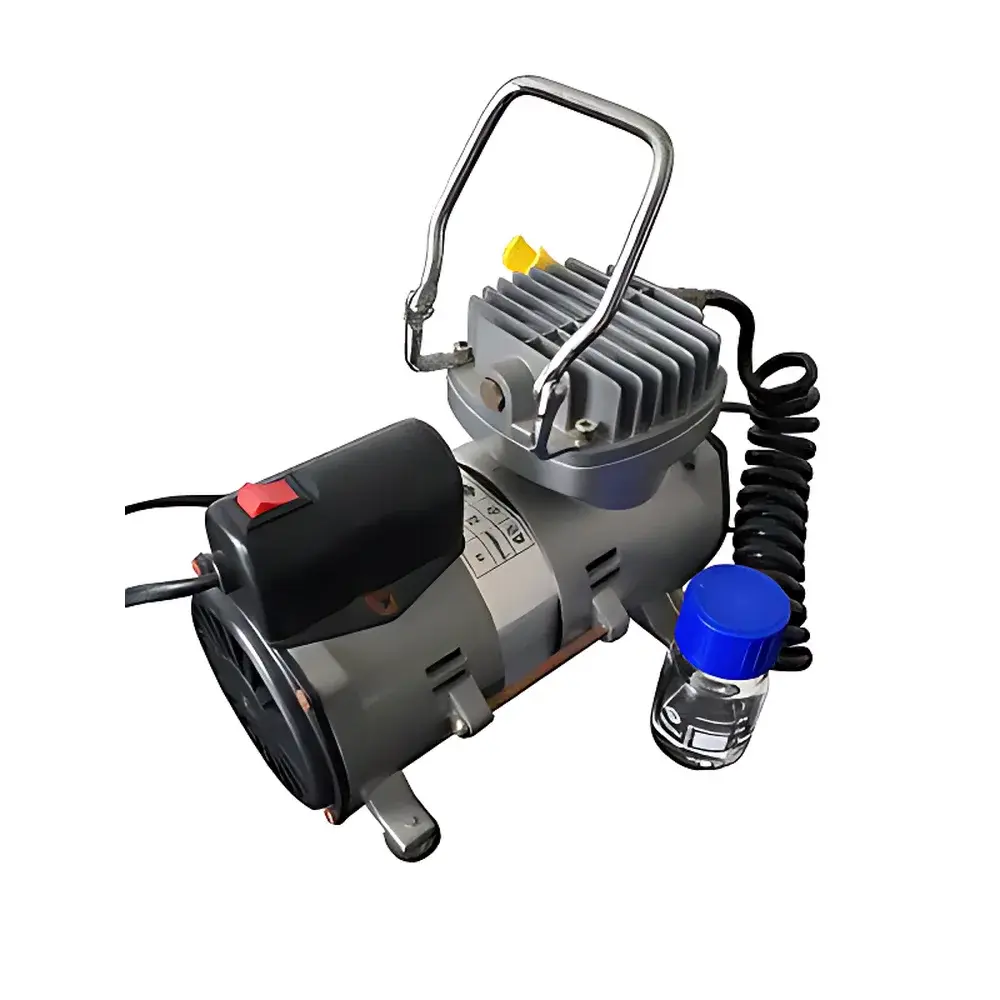
KEZHE SHANGHAI TS-II Dual-Nozzle Electric Thin-Layer Spray Developer
| Brand | KEZHE SHANGHAI |
|---|---|
| Origin | Shanghai, China |
| Manufacturer Type | Direct Manufacturer |
| Product Origin | Domestic (China) |
| Model | TS-II |
| Instrument Category | TLC Auxiliary Equipment |
| Detection Modes | Reflectance Absorption, Reflectance Fluorescence, Transmission Absorption, Transmission Fluorescence |
| Wavelength Range | 190–800 nm |
| Light Sources | Xenon Lamp, Tungsten-Halogen Lamp, High-Pressure Mercury Lamp |
| Monochromator | Holographic Grating (1200 lines/mm) with Nitrogen Purge Capability |
| Spectral Bandwidth | 5 nm |
| Wavelength Accuracy | < 1 nm |
| Wavelength Repeatability | < 0.2 nm |
| Minimum Spatial Resolution | 25 µm |
| Imaging Wavelengths | 254 nm, 365 nm, White Light |
| Sample Stage Capacity | Accommodates TLC Plates up to 200 mm × 200 mm |
| Maximum Scan Speed | 100 mm/s |
| Nozzle Orifice Diameters | 0.2 mm (Nozzle B), 0.3 mm (Nozzle A) |
| Spray Distance Range | 0–500 mm |
| Operating Pressure | 30 psi |
| Aerosol Particle Size Distribution | 0.1–3 µm |
| Included Components | Dedicated Low-Noise Micro Air Pump, PTFE-Coated Nozzle A, Ultrafine Stainless-Steel Nozzle B |
Overview
The KEZHE SHANGHAI TS-II Dual-Nozzle Electric Thin-Layer Spray Developer is an engineered solution for post-chromatographic derivatization in planar chromatography workflows. Designed specifically for thin-layer chromatography (TLC) and high-performance thin-layer chromatography (HPTLC), the system enables precise, reproducible, and contamination-controlled reagent application across analytical and preparative plates. Unlike manual spraying or conventional airbrush-based methods, the TS-II employs a dual-nozzle electro-pneumatic architecture that separates corrosive and non-corrosive reagent delivery paths—ensuring long-term component integrity and operator safety. Its core functionality relies on controlled aerosol generation via pressure-driven micro-nozzles, coupled with programmable linear motion control over the TLC plate surface. The instrument integrates seamlessly into regulated laboratory environments where traceability, repeatability, and method compliance are critical—particularly in pharmaceutical QC, natural product isolation, forensic chemistry, and academic research labs conducting multi-step TLC screening.
Key Features
- Dual independent nozzle system: Nozzle A constructed from chemically inert polytetrafluoroethylene (PTFE) for safe dispensing of aggressive reagents including concentrated sulfuric acid, phosphomolybdic acid, or anisaldehyde-sulfuric acid mixtures; Nozzle B fabricated from precision-machined stainless steel optimized for organic solvents, iodine vapor carriers, and neutral dyes.
- Micro-orifice design: 0.2 mm orifice (Nozzle B) and 0.3 mm orifice (Nozzle A) enable sub-3 µm median droplet size distribution under 30 psi regulated pressure—minimizing overspray, improving edge definition, and enhancing spot resolution during derivatization.
- Motorized XYZ-stage compatibility: Supports uniform scanning across standard 200 mm × 200 mm TLC plates at speeds up to 100 mm/s, with adjustable dwell time per zone to accommodate variable reagent absorption kinetics.
- Integrated low-noise micro air pump: Compact, oil-free diaphragm pump delivers stable airflow without external compressor dependency—reducing footprint, vibration, and ambient noise in shared lab spaces.
- Modular reagent reservoir interface: Enables rapid nozzle-swapping and solvent line purging between analyses, supporting GLP-aligned workflow continuity and cross-contamination mitigation.
Sample Compatibility & Compliance
The TS-II accommodates all commercially available silica gel, alumina, cellulose, and reversed-phase (RP-18) TLC/HPTLC plates—including pre-coated, fluorescent-indicator (F254/F365), and custom-formulated layers. Its non-contact spray geometry preserves plate integrity during repeated development cycles and eliminates mechanical abrasion associated with roller or pad-based applicators. From a regulatory standpoint, the system supports documentation requirements aligned with ICH Q5A, USP <621>, and EU Pharmacopoeia 2.2.27 guidelines for TLC method validation. While the device itself is not a measuring instrument subject to ISO/IEC 17025 accreditation, its consistent spray performance contributes directly to inter-laboratory reproducibility of Rf values and detection sensitivity—key parameters assessed during method transfer and stability-indicating assay qualification.
Software & Data Management
The TS-II operates as a standalone hardware platform without embedded firmware or proprietary software. All operational parameters—including scan speed, nozzle height, dwell time, and pressure modulation—are manually configured via front-panel controls and calibrated mechanical stops. This design prioritizes robustness, serviceability, and audit readiness: no electronic logs, no user accounts, and no data storage occur internally. For laboratories requiring full 21 CFR Part 11 compliance, integration with external LIMS or ELN systems is achieved through documented SOPs governing instrument use, maintenance records, and calibration verification (e.g., nozzle orifice inspection using optical micrometry, pressure gauge validation against NIST-traceable standards). Routine performance checks include droplet uniformity assessment via gravimetric deposition on pre-weighed aluminum foil strips.
Applications
- Routine visualization of separated compounds after silica gel TLC—especially for thermally labile or oxidation-sensitive analytes where heating plates is unsuitable.
- Gradient derivatization studies requiring sequential reagent application (e.g., first ninhydrin for amino acids, then chloramine-T for secondary amine differentiation).
- Quantitative densitometric analysis preparation: uniform reagent coverage ensures linear response in reflectance/fluorescence scanning modes across UV (254 nm, 365 nm) and visible spectra.
- Method development for herbal fingerprinting, pesticide residue screening, and counterfeit drug detection where reproducible color development is essential for pattern recognition algorithms.
- Teaching laboratories: provides hands-on training in controlled reagent delivery principles while minimizing exposure risk compared to open-vessel immersion or fume-hood-dependent sprayers.
FAQ
Does the TS-II require connection to an external air compressor?
No—the integrated micro air pump eliminates dependency on external compressors. It delivers sufficient flow and pressure (30 psi) for consistent aerosol generation across both nozzles.
Can the TS-II be used with corrosive reagents such as concentrated H₂SO₄?
Yes—Nozzle A is fully PTFE-lined and rated for continuous exposure to strong mineral acids, oxidizers, and halogenated solvents.
What is the recommended maintenance interval for the nozzles?
Inspect nozzle orifices visually under 10× magnification after every 50 plates; clean with ultrasonic bath in appropriate solvent if clogging is observed. Replace nozzles annually or after 500+ uses, whichever occurs first.
Is nitrogen purge capability active during routine operation?
Nitrogen purging is optional and only required when operating the monochromator below 200 nm (e.g., for vacuum UV-sensitive detection); it is not engaged during standard TLC visualization.
How does the TS-II ensure uniform reagent deposition across large-format plates?
Through synchronized linear stage movement and constant-pressure pneumatic control, the system achieves ±3% coefficient of variation in deposited mass across 200 mm × 200 mm surfaces, verified by replicate gravimetric testing per ASTM E29-23 protocol.
Related Products





