
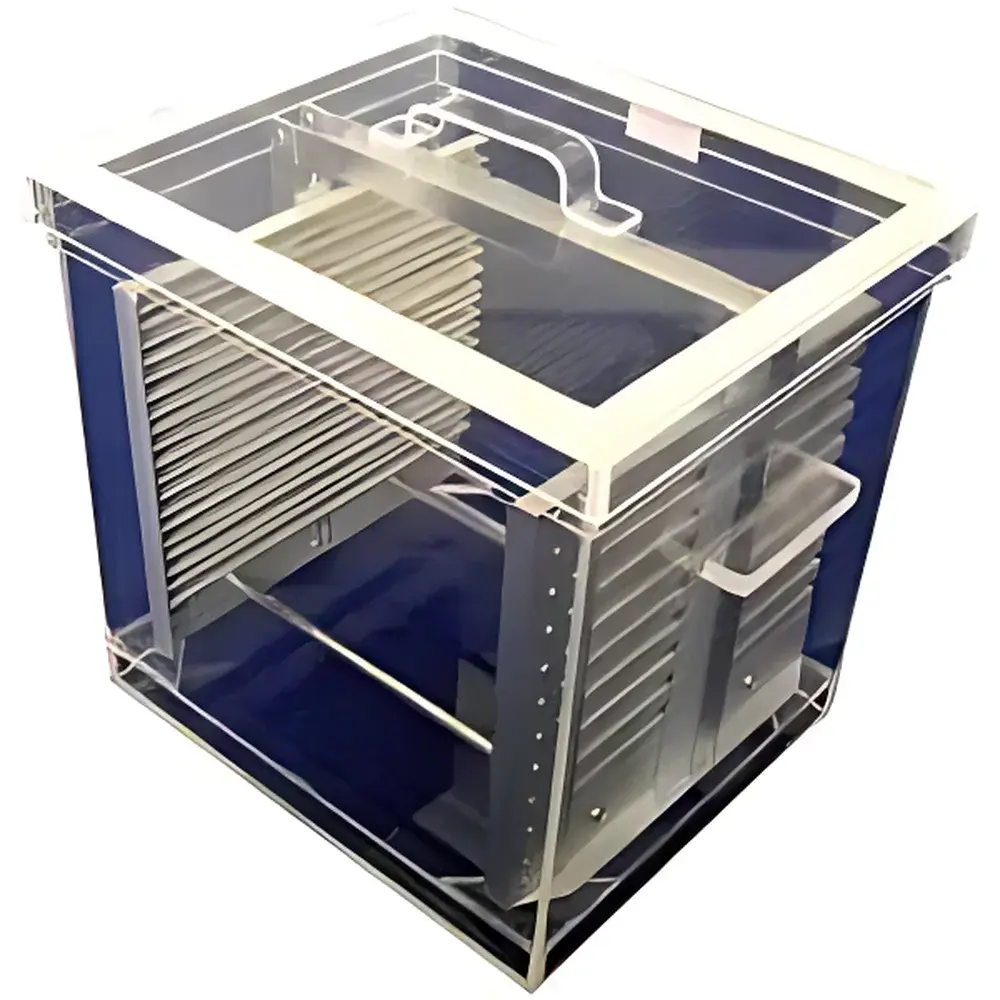
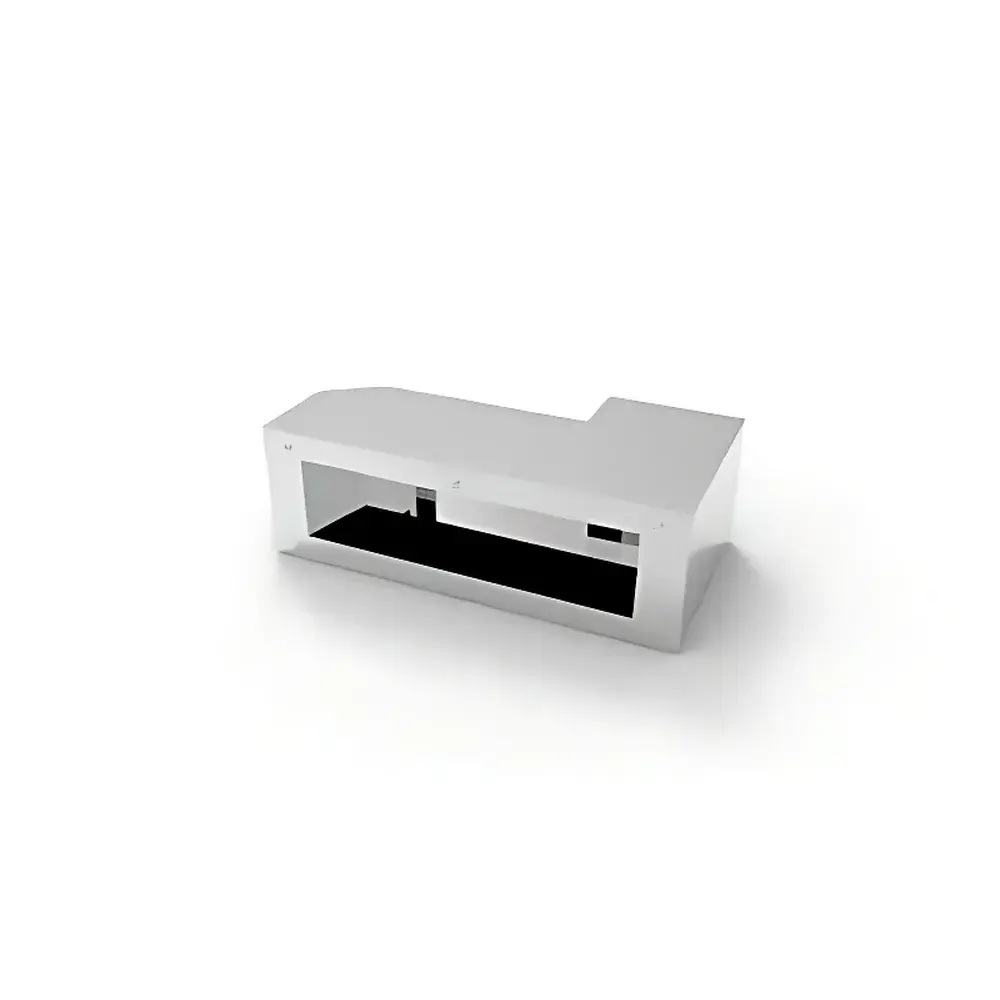
KEZHE TU-I Portable UV Lamp for TLC Visualization
| Brand | KEZHE SHANGHAI |
|---|---|
| Origin | Shanghai, China |
| Manufacturer Type | Direct Manufacturer |
| Product Category | Domestic (China-Made) |
| Model | TU-I |
| Price Range | USD 140–700 (FOB) |
| Instrument Class | TLC Ancillary Device |
| UV Wavelengths | 254 nm & 365 nm |
| Filter Dimensions | 150 × 50 mm |
| Portability | Handheld, Compact Design |
| Compliance | Designed for laboratory-grade TLC plate inspection per standard analytical workflows |
Overview
The KEZHE TU-I Portable UV Lamp is a purpose-engineered, handheld ultraviolet illumination device optimized for rapid, on-the-spot visualization of fluorescent and quenched compounds on thin-layer chromatography (TLC) plates. It operates at two fixed, narrow-band UV wavelengths—254 nm and 365 nm—selected to align with the excitation maxima of common TLC stationary phases (e.g., silica gel F254 and F365) and widely used organic analytes, including aromatic hydrocarbons, heterocycles, alkaloids, and derivatized carbohydrates. Unlike broad-spectrum or unfiltered UV sources, the TU-I integrates precision interference filters to minimize stray radiation and reduce operator exposure risk. Its compact form factor (L × W × H ≈ 185 × 65 × 45 mm) and integrated ergonomic grip enable stable, one-handed operation during plate scanning, making it suitable for benchtop use, field-deployed analytical support, and teaching laboratories where space and mobility are constrained.
Key Features
- Fixed dual-wavelength output: 254 nm (for detection of UV-absorbing compounds via fluorescence quenching) and 365 nm (for direct fluorescence excitation of native or derivatized analytes)
- High-transmission interference filter assembly (150 × 50 mm active area) ensuring uniform irradiance across standard TLC plate dimensions (e.g., 20 × 20 cm or 10 × 20 cm)
- Low-power, long-life UV LED or cold-cathode fluorescent lamp (CCFL) source—engineered for thermal stability and minimal ozone generation
- Integrated power switch with wavelength selector toggle; no external controllers or software required
- Rugged ABS housing with non-reflective matte finish to suppress ambient light interference during visualization
- Compliant with IEC 62471:2006 Photobiological Safety classification for UV-A/UV-C lamps (Risk Group 2 for 365 nm; Risk Group 3 for 254 nm—requires appropriate PPE)
Sample Compatibility & Compliance
The TU-I is validated for use with commercially available pre-coated TLC plates containing fluorescent indicators (e.g., silica gel 60 F254, aluminum oxide F254, cellulose F254) as well as non-fluorescent layers requiring post-chromatographic derivatization. It supports routine qualitative analysis in accordance with ASTM D129-18 (sulfur compounds), USP (chromatographic identification), and ISO 17025-accredited QC/QA procedures. While not a quantitative instrument, its consistent spectral output enables reproducible spot intensity assessment under controlled ambient lighting conditions. The device meets CE marking requirements for electromagnetic compatibility (EMC Directive 2014/30/EU) and low-voltage safety (LVD Directive 2014/35/EU). No battery or AC adapter is included; operation requires standard 100–240 VAC input or optional rechargeable Li-ion pack (sold separately).
Software & Data Management
The KEZHE TU-I is a hardware-only visualization tool with no embedded firmware, connectivity interfaces (e.g., USB, Bluetooth), or digital data output. It functions independently of software platforms and does not generate electronic records. Consequently, it falls outside the scope of FDA 21 CFR Part 11 requirements for electronic signatures or audit trails. Documentation—including user instructions, safety warnings, and maintenance guidelines—is provided in English and Chinese PDF format. For GLP/GMP environments, users are advised to log lamp usage in manual logbooks referencing batch numbers, calibration verification dates (via NIST-traceable radiometer checks), and operator initials.
Applications
- Routine TLC plate inspection in pharmaceutical QC labs (e.g., assay purity checks, degradation product screening)
- Educational demonstrations of separation principles in undergraduate chemistry curricula
- Field-based forensic analysis (e.g., drug precursor identification, ink differentiation)
- Botanical extract profiling and natural product isolation workflows
- Verification of Rf values prior to preparative TLC or column chromatography scale-up
- Compatibility testing with spray reagents such as anisaldehyde/H2SO4, ninhydrin, or vanillin/H3PO4
FAQ
Is the TU-I suitable for UV-sensitive compounds that degrade under prolonged exposure?
Yes—its instantaneous on/off switching and localized beam geometry allow brief, targeted illumination, minimizing photolytic decomposition. Users should limit exposure time to ≤5 seconds per spot when working with labile molecules.
Can the filter be replaced or customized for other wavelengths?
No—the 150 × 50 mm interference filter is permanently mounted and factory-aligned for 254 nm and 365 nm transmission only. KEZHE does not offer alternative filter kits or OEM modification services.
Does the lamp require annual recalibration?
Not formally—however, periodic verification using a calibrated UV radiometer (e.g., ILT950UV) is recommended every 6 months in regulated environments to confirm irradiance stability within ±10% of initial specification.
What personal protective equipment (PPE) is required during operation?
UV-blocking safety goggles (OD ≥3 at 254 nm and OD ≥2 at 365 nm), nitrile gloves, and lab coat coverage are mandatory. Direct skin or ocular exposure to 254 nm radiation must be avoided per ACGIH TLV® guidelines.
Is the TU-I compatible with HPTLC plates?
Yes—it delivers sufficient irradiance uniformity across high-performance TLC plates (e.g., 10 × 10 cm or 20 × 20 cm) without hot-spot formation or edge falloff, provided plates are placed flat and centered beneath the filter aperture.





