
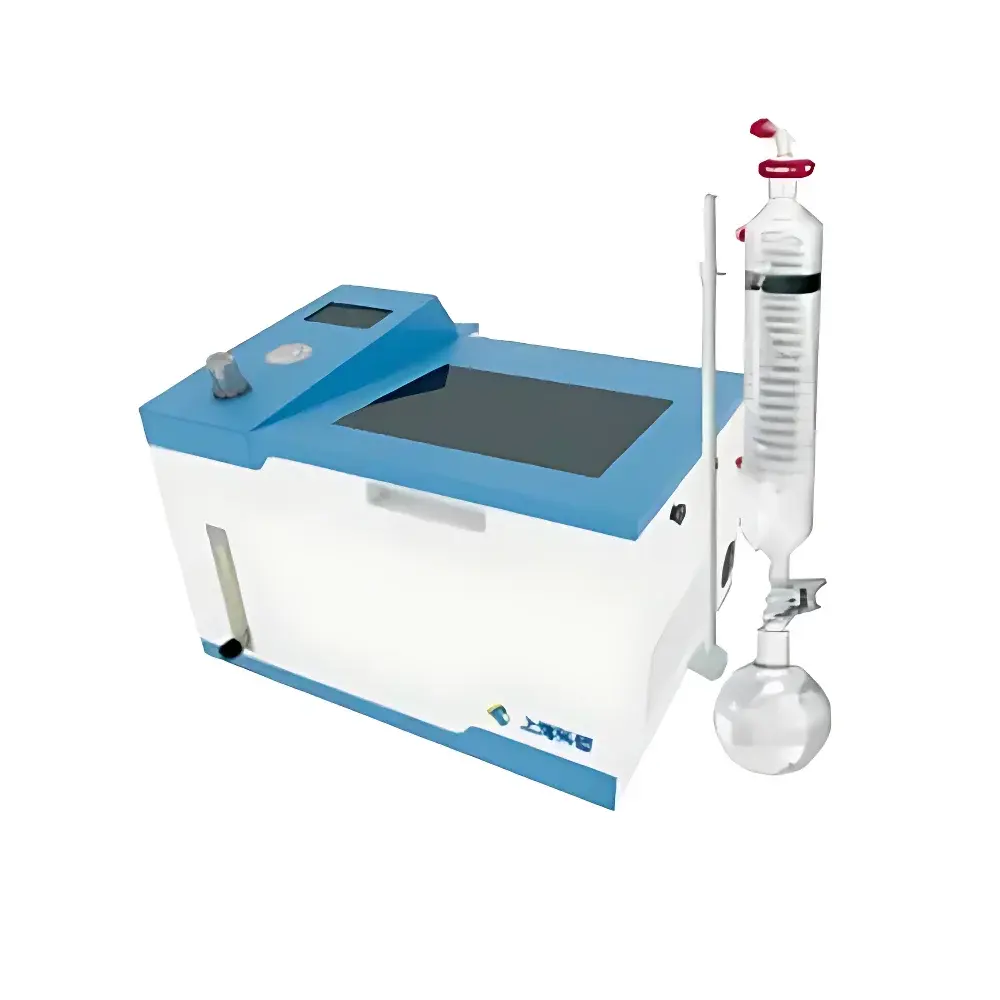
KEZHE VNH-1000 Nitrogen-Driven Parallel Evaporator
| Brand | KEZHE SHANGHAI |
|---|---|
| Origin | Shanghai, China |
| Manufacturer Type | Direct Manufacturer |
| Instrument Category | Vacuum Centrifugal Concentrator |
| Temperature Range | 10–40 °C |
| Temperature Control Accuracy | ±0.5 °C |
| Maximum Sample Volume per Position | 120 mL |
| Sample Capacity | 1–6 parallel positions |
| Final Absolute Vacuum | 8 mbar |
| Cooling Circulator Range | −10 to +25 °C |
| Vacuum Pump Flow Rate | 3 L/min at 0.6 bar |
| Vacuum Pump Speed Control | Yes |
| Rotational Agitation | 0–600 rpm |
| Tail Tube Volumes Supported | 0.3, 1, or 3 mL |
Overview
The KEZHE VNH-1000 Nitrogen-Driven Parallel Evaporator is an engineered solution for high-throughput sample concentration in regulated analytical laboratories. It combines controlled water-bath heating, inert nitrogen gas purging, and programmable vacuum regulation to achieve rapid, reproducible solvent removal from multiple samples simultaneously—without thermal degradation or cross-contamination. Unlike conventional rotary evaporators or single-channel nitrogen blow-down systems, the VNH-1000 operates on a parallel evaporation principle: each sample vial is sealed under individual vacuum control with directed nitrogen flow across the liquid surface, while the bath maintains precise thermal input. This dual-mode (vacuum + N₂ sweep) approach accelerates evaporation kinetics while preserving thermolabile analytes—critical for residue analysis in food safety (e.g., pesticide multiresidue methods), pharmaceutical impurity profiling (ICH Q5/Q6), and environmental monitoring (EPA Method 525.3, 8270). The system is designed for walk-away operation, integrating automatic endpoint detection via optical level sensing that functions independently of sample color or turbidity.
Key Features
- Parallel processing of 1–6 samples with independent vacuum-sealed lid assemblies—eliminates carryover and ensures method integrity across batches.
- Optical endpoint detection calibrated for volumetric accuracy at 0.3 mL, 1 mL, and 3 mL tail tube configurations; unaffected by chromophore interference or matrix opacity.
- Integrated Peltier-cooled condenser and recirculating chiller (−10 to +25 °C) maintain cold trap efficiency during extended runs, enabling >95% solvent recovery for acetone, ethyl acetate, methanol, and acetonitrile.
- Programmable 9-step temperature ramping (0–10 h per step) synchronized with vacuum gradient control—supports method development for complex matrices requiring staged evaporation profiles.
- Tail tube cooling jacket design actively maintains distal capillary temperature below 15 °C during operation, preventing analyte decomposition in heat-sensitive applications such as steroid hormone or mycotoxin quantification.
- Touchscreen HMI with audit-trail-capable logging (ISO/IEC 17025-compliant metadata: operator ID, timestamp, setpoints, actuals, alarms) meets GLP/GMP documentation requirements.
- Modular interface supports offline coupling with solid-phase extraction (SPE) cartridges and accelerated solvent extraction (ASE) systems—enabling direct transfer-free concentration post-extraction.
Sample Compatibility & Compliance
The VNH-1000 accommodates standard 12–16 mm OD borosilicate glass tubes and custom SPE-compatible collection vials (5–120 mL working volume). Its vacuum architecture complies with ASTM D7622–19 (standard practice for solvent removal in environmental analysis) and aligns with USP dissolution apparatus compatibility guidelines for residual solvent handling. All wetted surfaces contact FDA-compliant materials (316L stainless steel, PTFE, borosilicate glass). System firmware supports 21 CFR Part 11–compliant electronic signatures and role-based access control when integrated with validated LIMS environments.
Software & Data Management
Embedded controller firmware records full process logs—including real-time vacuum pressure (mbar), bath temperature (°C), nitrogen flow status, agitation speed (rpm), and endpoint confirmation events. Export formats include CSV and PDF reports with digital signature fields. Optional Ethernet/Wi-Fi connectivity enables remote monitoring and integration into laboratory automation frameworks (e.g., LabWare LIMS, Thermo Fisher SampleManager). Audit trails retain raw sensor data for ≥36 months, satisfying ISO/IEC 17025 clause 7.10.3.2 (data integrity) and EU Annex 11 (computerized system validation) expectations.
Applications
- Food testing labs: Multi-residue pesticide analysis (EN 15662:2018) requiring simultaneous concentration of QuEChERS extracts.
- Pharmaceutical QC: Residual solvent determination per ICH Q3C, including Class 2 solvents (e.g., dichloromethane, toluene) under controlled vacuum and low-temperature trapping.
- Environmental labs: EPA 8270D semi-volatile organics and 525.3 drinking water pesticides—where matrix complexity demands robust endpoint detection and solvent recycling.
- Clinical research: Steroid profiling in urine/plasma using LC-MS/MS; preservation of glucuronide conjugates during methanol/water extract concentration.
- Academic core facilities: High-throughput metabolomics sample preparation where batch consistency and trace-level recovery are essential.
FAQ
Does the VNH-1000 support method validation per ICH Q2(R2)?
Yes—the system’s programmable parameters (temperature, vacuum, agitation, timing), deterministic endpoint logic, and full audit trail generation enable formal validation of concentration steps within analytical procedures.
Can it be used with chlorinated solvents such as chloroform or DCM?
Yes, provided the optional corrosion-resistant vacuum pump kit (Hastelloy C-276 diaphragm) and chemically resistant seals are installed; standard configuration is rated for non-halogenated solvents.
Is calibration certificate included with shipment?
A factory-issued NIST-traceable calibration report for temperature and vacuum sensors is supplied; user-performed periodic verification follows ISO/IEC 17025 Section 6.4 protocols.
What maintenance intervals are recommended?
Vacuum pump oil change every 500 operating hours; condenser coil inspection quarterly; optical sensor cleaning biweekly in high-particulate environments.
How does the system handle viscous or high-salt matrices?
Rotational agitation (0–600 rpm) prevents crust formation; optional vortex-enhanced lids improve mixing in glycerol-rich or proteinaceous extracts without foaming.



