
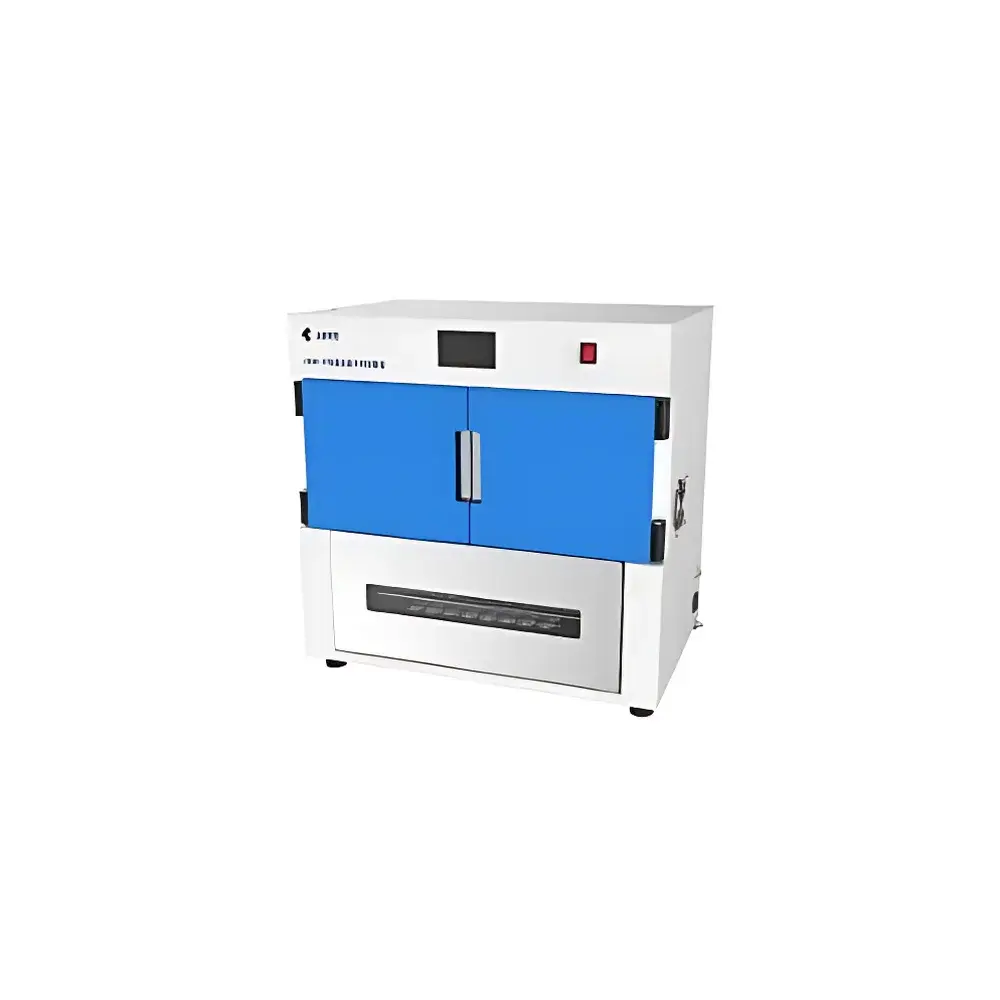
KEZHE VNH-500 Automated Parallel Evaporator
| Brand | KEZHE SHANGHAI |
|---|---|
| Origin | Shanghai, China |
| Manufacturer Type | Direct Manufacturer |
| Product Category | Domestic |
| Model | VNH-500 |
| Instrument Type | Automated Quantitative Concentrator |
| Temperature Range | Ambient to 100 °C |
| Temperature Control Accuracy | ≤ 0.5 °C |
| Sample Capacity per Vial | 10–80 mL |
| Maximum Simultaneous Samples | 72 (customizable) |
| Gas Flow Rate | Up to 15 L/min (N₂ or inert gas) |
| Heating Method | Water Bath |
| Operating Modes | Manual / Method-Based / Timer-Based |
Overview
The KEZHE VNH-500 Automated Parallel Evaporator is an engineered solution for high-throughput sample preparation in analytical laboratories requiring precise, reproducible solvent removal from multiple samples under controlled thermal and gaseous conditions. Based on the principle of simultaneous nitrogen gas sparging combined with regulated water-bath heating, the system enables gentle yet efficient evaporation of volatile solvents—particularly in post-extraction workflows such as solid-phase extraction (SPE), liquid-liquid extraction (LLE), and QuEChERS-based residue analysis. Unlike single-sample evaporators, the VNH-500 supports parallel processing of up to 72 vials within a single run, significantly reducing total turnaround time while maintaining consistent thermal exposure and gas flow dynamics across all positions. Its design prioritizes method robustness, operator safety, and compliance-readiness—making it suitable for regulated environments including environmental testing labs, food safety QA/QC facilities, and pharmaceutical contract research organizations.
Key Features
- Integrated water-bath heating and programmable nitrogen delivery ensure uniform thermal transfer and optimized gas-surface interaction across all sample positions.
- Motor-driven, auto-tracking nitrogen needles descend synchronously with solvent level reduction, maintaining optimal distance (typically 5–10 mm above liquid surface) throughout evaporation—minimizing splashing and maximizing evaporation efficiency.
- Each nitrogen channel operates independently with digitally controlled mass flow regulation, enabling selective activation and precise flow adjustment (0.1–15 L/min per channel) to match individual vial geometry and solvent volatility.
- Modular rack system accommodates interchangeable tube holders for 10–80 mL formats—including standard culture tubes, SPE collection tubes, and custom-configured glassware—supporting seamless integration with upstream SPE instruments or fraction collectors.
- Front-mounted transparent acrylic viewport allows real-time visual monitoring without interrupting operation or compromising temperature stability.
- Industrial-grade touchscreen interface displays live parameters including bath temperature, elapsed time, pressure status (if optional sensor installed), and active channel configuration; supports user-defined method storage (up to 99 protocols).
- Internal exhaust fan with activated carbon filter mitigates ambient solvent vapor accumulation, reducing inhalation exposure and improving lab air quality—aligned with OSHA PEL and ACGIH TLV guidelines for common organic solvents.
Sample Compatibility & Compliance
The VNH-500 accepts standard borosilicate glass and polypropylene tubes conforming to ISO 8536-1 and ASTM D4327 specifications. It is compatible with common extraction eluents including acetonitrile, methanol, ethyl acetate, hexane, and dichloromethane. For regulatory workflows, the instrument supports audit-trail-capable method execution when paired with KEZHE’s optional LIMS-integrated software module (compliant with FDA 21 CFR Part 11 requirements for electronic records and signatures). Its temperature control architecture meets ISO/IEC 17025 clause 6.4.3 for equipment calibration traceability, and routine performance verification can be conducted using NIST-traceable reference standards (e.g., certified water baths and calibrated flow meters).
Software & Data Management
The embedded control firmware provides non-volatile storage of method parameters, run logs, and error events. Each completed run generates a timestamped CSV report containing start/end times, average bath temperature, total nitrogen consumption (calculated), and any deviations exceeding preset thresholds (e.g., temperature drift >0.3 °C). Optional Ethernet or USB-C connectivity enables remote monitoring via KEZHE LabLink™ desktop application, which supports batch export, trend analysis, and GLP-compliant PDF certificate generation—including digital signature fields for analyst and reviewer approval.
Applications
- Residue analysis in food and agricultural commodities (e.g., pesticide multiresidue screening per EN 15662)
- Environmental water and soil extract concentration prior to GC-MS or LC-MS/MS analysis
- Pharmaceutical impurity profiling and stability-indicating assay sample prep
- Forensic toxicology sample cleanup following immunoaffinity or dSPE steps
- High-volume clinical biomarker quantification where throughput and inter-run consistency are critical
FAQ
What types of solvents are compatible with the VNH-500?
Commonly used organic solvents—including acetonitrile, methanol, ethanol, ethyl acetate, and hexane—are fully supported. Chlorinated solvents (e.g., chloroform, DCM) require optional corrosion-resistant needle materials and enhanced ventilation.
Can the system be integrated into an automated sample preparation line?
Yes—via RS-232 or Modbus TCP protocol, the VNH-500 accepts external trigger signals and reports status codes to robotic liquid handlers or SPE workstations.
Is calibration documentation provided with the instrument?
A factory-issued calibration certificate covering temperature uniformity (±0.5 °C across all zones) and flow accuracy (±2% FS) is included. On-site IQ/OQ services are available upon request.
Does the instrument meet CE or UL safety standards?
It complies with IEC 61010-1:2010 for laboratory electrical equipment and carries the CE marking for EMC and Low Voltage Directive conformity.
How often does maintenance require scheduled intervention?
Routine checks (gas line integrity, seal condition, bath water quality) are recommended every 200 operating hours; full preventive maintenance is advised annually or after 1,000 cycles.
Related Products



