KHLAB Precision Medicine Laboratory Construction Service
| Brand | KHLAB |
|---|---|
| Origin | Zhejiang, China |
| Manufacturer Type | Authorized Distributor |
| Country of Origin | China |
| Model | Precision Medicine Laboratory |
| Quotation | Upon Request |
| Design Experience | 10+ Years |
Overview
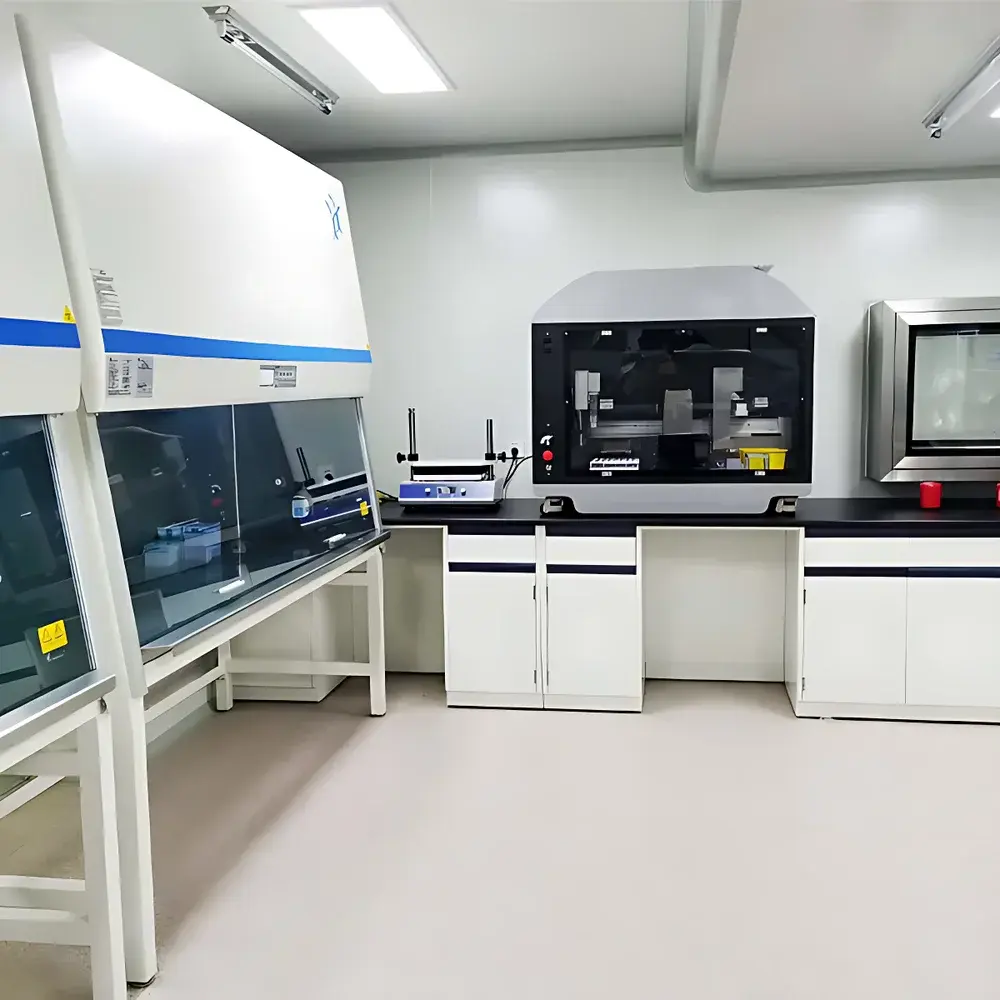
KHLAB Precision Medicine Laboratory Construction Service is a comprehensive, standards-driven turnkey solution for the design, engineering, and commissioning of clinical and research-grade precision medicine laboratories. Engineered for compliance with international laboratory quality frameworks—including ISO 15189:2022 (Medical laboratories — Requirements for quality and competence), ISO/IEC 17025:2017 (General requirements for the competence of testing and calibration laboratories), and relevant national GB/T standards—this service supports diagnostic accuracy, reproducible molecular assays, and regulatory readiness across academic hospitals, central laboratories, and translational research centers. The workflow spans functional zoning (e.g., pre-PCR clean areas, nucleic acid extraction zones, NGS library preparation suites, and bioinformatics support spaces), HVAC system specification (ISO Class 7–8 cleanrooms with unidirectional airflow and pressure cascades), containment infrastructure (Biosafety Level 2 [BSL-2] compliant workspaces), and integrated utility planning (ultra-pure water, nitrogen, compressed air, and emergency power). All architectural and mechanical designs adhere to the principles of spatial segregation, cross-contamination control, and audit-ready documentation.
Key Features
- End-to-end project delivery: From feasibility assessment and conceptual layout to detailed engineering drawings, equipment integration, and commissioning validation (IQ/OQ/PQ protocols available upon request)
- Regulatory-aligned spatial architecture: Segregated workflows for sample receipt, nucleic acid isolation, target enrichment, sequencing, and data interpretation—with physical barriers, anterooms, and directional airflow management
- Built-in environmental controls: HVAC systems designed to meet ISO 14644-1 Class 7 (10,000) or Class 8 (100,000) cleanroom specifications, including HEPA filtration, differential pressure monitoring, and temperature/humidity stability (±0.5°C, ±3% RH)
- Material and finish specification: Chemically resistant epoxy flooring, seamless stainless-steel wall cladding in high-risk zones, non-shedding ceiling systems, and static-dissipative surfaces where required
- Infrastructure readiness: Pre-wired electrical panels (dedicated circuits for sequencers, mass spectrometers, and thermal cyclers), grounding continuity verification, and UPS-backed critical loads
- Documentation package: As-built drawings, equipment traceability logs, material certifications (e.g., fire-rated wall assemblies), and validation summary reports aligned with GLP and CAP inspection expectations
Sample Compatibility & Compliance
The laboratory infrastructure supports diverse biospecimen types—including whole blood, plasma, FFPE tissue sections, saliva, and cell-free DNA—across analytical platforms such as next-generation sequencing (NGS), digital PCR, Sanger sequencing, and liquid chromatography–mass spectrometry (LC-MS). All structural and environmental specifications comply with national regulatory guidance from China’s National Medical Products Administration (NMPA) and align with internationally recognized frameworks: ISO 15189 Annex A (requirements for molecular pathology), CLSI EP34-A (laboratory design for genetic testing), and EU IVDR Annex II (general safety and performance requirements for IVD infrastructure). BSL-2 containment features include autoclave access, chemical fume hoods (ASHRAE 110-tested), and surface decontamination protocols validated per EN 14885.
Software & Data Management
While KHLAB does not supply proprietary LIMS or ELN software, the laboratory construction includes structured cabling (Cat 6A or fiber-optic backbone), VLAN segmentation for secure instrument network traffic, and designated server rack space with climate-controlled enclosures. Infrastructure supports integration with validated third-party systems—including STARLIMS, LabVantage, and Benchling—under FDA 21 CFR Part 11 and ISO 27001-compliant access control, audit trail logging, and electronic signature configurations. Physical design accommodates future scalability: modular data cabinets, redundant uplinks, and reserved conduit pathways for AI-accelerated computing nodes or edge-based genomic analysis hardware.
Applications
- Clinical molecular diagnostics laboratories implementing companion diagnostics for oncology, rare disease, and pharmacogenomics testing
- Academic core facilities supporting multi-omics research (genomics, epigenomics, transcriptomics) with high-throughput sequencing infrastructure
- Contract research organizations (CROs) requiring auditable, inspection-ready environments for biomarker assay development and validation
- Regional medical centers establishing certified precision oncology programs under provincial health authority accreditation schemes
- Biobanking facilities integrating automated sample storage (−80°C and LN2) with chain-of-custody tracking and environmental monitoring systems
FAQ
Does KHLAB provide ISO 15189 implementation consulting alongside laboratory construction?
Yes—KHLAB collaborates with accredited QMS consultants to support gap analysis, SOP development, internal audit training, and pre-assessment readiness reviews aligned with ISO 15189:2022 Clause 4–8.
Can the design accommodate both NGS and long-read sequencing platforms (e.g., Oxford Nanopore or PacBio)?
Yes—the infrastructure includes vibration-isolated foundations, EMI-shielded rooms for sensitive electronics, dedicated cooling capacity for high-power sequencers, and flexible benchtop power/data interfaces compatible with evolving platform footprints.
Is post-commissioning validation support included in the scope?
Validation documentation (IQ/OQ/PQ templates) is provided; on-site execution by qualified engineers is available as an optional add-on service, subject to regional availability and project-specific risk assessment.
How does KHLAB ensure compatibility with local building codes and fire safety regulations in China?
All civil and MEP designs are reviewed and stamped by registered Chinese architectural and fire protection engineers, ensuring full compliance with GB 50016 (Fire Protection Code), GB 50346 (Bio-safety Laboratory Construction Standard), and provincial health commission technical guidelines.
Related Products