
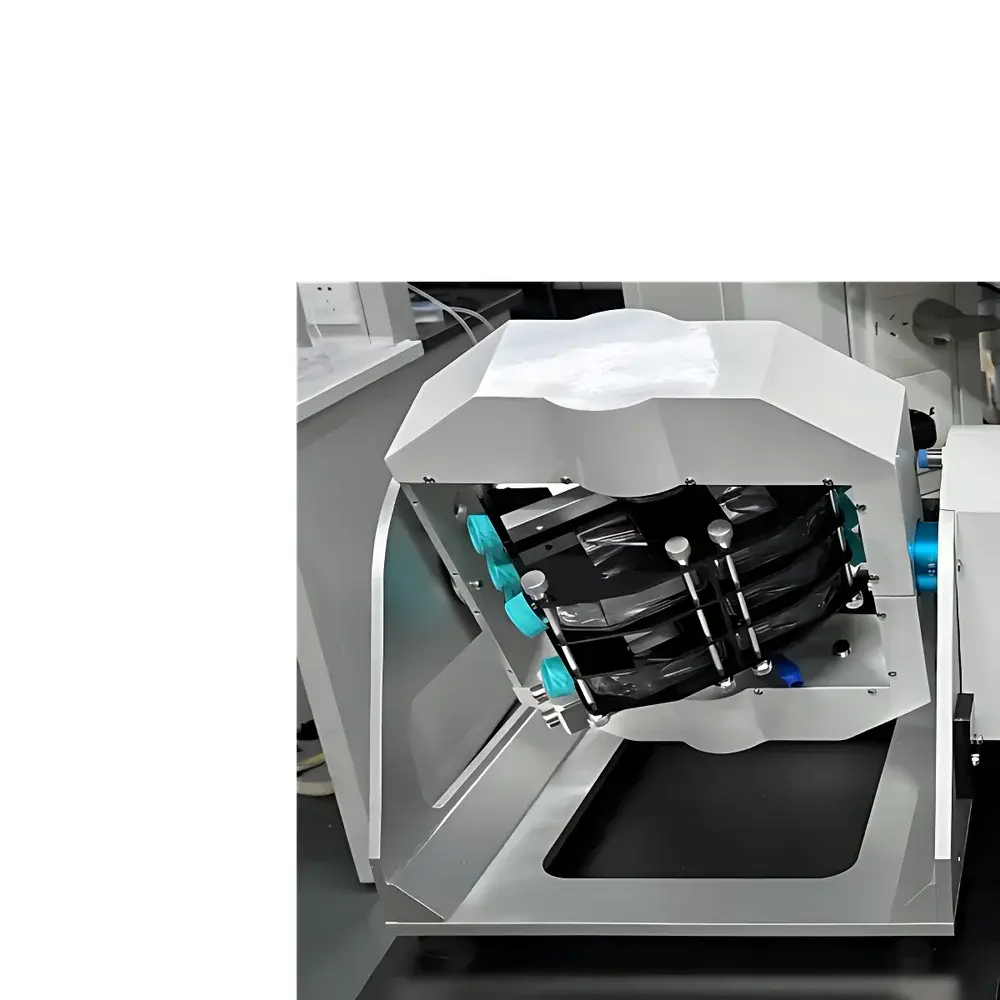
Kilby RCCS Rotating Cell Culture System
| Brand | Kilby |
|---|---|
| Origin | Beijing, China |
| Manufacturer Type | Authorized Distributor |
| Country of Origin | China |
| Model | RCCS |
| Price | USD 145 (FOB Beijing) |
Overview
The Kilby RCCS Rotating Cell Culture System is an engineered platform for three-dimensional (3D), dynamic suspension-based in vitro culture of mammalian embryos, stem cells, and organoids. Based on the principle of low-shear, simulated microgravity achieved through continuous, controlled rotation of culture vessels, the RCCS minimizes sedimentation and mechanical stress while enhancing nutrient/gas exchange across cell layers. Unlike static or orbital shaking systems, the RCCS maintains uniform suspension of sensitive embryonic structures—such as pre-implantation blastocysts or post-implantation embryo explants—enabling physiologically relevant morphogenesis over extended durations (up to 96–120 hours). Its design supports precise environmental modulation, including O₂ (1–21%), CO₂ (2–10%), temperature (35–38 °C), and optional pressure control (±50 mmHg), making it suitable for modeling early embryonic development under normoxic, hypoxic, hyperoxic, or mechanically loaded conditions.
Key Features
- Programmable rotation speed (0.1–60 rpm) with ±0.2 rpm stability, ensuring reproducible shear profiles across experiments
- Dual-chamber incubator-compatible design (standard 37 °C/5% CO₂ environments); optional integrated gas mixing module for O₂/CO₂/N₂ blending
- Autoclavable, borosilicate glass or biocompatible polymer culture vessels (10–100 mL volume range) with gas-permeable membranes
- Real-time monitoring interface supporting external integration with pH, dissolved O₂, and temperature sensors (via analog 0–5 V or RS-485 output)
- Compliance-ready architecture: supports audit trail logging, user access levels, and timestamped parameter recording for GLP/GMP-aligned workflows
Sample Compatibility & Compliance
The RCCS accommodates a broad spectrum of biological specimens—including murine, rat, rabbit, and porcine pre- and post-implantation embryos; human embryonic stem cell (hESC) aggregates; iPSC-derived neural or intestinal organoids; and primary chondrocyte or cardiomyocyte spheroids. It is routinely deployed in accordance with OECD Test Guideline 414 (Prenatal Developmental Toxicity Study) and FDA Guidance for Industry on Developmental and Reproductive Toxicology (DART) testing. The system enables full compliance with Good Laboratory Practice (GLP) requirements when paired with validated SOPs and electronic lab notebook (ELN) integration. All vessel materials meet USP Class VI biocompatibility standards; gas delivery components comply with ISO 8536-4 for medical gas connections.
Software & Data Management
The RCCS operates via embedded firmware with local LCD control panel and optional PC-based configuration software (Windows 10/11 compatible). Software features include multi-step protocol programming, event-triggered data capture (e.g., rotation pause upon sensor threshold breach), and export of time-stamped CSV logs containing RPM, temperature, and user-defined analog inputs. Data integrity conforms to FDA 21 CFR Part 11 principles: electronic signatures, role-based permissions, and immutable audit trails are supported when used with compliant ELN or LIMS platforms. Raw sensor outputs are calibrated per NIST-traceable references during factory validation.
Applications
- Developmental Toxicity Assessment: Used in whole-embryo culture (WEC) models (e.g., rat EGD-10 and rabbit EGD-12 protocols) to evaluate teratogenic potential of pharmaceuticals, agrochemicals, or nanomaterials without maternal metabolic interference
- Embryogenesis Mechanism Studies: Facilitates high-resolution imaging of gastrulation, neurulation, and somitogenesis under tunable oxygen gradients, enabling correlation of hypoxia-responsive gene expression (e.g., HIF-1α targets) with morphological outcomes
- Preimplantation Embryo Evaluation: Supports extended in vitro culture (EIVC) of zygotes to blastocyst stage under physiological shear conditions, improving developmental competence metrics versus static controls
- Organoid Maturation: Promotes vascularization and lumen formation in intestinal, hepatic, and cerebral organoids through enhanced paracrine signaling and extracellular matrix remodeling in dynamic suspension
- Regenerative Medicine Modeling: Enables biomechanical conditioning of cartilage explants or cardiac microtissues under controlled hydrostatic pressure profiles mimicking native joint or ventricular loading
FAQ
What embryo stages can be cultured using the RCCS?
The system supports culture from zygote through late organogenesis stages (e.g., rat EGD-10 to EGD-14, rabbit EGD-12 to EGD-15), depending on species-specific oxygen and media requirements.
Is the RCCS compatible with live imaging?
Yes—vessels are optically clear and compatible with inverted widefield, confocal, and light-sheet microscopy; rotation may be paused programmatically for acquisition.
Can the system be validated for regulatory submissions?
Yes—full IQ/OQ/PQ documentation packages, including calibration certificates and performance qualification reports, are available upon request.
Does the RCCS support sterile operation in laminar flow hoods?
All vessel loading, sealing, and transfer procedures follow aseptic technique; the base unit itself is designed for placement outside biosafety cabinets to minimize airflow disruption.
What maintenance is required?
Annual recalibration of rotation encoder and temperature sensor is recommended; no consumables beyond standard culture vessels and gas filters are required.



