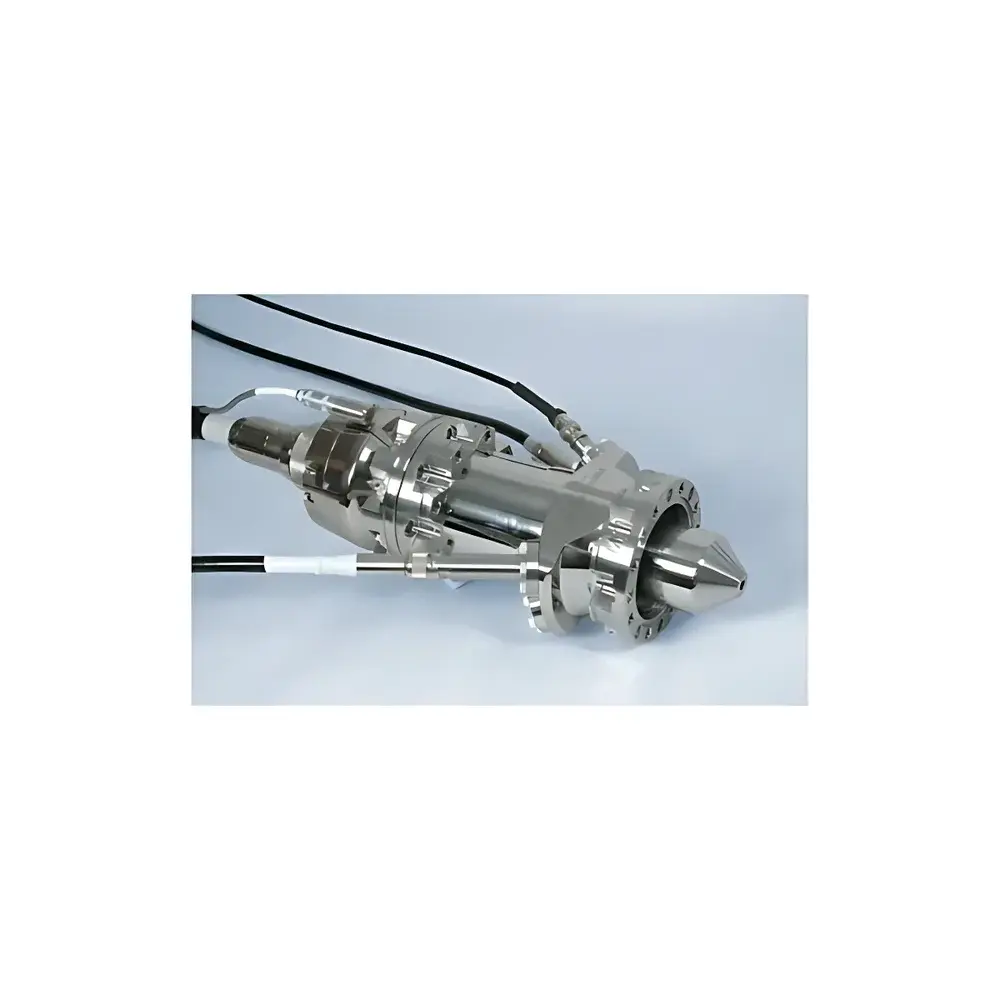
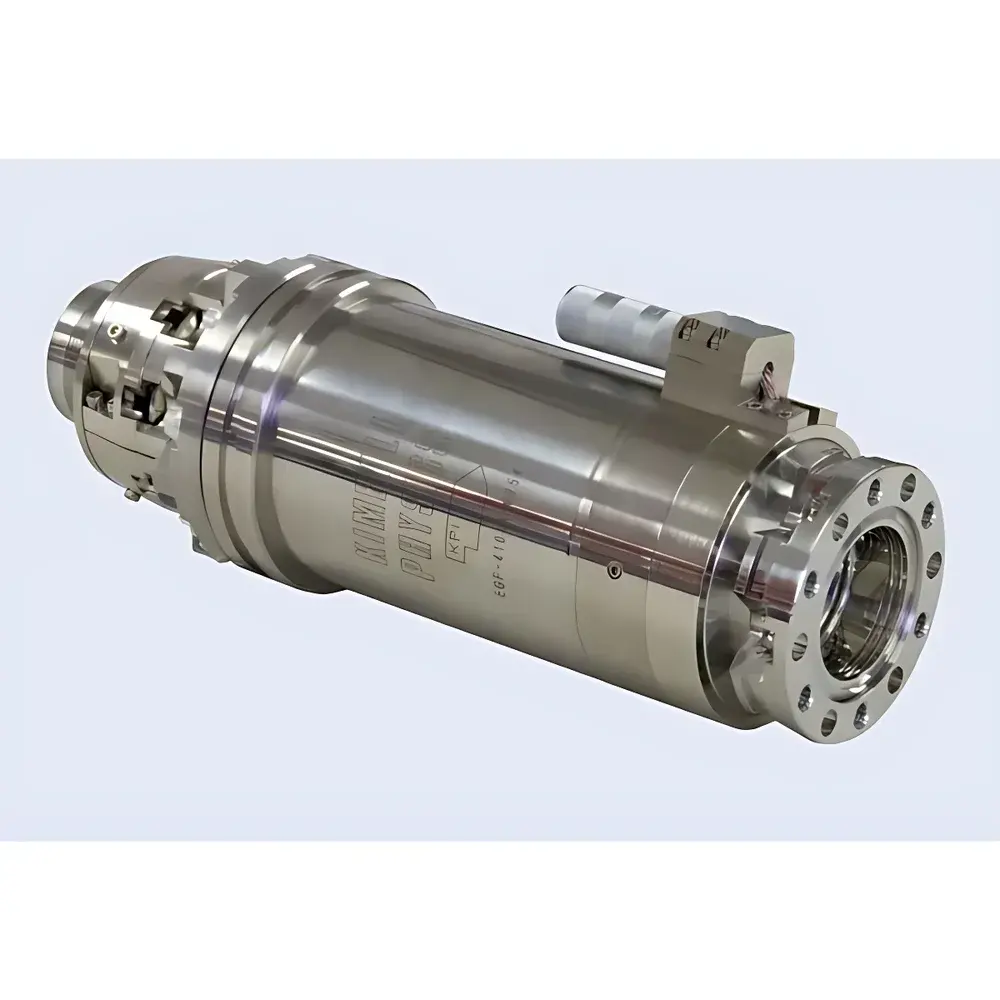
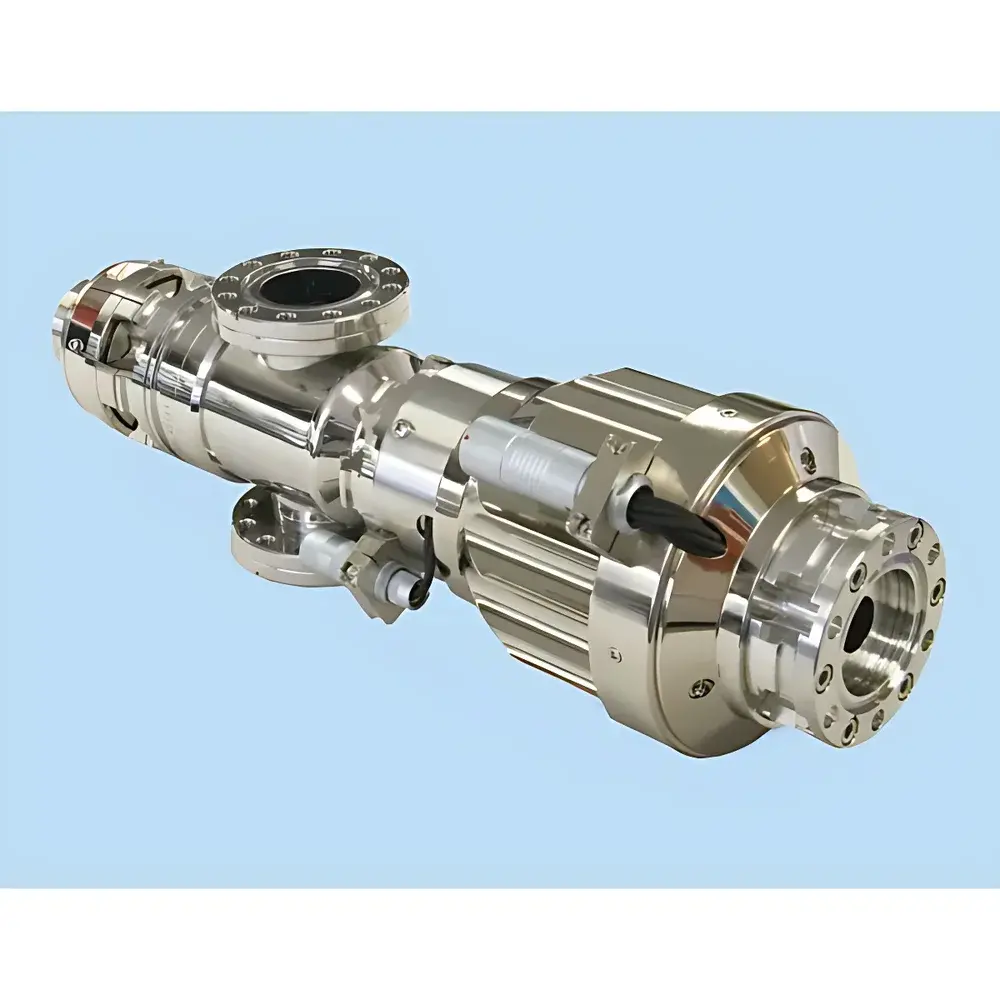
Kimball Physics EGH-8100 / EGPS-8100 Electron Gun System
| Brand | Kimball Physics, Inc. |
|---|---|
| Origin | USA |
| Model | EGH-8100 / EGPS-8100 |
| Beam Energy Range | 1 keV – 100 keV |
| Beam Current | 10 nA – 1 mA (pulsed up to 20 mA) |
| Spot Size | 3 mm – 100 mm |
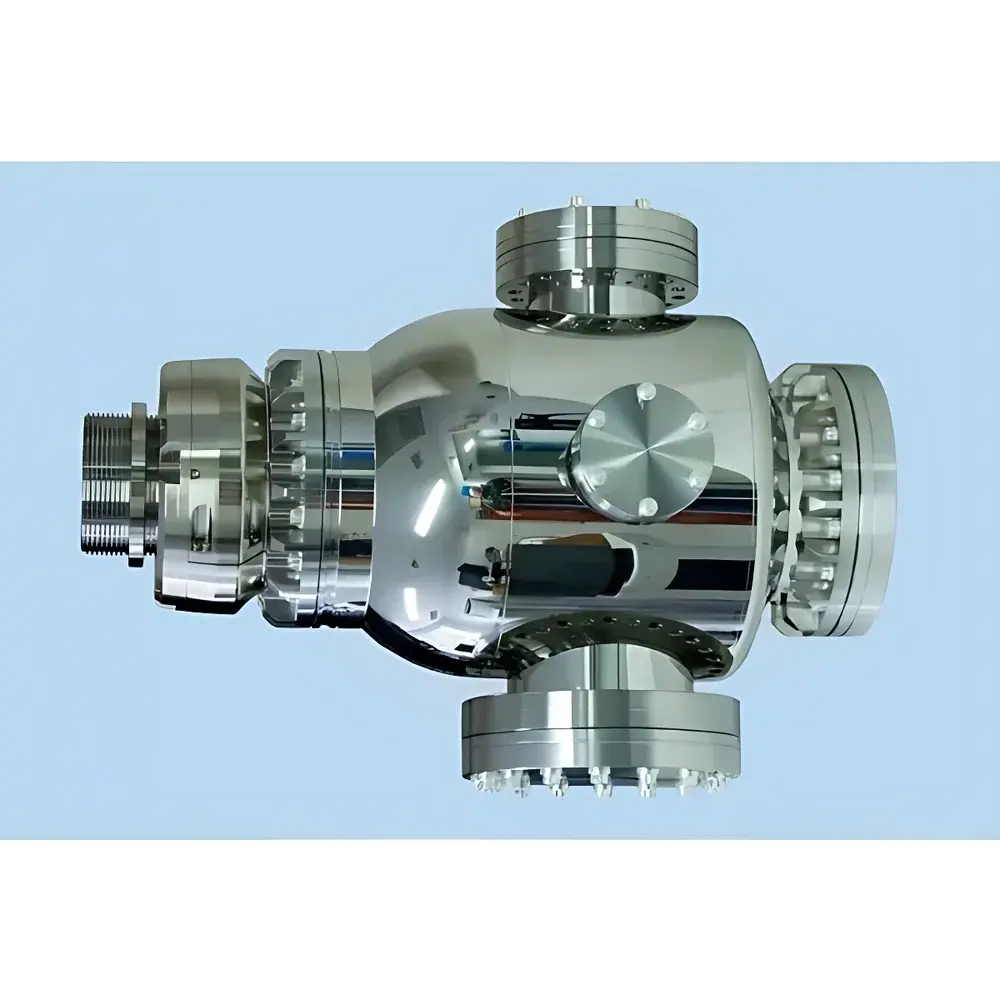
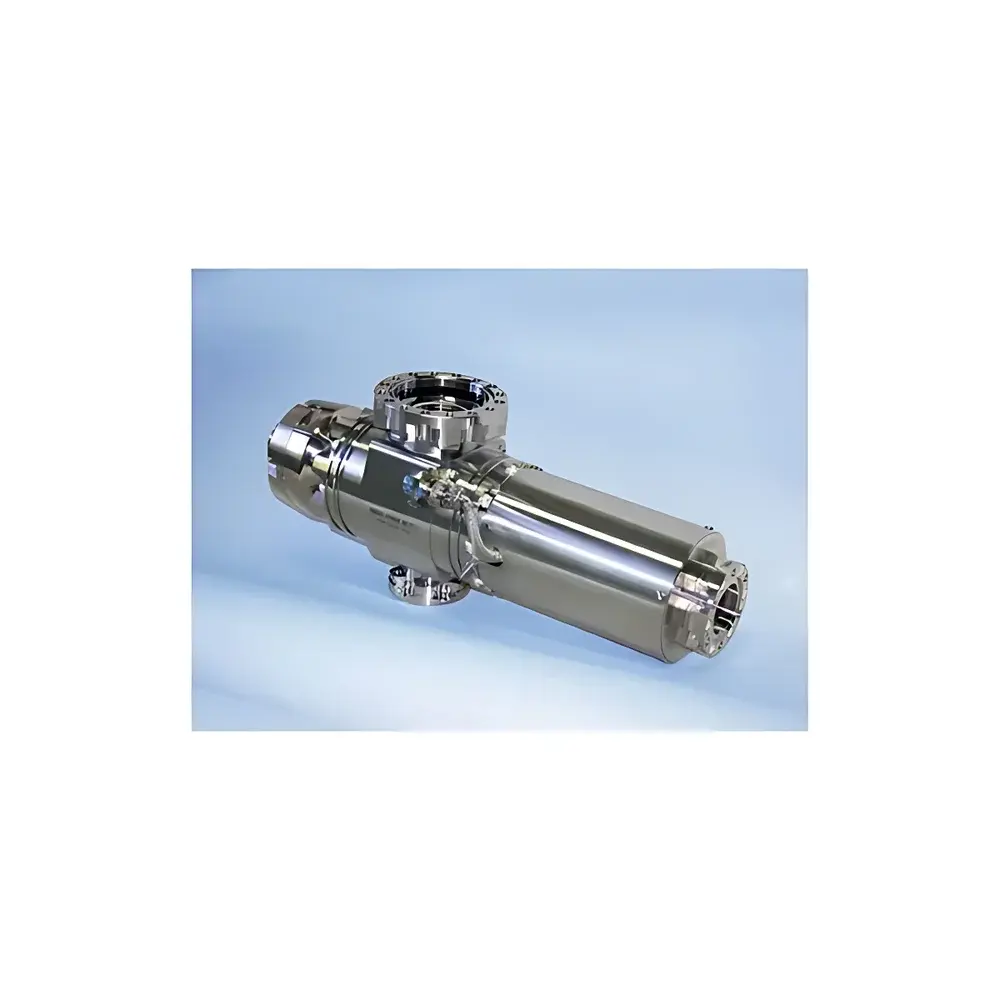
| Main Vacuum Flange | 6" CF |
| Turbo Pump Flange | 4" CF |
| Instrumentation Flanges | three 2" CF ports |
| Features | In-situ internal alignment, flood beam mode, DC/pulsed operation, high-current pulsed capability |
Overview
The Kimball Physics EGH-8100 and EGPS-8100 are high-performance, ultra-high vacuum (UHV)-compatible electron gun systems engineered for precision irradiation, surface modification, electron-induced deposition (EID), cathodoluminescence excitation, and in situ electron microscopy sample stimulation. Designed and manufactured in the United States by Kimball Physics, Inc., these systems operate on thermionic emission principles using a tungsten or lanthanum hexaboride (LaB6) cathode—optimized for stable, low-noise beam generation across a wide energy and current range. The EGH-8100 is configured for continuous (DC) and gated pulsed operation, while the EGPS-8100 integrates a dedicated high-current pulsed power supply enabling short-duration, high-peak-current bursts (up to 20 mA at pulse widths from 100 ns to 10 µs). Both models feature an integrated electrostatic focusing column with adjustable extraction, acceleration, and suppression electrodes, allowing dynamic control over beam convergence, current density, and spatial profile without external optics.
Key Features
- Wide operational beam energy range: 1 keV to 100 keV—enabling tunable penetration depth for thin-film analysis, insulator charging studies, and low-energy surface interaction experiments.
- Adjustable beam current from 10 nA (high-stability DC mode) up to 1 mA (continuous) and 20 mA (pulsed peak), supporting applications from low-dose imaging to high-flux irradiation.
- Variable spot size control: 3 mm (focused) to 100 mm (flood mode), achieved via electrostatic lens tuning and aperture selection—ideal for uniform large-area exposure or localized micro-irradiation.
- Modular UHV-compatible mechanical design: 6″ CF main chamber interface, 4″ CF turbo pump port, and three independent 2″ CF instrumentation ports for diagnostics (e.g., Faraday cups, beam profile monitors, pressure gauges).
- In-situ internal alignment system: Motorized cathode positioning and real-time beam steering enable rapid optimization and reproducible setup without breaking vacuum.
- Dual-mode operation: DC, gated pulse, and high-current pulsed configurations supported via interchangeable power supply modules and trigger interface (TTL/5 V logic compatible).
Sample Compatibility & Compliance
The EGH-8100/EGPS-8100 is routinely integrated into custom UHV chambers (1×10⁻⁹ Torr base pressure typical) used in surface science, accelerator test stands, and advanced materials characterization labs. It accommodates conductive, semiconductive, and insulating samples—including oxide thin films, 2D materials (graphene, TMDCs), phosphors, and radiation-sensitive polymers—when paired with appropriate charge neutralization (e.g., low-energy electron flood gun or ion compensation). The system conforms to standard UHV material compatibility requirements (oxygen-free copper, stainless steel 304/316L, ceramic insulators) and supports integration with residual gas analyzers (RGAs), quadrupole mass spectrometers, and Auger electron spectroscopy (AES) feedthroughs. While not certified to a specific regulatory standard, its architecture aligns with GLP-compliant experimental workflows requiring traceable beam parameter logging, interlock-enabled safety protocols, and hardware-based emergency shutdown.
Software & Data Management
Operation is managed via Kimball Physics’ proprietary Electron Gun Control Software (EGCS), a Windows-based application providing synchronized control of high-voltage supplies, pulse generators, beam alignment actuators, and diagnostic readouts. EGCS supports time-stamped parameter logging (energy, current, pulse width, repetition rate), script-driven sequence execution (e.g., dose ramping, raster scanning), and export to CSV or HDF5 for post-acquisition analysis. Optional LabVIEW and Python APIs (via TCP/IP or RS-232) enable integration into larger automation frameworks. All beam parameter changes are recorded with user ID and timestamp, satisfying basic audit-trail requirements for ISO/IEC 17025 or internal QA documentation. No FDA 21 CFR Part 11 compliance package is included by default but can be implemented via third-party electronic signature and access-control add-ons.
Applications
- Electron beam lithography (EBL) mask writing and resist sensitivity calibration
- In situ electron irradiation studies of defect evolution in perovskites and metal–organic frameworks (MOFs)
- Cathodoluminescence mapping of quantum dots and nanowire heterostructures
- Charging dynamics analysis of dielectric layers in MEMS and semiconductor gate stacks
- Electron-induced deposition (EID) of platinum, tungsten, and carbon nanostructures
- Calibration source for electron spectrometers and secondary electron detectors
- Beam-induced current (EBIC) and voltage contrast imaging in failure analysis labs
FAQ
What vacuum level is required for optimal operation?
The system is rated for UHV environments down to 1×10⁻⁹ Torr; minimum operating pressure is 5×10⁻⁸ Torr to prevent arcing and cathode poisoning.
Can the EGH-8100 be upgraded to EGPS-8100 functionality?
Yes—retrofit kits including the high-current pulsed power supply, fast HV switch, and updated control firmware are available directly from Kimball Physics.
Is LaB6 cathode operation supported out of the box?
Both cathode types (W hairpin and LaB6) are supported; LaB6 requires optional heater controller and differential pumping stage for extended lifetime.
How is beam current calibrated and verified?
Each system ships with NIST-traceable calibration data; users perform routine verification using a certified Faraday cup connected to the 2″ CF instrumentation port.
Are custom flange configurations or beamline integration services offered?
Yes—Kimball Physics provides engineering consultation for non-standard chamber interfaces, magnetic shielding, and beam transport line coupling (e.g., to hemispherical analyzers or time-of-flight spectrometers).