
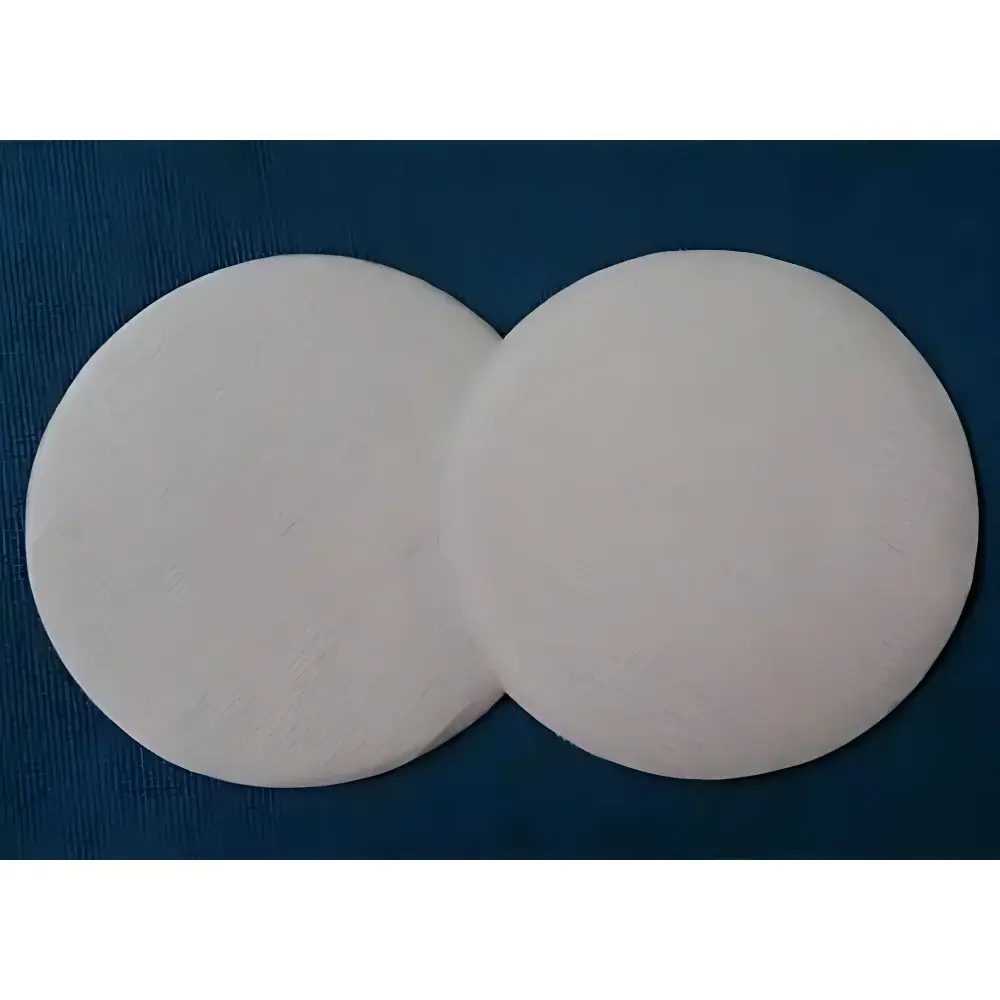
Klingspor PL31B Grit 180 Abrasive Paper for EN 388:2016 Abrasion Resistance Testing
| Origin | Germany |
|---|---|
| Manufacturer Type | Authorized Distributor |
| Origin Category | Imported |
| Model | Klingspor PL31B Grit 180 |
| Unit Price | USD 210 (per pack of 50 sheets) |
Overview
The Klingspor PL31B Grit 180 abrasive paper is a precision-engineered consumable specifically validated for standardized abrasion resistance testing of protective gloves in accordance with EN 388:2016, Clause 6.3 (Abrasion Resistance). This test method employs the Martindale or circular oscillatory motion principle, where the specimen—typically a glove palm or cut-resistant fabric sample—is subjected to controlled friction against a fixed abrasive surface under defined load, stroke length, and cycle count. The PL31B grade delivers consistent, traceable wear performance due to its uniform silicon carbide grain distribution, phenolic resin bonding, and calibrated grit size (180 µm nominal), ensuring high inter-laboratory reproducibility required for CE marking and PPE certification workflows.
Key Features
- Manufactured in Germany to DIN/EN-compliant quality control protocols, with full batch traceability and CoA (Certificate of Analysis) available upon request
- Grit 180 specification aligned with EN 388:2016 Annex A.3 requirements for abrasive surface characterization, including particle size distribution (D50 ≈ 175–185 µm) and hardness consistency
- Dimensionally stable backing: 230 mm × 280 mm sheets with precise flatness tolerance (±0.15 mm over surface), minimizing edge lift or slippage during Martindale tester operation
- Phenolic resin bond system engineered for thermal stability and minimal grain shedding across extended test cycles (up to 500 cycles per sheet under standard 9 kPa load)
- Pre-conditioned for ambient laboratory use (23 ± 2 °C, 50 ± 5 % RH), eliminating need for additional acclimatization prior to EN 388 testing
Sample Compatibility & Compliance
This abrasive paper is compatible with all EN 388:2016-certified abrasion testers—including Tinius Olsen TMC-100, SDL Atlas Martindale 111, and James Heal Taber V-5
- Validated for testing glove materials: leather, coated textiles, aramid blends (e.g., Kevlar®, Nomex®), high-performance polyethylene (HPPE), and stainless steel mesh composites
- Meets ISO 12947-2 (determining abrasion resistance of textiles by the Martindale method) for cross-method correlation studies
- Conforms to EU Regulation (EU) 2016/425 on Personal Protective Equipment (PPE), supporting technical documentation for Module B (EU Type Examination) and Module C2 (Product Verification)
- Batch-specific calibration data provided to support GLP-compliant test records per ISO/IEC 17025:2017 Clause 7.7
Software & Data Management
While the abrasive paper itself is a passive consumable, its integration into certified test systems requires strict documentation control. Leading abrasion testers (e.g., Tinius Olsen’s Bluehill Universal) log abrasive lot numbers, sheet usage count, and cumulative cycles per test sequence. These logs are exportable as CSV or PDF reports with embedded digital signatures, satisfying audit requirements under ISO/IEC 17025 and FDA 21 CFR Part 11 when configured with electronic record modules. Each Klingspor PL31B batch includes a unique identifier enabling direct linkage to raw material certifications and third-party verification reports from accredited labs (e.g., DEKRA, TÜV Rheinland).
Applications
- CE conformity assessment of cut- and abrasion-resistant work gloves for construction, metalworking, and forestry sectors
- Quality assurance screening during textile supplier qualification (e.g., Tier-1 automotive glove suppliers)
- Comparative wear analysis between alternative coating technologies (e.g., nitrile vs. polyurethane dip coatings)
- Research-grade tribological studies on fiber architecture effects—e.g., woven vs. knitted HPPE substrates under cyclic loading
- Internal R&D validation for new glove prototypes prior to formal EN 388 type testing at notified bodies
FAQ
Is this abrasive paper suitable for ISO 13997 (cut resistance) testing?
No. ISO 13997 requires a different abrasive medium (typically aluminum oxide-coated paper with grit 100) and a distinct test geometry (straight-line blade motion). PL31B Grit 180 is exclusively validated for EN 388 abrasion (circular oscillation).
How many test cycles can be performed per sheet before replacement?
Per EN 388:2016, one sheet is intended for a single test sequence of up to 500 cycles at 9 kPa load. Reuse beyond one sequence compromises result validity and violates Clause 6.3.2.
Does the paper require conditioning before use?
No—sheets are pre-conditioned per ISO 13934-1 and shipped in humidity-controlled packaging. Conditioning is only required if storage exceeds 6 months or ambient conditions deviate from 23 ± 2 °C / 50 ± 5 % RH.
Can I obtain ISO/IEC 17025-accredited test reports for my batch?
Yes. Upon request, accredited laboratories (e.g., Hohenstein Institutes) can issue test reports verifying grit size distribution, bond integrity, and surface roughness per ISO 4618 and ASTM D4587.




