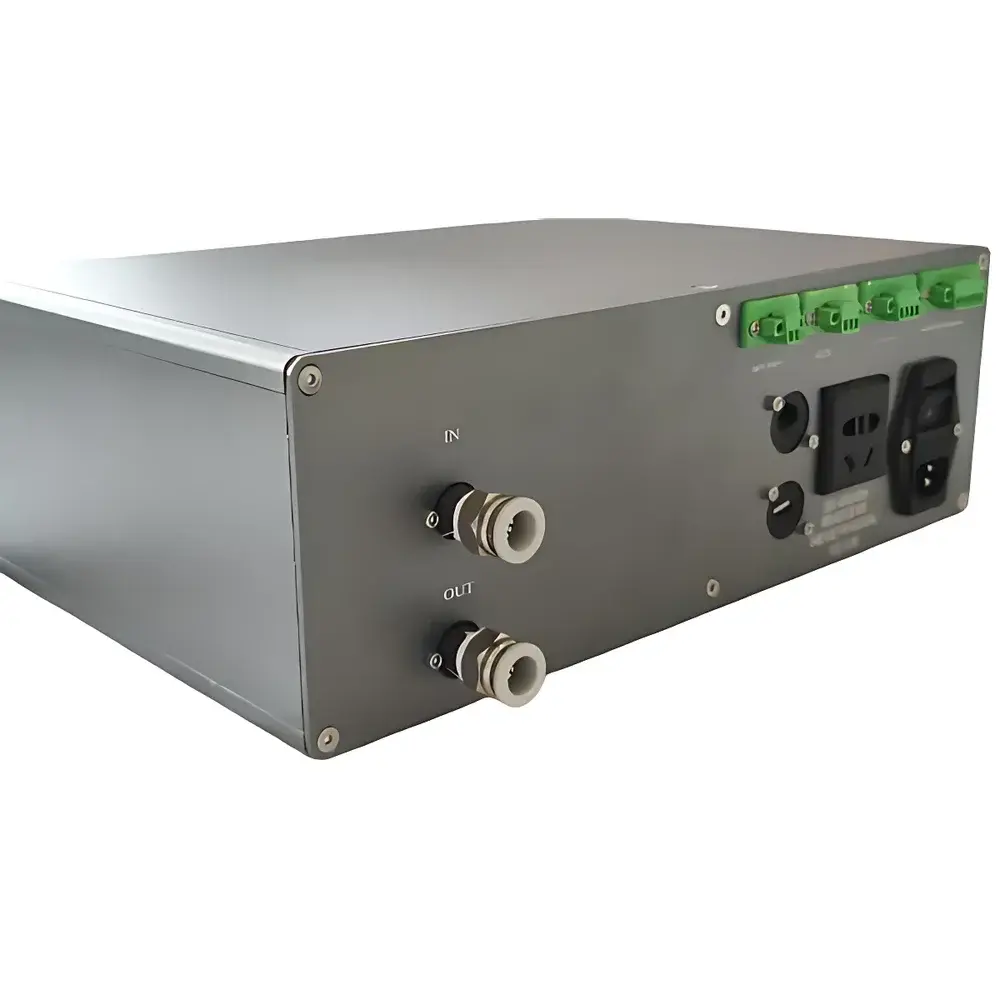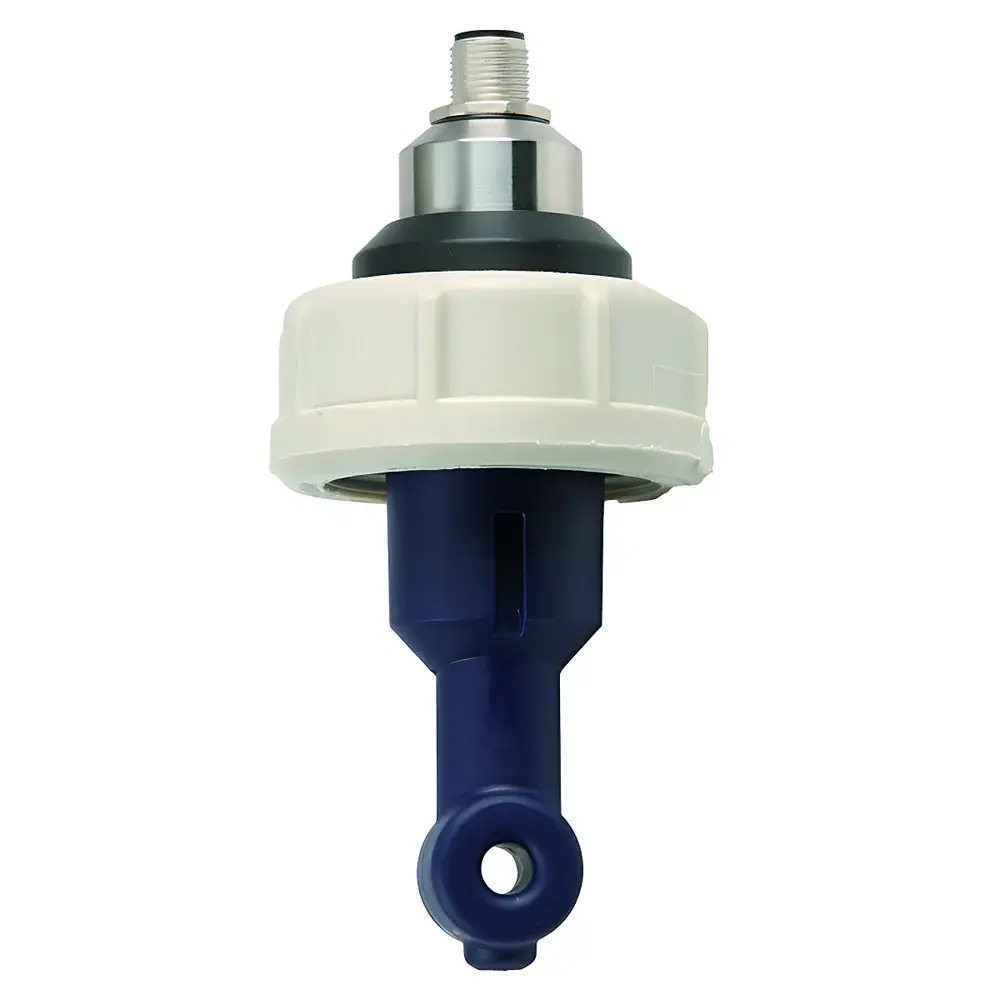
Knick SE670 Ring Electrode Conductivity Sensor
| Brand | Knick |
|---|---|
| Origin | Germany |
| Manufacturer Type | Original Equipment Manufacturer (OEM) |
| Product Origin | Imported |
| Model | SE670 |
| Pricing | Available Upon Request |
Overview
The Knick SE670 Ring Electrode Conductivity Sensor is a digitally interfaced, non-contacting toroidal (inductive) conductivity transducer engineered for continuous, high-stability measurement across a wide dynamic range—from ultra-low (0.01 µS/cm) to very high (2 S/cm) conductivity values in industrial process streams. Unlike traditional two- or four-electrode contacting sensors, the SE670 employs a dual-coil toroidal principle: an excitation coil induces eddy currents in the conductive medium, and a separate sensing coil detects the resulting magnetic field strength—proportional to solution conductivity. This galvanic isolation eliminates electrode polarization, fouling, and corrosion-related drift, making it especially suitable for aggressive, scaling-prone, or particulate-laden fluids common in chemical processing, power plant water chemistry, wastewater treatment, and pharmaceutical utilities.
Key Features
- Toroidal (inductive) measurement principle ensures zero electrode contact with process media—no polarization, no passivation, no calibration drift from surface contamination.
- Integrated Pt1000 RTD temperature sensor with <1 s thermal response time, enabling real-time, algorithmic temperature compensation per IEC 60746-3 and ASTM D1125 standards.
- Digital signal transmission via RS-485 Modbus RTU protocol; supports cable runs up to 100 m without signal degradation or shielding requirements.
- Compact, IP68-rated stainless steel (1.4435 / SS316L) housing with hygienic, weldable process connection (e.g., DIN 11851, ISO 2852, or NPT threads) for inline or insertion mounting.
- Chemical resistance validated for sustained exposure to pH 0–14, oxidizing agents (e.g., chlorine, ozone), and moderate organic solvents—compliant with DIN EN 14597 for process instrumentation in corrosive environments.
- No wetted electrodes: measurement stability maintained under biofilm formation, iron oxide deposition, or calcium carbonate scaling—validated per USP <645> and EP 2.2.38 for purified water monitoring.
Sample Compatibility & Compliance
The SE670 is qualified for use with aqueous solutions exhibiting moderate to high ionic strength—including boiler feedwater, condensate, cooling tower blowdown, CIP rinse water, and bulk pharmaceutical water (PW, WFI pre-check). It is not intended for non-conductive hydrocarbons or highly viscous slurries (>500 cP). The sensor meets electromagnetic compatibility (EMC) per EN 61326-1 and functional safety requirements aligned with IEC 61508 SIL 2 for use in safety-related loops when integrated with certified controllers. Its construction materials comply with FDA 21 CFR Part 177 for indirect food contact, and surface finish options (Ra ≤ 0.8 µm) satisfy ASME BPE-2022 for biopharmaceutical applications.
Software & Data Management
The SE670 operates as a smart field device within Knick’s SensoGate or third-party SCADA/DCS ecosystems. Configuration, diagnostics, and linearization are performed via Knick’s SensoSoft PC software (Windows-based), supporting user-defined temperature compensation curves, conductivity range segmentation, and alarm thresholds. All configuration changes are logged with timestamp and operator ID—enabling audit trails compliant with FDA 21 CFR Part 11 Annex 11 and EU GMP Annex 11 requirements. Data output includes primary conductivity (µS/cm or mS/cm), compensated temperature (°C), sensor status flags (e.g., “coil fault”, “temperature out-of-range”), and diagnostic counters (e.g., self-test cycles, communication errors).
Applications
- Real-time conductivity monitoring in power generation: demineralizer effluent, steam cycle purity control, and condensate polishing.
- Pharmaceutical water systems: PW distribution loop surveillance, WFI storage tank overflow monitoring, and cleaning validation (CIP conductivity break-point detection).
- Chemical manufacturing: reaction mixture concentration tracking, acid/base dosing control, and solvent recovery stream verification.
- Municipal and industrial wastewater: influent/effluent salinity profiling, membrane integrity testing (RO/UF), and brine concentration management.
- Food & beverage: syrup dilution control, CIP return line verification, and final rinse water quality assurance per 3-A Sanitary Standards.
FAQ
Does the SE670 require periodic recalibration?
No—toroidal sensors exhibit inherent long-term stability; calibration verification is recommended annually per ISO/IEC 17025 or internal QA protocols, using traceable standard solutions (e.g., KCl at 25 °C).
Can the SE670 be used in pressurized pipelines?
Yes—rated for continuous operation up to 16 bar at 100 °C; pressure rating depends on selected process connection and gasket material (e.g., EPDM, FKM, or PTFE).
Is the sensor compatible with hazardous area installations?
When paired with Knick’s intrinsically safe barrier modules (e.g., Stratos Multi or Phosphor), the SE670 meets ATEX II 1G Ex ia IIC T4 Ga and IECEx Ex ia IIC T4 Ga requirements.
What is the minimum flow velocity required for accurate measurement?
No minimum flow is mandated due to non-invasive design; however, laminar flow conditions below 0.3 m/s may introduce minor axial dispersion effects—verified per VDI/VDE 2646 guideline for inductive sensors.
Related Products