
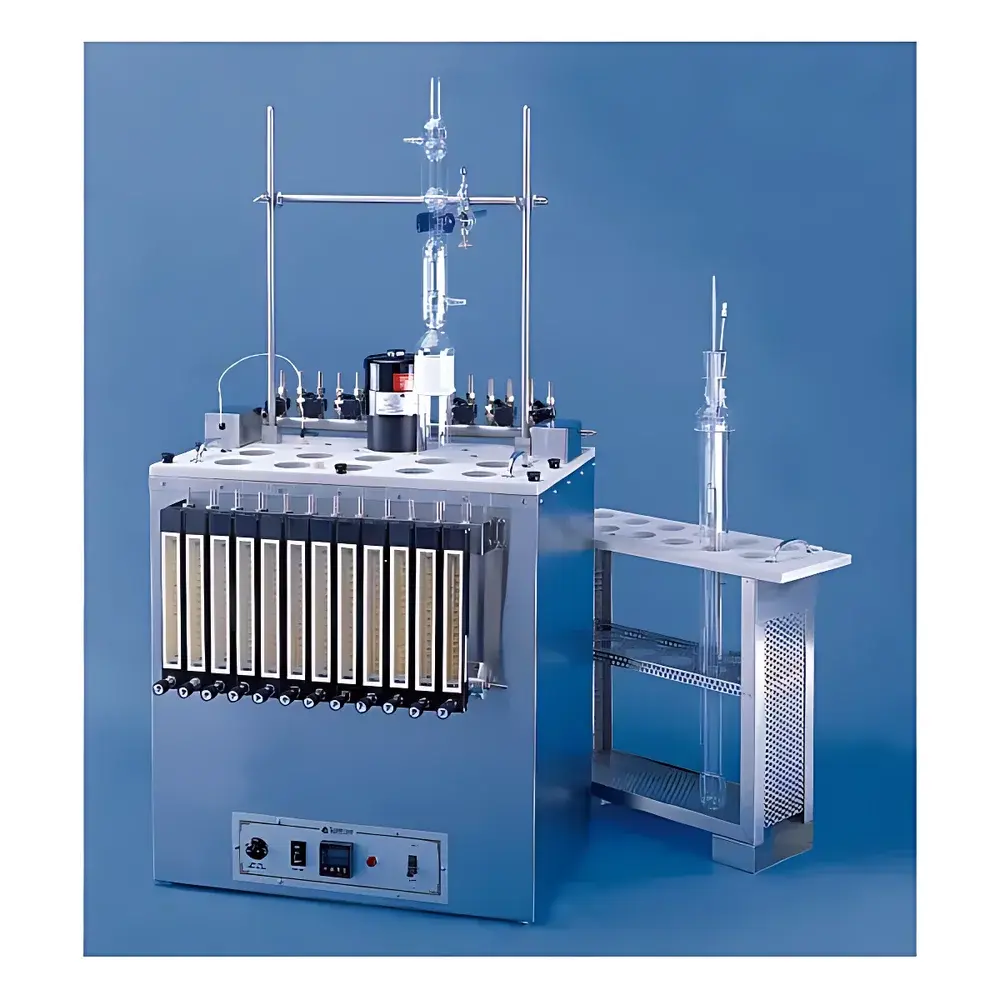
Koehler K12239 High-Temperature Multi-Function Oxidation Bath
| Brand | Koehler |
|---|---|
| Origin | USA |
| Model | K12239 |
| Temperature Range | Ambient to 200 °C |
| Temperature Stability | ±0.1 °C (±0.2 °F) |
| Bath Medium | Silicone Oil |
| Sample Capacity | Up to 12 glass vessels (10 for ASTM D5968 / FTM 791-5307/5308) |
| Air Flow Control | Optional analog flowmeter or digital mass flow controller |
| Temperature Display | Dual-line LED, °C/°F selectable |
| Power Supply | 220–240 V, 50/60 Hz |
| Dimensions (W×D×H) | 65 × 61 × 107 cm |
| Weight | 96.6 kg |
| Compliance | ASTM D943, D2274, D2440, D2893, D4310, D4636, D5968, D6594 |
Overview
The Koehler K12239 High-Temperature Multi-Function Oxidation Bath is an engineered platform for standardized oxidative stability and corrosion testing of lubricating oils, insulating fluids, hydraulic fluids, and distillate fuels. It operates on the principle of accelerated oxidation under controlled thermal and gaseous environments—specifically, by maintaining precise bath temperatures up to 200 °C while delivering regulated flows of purified, dried air or oxygen to sample vessels immersed in silicone oil. This configuration replicates service-induced degradation mechanisms such as sludge formation, acid generation, viscosity change, and metal-catalyzed oxidation—critical failure modes in rotating equipment, transformers, and hydraulic systems. Designed for laboratory compliance with multiple international test methods, the K12239 integrates microprocessor-based PID temperature regulation, dual-line LED display, over-temperature cut-off protection, and modular rack architecture to support method-specific configurations without hardware rework.
Key Features
- Microprocessor-controlled PID temperature system ensures rapid thermal equilibration and sustained stability within ±0.1 °C across the full operating range (ambient to 200 °C).
- Dual-line LED display shows both setpoint and actual bath temperature simultaneously, with user-selectable units (°C or °F).
- Modular movable rack assembly accommodates up to 12 standardized glass test vessels—configurable for ASTM D943 (12-vessel), ASTM D2274 (12-vessel), ASTM D5968 (10-vessel), and FTM 791-5307/5308 (10-vessel) protocols.
- Optional air delivery control: analog rotameter for manual flow adjustment or digital mass flow controller (MFC) for programmable, traceable, and repeatable airflow—essential for GLP/GMP-aligned laboratories.
- Integrated over-temperature safety circuit automatically de-energizes heating elements if bath temperature exceeds the user-defined limit, preventing thermal runaway and sample degradation.
- Robust stainless-steel construction with silicone oil bath medium ensures chemical inertness, low volatility, and long-term thermal consistency at elevated temperatures.
- Front-accessible terminal block and standardized IEC power inlet simplify electrical integration into regulated lab environments (220–240 V, 50/60 Hz).
Sample Compatibility & Compliance
The K12239 supports a broad spectrum of petroleum-based and synthetic fluid matrices—including mineral and PAO-based engine oils, turbine oils, transformer insulating oils, hydraulic fluids, and middle-distillate fuels. Its design enables direct implementation of 12 distinct standard methods: ASTM D943 (TOST), D2274 (RBOT), D2440 (sludge evaluation), D2893 (oxidation stability of turbine oils), D4310 (oxidation stability of diesel fuels), D4636 (oxidation stability of aviation turbine fuels), D5968 (Cummins oxidation test), D6594 (oxidation stability of biodiesel blends); DIN 51394 (oxidation stability of lubricants), 51586 (turbine oil oxidation), 51587 (hydraulic fluid oxidation); and U.S. Department of Defense FTM 791-5307 (oxidation/corrosion of hydraulic fluids) and 791-5308 (oxidation stability of fire-resistant hydraulic fluids). All configurations meet the mechanical, thermal, and airflow requirements stipulated in each standard’s apparatus section.
Software & Data Management
While the K12239 operates as a stand-alone benchtop instrument without embedded software, its analog and digital airflow options are compatible with external data acquisition systems. When equipped with the optional digital mass flow controller, the unit supports 4–20 mA or RS-485 Modbus RTU output for integration into LIMS or SCADA platforms. Temperature logging can be achieved via external thermocouple interfaces or third-party USB data loggers connected to the bath’s auxiliary PT100 sensor port (available upon request). The instrument complies with foundational elements of FDA 21 CFR Part 11 when paired with validated electronic record systems—particularly regarding audit trail capability for temperature setpoints, airflow parameters, and operational timestamps. Its mechanical design and calibration traceability align with ISO/IEC 17025 requirements for accredited testing laboratories performing oxidative stability assessments.
Applications
This oxidation bath serves as a core asset in quality control, R&D, and regulatory compliance laboratories engaged in fluid life-cycle assessment. Typical use cases include: evaluating antioxidant package efficacy during lubricant formulation; benchmarking oxidative resistance of base stocks and finished products against OEM specifications (e.g., Cummins CES 20081, GEK 32568); validating shelf-life claims for transformer oils per IEEE C57.106; supporting ASTM D943-based TOST testing for steam turbine oils; conducting RBOT (ASTM D2274) screening for industrial gear oils; and performing military-specification oxidation testing (FTM 791-5307/5308) for aviation and naval hydraulic systems. Its modularity also facilitates method cross-validation studies and inter-laboratory round-robin trials.
FAQ
What bath medium is required for operation?
Silicone oil is specified as the bath medium due to its thermal stability, low vapor pressure, and chemical inertness up to 200 °C.
Can the K12239 be used for ASTM D943 and ASTM D2274 simultaneously?
No—while the same bath unit supports both methods, they require different rack configurations, vessel types, and airflow rates; switching between them necessitates physical reconfiguration of the movable rack and airflow control components.
Is calibration documentation provided with the instrument?
Yes—each unit ships with a NIST-traceable temperature calibration certificate covering three points across the operating range (e.g., 100 °C, 150 °C, 200 °C), performed using certified reference thermometers.
Does the unit meet CE or UKCA marking requirements?
The K12239 is designed and tested to IEC 61010-1:2010 for electrical safety and EMC compliance; CE marking is available upon request for EU-market deliveries, subject to end-user declaration of conformity.
What maintenance is recommended for long-term reliability?
Quarterly inspection of silicone oil level and clarity, annual verification of PID controller response time and over-temperature cutoff function, and biannual cleaning of airflow pathways and rack mounting surfaces are advised per Koehler’s Maintenance Protocol K-MP-2023.
Related Products





