
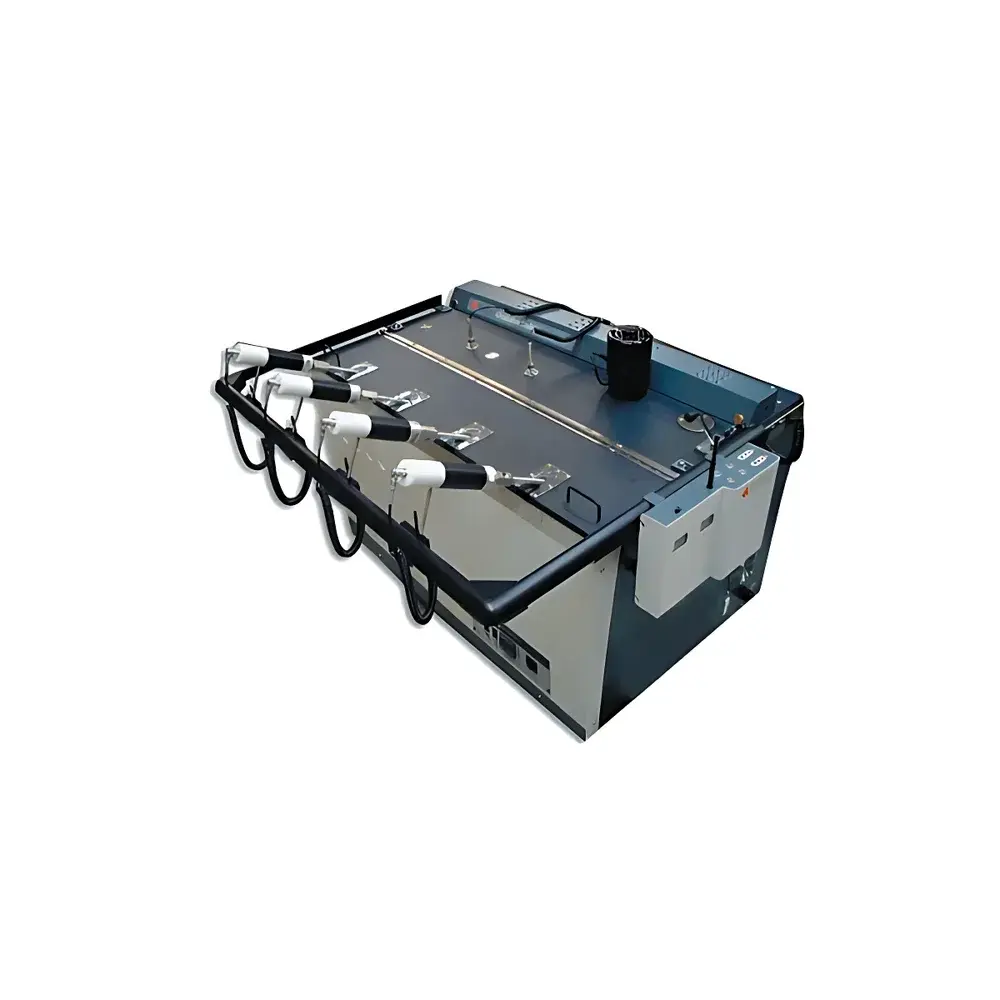
Koehler Oxidation Stability Tester (Rotating Pressure Vessel Oxidation Test, RPVOT)
| Brand | Koehler |
|---|---|
| Origin | USA |
| Model | K18200 Series Oxidation Stability Tester |
| Standards Compliance | ASTM D2112, D2272, D4742 |
| Operating Pressure | 90 psi (620 kPa) initial, up to 500 psi (3450 kPa) burst rating |
| Temperature Range | Ambient to 200 °C |
| Control Stability | ±0.02 °C |
| Rotation Speed | 100 rpm ± 1 rpm |
| Bath Capacity | 68 L (2-cell), 95 L (3-cell), 121 L (4-cell) |
| Heating Power | 0–2750 W (2/3-cell), 0–3750 W (4-cell) |
| Drive Motor | 0.5 hp continuous-duty, spherical bearing, integrated gear reduction |
| Bearing Type | PTFE-coated carbon fluoropolymer |
| Pressure Sensing | Direct-mount transducer on oxygen bomb |
| Safety | Auto-shutdown at >177 °C or >16.7 °C above setpoint |
| Software | Oxidata™ v5.x (Windows-based, FDA 21 CFR Part 11–ready audit trail, GLP-compliant data archiving) |
Overview
The Koehler Oxidation Stability Tester (K18200 Series) is a precision-engineered laboratory instrument designed for the Rotating Pressure Vessel Oxidation Test (RPVOT), a standardized accelerated oxidation aging method widely adopted in petroleum and lubricant quality assurance. Based on the fundamental principle of forced oxidative degradation under elevated temperature, pressure, and catalytic conditions, the system subjects lubricating oils — both virgin and in-service — to controlled thermo-oxidative stress within a sealed stainless-steel oxygen bomb. The test quantifies oxidation resistance by measuring the time required for a defined pressure drop (typically 25.4 kPa or 3.7 psi from the initial 620 kPa) during constant-temperature rotation. This induction period serves as a critical indicator of antioxidant depletion and base oil stability, directly correlating with service life prediction and formulation robustness.
Key Features
- Modular configuration options: 2-, 3-, or 4-cell rotating systems, enabling parallel testing while maintaining individual thermal and pressure integrity.
- Oxygen bomb constructed from high-conductivity 316 stainless steel, rated for 500 psi (3450 kPa) burst pressure, with integrated pressure relief membrane and magnetic alignment for rapid, leak-tight installation.
- Constant-velocity drive system delivering precise 100 rpm rotation via a 0.5 hp continuous-duty motor with spherical bearings and built-in gear reduction — engineered for long-term torque consistency and minimal vibration.
- Direct-coupled pressure transducers mounted on each bomb manifold eliminate pneumatic line losses and ensure traceable, high-fidelity pressure acquisition with sub-kPa resolution.
- Thermostatically controlled oxidation bath featuring ±0.02 °C stability across its full operating range (up to 200 °C), achieved through microprocessor-regulated heating elements and optimized fluid dynamics at 30° tilt angle.
- Robust safety architecture including dual overtemperature cutoffs: one triggered at 16.7 °C above setpoint, the second at absolute 177 °C — both independently wired and fail-safe.
- Exterior housing coated with industrial-grade polyurethane for corrosion resistance in laboratory environments handling aggressive solvents and oxidizing agents.
Sample Compatibility & Compliance
The K18200 series supports a broad range of petroleum-based fluids, including turbine oils, hydraulic fluids, engine oils (including gasoline and diesel variants), greases (after solvent dilution), and synthetic esters. It is fully compliant with ASTM D2112 (for steam turbine oils), ASTM D2272 (general-purpose RPVOT), ASTM D4742 (oxidation stability of diesel engine oils), and IP 229 (identical technical scope to D2272). All hardware and software components meet mechanical and electrical safety requirements per UL 61010-1 and IEC 61010-1. The system architecture supports GLP and GMP workflows through configurable user access levels, electronic signatures, and immutable audit trails — aligning with FDA 21 CFR Part 11 expectations for regulated laboratories.
Software & Data Management
Oxidata™ v5.x is a Windows-native application developed exclusively for RPVOT data acquisition and analysis. It provides real-time visualization of up to 12 independent pressure channels and 4 temperature inputs, with synchronized plotting of dP/dt curves, inflection point detection, and automated induction period calculation per ASTM algorithms. Raw data are stored in encrypted binary format with metadata stamping (operator ID, timestamp, calibration status, environmental log). Export functions support CSV, PDF, and XML formats for LIMS integration. Version-controlled firmware updates, password-protected method libraries, and configurable report templates facilitate method transfer between sites and regulatory submissions.
Applications
This instrument is routinely deployed in refinery QC labs, OEM lubricant development centers, third-party certification facilities, and military logistics depots. Typical use cases include batch release testing of new formulations, monitoring antioxidant package depletion in field-used oils, benchmarking competitive products, supporting OEM specification compliance (e.g., GEK 32568, Siemens TLV 9013), and generating data for ISO 55001 asset management programs. Its reproducibility (RSD < 2.5% across inter-laboratory studies per ASTM D2272) makes it suitable for arbitration testing and contract specifications.
FAQ
What is the primary measurement output of the RPVOT method?
The key result is the oxidation induction period — expressed in minutes — representing the elapsed time from test initiation until the recorded pressure drops by a specified threshold (e.g., 25.4 kPa) from its initial value.
Can the system accommodate non-standard sample volumes or alternative catalyst configurations?
Yes — while ASTM methods specify 50 mL oil + 2.0 g copper wire coil, the bomb geometry allows validated deviations for research applications; custom fixtures require prior verification against reference materials.
Is Oxidata™ compatible with modern Windows OS versions and networked lab environments?
Oxidata™ v5.x supports Windows 10 and 11 (64-bit), TLS 1.2+ secure communications, and domain-authenticated login; it operates seamlessly in virtualized environments when configured per Koehler’s IT deployment guide.
How often does the pressure transducer require recalibration?
Annual traceable calibration is recommended; Koehler provides NIST-traceable calibration certificates and on-site service contracts with documented uncertainty budgets per ISO/IEC 17025.
Does the system support remote monitoring or unattended operation?
Yes — with proper network configuration and firewall rules, Oxidata™ permits secure remote desktop access and scheduled start/stop via Windows Task Scheduler; all events are logged with operator attribution.




