
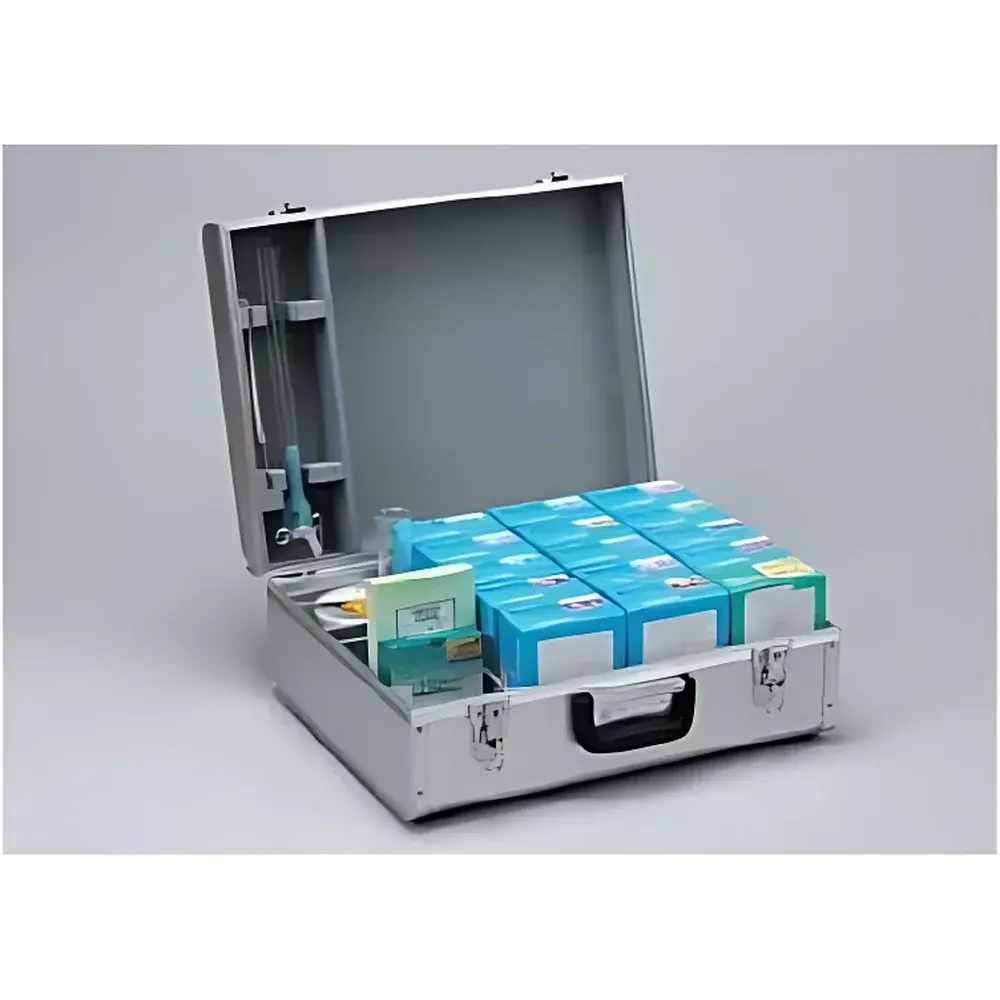
Kokuritsu WAS-E / WAS-D1/D2 / WAS-G1/G2 Portable Multi-Parameter Water Quality Analysis Kit
| Brand | Kokuritsu |
|---|---|
| Origin | Japan |
| Model | WAS-E / WAS-D1 / WAS-D2 / WAS-G1 / WAS-G2 |
| Instrument Type | Portable, Handheld Water Quality Analyzer |
| Measurable Parameters | pH (2.0–12.0), Conductivity (indirect via TDS/hardness), Total Hardness (0–500 mg/L as CaCO₃), Dissolved Oxygen (1–10 mg/L), COD (0–100 mg/L), NH₃-N (0.2–10 mg/L), NO₂⁻-N (0.006–1 mg/L), NO₃⁻-N (0.23–45 mg/L), PO₄³⁻ (0.05–10 mg/L), S²⁻/H₂S (0.1–5 mg/L), Cr⁶⁺ (0.05–2 mg/L), Cu (0.5–10 mg/L), Zn (0–10 mg/L), Fe (0.05–10 mg/L), Free Chlorine (0.1–5 mg/L), Free Cyanide (0.02–2 mg/L), Turbidity (1–5 NTU per JIS), Color (2–10 Hazen units per JIS), Temperature (0–50 °C), Transparency (0–30 cm), KMnO₄ Consumption (0–15 mg/L), E. coli & Total Bacterial Count (qualitative presence/absence ≥1 CFU/mL) |
| Compliance | JIS K 0102, JIS K 0109, JIS K 0117, JIS K 0120, JIS K 0121 |
Overview
The Kokuritsu WAS-E, WAS-D1/D2, and WAS-G1/G2 series are field-deployable, chemically based multi-parameter water quality analysis kits engineered for rapid, on-site assessment of environmental, potable, and aquacultural water matrices. Unlike electronic sensor-based analyzers, these systems rely on standardized colorimetric, titrimetric, and turbidimetric methods using pre-packaged, factory-calibrated reagent tablets or powders—ensuring methodological consistency across operators with minimal training. Each kit implements established Japanese Industrial Standards (JIS), including JIS K 0102 (general water testing methods), JIS K 0109 (determination of dissolved oxygen), JIS K 0117 (nitrogen compounds), JIS K 0120 (phosphorus), and JIS K 0121 (heavy metals), enabling direct comparability with regulatory reporting requirements in Japan and compatible jurisdictions. The modular architecture allows users to configure test panels from a validated pool of 57 distinct parameters, supporting adaptive monitoring strategies for wastewater discharge compliance, watershed health surveillance, drinking water safety verification, and aquaculture management.
Key Features
- Operator-agnostic methodology: Encapsulated reagents eliminate pipetting, dilution, and timing variability—each test follows a uniform “add-sample–mix–wait–compare” protocol using supplied color charts or semi-quantitative visual readers.
- Modular parameter selection: Users select from 57 JIS-validated test methods; no fixed panel—WAS-E emphasizes industrial effluent screening (e.g., COD, Cr⁶⁺, cyanide), WAS-D1/D2 focuses on surface water characterization (turbidity, color, KMnO₄ consumption, bacterial indicators), and WAS-G1/G2 targets aquaculture-critical parameters (NH₃-N, NO₂⁻-N, S²⁻, DO, hardness speciation).
- JIS-compliant optical reference standards: Turbidity (1–5 NTU) and color (2–10 Hazen) measurements adhere strictly to JIS-defined formazin-based calibration protocols; all visual comparisons use ISO 10523- and JIS K 0102-aligned chromatic scales.
- Field-rugged packaging: Reagent tablets are sealed in moisture-resistant aluminum pouches with desiccant; test vials, droppers, and comparator discs are housed in impact-resistant polymer cases rated IP54 for dust and splash resistance.
- No power or calibration required: Fully passive operation eliminates battery dependency, firmware updates, or sensor drift correction—ideal for remote deployment, emergency response, or resource-constrained laboratories.
Sample Compatibility & Compliance
The WAS kits accept raw, unfiltered water samples across diverse matrices: municipal tap water, river/lake surface water, activated sludge effluent, aquaculture pond water, and shallow groundwater. Sample volume requirements range from 5 mL (for colorimetric tests) to 100 mL (for titrations such as total hardness). All procedures comply with JIS methodologies applicable to environmental monitoring under Japan’s Water Pollution Control Law and align with internationally recognized equivalents—including EPA Method 365.2 (phosphate), ISO 5815-1:2019 (BOD-related DO), and ISO 6226:1981 (cyanide)—facilitating cross-border data acceptance. While not FDA 21 CFR Part 11 compliant (as no electronic records are generated), the kits support GLP-aligned documentation when paired with standardized field logbooks referencing JIS test numbers and lot-controlled reagent codes.
Software & Data Management
These kits operate without embedded software or digital interfaces. Data acquisition is manual: users record results directly onto printed JIS-formatted field sheets or laboratory notebooks, noting reagent lot numbers, sample IDs, ambient temperature, and observer initials. For digital integration, Kokuritsu provides optional Excel-based templates (compatible with Windows/macOS) that map JIS test codes to UN/ECE Water Quality Vocabulary terms and auto-calculate derived indices (e.g., carbonate alkalinity from pH + hardness). No cloud storage, API, or audit trail functionality is included—consistent with their design intent as low-infrastructure, traceable analog tools.
Applications
- Regulatory field screening: Rapid verification of industrial discharge against local limits for Cr⁶⁺, cyanide, and COD prior to submission to municipal treatment plants.
- Drinking water safety audits: On-the-spot confirmation of free chlorine residual, pH stability, and absence of nitrite spikes in distribution networks or rural wells.
- Aquaculture health management: Daily monitoring of unionized ammonia (calculated from pH + NH₃-N), nitrite accumulation, and dissolved oxygen saturation to preempt fish stress events.
- Watershed stewardship programs: Citizen science initiatives using WAS-D1/D2 for longitudinal tracking of turbidity, color, and bacterial indicators in urban streams or lake littoral zones.
- Emergency response triage: Post-flood or post-spill assessment of heavy metal leaching (Cu, Zn, Fe), sulfide generation, and oxidative demand in affected water bodies.
FAQ
Are reagent lot numbers traceable to JIS-certified validation reports?
Yes—each aluminum pouch carries a unique lot number linked to Kokuritsu’s internal JIS K 0102 Annex B validation dossier, including inter-laboratory precision data (RSD ≤8% at mid-range concentrations) and shelf-life testing under accelerated aging (40 °C/75% RH for 12 months).
Can WAS kits be used for ISO/IEC 17025-accredited testing?
They may serve as screening tools within accredited labs but cannot fulfill Method Validation requirements for definitive compliance reporting unless fully integrated into a documented measurement uncertainty budget per ISO/IEC 17025:2017 Clause 7.6—visual endpoint interpretation introduces operator-dependent uncertainty components.
What is the typical shelf life of unopened reagents?
Three years from manufacture date when stored at 5–30 °C and <60% RH; humidity exposure degrades azide-based reagents (e.g., for cyanide) and iodometric COD tablets most rapidly.
Do WAS-G1/G2 kits differentiate between carbonate and non-carbonate hardness?
Yes—M-hardness (methyl orange endpoint) measures total acidity-neutralizing capacity, while total hardness (EDTA titration) quantifies Ca²⁺/Mg²⁺; the ratio supports alkalinity speciation per APHA Standard Methods 2320 B.
Is there a documented correlation between WAS turbidity readings and ISO 7027-compliant instruments?
JIS turbidity units (NTUJIS) show strong linear correlation (R² >0.99) with ISO 7027 Nephelometric Turbidity Units (NTU) for formazin standards below 10 NTU, though scattering geometry differences introduce ±0.3 NTU bias above 5 NTU.
Related Products







