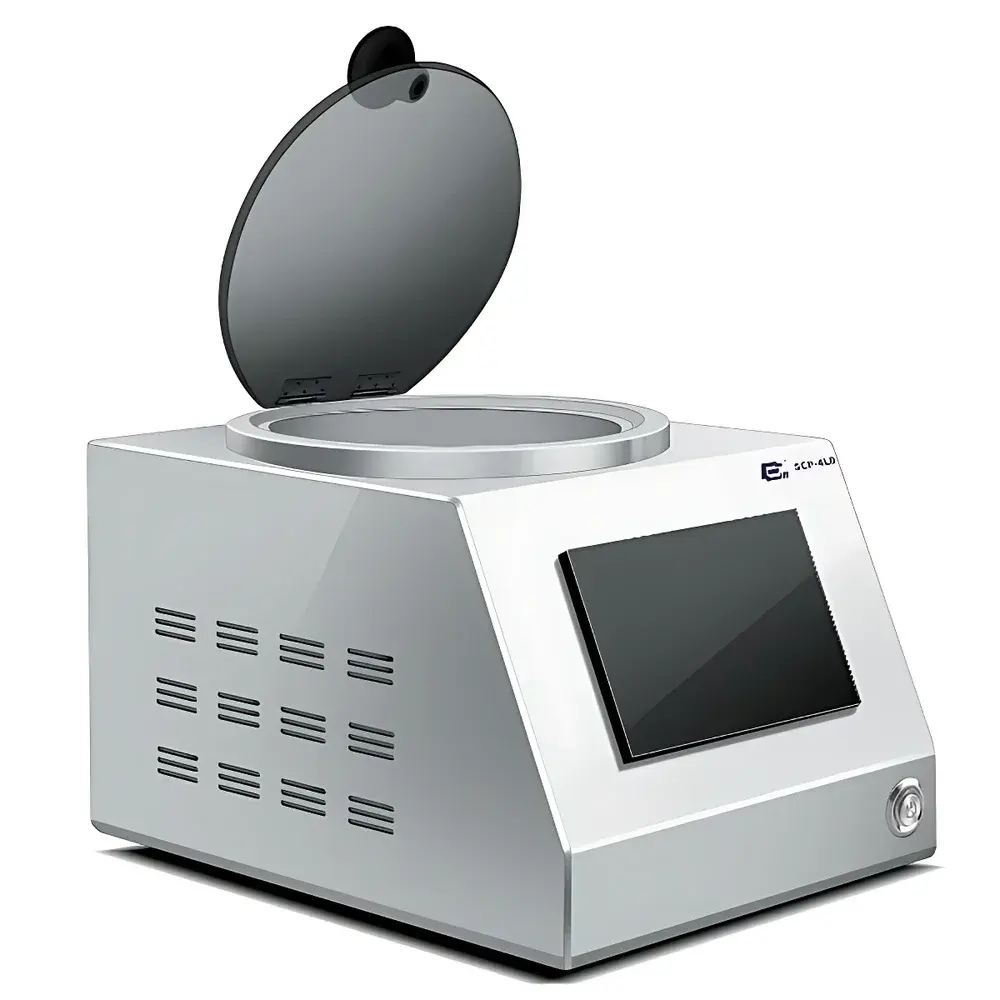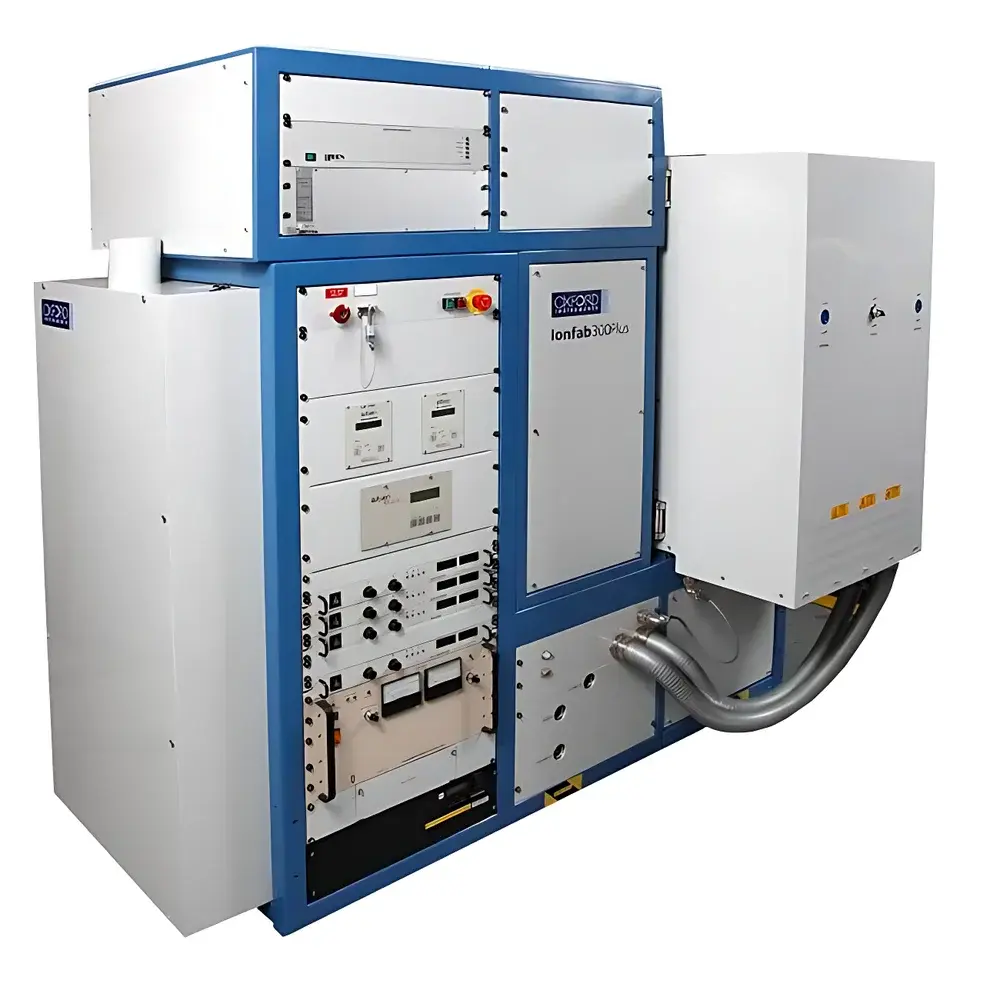
Korea Vacuum PECVD/RIE Integrated Plasma Enhanced Chemical Vapor Deposition and Reactive Ion Etching System
| Brand | Korea Vacuum |
|---|---|
| Origin | South Korea |
| Model | PECVD/RIE |
| Heating Method | Hot-Wall |
| Application Domain | Semiconductor Fabrication |
| Gas Channels | 8 (4 for PECVD, 4 for RIE) |
| Deposited Films | SiOₓ, SiNₓ |
| Base Pressure | 1×10⁻⁷ Torr |
| Operating Pressure Range (PECVD) | 1×10⁻³ Torr |
| Operating Pressure Range (RIE) | 0.02–500 mTorr |
| Maximum Substrate Size | 8-inch (200 mm) |
| RF Source Power | 600 W, 13.56 MHz |
| RF Bias Power | 300 W, 13.56 MHz |
| Platen Temperature | Up to 400 °C |
| Pumping System | 200 L/sec corrosion-resistant turbomolecular pump (Pfeiffer TPH261PC) + BOC Edwards RV12 roughing pump |
| Gas Distribution | Showerhead-type for both PECVD and RIE |
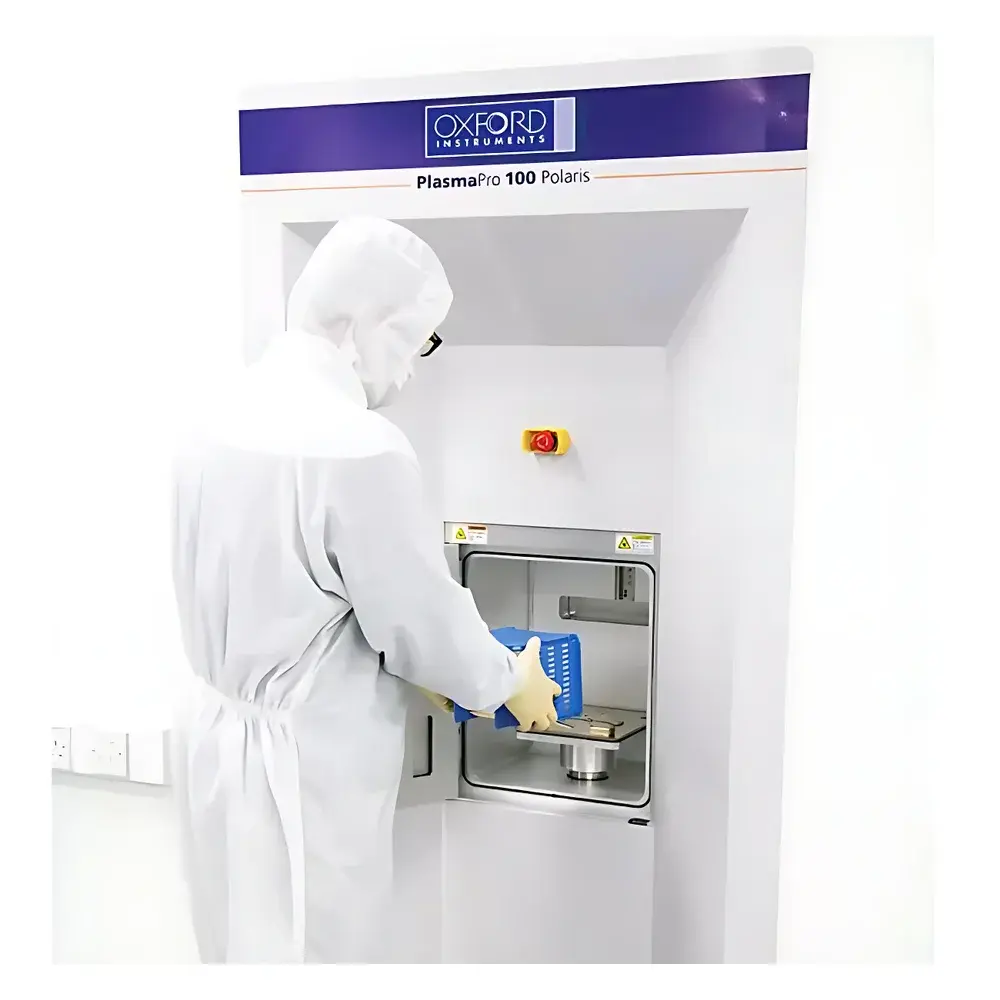
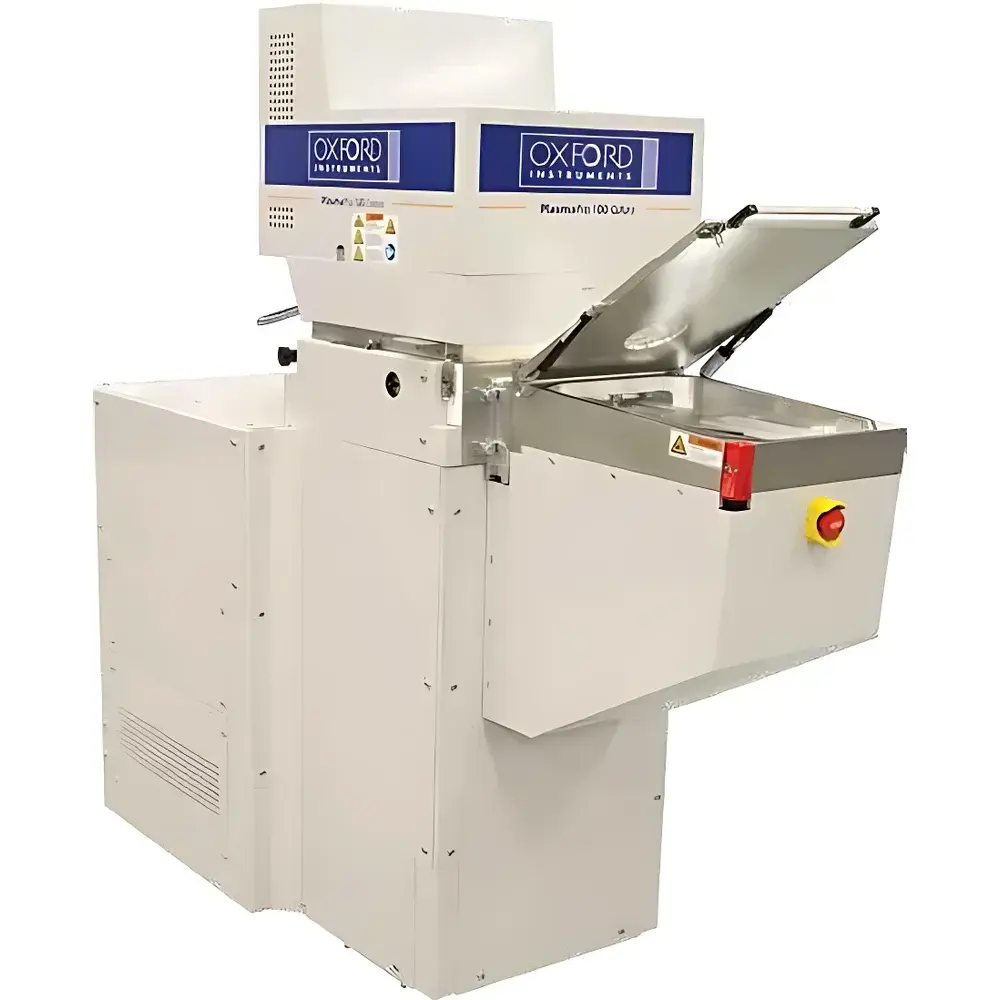
| Substrate Handling | Manual loading with pneumatic top-hinged lid |
| Vacuum Gauges | Baratron capacitance manometer (RIE), BOC Edwards wide-range gauge (PECVD & RIE) |
| MFC Count | 4 (PECVD), 3 (RIE) |
| Cooling | Water-cooled platen and electrodes |
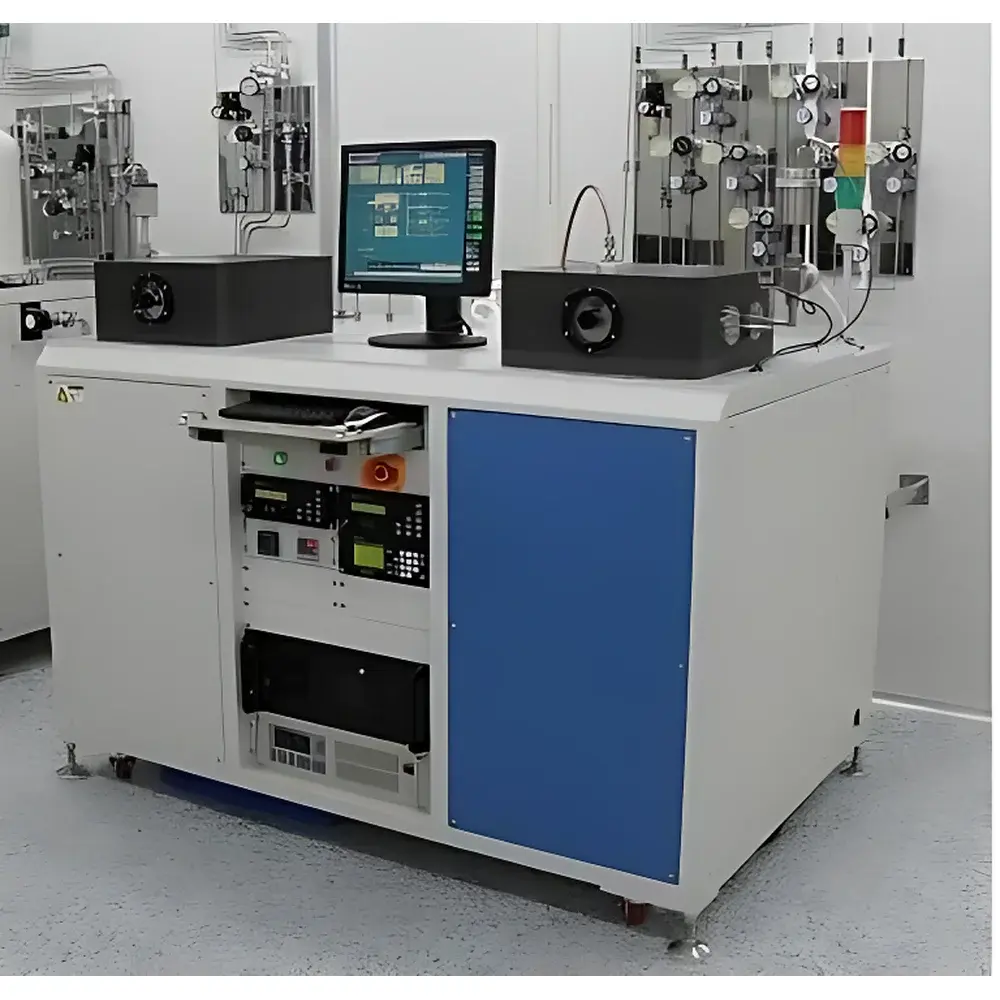
| Control Interface | LabVIEW-based PC control with automated pressure regulation and process sequencing |
Overview
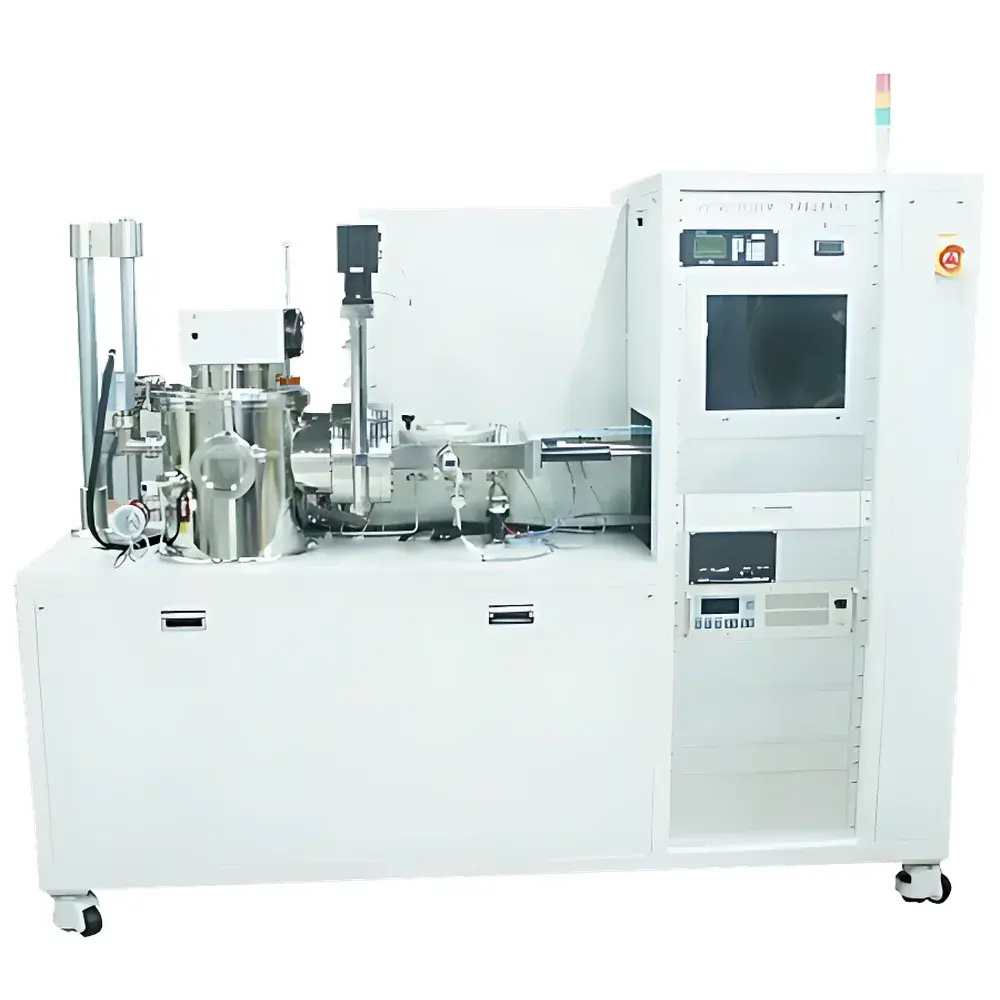
The Korea Vacuum PECVD/RIE Integrated System is a dual-mode, computer-controlled plasma processing platform engineered for precision thin-film deposition and anisotropic etching in semiconductor R&D and pilot-line fabrication. It combines two complementary plasma processes—Plasma Enhanced Chemical Vapor Deposition (PECVD) and Reactive Ion Etching (RIE)—within a single vacuum-compatible cabinet architecture, minimizing footprint while maximizing process interoperability. The PECVD module operates on the principle of low-pressure radiofrequency (13.56 MHz) plasma activation, enabling thermally sensitive substrate processing at temperatures up to 400 °C. Precursor gases—including silane (SiH₄), ammonia (NH₃), nitrogen oxide (N₂O), and oxygen (O₂)—are dissociated in the plasma to form stoichiometric SiOₓ and SiNₓ films with high uniformity, low hydrogen content, and controllable stress. The RIE module utilizes directional ion bombardment under controlled DC self-bias (up to −400 V) to achieve high-aspect-ratio, chemically selective etching—particularly suited for silicon nitride mask patterning, oxide trench definition, and hard-mask removal. Both modules share a common ultra-high-vacuum environment maintained below 1×10⁻⁷ Torr via a 200 L/sec Pfeiffer TPH261PC turbomolecular pump backed by a BOC Edwards RV12 mechanical pump, ensuring minimal contamination and repeatable process history.
Key Features
- Integrated dual-chamber design: Independent but co-located PECVD and RIE modules sharing vacuum infrastructure and control software.
- Hot-wall heating architecture with water-cooled stainless-steel platen (8-inch diameter) and adjustable source-to-substrate spacing (2 inches standard, field-adjustable).
- Showerhead-type RF plasma source (8-inch diameter) for uniform plasma generation and enhanced film conformality across 200 mm wafers.
- Four-channel mass flow controller (MFC) system for PECVD (NH₃, 2% SiH₄/Ar, O₂, N₂O) and three-channel MFC system for RIE (Cl₂, BCl₃, N₂), all with VCR fittings and Nupro isolation valves.
- Real-time dynamic pressure control using Baratron capacitance manometers (RIE) and BOC Edwards wide-range gauges (PECVD & RIE), enabling stable operation from 0.02 mTorr to 500 mTorr (RIE) and 1×10⁻³ Torr (PECVD).
- LabVIEW-based control interface supporting recipe-driven automation, parameter logging, alarm management, and audit-trail-capable event history—compatible with GLP/GMP documentation requirements.
- N₂ purge lines integrated into chamber walls and gas manifolds to prevent residual precursor cross-contamination between runs.
Sample Compatibility & Compliance
The system accommodates standard 100 mm, 150 mm, and 200 mm (8-inch) silicon wafers, quartz substrates, and ceramic carriers. Substrates are manually loaded through a pneumatically actuated top-hinged lid with a 5-inch quartz viewport for real-time plasma observation. All wetted components—including chamber body (stainless steel for PECVD, aluminum for RIE), showerheads, and electrodes—are electropolished and passivated to minimize particle generation and metal ion outgassing. The vacuum architecture complies with ISO 27400 (cleanroom-compatible pumping) and meets ASTM F2431-04 standards for residual gas analysis in semiconductor tool qualification. Process repeatability is validated per SEMI E10-03 guidelines, with film thickness uniformity ≤±2.5% (1σ) over 200 mm wafers and etch rate repeatability ≤±3.0% (1σ) across 25 consecutive runs.
Software & Data Management
Control and monitoring are implemented via a Windows-based LabVIEW application with modular VI architecture. The software supports full recipe definition—including gas sequence timing, RF power ramping, temperature ramp profiles, pressure setpoints, and MFC calibration offsets. All operational parameters are timestamped and logged to SQL Server databases with configurable retention policies. Audit trails record user login/logout events, parameter modifications, alarm triggers, and emergency stops—fully compliant with FDA 21 CFR Part 11 requirements when deployed with electronic signature modules and role-based access controls. Export functions support CSV, XML, and PDF formats for integration into MES (Manufacturing Execution Systems) and SPC (Statistical Process Control) platforms.
Applications
- Deposition of stoichiometric silicon nitride (SiNₓ) gate dielectrics and etch-stop layers in CMOS process flows.
- Growth of low-stress silicon dioxide (SiOₓ) interlayer dielectrics for MEMS encapsulation and optical waveguide cladding.
- Formation of hydrogenated amorphous silicon (a-Si:H) and microcrystalline silicon (μc-Si) for photovoltaic device research.
- Anisotropic etching of SiO₂ and SiNₓ using Cl₂/BCl₃ chemistry for shallow trench isolation (STI) and gate stack patterning.
- Hard-mask trimming and sidewall passivation in advanced node lithography development.
- Surface functionalization of polymer and metal substrates for biosensor interface engineering.
FAQ
What vacuum level is required before initiating plasma ignition?
A base pressure of ≤1×10⁻⁷ Torr must be achieved and stabilized for ≥5 minutes prior to RF ignition, verified by both Baratron and wide-range gauges.
Can the system deposit films other than SiOₓ and SiNₓ?
Yes—by introducing compatible precursors (e.g., TEOS for SiO₂, TDMAT for TiN), the PECVD module supports deposition of Al₂O₃, TiO₂, and carbon-based DLC films, subject to gas compatibility and chamber conditioning.
Is remote diagnostics or service support available?
The system includes Ethernet-enabled remote access capability for secure technician support, firmware updates, and diagnostic log retrieval—configured per customer IT security policies.
What cooling infrastructure must the user provide?
A closed-loop deionized water supply delivering ≥3 L/min at 18–22 °C and ≤3 bar inlet pressure is required for platen and electrode cooling; chiller units are not included.
Does the system meet electromagnetic compatibility (EMC) standards for cleanroom installation?
Yes—it conforms to CISPR 11 Group 2 Class A emission limits and IEC 61000-4-2/3/4/6 immunity standards, with optional RF shielding kits available for Class 100 environments.