
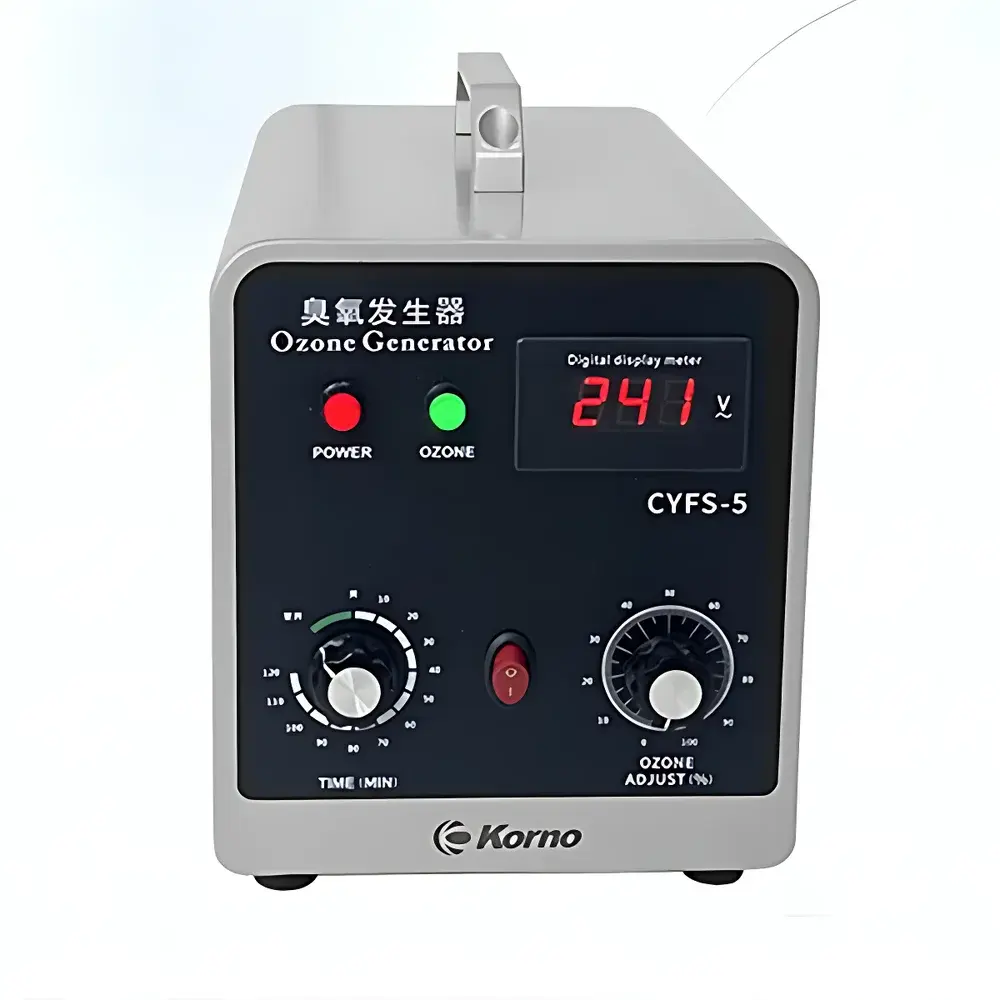
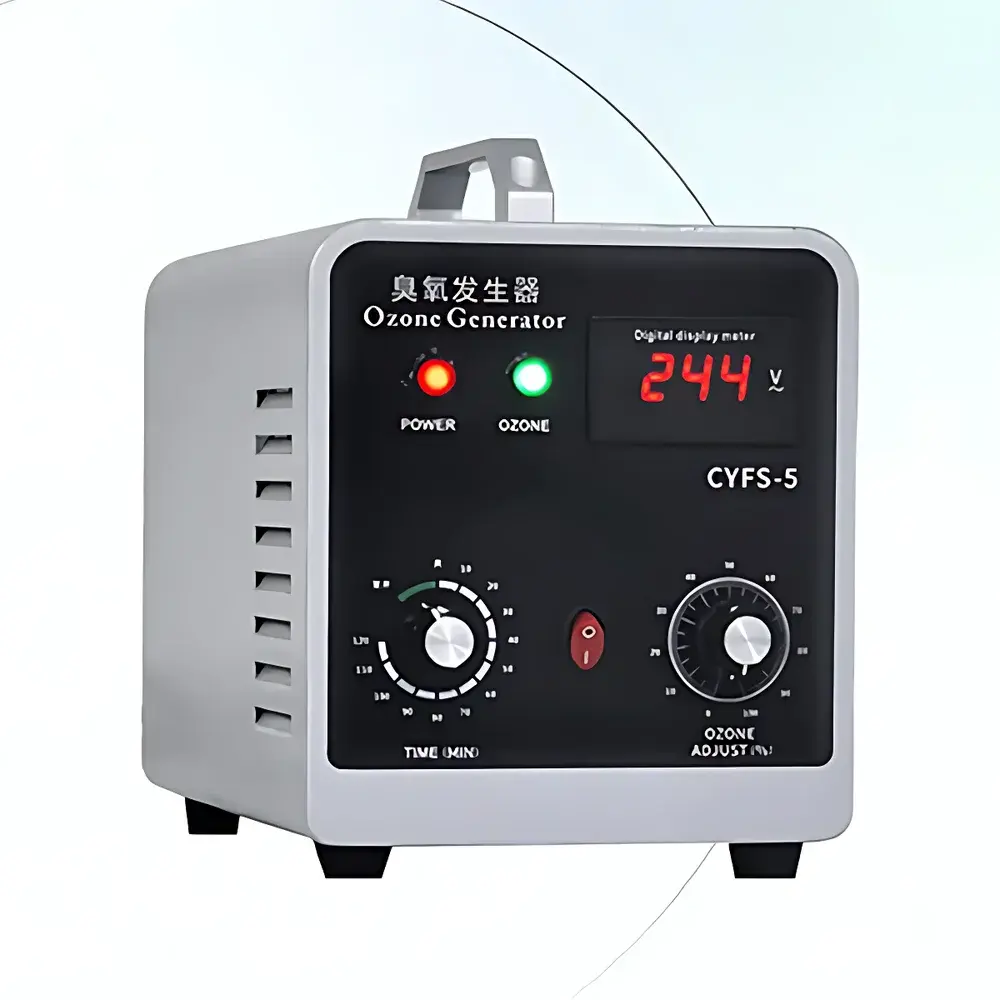
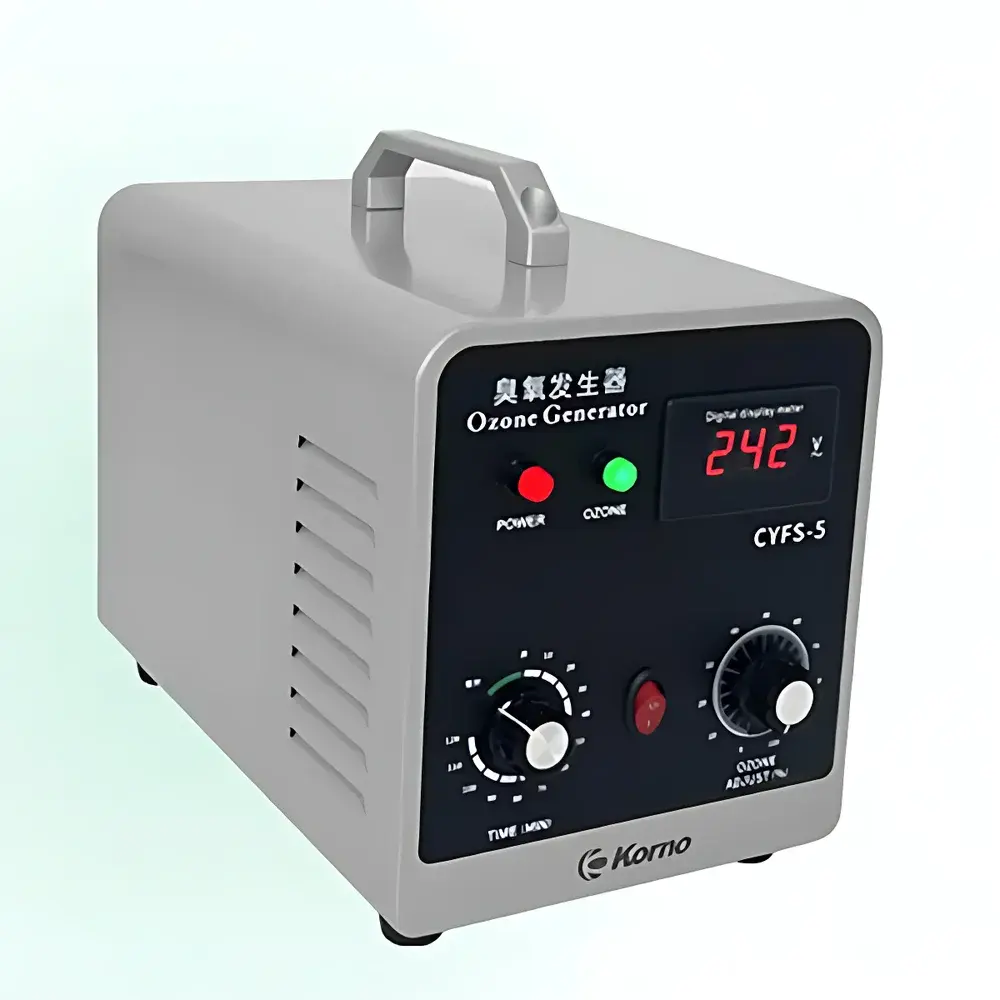
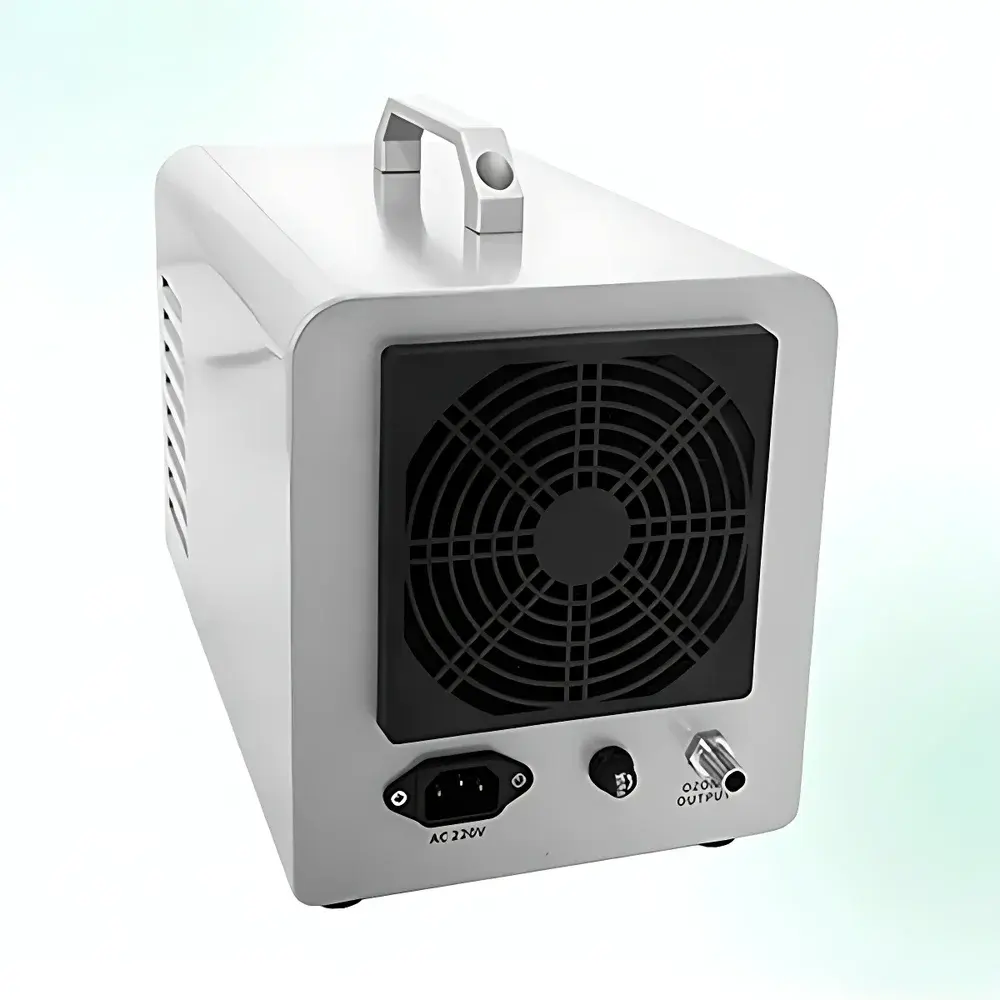
Korno GF-3G-A / GF-5G-A Portable Ozone Generator
| Brand | Korno |
|---|---|
| Model | GF-3G-A / GF-5G-A |
| Ozone Output | 3 g/h or 5 g/h |
| Power Consumption | 30 W / 50 W |
| Air Intake Flow | 4–6 L/min / 6–10 L/min |
| Cooling | Forced-air |
| Input Voltage | 220 V AC, 50 Hz |
| Operating Environment | Dry, ventilated, <40 °C |
| Ozone Concentration at Outlet | Adjustable 10–15 mg/L |
| Outlet Pressure | 0.02 MPa |
| Outlet Fitting | Bayonet quick-connect (10×8 mm) |
| Housing Material | Stainless steel (corrosion- and water-resistant) |
| Dimensions (W×D×H) | 180×200×300 mm |
| Weight | 2.0 kg / 2.5 kg |
| Timer Range | 0–120 min, manual preset |
| Ozone Regulation | Continuous 10–100% output control |
| Application Coverage Area | 20–80 m² |
| Gas Source | Ambient air |
| Compliance | Domestic disinfection product registration (China) |
Overview
The Korno GF-3G-A and GF-5G-A are compact, hand-carried ozone generators engineered for on-site, flexible disinfection and oxidation applications in controlled environments. These units operate on the corona discharge principle—where high-voltage electrical fields dissociate oxygen molecules (O₂) from ambient air to form atomic oxygen (O), which recombines into ozone (O₃). Designed for laboratory, educational, agricultural, and light commercial use, they deliver precise, adjustable ozone output without requiring external oxygen supply or complex gas handling infrastructure. Their portable architecture enables rapid deployment across multiple zones—such as biosafety cabinets, small-scale culture rooms, animal housing enclosures, or post-experiment decontamination areas—while maintaining stable ozone generation under variable ambient conditions (≤40 °C, low humidity). Unlike large fixed-installation systems, these units integrate safety-critical features—including pressure-limited outlet design, thermal cut-off protection, and sealed stainless-steel housings—to ensure operational reliability during intermittent or scheduled operation.
Key Features
- Two calibrated output variants: GF-3G-A (3 g/h nominal ozone output) and GF-5G-A (5 g/h nominal ozone output), each optimized for distinct coverage requirements and regulatory load thresholds.
- Full-range ozone concentration modulation (10–100%) via front-panel control, enabling fine-tuned dosing for sensitive biological samples or odor-abatement protocols.
- Integrated mechanical timer with 0–120 minute programmable interval, supporting unattended cyclic operation while complying with exposure safety limits defined in OSHA PEL (0.1 ppm TWA) and NIOSH REL (0.1 ppm ceiling).
- Electropolished stainless-steel enclosure (AISI 304 grade) providing IP54-rated ingress protection—resistant to corrosion from ozone-rich atmospheres, condensation, and routine cleaning agents.
- Passive forced-air cooling system with thermally shielded high-voltage transformer and ceramic dielectric barrier—ensuring consistent discharge efficiency and extended electrode service life.
- Standardized bayonet-style ozone outlet (10×8 mm) compatible with silicone, EPDM, or PTFE-lined tubing; rated for continuous operation at 0.02 MPa backpressure.
Sample Compatibility & Compliance
These generators are intended for gaseous-phase application only—suitable for air sterilization, surface decontamination of non-porous equipment, and aqueous ozonation when coupled with venturi injectors or bubble diffusers (not included). They are not designed for direct immersion or high-humidity (>60% RH) environments without pre-drying. The devices comply with China’s Disinfection Product Registration Requirements (WS 628–2018) and meet electromagnetic compatibility standards per GB/T 18268.1–2010. While not certified to ISO 14644 cleanroom classifications, their verified log₄ microbial reduction (≥99.99% against Staphylococcus aureus, Aspergillus niger, and MS2 bacteriophage under standardized chamber testing) supports alignment with GMP Annex 1 environmental monitoring guidance for Grade C/D spaces. Users must implement local exhaust ventilation and ozone destruct units where residual O₃ accumulation exceeds occupational exposure limits.
Software & Data Management
The GF-3G-A and GF-5G-A operate as standalone hardware with no embedded firmware, network interface, or digital data logging capability. All operational parameters—including runtime, output level, and cycle count—are manually set and monitored via analog controls and LED indicators. This architecture eliminates cybersecurity risks associated with connected instrumentation and ensures deterministic behavior under GLP/GMP audit conditions. For traceability, laboratories may pair the unit with external time-stamped environmental loggers (e.g., ozone analyzers per ISO 11133 Annex D, temperature/humidity sensors) and document settings in paper-based or validated electronic lab notebooks (ELN) compliant with 21 CFR Part 11 requirements.
Applications
- Post-use decontamination of fume hoods, laminar flow workstations, and incubator interiors prior to maintenance.
- Odor and VOC abatement in animal holding facilities (poultry, swine, companion animal clinics), including formaldehyde and ammonia oxidation.
- Pre-sterilization treatment of hydroponic reservoirs, aquaculture tanks, and mycological growth chambers.
- Emergency pathogen mitigation in teaching labs following spills involving non-enveloped viruses or spore-forming bacteria.
- Air quality remediation in archival storage rooms, library stacks, and museum conservation labs to inhibit mold colonization on cellulose-based materials.
- Validation support for ozone-based cleaning SOPs—particularly where chlorine-free alternatives are mandated by institutional biosafety committees.
FAQ
Can this generator be used for water disinfection directly?
No. It produces gaseous ozone only. For aqueous application, a dedicated ozone dissolution system (e.g., venturi injector + contact tank) must be added externally.
Is ozone concentration measured in real time?
No. The unit provides no built-in ozone sensor. External UV-absorption or electrochemical ozone analyzers are required for quantitative verification.
What maintenance is required?
Quarterly visual inspection of the ceramic discharge tube and air filter; annual replacement of the activated carbon pre-filter (part no. K-FIL-AC01) recommended under continuous use.
Does it meet FDA or EU CE requirements?
It holds Chinese disinfection product registration but lacks FDA 510(k) clearance or CE marking under EU MDR 2017/745. Its use in regulated pharmaceutical manufacturing requires site-specific validation.
Can it operate continuously for 24 hours?
Not recommended. Duty cycle should not exceed 60 minutes ON / 30 minutes OFF to maintain thermal stability and electrode longevity.
Related Products



