
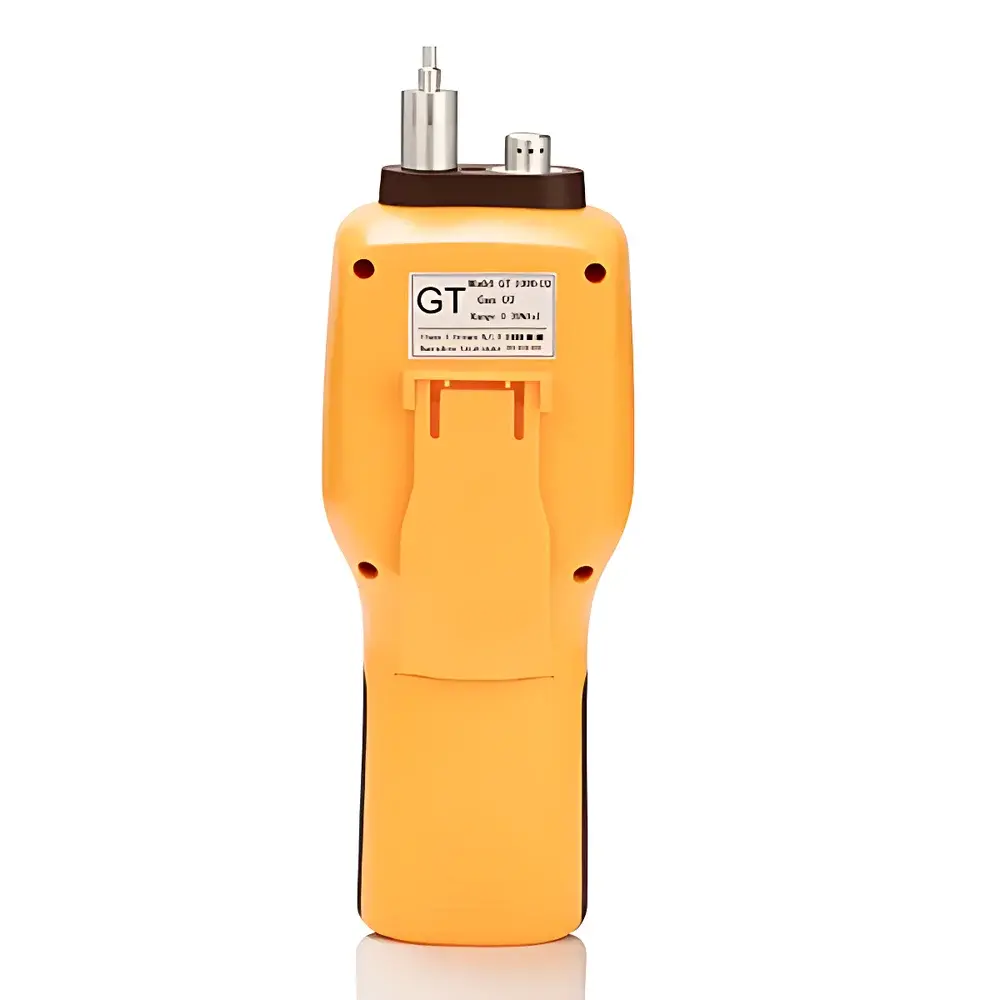
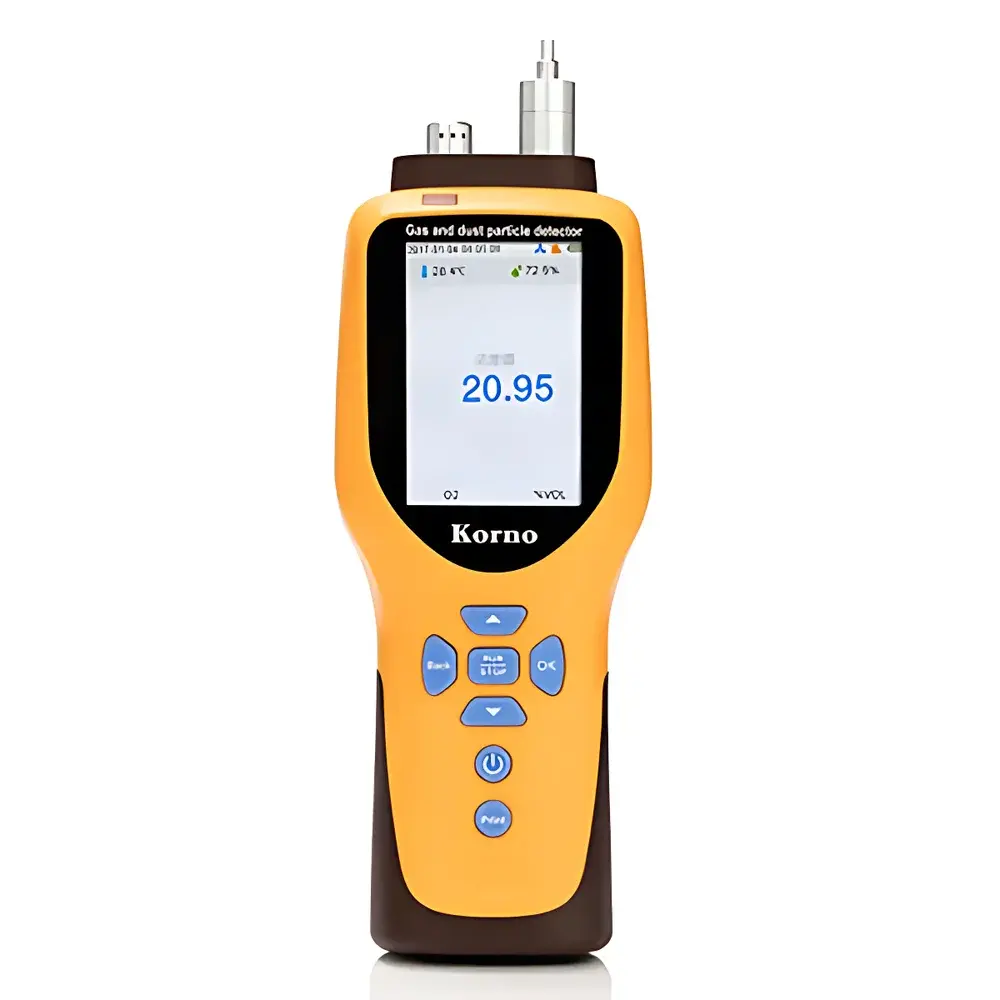
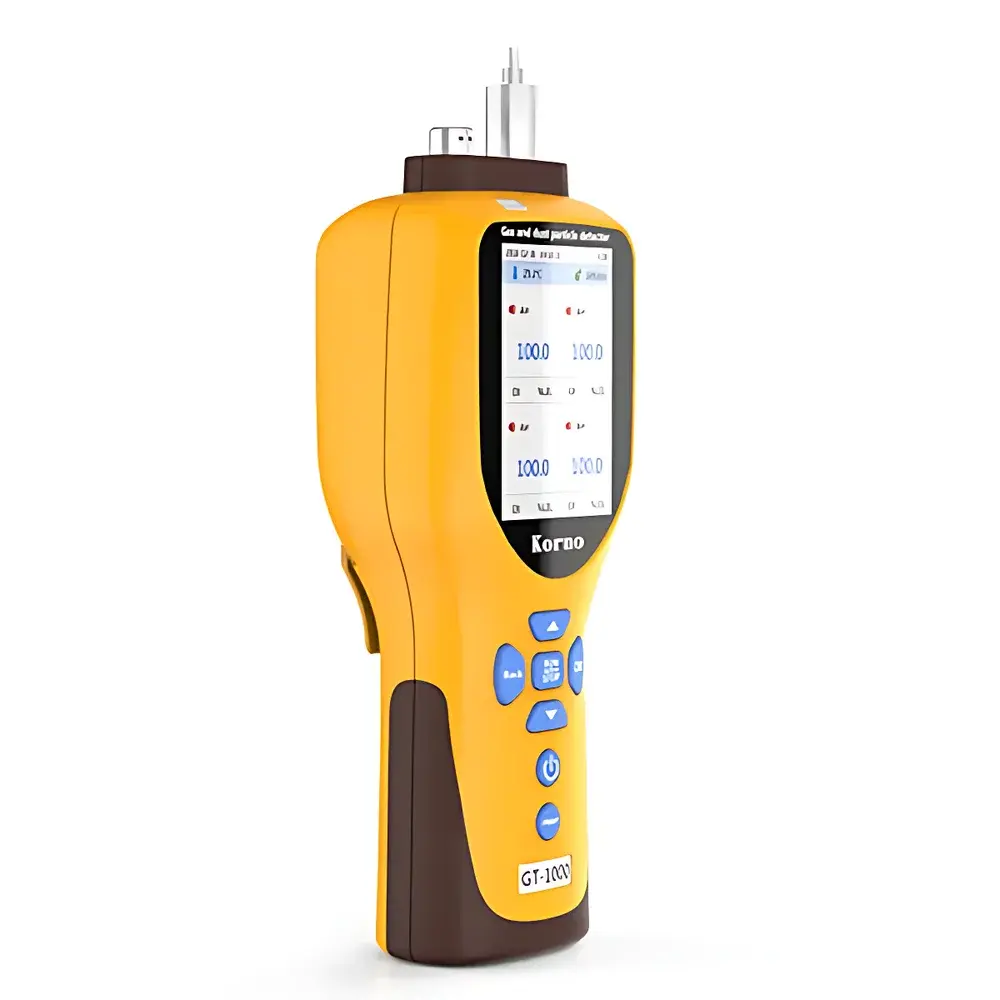
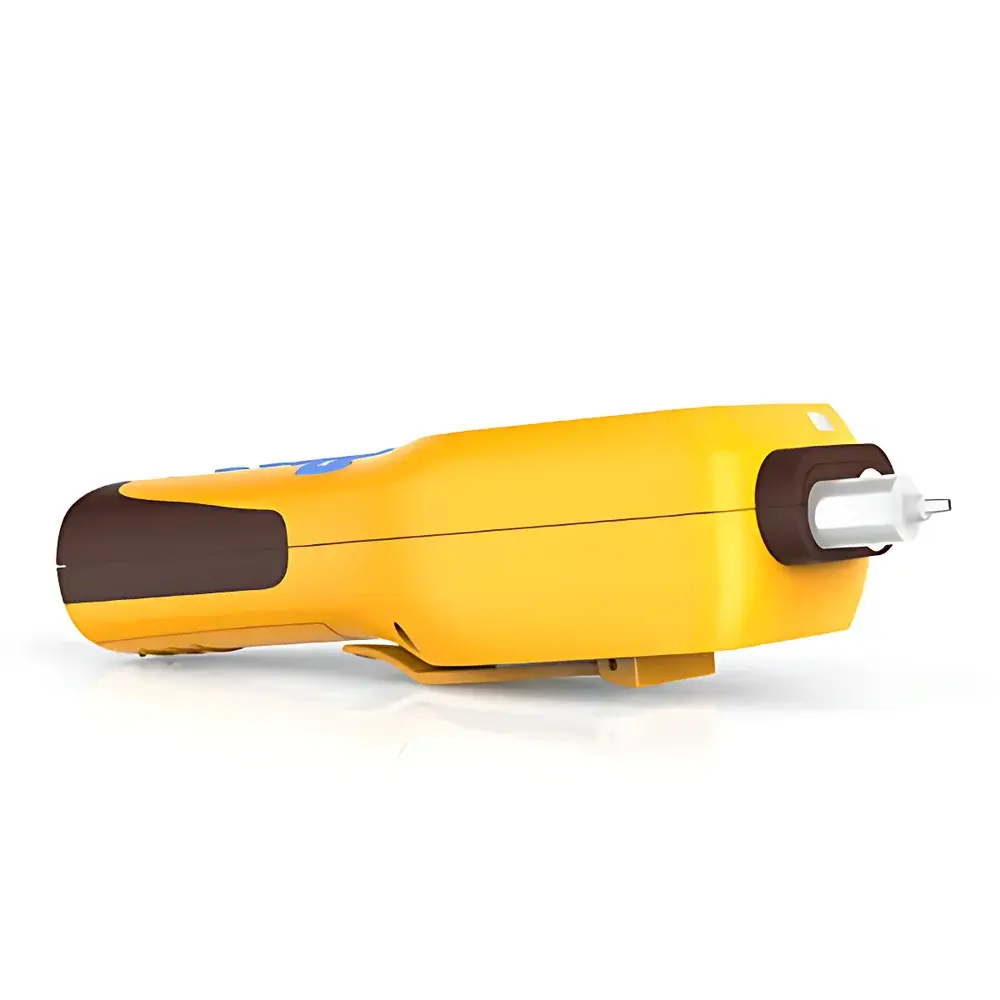
Korno GT-1000-THT Portable Tetrahydrothiophene (THT) Gas Detector
| Brand | Korno |
|---|---|
| Origin | Guangdong, China |
| Manufacturer Type | OEM/ODM Manufacturer |
| Country of Origin | China |
| Model | GT-1000-THT |
| Detection Principle | Electrochemical |
| Form Factor | Portable, Pump-Suction |
| Measurement Range | 0–20 ppm / 0–50 ppm / 0–100 ppm (selectable) |
| Resolution | 0.01 ppm (0–100 ppm range) |
| Accuracy | ≤ ±3% FS (dependent on sensor batch and calibration status) |
| Linearity Error | ≤ ±2% FS |
| Zero Drift | ≤ ±2% FS |
| Repeatability | ≤ ±2% FS |
| Response Time (T90) | ≤ 20 s |
| Recovery Time | ≤ 20 s |
| IP Rating | IP67 |
| Explosion Protection Certification | Ex ib IIB T4 Gb (Certificate No.: CLEx25.9119) |
| Conformity | GB/T 3836.1–2021 & GB/T 3836.4–2021 |
| Operating Temperature | –20 °C to +50 °C |
| Operating Humidity | ≤ 95% RH (non-condensing) |
| Power Supply | DC 3.7 V, 3800 mAh or 7200 mAh rechargeable polymer battery |
| Dimensions | 257 × 90 × 65 mm (L×W×H) |
| Weight | 0.5 kg (net) |
Overview
The Korno GT-1000-THT is a portable, pump-suction electrochemical gas detector engineered for reliable, real-time quantification of tetrahydrothiophene (THT) in industrial, municipal, and field-deployed environments. THT is widely used as an odorant in natural gas distribution systems due to its low odor threshold (≈0.003 ppm) and chemical stability; accurate detection is therefore critical for leak verification, odorant injection system validation, and occupational exposure monitoring per OSHA PEL (1 ppm TWA) and ACGIH TLV (0.5 ppm TWA). The GT-1000-THT employs a high-selectivity, temperature-compensated electrochemical sensor with proprietary signal conditioning firmware, delivering stable baseline performance across variable ambient conditions. Its microcontroller-based architecture integrates dual-stage analog filtering, digital zero compensation, and adaptive gain control—features validated through internal algorithm patents and verified under repeated thermal cycling (–20 °C to +50 °C). Unlike diffusion-mode detectors, the integrated miniature diaphragm pump ensures consistent sample delivery at controlled flow rates (≥300 mL/min), minimizing boundary-layer effects and enabling representative measurement in low-airflow or confined spaces.
Key Features
- Electrochemical sensing platform optimized specifically for THT with cross-sensitivity mitigation against H2S, SO2, and common hydrocarbons
- Pump-suction sampling system with programmable flow control and automatic suction fault diagnostics
- 3.5-inch industrial-grade TFT color display with touch-enabled UI for real-time concentration graphs, trend logging, and multi-parameter overlay (optional temperature/humidity)
- On-device data management: stores up to 30,800 timestamped records (8-channel equivalent); expandable via removable 32 GB microSD card
- Configurable detection modes: continuous real-time monitoring, scheduled interval sampling (1–24 h intervals), and event-triggered capture
- Robust mechanical design compliant with IP67 ingress protection and certified intrinsically safe per GB/T 3836.4–2021 (Ex ib IIB T4 Gb)
- Modular sensor architecture supporting up to seven simultaneous gas channels—including optional PM2.5 laser particle counter (0.3 µm detection threshold) and environmental sensors
Sample Compatibility & Compliance
The GT-1000-THT is validated for use in natural gas infrastructure maintenance, biogas upgrading facilities, LNG terminal operations, and municipal utility inspection workflows. It meets mandatory requirements for equipment deployed in Zone 1 and Zone 2 hazardous areas per Chinese national standards GB/T 3836.1–2021 and GB/T 3836.4–2021. While not CE-marked or ATEX-certified out-of-box, its intrinsic safety design allows adaptation to IECEx and UL 913 Class I Division 1 frameworks with documented third-party assessment. Sensor response characteristics comply with ISO 16000-25:2016 guidelines for volatile sulfur compound detection in air, and measurement uncertainty budgets align with ISO/IEC 17025 traceability principles when calibrated using NIST-traceable THT standard gases (e.g., 10 ppm in nitrogen, ±2% certified uncertainty). Routine calibration verification is supported via built-in span-check functionality and external bump-test adapters.
Software & Data Management
Data acquisition and reporting are managed through embedded firmware v3.2+ featuring audit-trail-capable logging (user ID, timestamp, calibration events, alarm triggers). Raw and processed data export is supported via USB-C interface in CSV format, compatible with LIMS integration and regulatory reporting templates (e.g., EPA Method TO-15 derivatives). Optional Bluetooth 5.0 module enables wireless synchronization with Korno’s CloudLink™ platform—supporting remote fleet configuration, over-the-air firmware updates, and automated compliance dashboards aligned with GLP documentation requirements. All stored datasets include metadata headers indicating sensor serial number, calibration date, environmental compensation flags, and battery voltage at time of capture—essential for FDA 21 CFR Part 11-compliant environments when paired with user-authenticated login protocols.
Applications
- Verification of THT dosage consistency downstream of odorant injection skids in city gate stations
- Leak surveying along buried gas mains using grid-based walkover mapping with GPS-tagged readings
- Occupational hygiene monitoring during pipeline maintenance, valve replacement, or regulator servicing
- Validation of odorant removal efficiency in activated carbon filters used in biogas upgrading units
- Field calibration support for fixed THT analyzers (e.g., GC-PID or FTIR systems) via reference-point comparison
- Emergency response triage in suspected gas release incidents where rapid qualitative/quantitative assessment informs evacuation thresholds
FAQ
What is the recommended calibration frequency for the GT-1000-THT in routine field use?
For compliance with ISO 17025 and internal QA protocols, full two-point (zero/span) calibration is advised every 30 days or prior to each deployment cycle—whichever occurs first. Bump testing with 5 ppm THT standard gas is required before each shift.
Can the instrument operate continuously while charging?
Yes. The device supports hot-swap operation: it remains fully functional during USB-C charging, with uninterrupted logging and alarm activation.
Is the PM2.5 particle sensor interchangeable without recalibration?
Yes. The laser scattering module uses factory-characterized Mie curve coefficients stored in EEPROM; no field recalibration is needed upon replacement.
Does the GT-1000-THT support Modbus RTU output for SCADA integration?
Not natively. However, optional RS-485 expansion modules (sold separately) enable Modbus RTU communication at 9600 bps with configurable register mapping.
How does the instrument handle high-humidity environments above 90% RH?
The IP67-rated housing and hydrophobic inlet filter mitigate condensation ingress, but prolonged exposure >95% RH may require optional Nafion® dry-gas pre-treatment module (part no. GT-DP-01) to prevent sensor electrolyte dilution.
Related Products







