
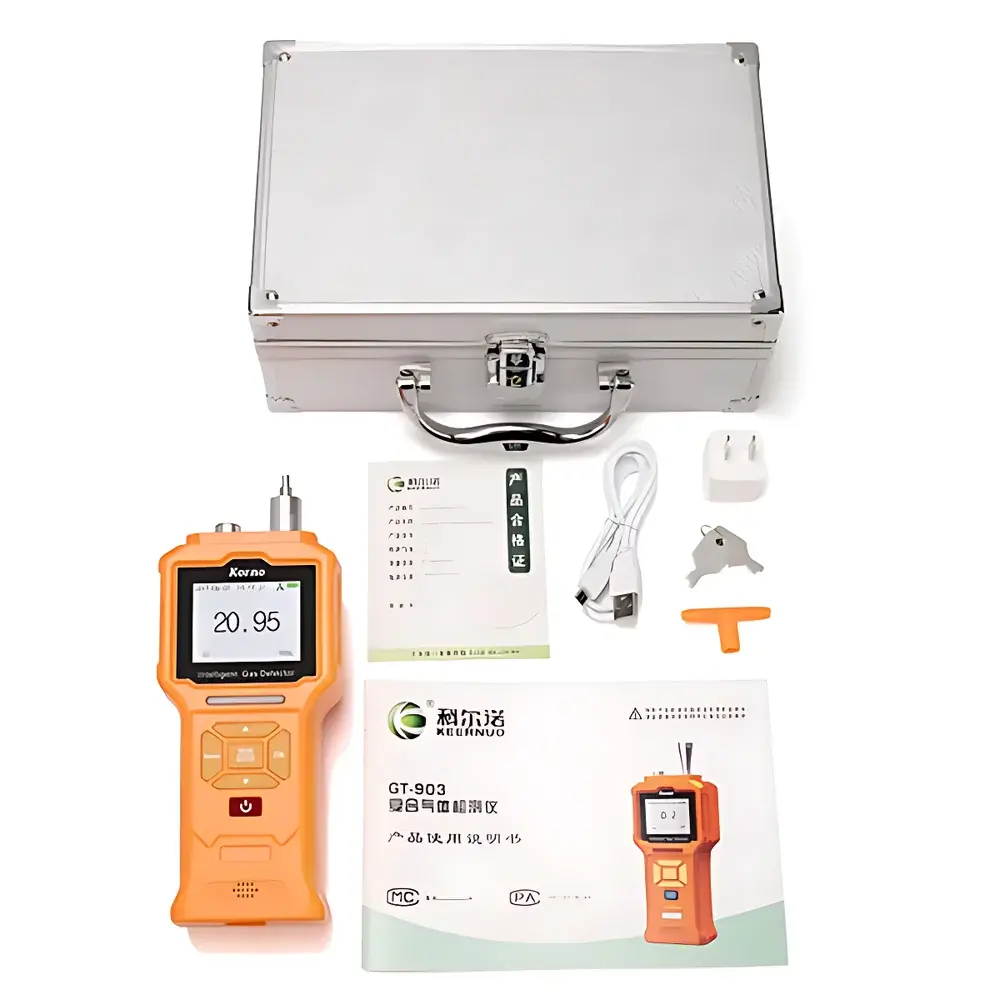
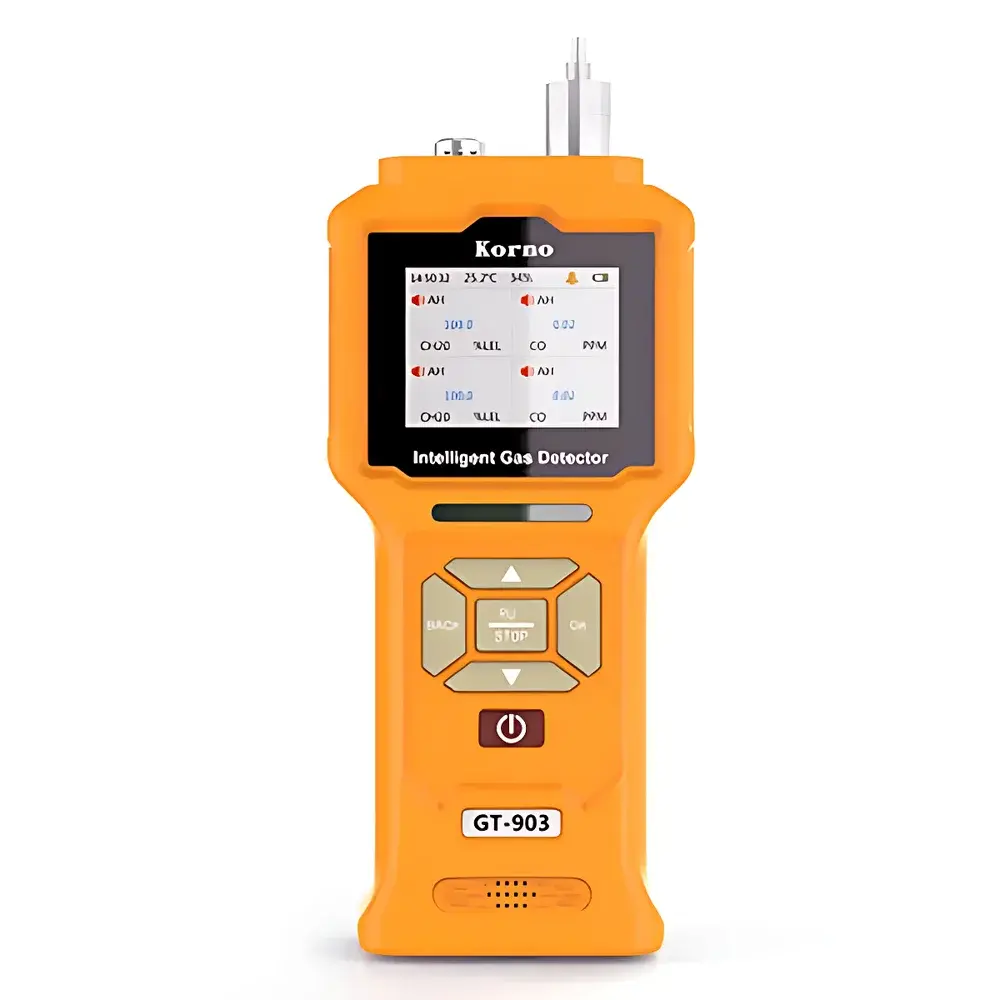
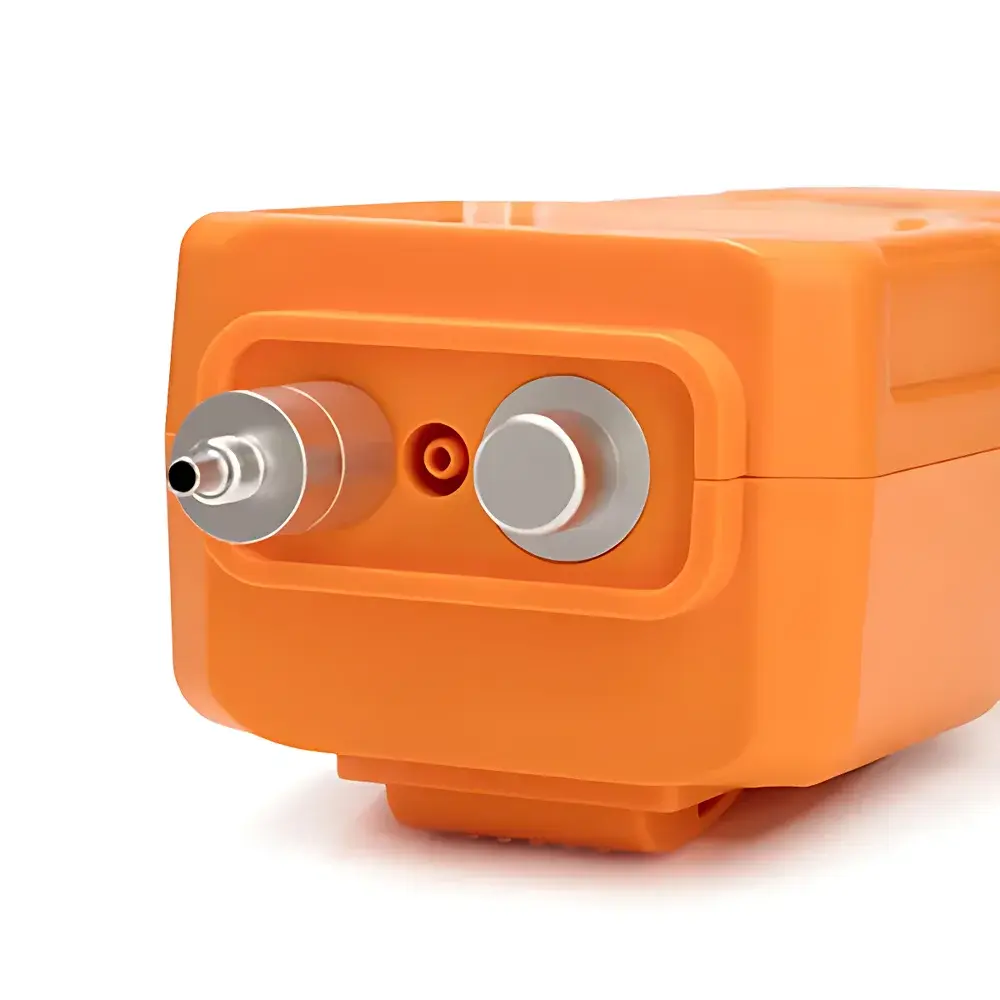
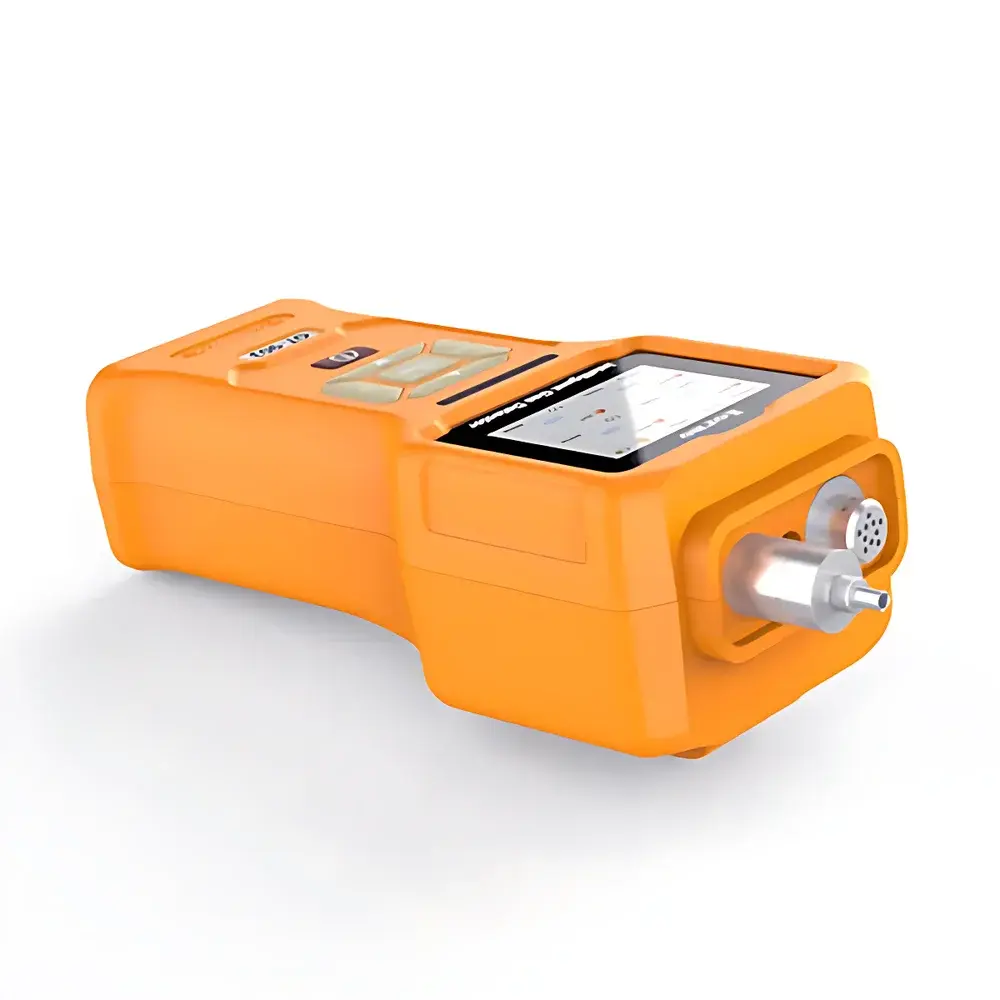
Korno GT-903-THT Portable Tetrahydrothiophene (THT) Gas Detector
| Brand | Korno |
|---|---|
| Origin | Guangdong, China |
| Manufacturer Type | OEM/ODM Manufacturer |
| Country of Origin | China |
| Model | GT-903-THT |
| Detection Principle | Electrochemical |
| Portability | Portable (Pump-Suction) |
| Measurement Range | 0.1–100 mg/m³ (configurable) |
| Sensitivity | Fast response |
| Accuracy | ≤±3% FS (sensor-dependent) |
| Response Time | ≤20 s (T90) |
| Resolution | 0.01 ppm (0–100 ppm range) |
| Linearity Error | ≤±2% FS |
| Zero Drift | ≤±1% FS |
| Recovery Time | ≤20 s |
| Sensor Capacity | Up to 4 interchangeable sensors |
| Repeatability | ≤±2% FS |
| Explosion Protection Certification | CLEx25.9118 |
| Ingress Protection | IP67 |
| Metrological Approval | 2017C125-44 |
| Operating Temperature | −20 to +50 °C |
| Operating Humidity | ≤95% RH (non-condensing) |
| Operating Pressure | 88–112 kPa |
| Battery | 3.7 V DC / 3800 mAh Li-polymer rechargeable |
| Display | 2.4″ industrial-grade color LCD |
| Data Storage | 30,800 × 4 groups (real-time/timed) |
| Connectivity | USB interface for data export |
| Optional Sensors | Temperature & humidity module (−20 to +50 °C / 0–100% RH) |
| Standards Compliance | GB/T 3836.1–2021, GB/T 3836.4–2021 |
Overview
The Korno GT-903-THT is a certified portable gas detector engineered specifically for the quantitative measurement of tetrahydrothiophene (THT) — a widely used odorant in natural gas distribution systems across Asia, Europe, and North America. Designed for compliance with explosion-hazardous area requirements, it employs a high-selectivity electrochemical sensing principle optimized for THT’s unique redox behavior in ambient air. Unlike broad-spectrum PID or catalytic bead detectors, the GT-903-THT integrates a factory-calibrated, imported electrochemical sensor with temperature-compensated signal processing to deliver stable, low-drift measurements in real-world utility, pipeline maintenance, and LNG terminal environments. Its pump-suction sampling architecture ensures representative air intake even in low-flow or confined spaces, while the embedded microcontroller implements adaptive baseline correction and digital filtering to suppress environmental interference from humidity fluctuations or transient VOC cross-sensitivity.
Key Features
- Pump-suction sampling system with integrated micro-diaphragm vacuum pump (flow rate ≥300 mL/min), enabling active draw-through detection at distances up to 1.5 m via optional probe extension
- Industrial 2.4-inch full-color TFT display with intuitive icon-based UI, supporting multilingual menu navigation (English, Spanish, French, Chinese)
- Configurable dual-mode operation: continuous real-time monitoring or programmable timed sampling intervals (1–3600 s)
- On-device data management: stores up to 30,800 records per sensor channel (4 channels max), timestamped with temperature/humidity metadata when optional environmental module is installed
- Robust mechanical architecture: IP67-rated enclosure with reinforced polycarbonate housing and elastomeric impact bumper; certified for use in Zone 1/21 hazardous locations per GB/T 3836.1–2021 and GB/T 3836.4–2021
- Field-replaceable modular sensor design — supports hot-swappable electrochemical THT sensors with pre-loaded calibration coefficients stored in EEPROM
- Battery runtime: ≥12 hours continuous operation on single 3.7 V / 3800 mAh Li-polymer charge; USB-C charging with battery level indicator and low-power warning
Sample Compatibility & Compliance
The GT-903-THT is validated for direct measurement of gaseous THT in ambient air, natural gas mixtures (diluted to <1% vol), and ventilation exhaust streams. It excludes interference from common background gases including methane (CH₄), carbon monoxide (CO), hydrogen sulfide (H₂S), and ethanol at concentrations below 500 ppm. All units undergo factory verification against NIST-traceable THT standard gas (certified reference material CRM-THF-100, 100 ppm in air) and are supplied with individual calibration certificates. Regulatory alignment includes mandatory Chinese metrological approval (2017C125-44), intrinsic safety certification (CLEx25.9118), and conformance with IEC 60079-0 and IEC 60079-11 for electrical equipment in explosive atmospheres. While not FDA 21 CFR Part 11 compliant by default, audit-ready data export (CSV/Excel format via USB) supports GLP-aligned recordkeeping in utility QA/QC workflows.
Software & Data Management
Data acquisition and configuration are managed through the onboard firmware v3.2+, which implements non-volatile memory logging with time-stamped event markers (alarm triggers, zero calibrations, sensor swaps). Exported datasets include raw mV output, compensated concentration values (mg/m³ and ppm), ambient temperature (°C), relative humidity (%RH), and battery voltage. The proprietary Korno DataLink Desktop Utility (Windows/macOS) enables batch calibration coefficient upload, firmware updates, and report generation compliant with ISO/IEC 17025 documentation requirements. No cloud dependency: all operations occur locally without internet connectivity, preserving data sovereignty in critical infrastructure settings.
Applications
- Natural gas odorization verification at city gate stations and regional distribution hubs
- Leak detection and residual THT mapping during pipeline commissioning or post-maintenance purging
- Occupational exposure assessment in compressor stations, metering skids, and odorant injection facilities (per OSHA PEL and ACGIH TLV guidelines)
- Regulatory compliance audits for municipal gas utilities under GB 17820–2018 (Technical Specification for Natural Gas)
- Third-party verification of odorant dosage consistency across seasonal demand variations
- Research applications involving THT stability studies under varying temperature/humidity profiles
FAQ
What is the recommended calibration frequency for the GT-903-THT in routine field use?
For utility-grade applications, bump testing before each shift and full span calibration every 30 days are advised. In high-humidity or high-dust environments, bi-weekly calibration is recommended.
Can the device measure THT in natural gas directly, or must the sample be diluted?
Direct measurement in undiluted natural gas is not supported due to hydrocarbon quenching effects on the electrochemical cell. Samples must be diluted to ≤1% vol in air using a certified dilution manifold prior to analysis.
Is the temperature/humidity sensor module required for accurate THT quantification?
While not mandatory, the optional environmental module improves long-term drift compensation and enables correction algorithms compliant with ISO 8573-1 Annex B for compressed air quality reporting.
Does the GT-903-THT support MODBUS RTU or other industrial protocols for SCADA integration?
No — it operates as a standalone instrument with USB data export only. For networked deployment, external gateway hardware is required.
How is sensor lifespan defined, and what indicators signal end-of-life?
Electrochemical THT sensors have a nominal service life of 24 months from first power-on. Firmware alerts trigger at 85% EOL based on accumulated exposure hours, zero stability degradation, and sensitivity decay trends.







