
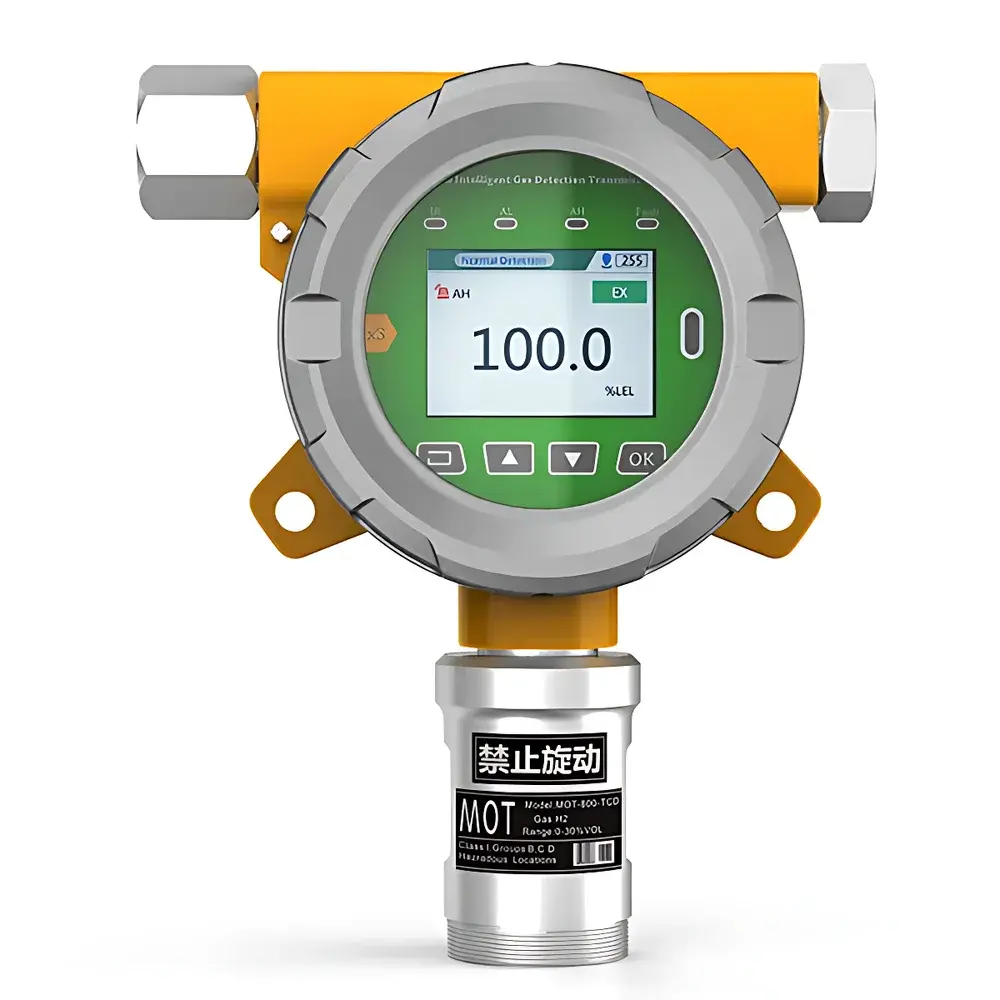
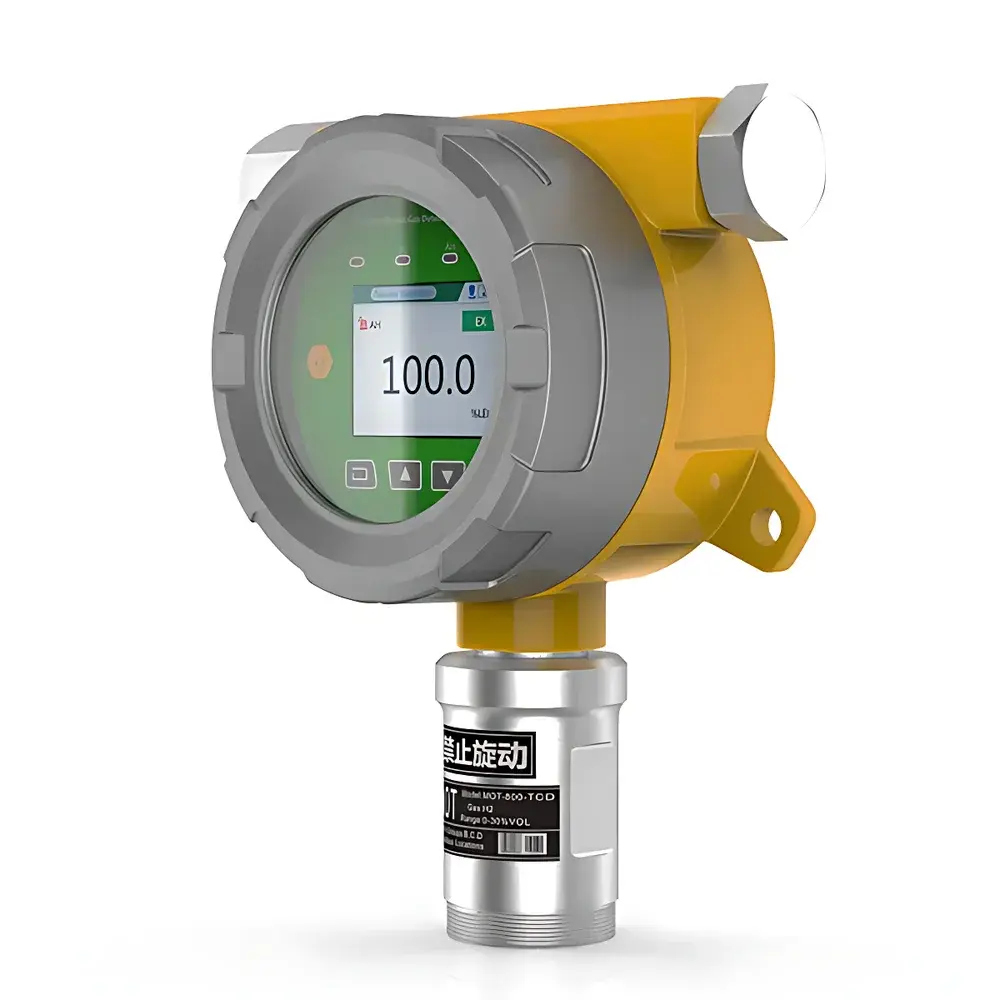
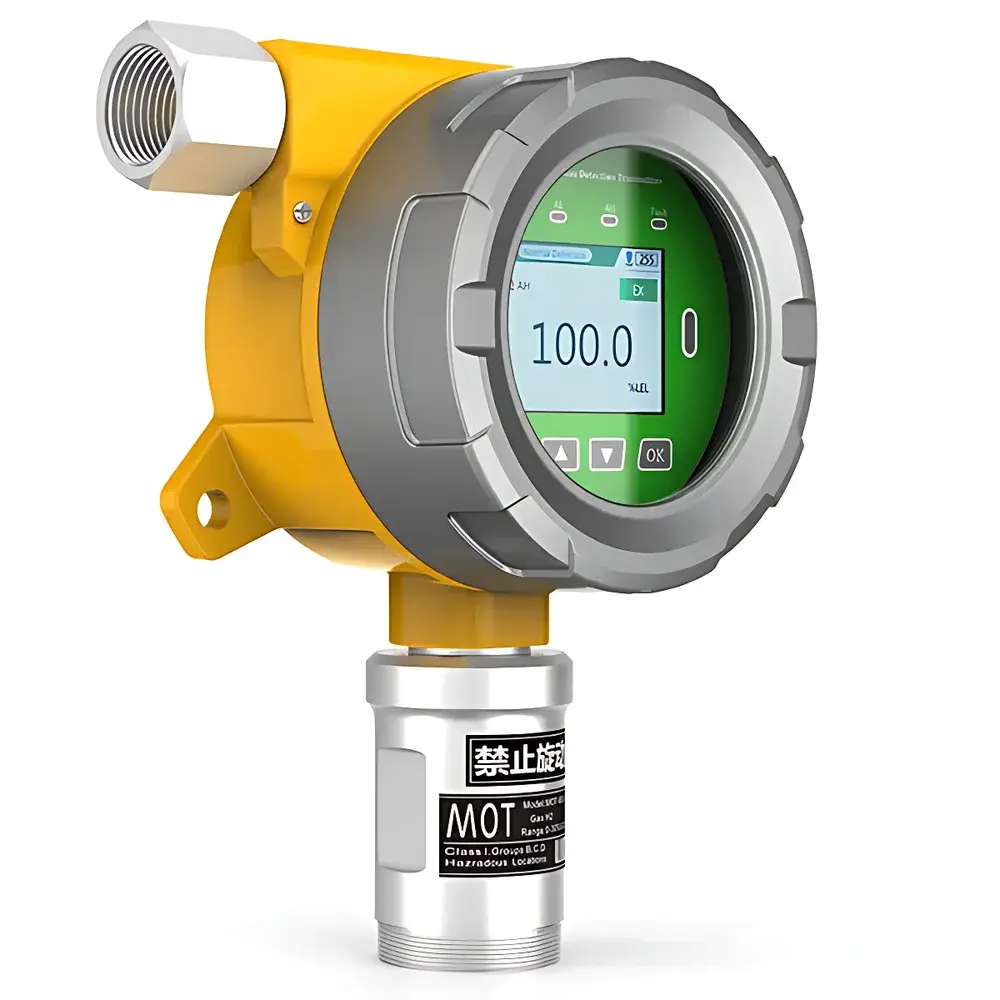
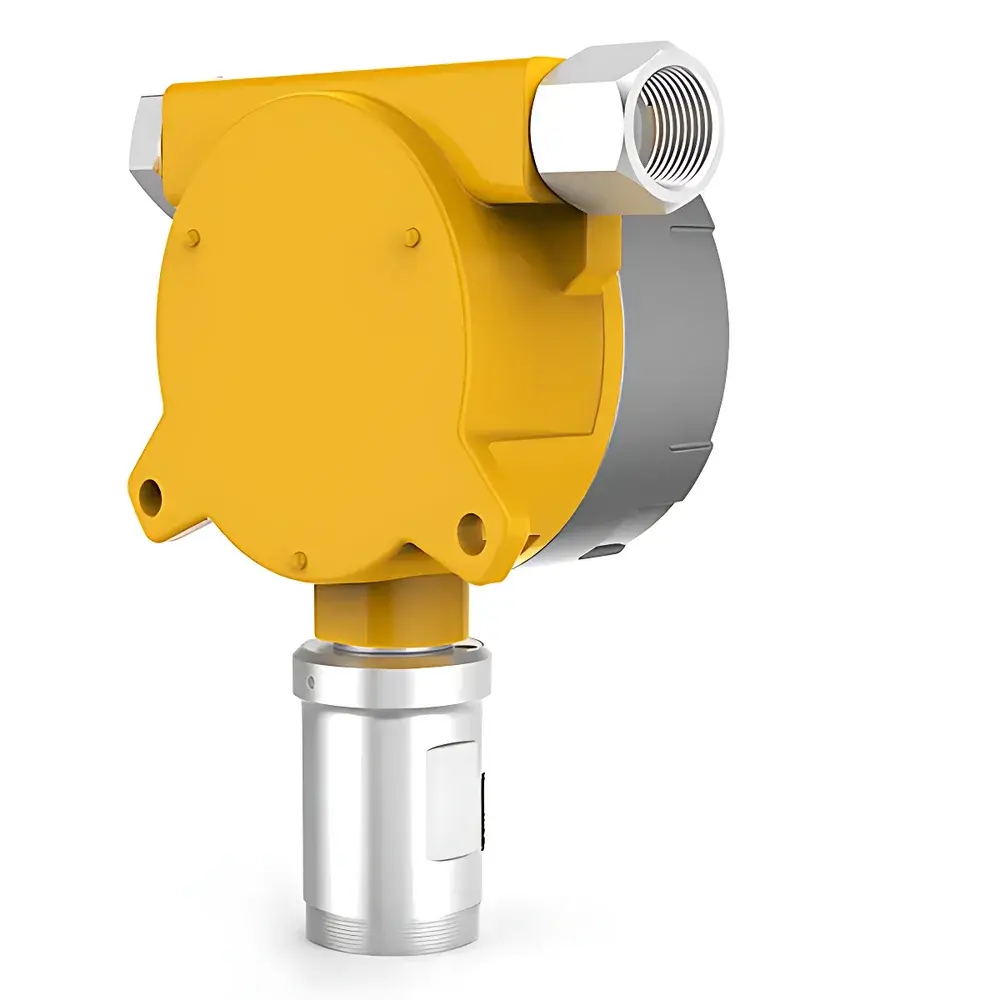
Korno MOT500-CL2 Chlorine Gas Detector with Alarm Function
| Brand | Korno |
|---|---|
| Model | MOT500-CL2 |
| Detection Gas | Chlorine (Cl₂) |
| Sensor Type | Imported electrochemical sensor |
| Measurement Range | 0–10 / 20 / 50 / 100 / 200 ppm (selectable) |
| Resolution | 0.01 ppm (0–100 ppm) |
| Response Time (T90) | ≤20 s |
| Accuracy | ≤±3% FS |
| Linearity Error | ≤±2% FS |
| Zero Drift | ≤±2% FS |
| Recovery Time | ≤30 s |
| Repeatability | ≤±2% FS |
| Explosion Protection Certification | CCRI24.8021X |
| Ingress Protection | IP66 |
| Operating Temperature | −20 to +50 °C |
| Operating Humidity | ≤95% RH (non-condensing) |
| Power Supply | 24 VDC (12–30 VDC) |
| Output Signals | 4–20 mA (16-bit, up to 1 km), RS485 (MODBUS RTU, up to 2 km), 0–5 V / 0–10 V, 2× relay (NO/NC, 125 VAC/0.3 A or 30 VDC/1 A) |
| Installation Options | Wall-mount, threaded pipe (M40×1.5 mm), flow-through |
| Enclosure Material | Die-cast aluminum with sandblasted anodized/fluorocarbon coating |
| Dimensions & Weight | 226 × 215 × 85 mm (L×W×H), 1.7 kg (net) |
| Compliance | GB/T 3836.1–2021, GB/T 3836.2–2021, GB/T 3836.31–2021 |
Overview
The Korno MOT500-CL2 is a fixed-mount, continuous-duty chlorine (Cl₂) gas detection system engineered for real-time monitoring and alarm activation in industrial and hazardous environments. It operates on the principle of amperometric electrochemical sensing—where Cl₂ molecules undergo oxidation at a working electrode, generating a current proportional to gas concentration. This method delivers high selectivity for chlorine in complex gas matrices, low cross-sensitivity to common interferents (e.g., SO₂, NO₂, H₂S), and stable baseline performance under fluctuating ambient conditions. Designed for permanent installation in chlorination facilities, water treatment plants, chemical synthesis units, and pulp & paper processing lines, the MOT500-CL2 meets the functional safety requirements of continuous emission monitoring (CEM) and process safety management (PSM) frameworks. Its intrinsic safety-compatible architecture—including explosion-proof housing certified to GB/T 3836.2–2021 (equivalent to IEC 60079-1 for flameproof “d” enclosures)—enables deployment in Zone 1 and Zone 2 classified areas without additional barrier systems.
Key Features
- Imported high-stability electrochemical sensor with factory-calibrated sensitivity and temperature compensation circuitry
- Selectably configurable measurement ranges (0–10, 20, 50, 100, or 200 ppm Cl₂) to match application-specific exposure limits (e.g., OSHA PEL: 0.5 ppm; NIOSH REL: 0.5 ppm; IDLH: 10 ppm)
- Dual-stage alarm logic with user-definable threshold levels and hysteresis control to prevent nuisance tripping during transient spikes
- Multi-modal signal output architecture supporting analog (4–20 mA, 0–5/10 V), digital (RS485 MODBUS RTU), and discrete (relay) interfaces for seamless integration into DCS, PLC, SCADA, or centralized safety systems
- Robust die-cast aluminum enclosure with fluorocarbon coating—resistant to chlorine-induced corrosion, UV degradation, and mechanical impact (IP66-rated ingress protection)
- Flexible mounting options including wall bracket, M40×1.5 mm threaded pipe connection, and flow-through cell integration for duct or manifold sampling
- Expandable multi-gas platform supporting up to six simultaneously active sensors (Cl₂ plus optional O₂, H₂S, CO, NH₃, or VOC channels)
Sample Compatibility & Compliance
The MOT500-CL2 is validated for use in ambient air, process streams, and exhaust ducts containing chlorine at concentrations relevant to occupational health (ppm-level) and environmental compliance (e.g., EPA Method 18, EN 14181). It is not intended for use in inert atmospheres, high-humidity condensing environments (>95% RH without pre-conditioning), or applications involving liquid-phase chlorine contact. The device complies with China’s national explosion protection standards GB/T 3836.1–2021 (general requirements), GB/T 3836.2–2021 (flameproof “d” enclosure), and GB/T 3836.31–2021 (dust ignition protection), ensuring suitability for Class I Division 1 / Zone 1 hazardous locations. While not CE-marked or ATEX-certified out-of-box, its electrical design adheres to EMC Directive 2014/30/EU principles and can be adapted for EU market conformity via third-party Notified Body assessment.
Software & Data Management
Data acquisition and configuration are managed via Korno’s proprietary PC-based calibration and diagnostics software (compatible with Windows 10/11), which supports zero/span calibration, sensor lifetime tracking, alarm log export (CSV), and firmware updates. The RS485 MODBUS RTU interface enables direct integration with industry-standard supervisory systems—supporting register mapping for real-time concentration, alarm status, sensor health, and fault codes. Optional GPRS or TCP/IP modules allow encrypted data transmission to cloud platforms or on-premise servers, with timestamped records compliant with internal QA/QC documentation requirements. Although not FDA 21 CFR Part 11–validated, audit trail functionality (user login, parameter changes, calibration events) is implemented in firmware to support GLP-aligned operational procedures.
Applications
- Continuous monitoring of chlorine feed lines in municipal and industrial water disinfection systems
- Leak detection at chlorine cylinder storage rooms, vaporizer enclosures, and dosing skids
- Process gas analysis in PVC production, titanium dioxide synthesis, and organic chlorination reactors
- Emergency response staging zones where portable Cl₂ monitors require fixed reference points
- Integration into facility-wide toxic gas monitoring networks using centralized alarm relays and visual/audible local sirens
- Compliance verification against local environmental regulations governing Cl₂ emissions from chemical manufacturing sites
FAQ
What is the typical service life of the electrochemical Cl₂ sensor?
Under normal operating conditions (25 °C, 50% RH, no exposure to silicones or halogenated solvents), the sensor exhibits a nominal lifespan of 24 months, with performance verified via semi-annual bump testing and annual full calibration.
Can the MOT500-CL2 be used outdoors without shelter?
Yes—the IP66-rated enclosure and −20 to +50 °C operating range permit unsheltered outdoor installation; however, prolonged exposure to direct sunlight may accelerate thermal drift, and optional sunshade kits are recommended for equatorial or desert deployments.
Is third-party calibration certification available?
Korno provides NIST-traceable calibration certificates upon request (fee applicable); end-users may also commission accredited labs (e.g., CNAS-certified) for ISO/IEC 17025-compliant verification.
How does the device handle interference from hydrogen chloride (HCl)?
The Cl₂ sensor demonstrates <5% cross-sensitivity to HCl at concentrations up to 50 ppm; for applications with co-existing HCl >10 ppm, a dedicated HCl compensation channel or selective scrubber filtration is advised.
Does the unit support Modbus TCP or only Modbus RTU over RS485?
Standard configuration includes RS485 MODBUS RTU only; Modbus TCP is enabled exclusively when the optional Ethernet module is installed and configured via the web-based interface.
Related Products







