
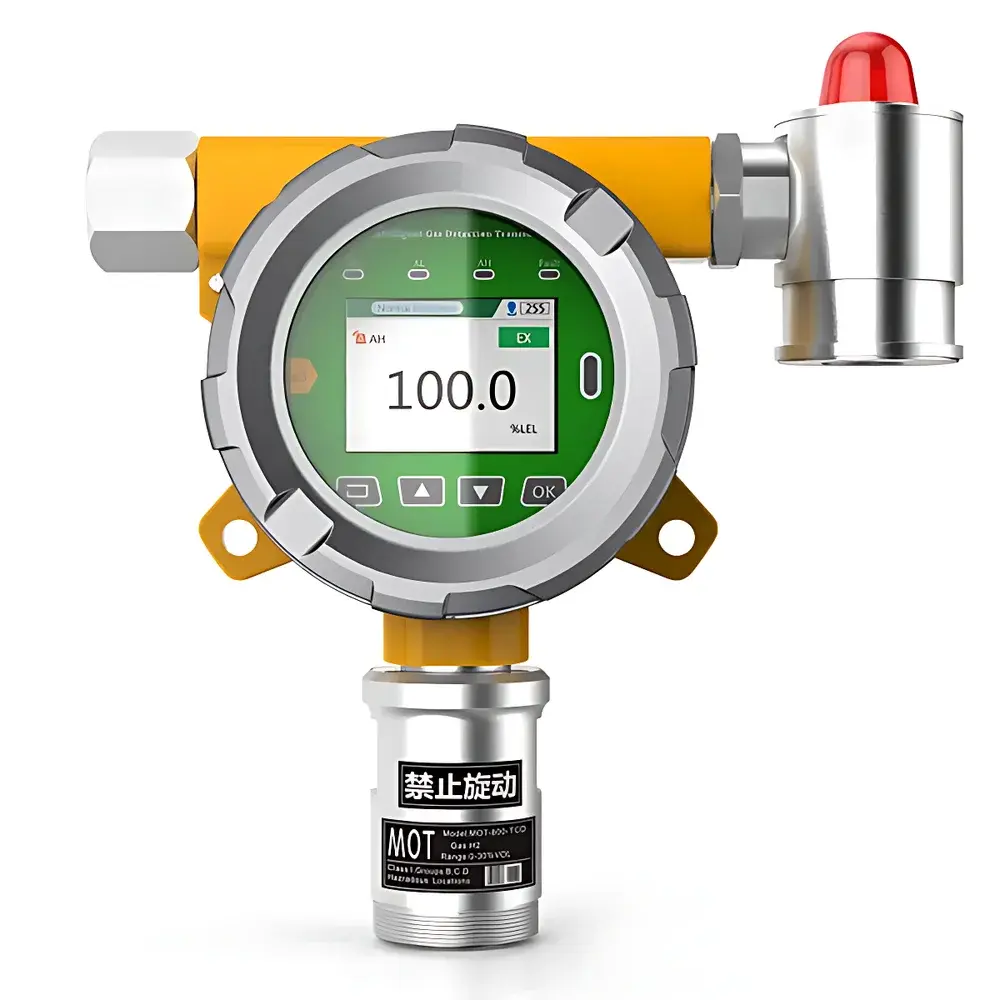
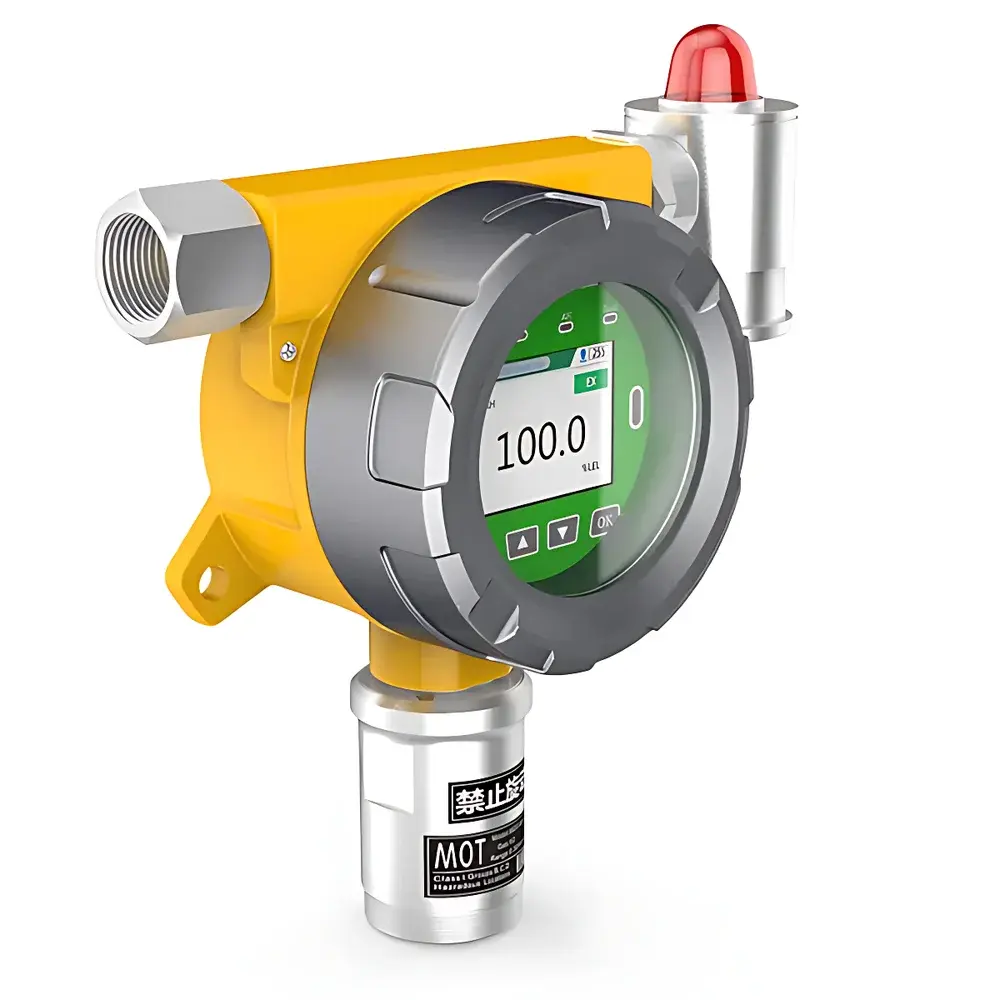
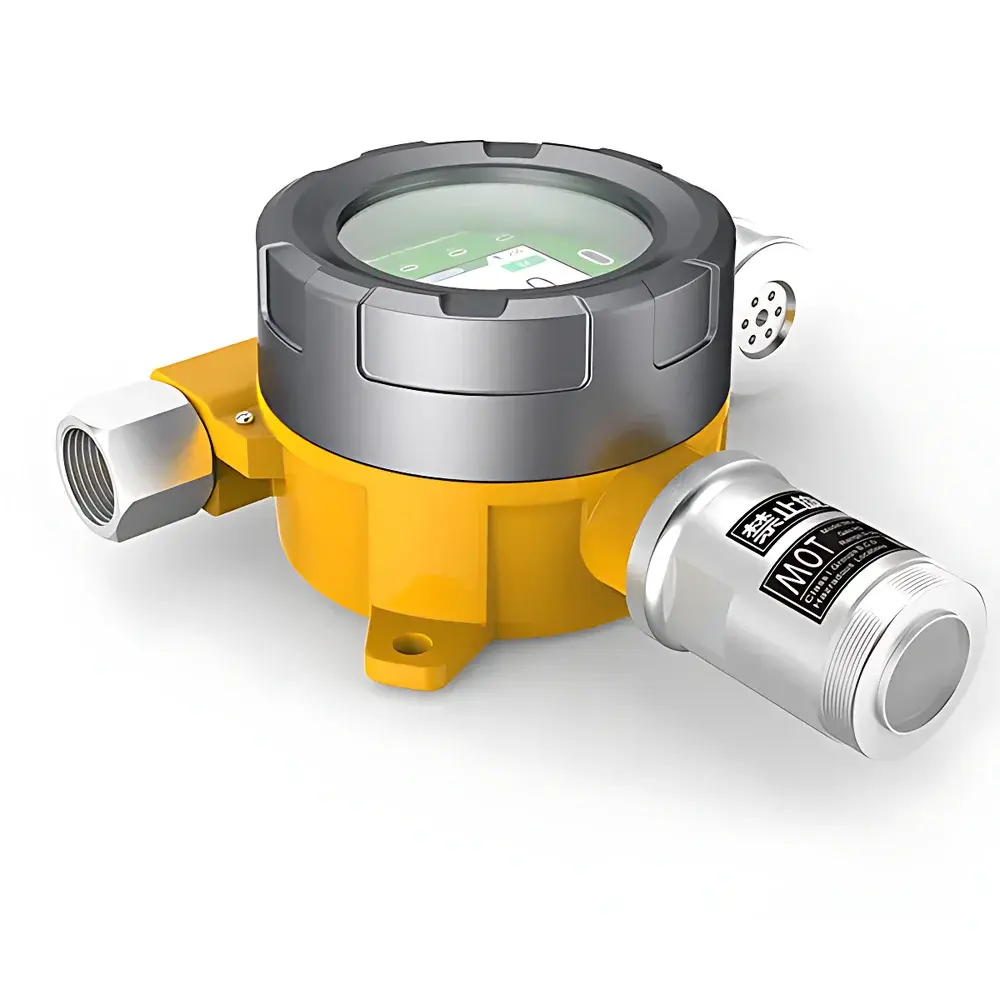
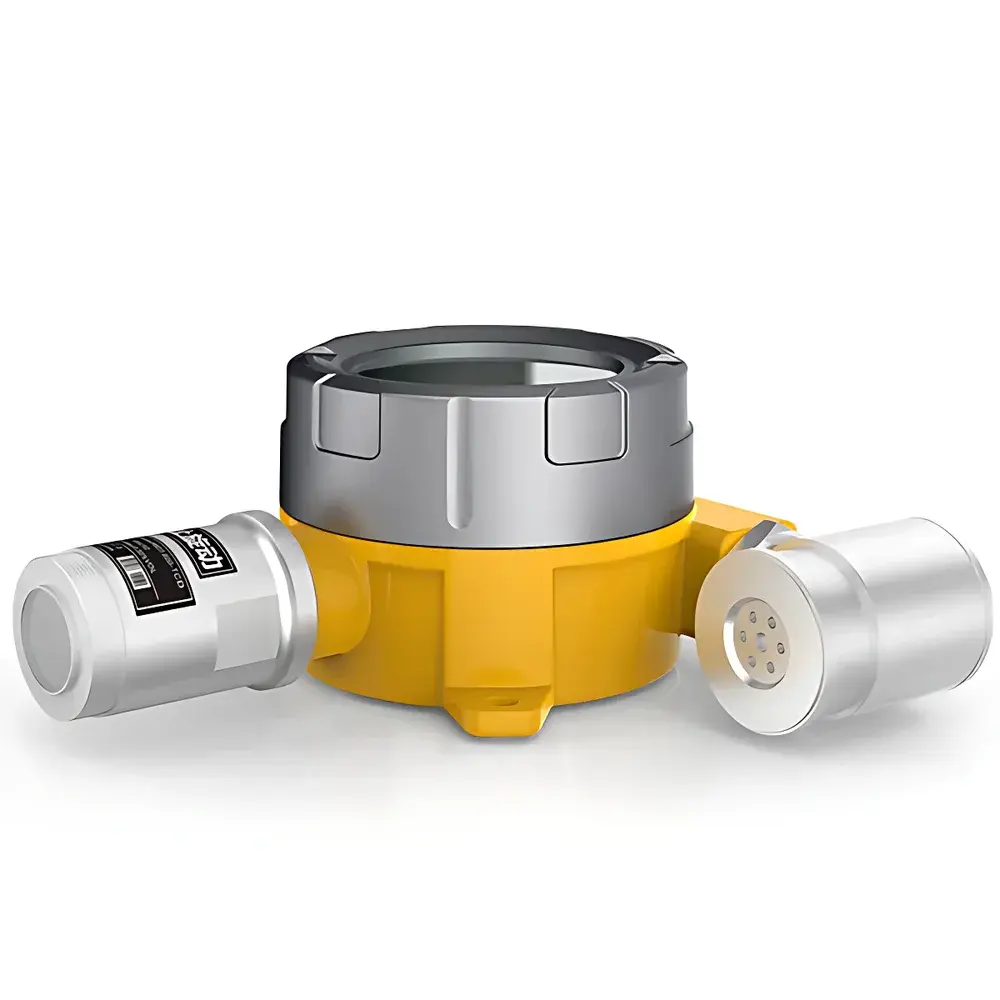
Korno MOT500-H2-A Hydrogen Gas Detector and Alarm
| Brand | Korno |
|---|---|
| Origin | Guangdong, China |
| Manufacturer Type | Manufacturer |
| Country of Origin | China |
| Model | MOT500-H2-A |
| Price | Upon Request |
| Detection Gas | Hydrogen (H₂) |
| Sensor Type | Imported High-Performance Electrochemical Sensor |
| Measurement Ranges | 0–100, 1000, 5000, 20,000, 40,000, or 50,000 ppm (selectable) |
| Resolution | 0.01 ppm (0–100 ppm) |
| Response Time (T90) | ≤20 s |
| Accuracy | ≤±3% FS (sensor-dependent) |
| Linearity Error | ≤±2% FS |
| Zero Drift | ≤±2% FS |
| Recovery Time | ≤30 s |
| Sensor Expansion | Up to 6 sensors (optional) |
| Repeatability | ≤±2% FS |
| Explosion Protection Certification | CCRI24.8021X |
| Ingress Protection Rating | IP66 |
| Temperature & Humidity Sensing (optional) | -20–50 °C |
| Sampling Method | Diffusion, Pipe-Insertion, Flow-Through, or Pump-Suction (selectable) |
| Mounting Options | Wall-Mount, Pipe-Mount (M40×1.5 mm thread), Flow-Through |
| Output Signals | 4–20 mA (16-bit, up to 1 km) |
| Transmission Modes | Shielded cable (3–4 core) |
| Compatible Receivers | PC, PLC, DCS, alarm controllers, smartphones, tablets |
| Alarm Types | Local audible/visual alarm |
| Alarm Configuration | Dual-level standard (tripoint optional) |
| Housing Material | Die-cast aluminum with sandblasted anodizing or fluorocarbon coating |
| Operating Environment | -20–50 °C |
| Power Supply | 24 VDC (12–30 VDC) |
| Electrical Interface | 3/4″ NPT internal thread + G1/2″ internal thread (dual compatibility) |
| Dimensions & Weight | 226 × 215 × 85 mm (L×W×H) |
| Standard Accessories | User manual, calibration hood, certificate of conformity |
| Optional Accessories | IR remote control, DC12/24V adapter, USB/RS232 converter, RS485/RS232 adapter, sampling pump, flow meter, flow cell, mounting bracket |
| Compliance Standards | GB/T 3836.1–2021, GB/T 3836.2–2021, GB/T 3836.31–2021 |
Overview
The Korno MOT500-H2-A is a fixed-mount, intrinsically safe hydrogen gas detector engineered for continuous, real-time monitoring in high-risk industrial environments where hydrogen leakage poses explosion hazards or operational safety concerns. It operates on the principle of electrochemical sensing—leveraging a temperature-compensated, long-life imported H₂-specific sensor that delivers stable baseline performance across wide ambient conditions. Designed for deployment in hydrogen production, refueling stations, PEM electrolysis facilities, fuel cell manufacturing, and hydrogen-powered process plants, the device provides simultaneous measurement of hydrogen concentration (ppm-level resolution), ambient temperature, and relative humidity (with optional probe). Its modular architecture supports multi-gas expansion up to six detection channels, enabling integrated monitoring of H₂ alongside co-existing hazardous or process gases such as O₂, CO, or NO₂—critical for comprehensive safety interlock systems compliant with IEC 61511 and ISO 26142.
Key Features
- Electrochemical sensor with factory-calibrated 6-point nonlinearity correction, ensuring trace-level accuracy (≤±3% FS) and linearity error ≤±2% FS across full span.
- Configurable measurement ranges from 0–100 ppm (for leak detection) to 0–50,000 ppm (for high-concentration process monitoring), with auto-ranging logic to optimize signal-to-noise ratio.
- Dual independent relay outputs (expandable to three) programmable for fail-safe shutdown, ventilation activation, or DCS interlocking—each rated for 125 VAC/0.3 A or 30 VDC/1 A.
- Multi-protocol digital interface: MODBUS RTU over RS485 (2 km max), TCP/IP Ethernet (with optional PoE support), and GPRS-enabled cellular telemetry for cloud-based SCADA integration.
- Robust IP66-rated die-cast aluminum enclosure with fluorocarbon coating, certified to GB/T 3836.1–2021 (Explosion-proof “d” housing) and GB/T 3836.31–2021 (dust ignition protection).
- Embedded self-diagnostics including sensor health monitoring, zero drift compensation, and automatic data recovery after power interruption or firmware reset.
Sample Compatibility & Compliance
The MOT500-H2-A is validated for use in Class I, Division 1 / Zone 1 explosive atmospheres containing hydrogen-air mixtures (LEL = 4.0% vol, UEL = 75% vol). It complies with national mandatory standards for explosion-proof electrical equipment in China (GB/T 3836 series), and its sensor response characteristics meet the functional safety requirements outlined in GB/T 50493–2019 (“Design Code for Detection and Alarm of Flammable and Toxic Gases in Petrochemical Enterprises”). While not CE-marked or ATEX-certified out-of-the-box, the unit’s hardware architecture and signal conditioning circuitry are compatible with SIL2-capable system integration when deployed within a certified safety instrumented system (SIS) per IEC 61508. Calibration traceability follows ISO/IEC 17025 principles via accredited reference gas standards (NIST-traceable H₂/N₂ blends).
Software & Data Management
The detector supports both local and remote configuration via Korno’s proprietary PC-based configuration tool (Windows-compatible, USB/RS232 interface) and optional web-based HMI via embedded HTTP server. All configuration parameters—including alarm thresholds, relay logic, sampling mode, and output scaling—are stored in non-volatile memory with CRC-protected backup. Audit trails record calibration events, alarm activations, and configuration changes with timestamps (ISO 13485-aligned logging structure). For enterprise-level deployment, the TCP/IP and GPRS interfaces enable seamless integration with third-party platforms such as Ignition SCADA, Siemens Desigo, or Honeywell Experion PKS. Data export supports CSV and Modbus register mapping for historian ingestion (e.g., OSIsoft PI System). Firmware updates are performed via secure OTA (Over-The-Air) or local USB flash drive—fully compliant with FDA 21 CFR Part 11 requirements when paired with appropriate user access controls and electronic signature protocols.
Applications
- Hydrogen refueling stations (HRS): Real-time monitoring at compressor skids, storage vessels, and dispensing nozzles per SAE J2601 and ISO/TS 19880-1.
- Green hydrogen production: Inline monitoring in alkaline/PED/PEM electrolyzer balance-of-plant (BOP) systems to detect membrane crossover or seal failure.
- Power generation: Turbine hall and generator cooling circuit surveillance in hydrogen-cooled turbogenerators (IEEE C50.13).
- Pharmaceutical manufacturing: Monitoring inert purge atmospheres in lyophilization chambers and glove boxes where H₂ may be used as reducing agent.
- Petrochemical refining: Leak detection in hydrotreater reactors, hydrocracker units, and sulfur recovery trains.
- Municipal infrastructure: Early warning in underground utility vaults, subway tunnels, or compressed natural gas (CNG) blending facilities where hydrogen blending is implemented.
FAQ
What is the minimum detectable hydrogen concentration with the MOT500-H2-A?
The lowest selectable range is 0–100 ppm, with a resolution of 0.01 ppm—suitable for early-stage leak detection in low-hazard zones.
Can the device operate continuously in high-humidity environments?
Yes—when equipped with the optional humidity sensor and configured with anti-condensation heating (available via custom firmware), it maintains stable operation up to 95% RH non-condensing per GB/T 3836.1–2021 Annex E.
Is third-party calibration verification supported?
Yes—the unit accepts standard 4-gas calibration kits (including H₂/N₂ blends) and supports manual zero/span adjustment with password-protected admin access.
Does the MOT500-H2-A meet international explosion-proof standards beyond Chinese GB/T norms?
It is designed to meet the mechanical and thermal design criteria of ATEX Directive 2014/34/EU Category 2G (Zone 1), though formal EU-type examination and CE marking require additional notified body assessment.
How is sensor lifetime managed and reported?
The onboard microcontroller tracks cumulative exposure hours, operating temperature history, and electrochemical depletion metrics—displayed via the local LCD and exported in diagnostic logs for predictive maintenance scheduling.




