
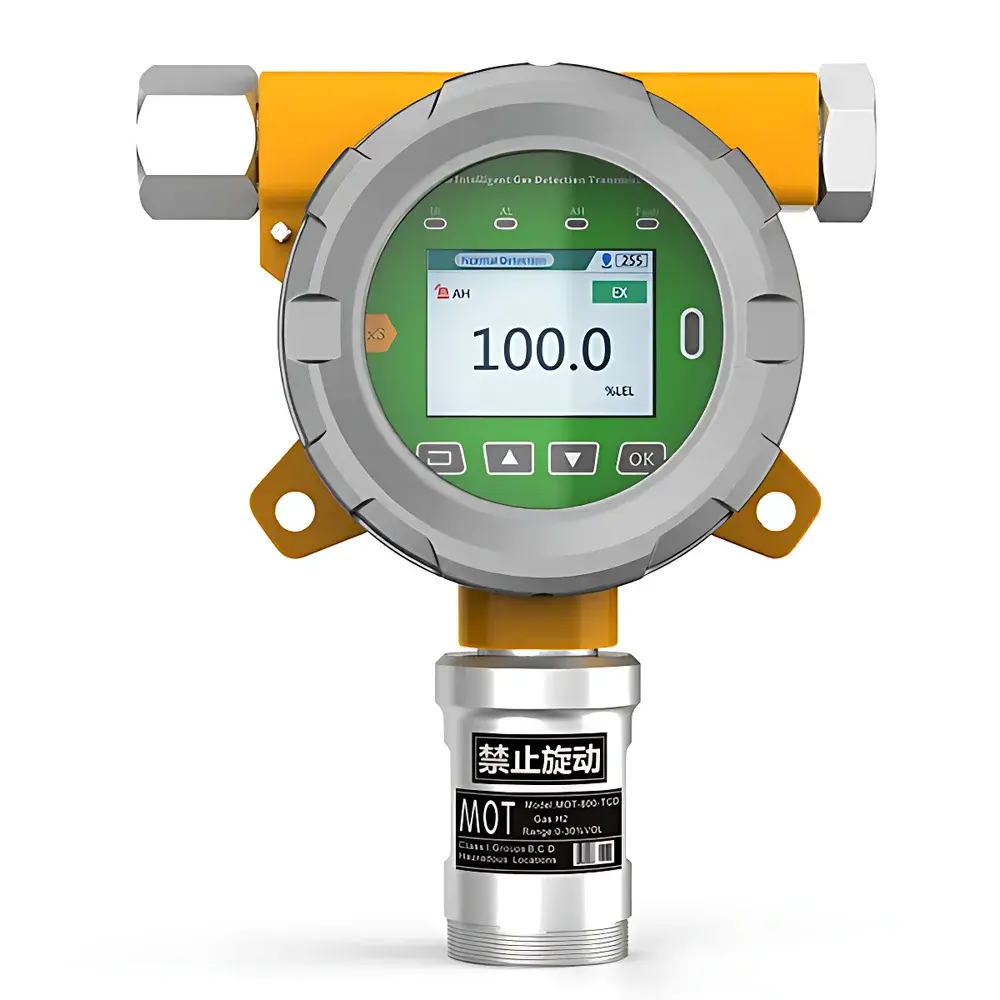
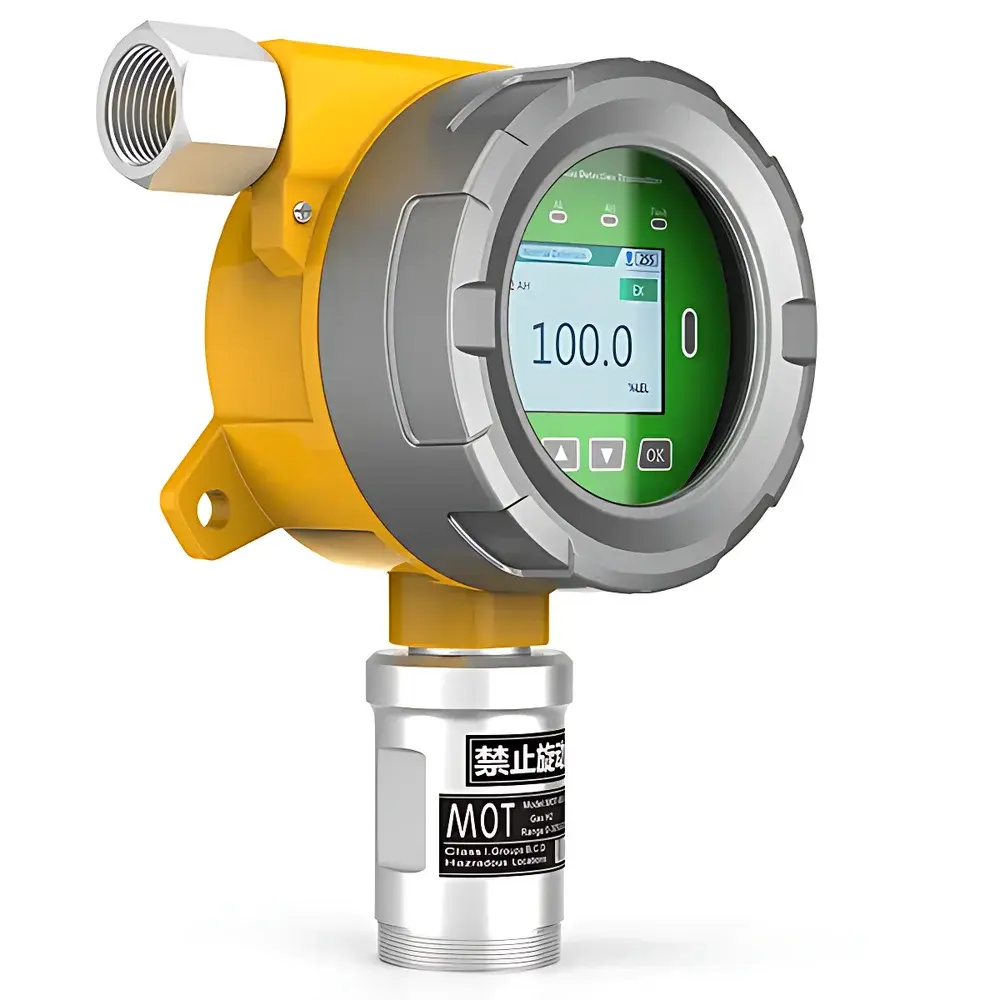
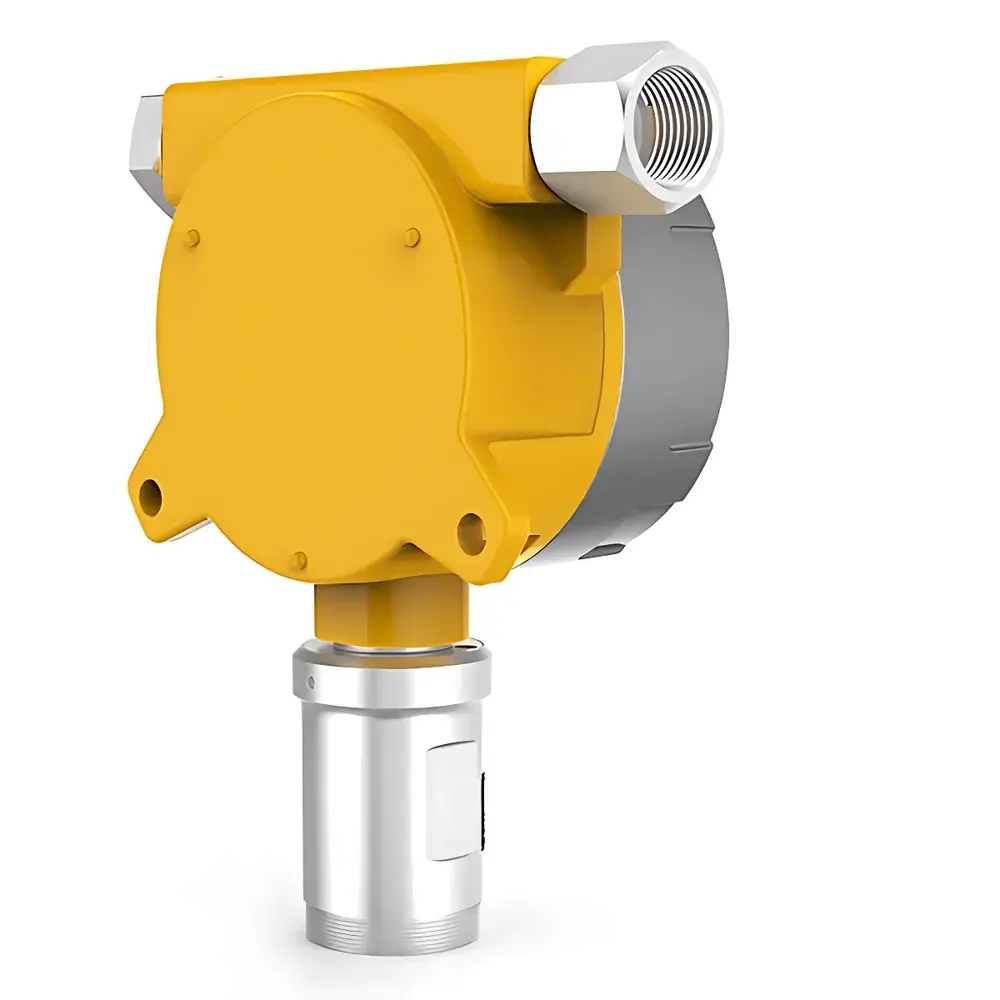
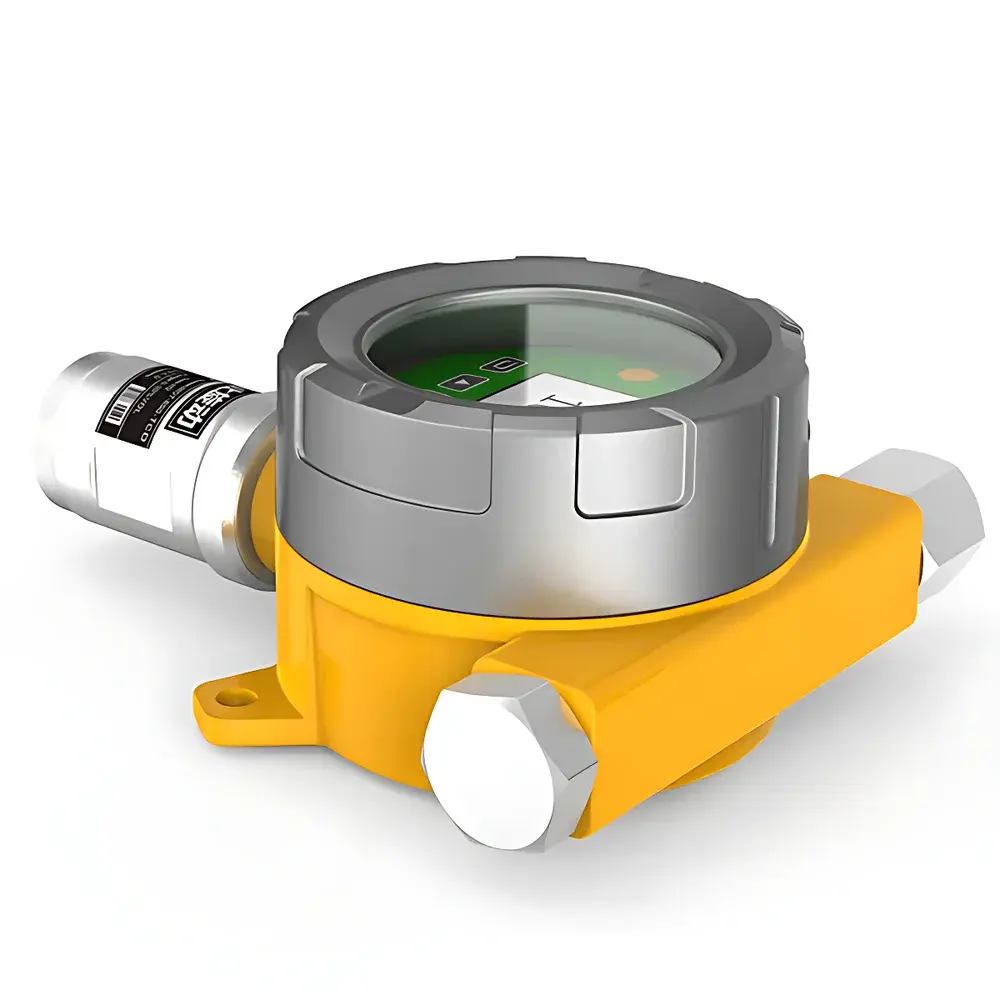
Korno MOT500-He Online Helium Gas Detector
| Brand | Korno |
|---|---|
| Model | MOT500-He |
| Detection Gas | Helium (He) |
| Sensor Type | Imported Thermal Conductivity Sensor |
| Measurement Ranges | 0–10%, 0–50%, or 0–100% VOL |
| Resolution | 0.01% VOL |
| Response Time (T90) | ≤20 s |
| Accuracy | ≤±3% FS |
| Linearity Error | ≤±1% FS |
| Zero Drift | ≤±2% FS |
| Recovery Time | ≤20 s |
| Sensor Expansion | Up to 6 configurable gas sensors |
| Explosion Protection Certification | CCRI24.8021X |
| Ingress Protection | IP66 |
| Operating Temperature | −20 to +50 °C |
| Operating Humidity | ≤95% RH (non-condensing) |
| Power Supply | 24 VDC (12–30 VDC) |
| Output Signals | 4–20 mA (16-bit, 1 km), RS485 (MODBUS RTU, 2 km), 0–5 V / 0–10 V, 2× relay outputs (expandable to 3) |
| Installation Options | Wall-mount, threaded pipe mount (M40×1.5 mm), flow-through |
| Communication Options | Cable (3/4-core), TCP/IP (fiber/Ethernet), GPRS (optional), 433 MHz wireless (2–10 km, optional) |
| Housing | Die-cast aluminum with sandblasted oxidation/fluorocarbon coating |
| Dimensions & Weight | 226 × 215 × 85 mm (L×W×H), 1.7 kg (net) |
| Compliance | GB/T 3836.1–2021, GB/T 3836.2–2021, GB/T 3836.31–2021 |
Overview
The Korno MOT500-He Online Helium Gas Detector is a fixed-installation, industrial-grade continuous monitoring system engineered for reliable helium (He) concentration measurement in demanding process and safety-critical environments. Utilizing a high-stability imported thermal conductivity sensor, the device operates on the principle of thermal dissipation differential—comparing the heat transfer characteristics of the sample gas against a reference gas (typically air or nitrogen). This method provides inherently linear, drift-resistant response across wide concentration ranges (0–10%, 0–50%, or 0–100% VOL), making it especially suitable for helium leak detection in vacuum systems, cryogenic facilities, semiconductor fabrication lines, MRI magnet quench monitoring, and controlled-atmosphere packaging operations. Unlike catalytic or electrochemical sensors, thermal conductivity detection is non-consumptive, requires no oxygen, and exhibits excellent long-term stability—critical for unattended 24/7 operation in remote or hazardous locations.
Key Features
- Industrial 2.4-inch high-brightness color LCD display with real-time concentration curve visualization and intuitive menu navigation
- Full software-based calibration suite supporting up to six-point target calibration per sensor, ensuring traceable accuracy and linearity verification
- Robust die-cast aluminum housing with fluorocarbon coating, certified to IP66 ingress protection and CCRI24.8021X explosion-proof standard (suitable for Zone 1/21 hazardous areas)
- Multi-mode sampling options: diffusion, flow-through, and pump-aspirated configurations—enabling flexible deployment across ducts, enclosures, or ambient workspaces
- Configurable dual-stage (standard) or triple-stage alarm logic with programmable high/low and range-control modes for precise process interlock integration
- Comprehensive signal output architecture: isolated 4–20 mA (16-bit DAC, 1 km), RS485 (MODBUS RTU, 2 km), analog voltage (0–5 V / 0–10 V), and dry-contact relays (2 standard, 1 optional)
- Expandable multi-gas platform: supports up to six independent sensor modules—including He plus O₂, H₂, CO, CH₄, or other thermally detectable gases—on a single controller chassis
Sample Compatibility & Compliance
The MOT500-He is optimized for helium detection in clean, dry, non-corrosive gas streams. While thermal conductivity sensors are insensitive to inert background gases (e.g., N₂, Ar), performance may be affected by high humidity, condensate, or particulate-laden samples; optional temperature/humidity probes (−40 to +120 °C / 0–100% RH) and pre-filtration kits are available for challenging conditions. The instrument complies fully with China’s national explosion-protection standards: GB/T 3836.1–2021 (general requirements), GB/T 3836.2–2021 (flameproof “d” enclosure), and GB/T 3836.31–2021 (dust-ignition-proof “t” protection). Though not CE- or ATEX-certified out-of-box, its hardware architecture and firmware design align with IEC 61508 SIL 2 functional safety principles—facilitating third-party assessment for integration into Safety Instrumented Systems (SIS) under ISO 13849 or IEC 62061.
Software & Data Management
Data integrity and audit readiness are ensured through embedded non-volatile memory with automatic logging of calibration events, alarm triggers, sensor diagnostics, and zero/span drift history. All configuration changes are timestamped and user-logged. Optional TCP/IP and GPRS modules enable secure remote access via web interface or dedicated SCADA client, supporting historical data export in CSV format. For regulated environments, the system supports manual or scheduled data backup, and—when integrated with compliant enterprise platforms—can meet basic GLP/GMP documentation requirements including electronic signature capability (via external authentication layer). Firmware updates are performed via USB or network push, preserving all user settings and calibration coefficients.
Applications
- Leak detection in helium-cooled superconducting magnets (e.g., MRI, particle accelerators)
- Helium recovery and purification loop monitoring in semiconductor and fiber-optic manufacturing
- Safety surveillance in cryogenic laboratories handling liquid helium dewars
- Atmosphere control verification in hermetic packaging (food, pharmaceuticals, electronics)
- Process gas purity assurance in high-vacuum deposition chambers and leak-testing stations
- Environmental monitoring in geothermal or natural gas processing where helium is a tracer component
FAQ
What measurement principle does the MOT500-He use, and why is thermal conductivity appropriate for helium?
It employs thermal conductivity detection—a physical method comparing heat loss from a heated element in sample gas versus reference gas. Helium’s exceptionally high thermal conductivity (≈6× that of air) yields strong, stable, and oxygen-independent signals—ideal for inert gas detection where electrochemical or PID technologies fail.
Can the device operate in high-humidity or sub-zero environments?
Standard units are rated for −20 to +50 °C and ≤95% RH (non-condensing). For extended environmental ranges, optional temperature/humidity sensing modules and heated sample lines or condensate traps are available as system-level accessories.
Is third-party calibration certification included?
The unit ships with factory calibration certificate traceable to national standards. On-site calibration verification and accredited calibration services (e.g., CNAS) can be arranged separately through authorized Korno service partners.
How is sensor cross-sensitivity managed when multiple gases are present?
Thermal conductivity response is primarily governed by binary gas mixtures. In multi-gas configurations, Korno’s firmware applies empirically derived compensation algorithms based on known gas pair interactions—validated during factory characterization for common industrial backgrounds (e.g., He/N₂, He/Ar).
Does the MOT500-He support FDA 21 CFR Part 11 compliance?
While the base unit does not include built-in electronic signature or audit-trail encryption, its data logging architecture and MODBUS/RS485 protocol enable integration with validated third-party LIMS or MES platforms that enforce Part 11 requirements at the system level.







