
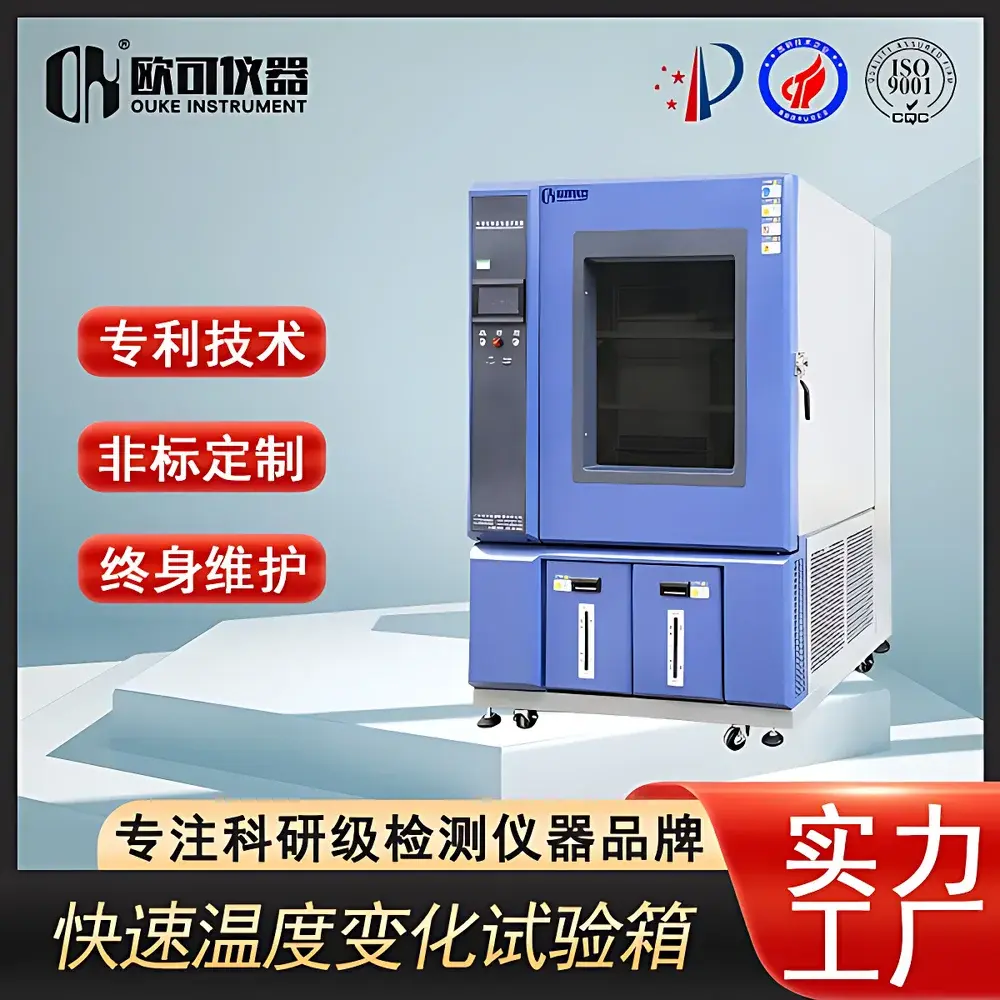
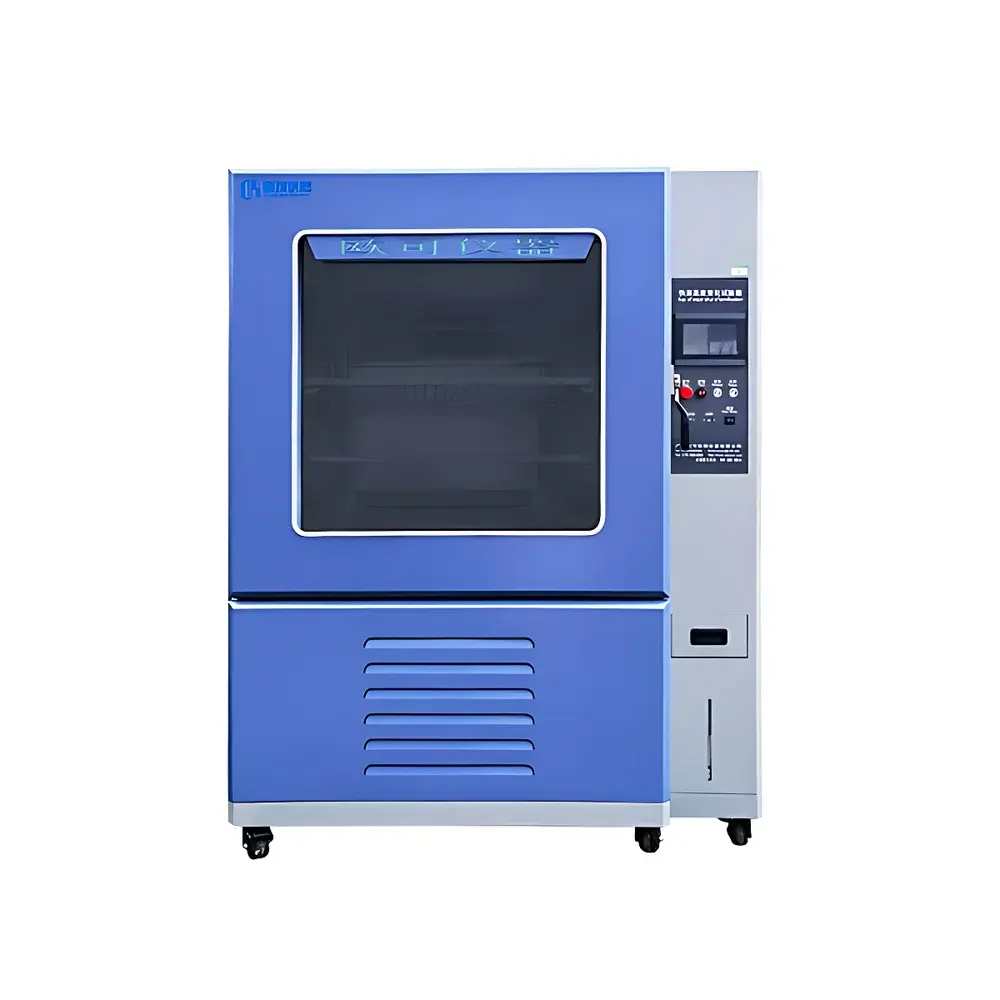
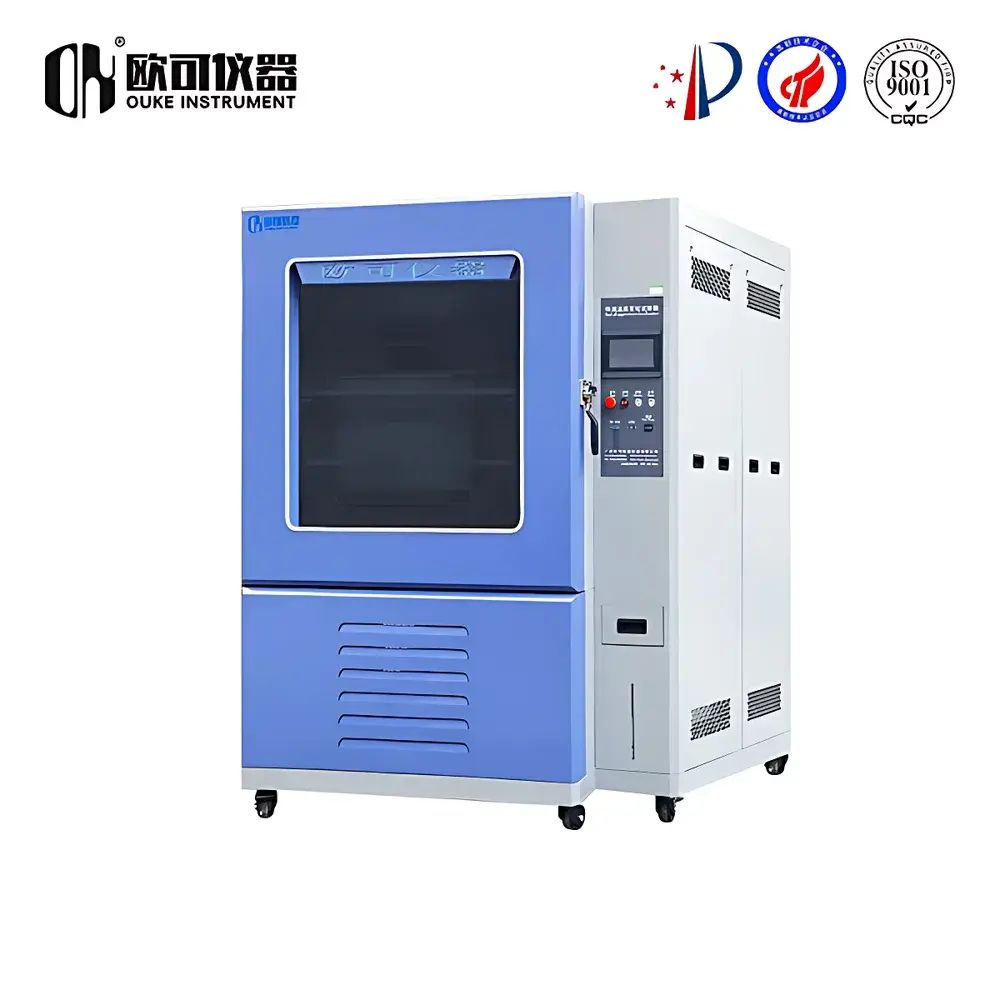
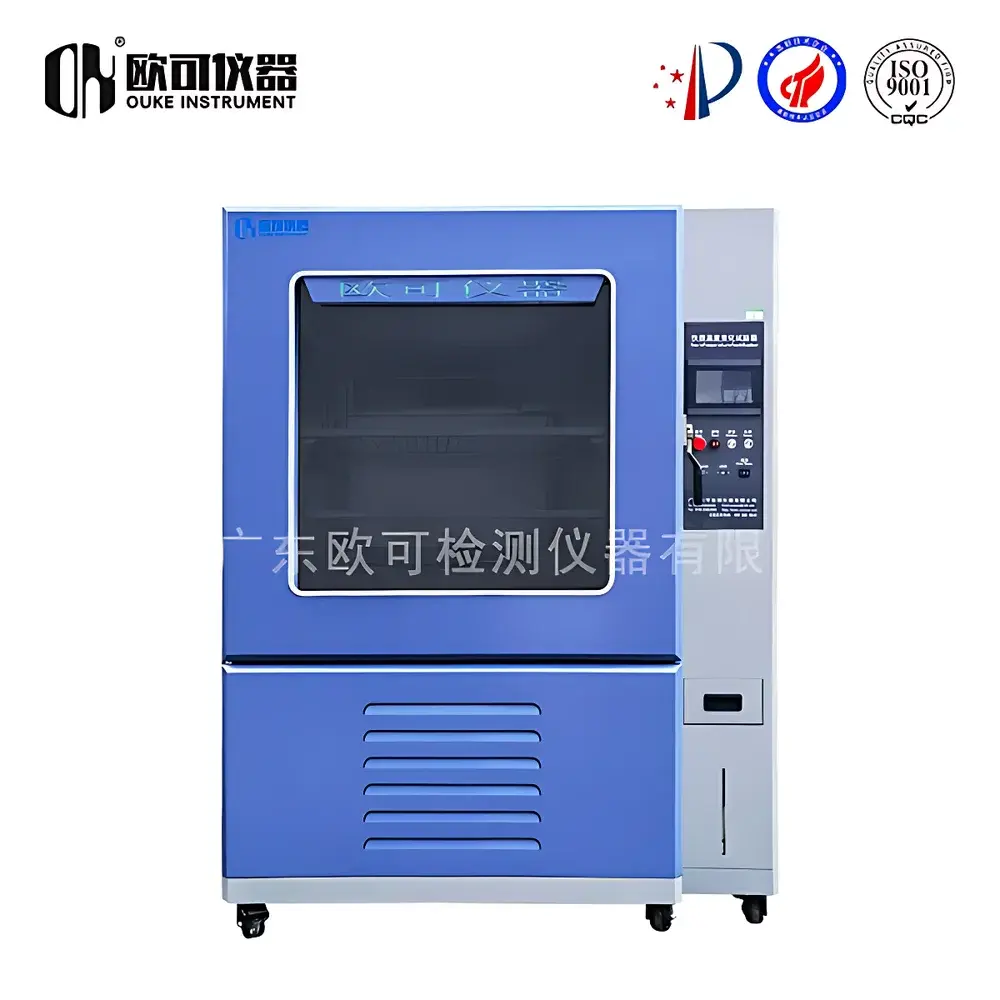
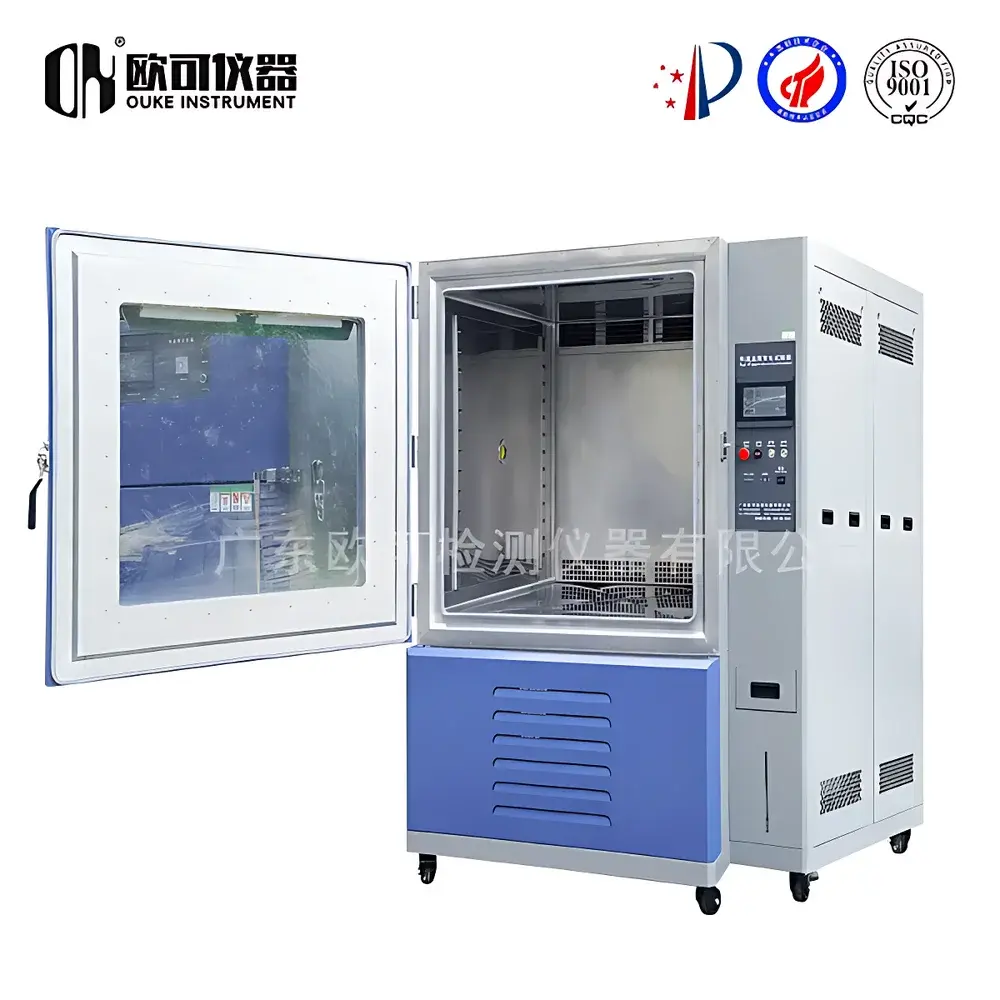
OK KS-TH-155 Rapid Temperature Change Environmental Test Chamber
| Brand | OK |
|---|---|
| Origin | Guangdong, China |
| Manufacturer Type | Direct Manufacturer |
| Product Origin | Domestic |
| Model | KS-TH-155 |
| Price | ¥58,000 |
| Temperature Range | −70 °C to +150 °C (selectable) |
| Refrigeration Method | Cascade Compression Refrigeration |
| Explosion-Proof Option | Standard (Non-Explosion-Proof) |
| Temperature Fluctuation | ±0.5 °C |
| Temperature Deviation | ±2.0 °C |
| Temperature Uniformity | 2.0 °C |
| Heating Rate | ≤60 min (from −40 °C to +85 °C) |
| Cooling Rate | ≤45 min / ≤60 min / ≤80 min (model-dependent configuration) |
| Internal Chamber Dimensions (W×H×D) | 500 × 600 × 500 mm |
Overview
The OK KS-TH-155 Rapid Temperature Change Environmental Test Chamber is an engineered thermal stress screening system designed for accelerated reliability validation of electronic components, automotive ECUs, aerospace subsystems, and high-performance materials. Unlike conventional environmental chambers that simulate gradual ambient transitions, this chamber implements controlled, high-rate thermal cycling—achieving programmable temperature ramps up to 25 °C/min under no-load conditions—by integrating cascade compression refrigeration with precision-controlled electric heating and high-velocity air circulation. Its operational principle is rooted in thermomechanical fatigue induction: rapid expansion and contraction of material interfaces generate interfacial shear stresses, exposing latent defects in solder joints, die attach layers, PCB laminates, and hermetic seals long before field failure occurs. The system complies with core acceleration test standards including IEC 60068-2-14 (Change of Temperature), MIL-STD-883 Method 1010.8 (Temperature Cycling), JESD22-A104 (Temperature Cycling), and GJB 150.5A–2012 (Temperature Shock and Cycling). It is not intended for climatic simulation but rather for deterministic defect excitation via calibrated thermal transients.
Key Features
- Cascade Dual-Stage Refrigeration System: Equipped with industrial-grade compressors (e.g., Bitzer or Dalian Duling), optimized for deep-cold operation down to −70 °C; supports optional liquid nitrogen (LN₂) assist for enhanced cooling power during transient phases.
- High-Dynamic Thermal Actuation: 3 kW stainless-steel sheathed heaters integrated into a vertical airflow duct; combined with a high-CFM centrifugal blower (>800 m³/h), enabling uniform heat transfer across the full work volume.
- Predictive PID+ Control Architecture: Touchscreen controller with adaptive algorithm that coordinates simultaneous modulation of heating output, compressor staging, and (if equipped) LN₂ solenoid valve timing—minimizing overshoot and ensuring linearity within ±1.5 °C of target ramp profiles.
- Robust Thermal Chamber Construction: Interior chamber fabricated from SUS304 stainless steel; insulated with ≥120 mm thick polyurethane foam (λ ≤ 0.022 W/m·K); triple-layer heated observation window with anti-frost coating ensures optical clarity at sub-zero temperatures.
- Comprehensive Safety & Diagnostics: Redundant over-temperature cutoff (mechanical and electronic), compressor high-pressure/low-pressure protection, phase failure detection, ground fault interruption, and real-time fault logging with timestamped event history.
Sample Compatibility & Compliance
The KS-TH-155 accommodates samples up to 50 kg total mass with active thermal load ≤ 300 W (self-heating), maintaining specified ramp rates per IEC 60068-2-14 Annex B. Chamber internal dimensions (500 × 600 × 500 mm) support standard test fixtures, DUT mounting plates, and cable feedthroughs via two 50 mm diameter insulated ports with silicone gaskets. All thermal performance specifications—including temperature uniformity (≤2.0 °C), fluctuation (±0.5 °C), and deviation (±2.0 °C)—are verified per ISO 16750-4 and ASTM E145-22 Annex A4 using NIST-traceable Class A PT100 sensors at nine designated measurement points. The system supports GLP-compliant operation through configurable audit trails, user access levels, and electronic signature-capable report generation.
Software & Data Management
Bundled PC software (OK-EnviroLink v3.2) provides full remote supervision via Ethernet or RS-485. Users define multi-segment thermal profiles—including non-linear ramps, dwell periods, and conditional triggers—with up to 999 cycles per program. Real-time data acquisition records chamber setpoint, chamber mean temperature, sensor-specific readings, compressor status, heater duty cycle, and LN₂ consumption (if fitted) at user-selectable intervals (1–60 s). Export formats include CSV, PDF test reports with embedded trend plots, and XML-compatible datasets compliant with FDA 21 CFR Part 11 requirements for electronic records and signatures. Historical data is stored locally on the controller’s 4 GB flash memory and synchronized automatically to network drives.
Applications
- Environmental Stress Screening (ESS) per GJB 1032A–2019 for military-grade electronics prior to delivery.
- Thermal cycling qualification of EV battery modules, BMS controllers, and ADAS radar units under SAE J2380 and LV-124 conditions.
- Failure analysis root cause isolation—reproducing intermittent opens/shorts induced by CTE mismatch in stacked-die packages or flex-rigid PCB assemblies.
- Material science studies: evaluating delamination thresholds in carbon fiber composites, glass transition hysteresis in thermoplastics, and crack propagation kinetics in ceramic substrates.
- Pre-compliance testing for automotive OEM specifications such as GMW3172, Ford EMC-CS-2009.1, and VW 80101.
FAQ
What distinguishes rapid temperature change from thermal shock testing?
Rapid temperature change employs a single-chamber design with continuous, linear ramping (e.g., −40 °C → +85 °C in 5 min), inducing cumulative thermo-mechanical fatigue. Thermal shock uses dual- or tri-chamber configurations with abrupt transfers (<15 s), producing instantaneous strain gradients—suited for brittle material evaluation.
Can the KS-TH-155 operate without liquid nitrogen?
Yes. The base configuration uses cascade mechanical refrigeration only. LN₂ assist is an optional upgrade for applications requiring sub-60 s cooling from +85 °C to −40 °C under loaded conditions.
Is calibration certification included with shipment?
Each unit ships with a factory calibration certificate traceable to CNAS-accredited laboratories, covering temperature uniformity, fluctuation, and deviation across the full operating range. Optional annual recalibration services are available.
How is data integrity ensured during extended tests?
The controller features dual-storage redundancy: real-time logging to internal flash memory and simultaneous streaming to external USB or network storage. Power-loss recovery resumes programs from last valid checkpoint with full parameter retention.
What maintenance intervals are recommended?
Compressor oil and filter replacement every 12 months or 4,000 operating hours; condenser coil cleaning quarterly; refrigerant leak inspection semiannually; and full system performance verification annually per ISO/IEC 17025 guidelines.
Related Products



