
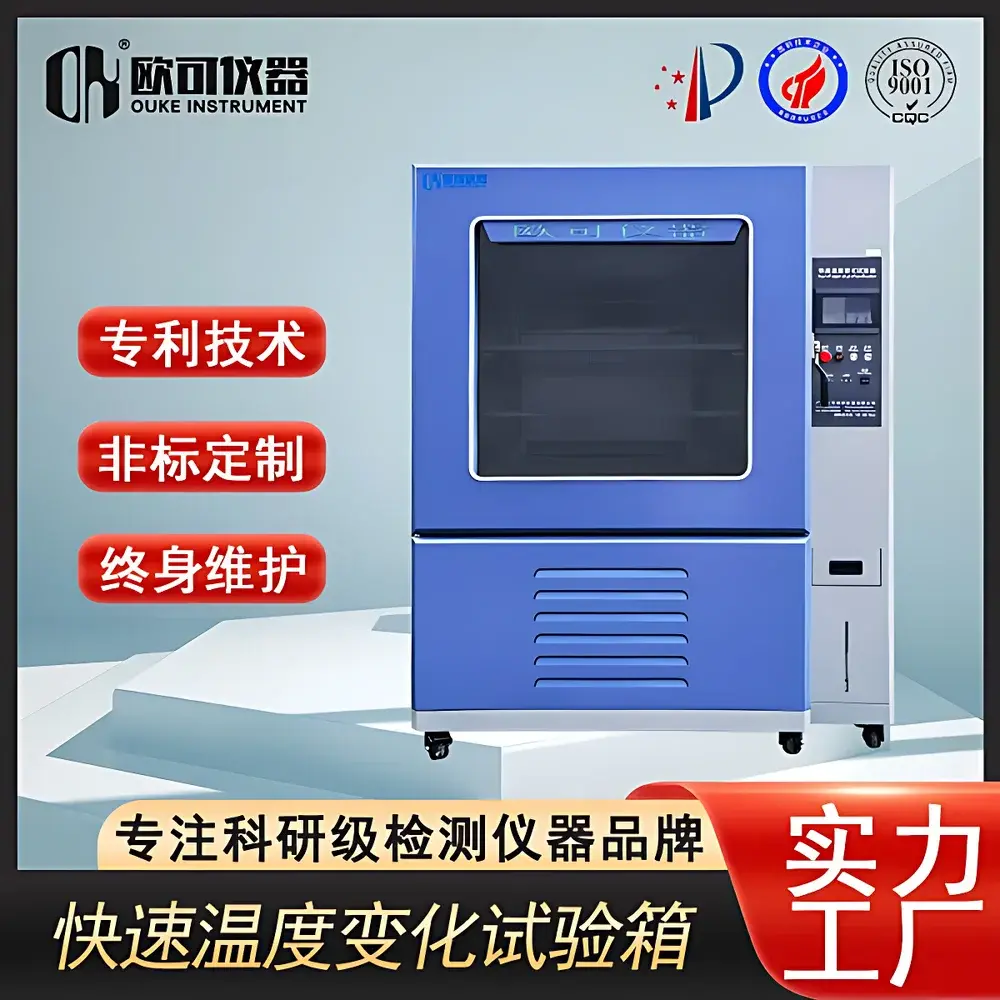
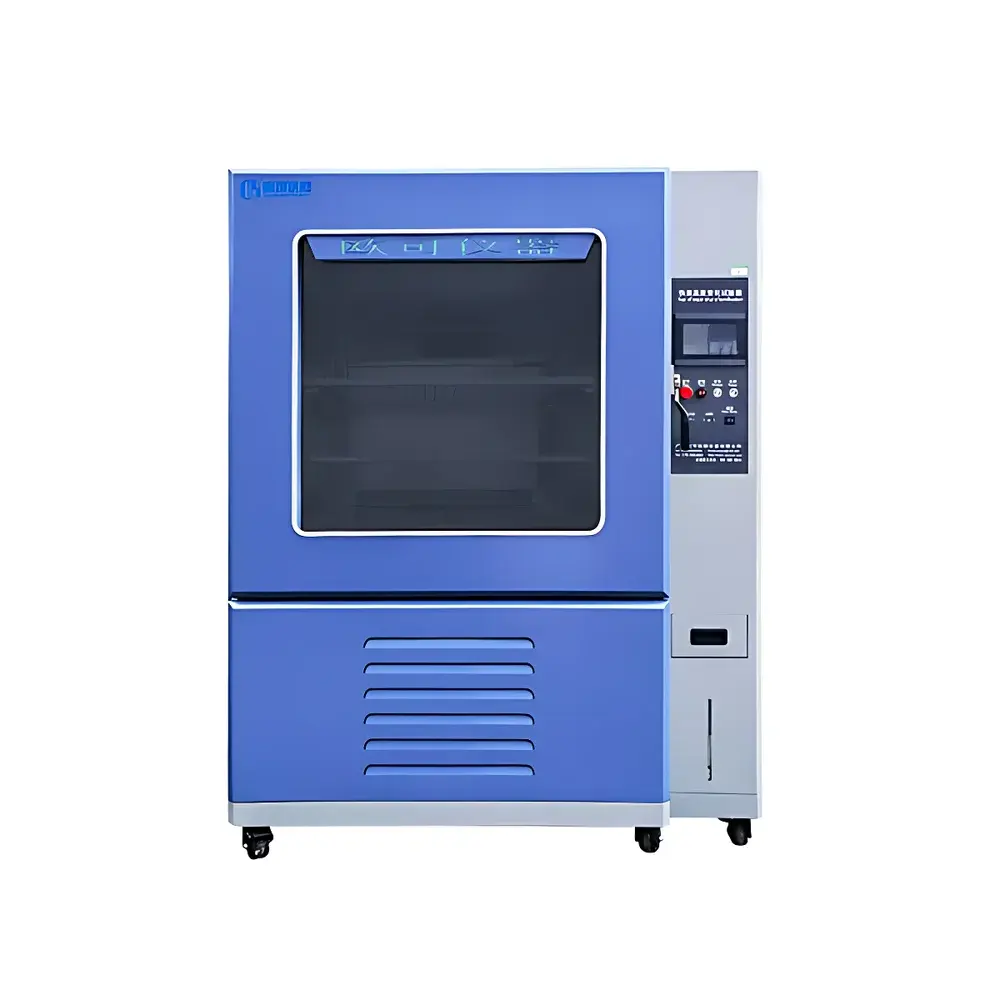
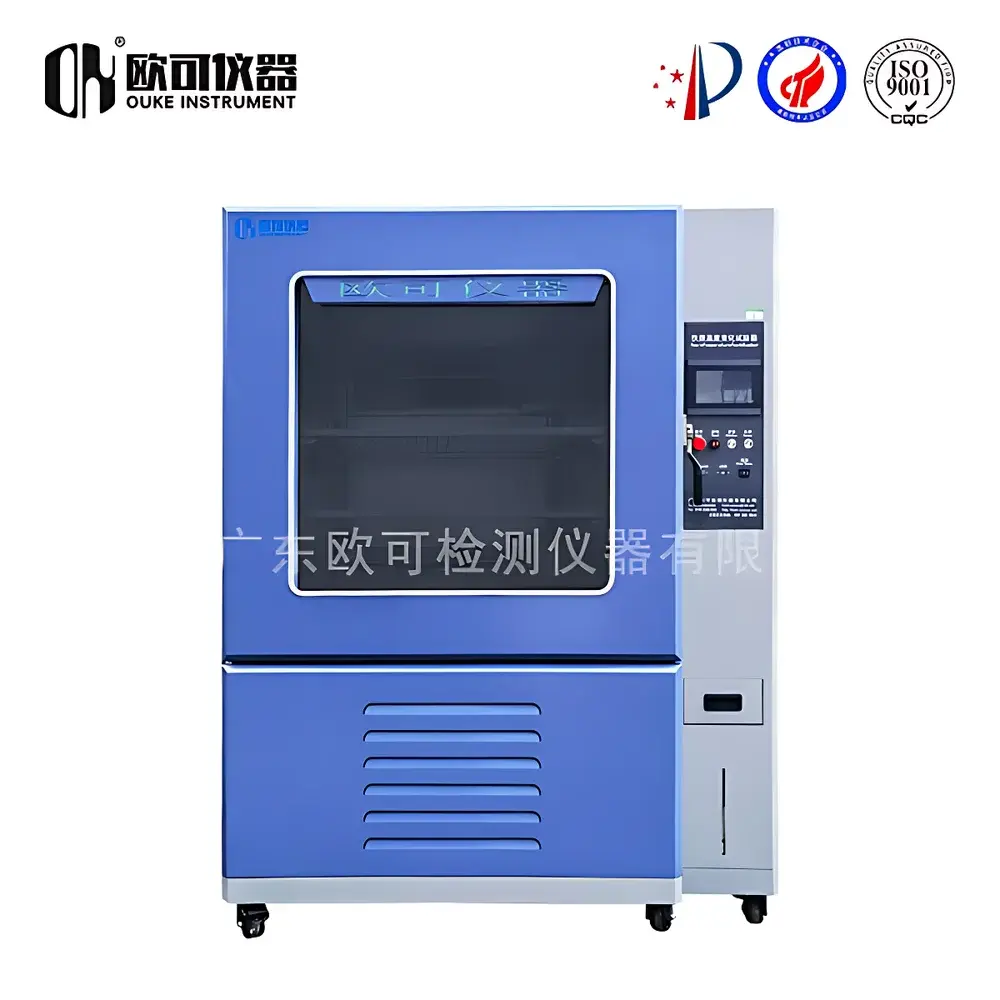
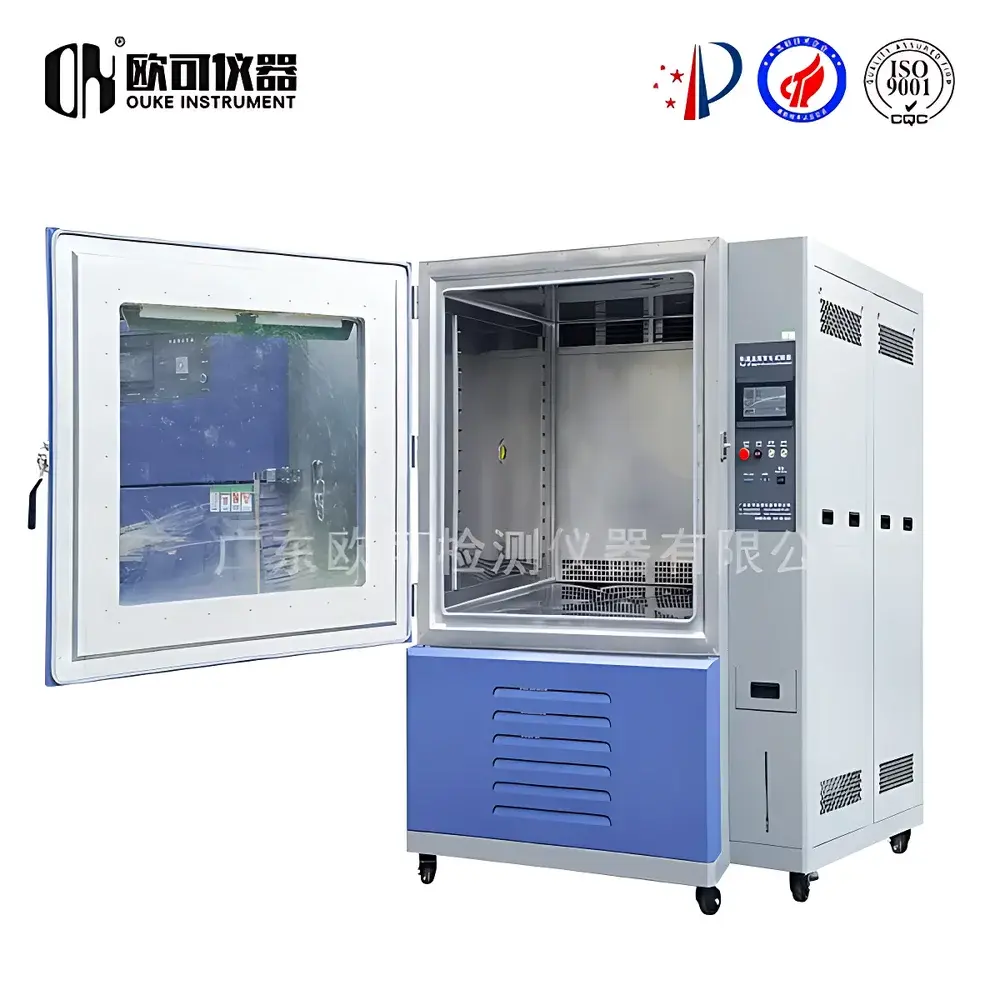
OK KS-TH-225 Advanced Rapid Thermal Cycling Environmental Test Chamber
| Brand | OK Instruments |
|---|---|
| Origin | Guangdong, China |
| Manufacturer Type | Direct Manufacturer |
| Country of Origin | China |
| Model | KS-TH-225 |
| Price | ¥78,000 |
| Temperature Range | -70°C to +150°C |
| Refrigeration Method | Cascade Compressor System (Dual-Stage) |
| Explosion-Proof Design | Standard (Non-Explosion-Proof) |
| Temperature Fluctuation | ±0.5°C |
| Temperature Deviation | ±2.0°C |
| Temperature Uniformity | ±2.0°C |
| Heating Rate | ≤60 min (from -40°C to +85°C) |
| Cooling Rate | ≤45 min / ≤60 min / ≤80 min (model-dependent cooling profiles) |
| Internal Chamber Dimensions (W×H×D) | 500 × 750 × 600 mm |
Overview
The OK KS-TH-225 Advanced Rapid Thermal Cycling Environmental Test Chamber is an engineered solution for accelerated reliability testing via controlled, high-rate thermal stress application. Unlike conventional environmental chambers designed for steady-state or slow-ramp conditioning, the KS-TH-225 implements a dynamic thermal cycling methodology grounded in controlled convective heat transfer and predictive multi-loop control architecture. Its operational principle centers on inducing rapid, repeatable thermal gradients across test specimens—thereby generating cyclic thermo-mechanical strain in materials, solder joints, laminates, and interconnects. This process accelerates failure mechanisms such as intermetallic growth, delamination, coefficient-of-thermal-expansion (CTE) mismatch fatigue, and microcrack propagation—phenomena that would otherwise manifest only after months or years of field operation. The chamber does not simulate ambient climatic conditions; rather, it executes standardized stress profiles per IEC 60068-2-14, MIL-STD-883 Method 1010, JESD22-A104, and GJB 150.15A—making it a core tool in Environmental Stress Screening (ESS) and Highly Accelerated Life Testing (HALT) workflows.
Key Features
- Cascade refrigeration system with dual-stage compressors (e.g., Bitzer or DORIN equivalent), enabling stable low-temperature operation down to –70°C while maintaining thermal responsiveness;
- High-power resistive heating assembly integrated into a vertical airflow duct, delivering rapid, symmetric heating without localized hot spots;
- High-velocity forced convection system featuring a heavy-duty centrifugal blower and optimized air baffle design, ensuring ≥1.2 m/s average air velocity at specimen level and minimizing boundary-layer resistance;
- Predictive PID + feedforward control algorithm, dynamically coordinating compressor staging, heater duty cycle, and optional liquid nitrogen (LN₂) injection timing (when configured) to achieve linear or non-linear ramp profiles with minimal overshoot (<±0.3°C peak deviation);
- Stainless steel 304 inner chamber with 120 mm thick polyurethane insulation (foam density ≥40 kg/m³), reducing thermal leakage and stabilizing chamber wall temperature during transient cycles;
- Triple-pane electrically heated observation window with anti-frost coating, preserving optical clarity across the full operating range;
- Standard 50 mm diameter test port with silicone-sealed plug and thermal break collar, supporting sensor lead-through without compromising chamber integrity.
Sample Compatibility & Compliance
The KS-TH-225 accommodates electronic assemblies (PCBAs, ECUs, sensors), automotive modules (BMS, ADAS controllers), aerospace avionics housings, and polymer-based components up to 35 kg total mass. Its internal volume (0.225 m³) and uniform airflow distribution meet ISO 16750-4, AEC-Q200, and IPC-9701 requirements for thermal cycling validation. All control logic and data logging functions comply with GLP/GMP traceability principles: event timestamps are hardware-synchronized, alarm logs include cause codes and operator IDs, and parameter setpoints are protected by password-level access control. While the base configuration does not include LN₂ integration, optional retrofit kits support ASTM F2627-compliant cryogenic assist for sub–60°C ramp acceleration. The unit conforms to CE marking directives (2014/30/EU EMC, 2014/35/EU LVD) and meets UL 61010-1 safety requirements for laboratory equipment.
Software & Data Management
Equipped with a 10.1-inch capacitive touchscreen HMI running OK’s proprietary TCS-3000 control firmware, the chamber supports up to 99 programmable test profiles—each comprising up to 99 segments (ramp/soak/hold) with independent rate, tolerance, and dwell settings. Real-time monitoring includes chamber air temperature, controller setpoint, compressor discharge pressure, and fan RPM. Data is logged at user-selectable intervals (1–60 s) and stored internally (≥30 days at 10 s resolution) or exported via USB 2.0 to CSV or Excel-compatible formats. Optional PC software (OK-DataLink v4.2) provides remote Ethernet supervision, profile cloning, statistical process reporting (Cp/Cpk on cycle time deviation), and PDF report generation compliant with FDA 21 CFR Part 11 audit trail requirements—including electronic signature capture and immutable log archiving.
Applications
- Pre-shipment ESS screening for automotive electronics per GM W3177 and Ford EMV-12102;
- Thermal fatigue qualification of power semiconductor packages (SiC MOSFETs, IGBT modules) under JEDEC JESD22-A104D;
- Validation of conformal coating adhesion and PCB warpage behavior during repeated –55°C ↔ +125°C excursions;
- Accelerated aging of lithium-ion battery cells and modules under simulated charge/discharge thermal transients;
- Material compatibility testing for aerospace sealants, thermal interface materials (TIMs), and composite layups per NASA-STD-6002;
- Root-cause analysis of intermittent faults traced to solder joint fracture or wire bond lift-off.
FAQ
What distinguishes rapid thermal cycling from thermal shock testing?
Rapid thermal cycling applies continuous, controlled temperature ramps (e.g., 15°C/min) within a single chamber, inducing cumulative thermo-mechanical fatigue. Thermal shock uses discrete, near-instantaneous transfers between separate hot/cold zones (typically <5 min transition), emphasizing brittle fracture and interface delamination.
Can the KS-TH-225 operate without liquid nitrogen?
Yes—the standard configuration relies solely on cascade mechanical refrigeration. LN₂ assist is an optional upgrade for enhanced cooling rates below –40°C.
Is the temperature uniformity specification verified per ISO 16750-4 Annex B?
Yes—uniformity is measured using nine calibrated PT100 sensors at defined spatial locations per ISO 16750-4:2018 Clause 6.3.1, with results documented in the factory calibration certificate.
Does the controller support custom ramp profiles with variable rates per segment?
Yes—each segment allows independent ramp rate (°C/min), soak duration, and upper/lower tolerance bands, enabling complex profiles such as “slow ramp to +85°C → fast ramp to –40°C → extended dwell at –40°C.”
What maintenance intervals are recommended for the refrigeration system?
Compressor oil and filter replacement every 12 months or 4,000 operating hours; annual verification of refrigerant charge and condenser coil cleanliness; biannual calibration of all temperature sensors against NIST-traceable standards.



