
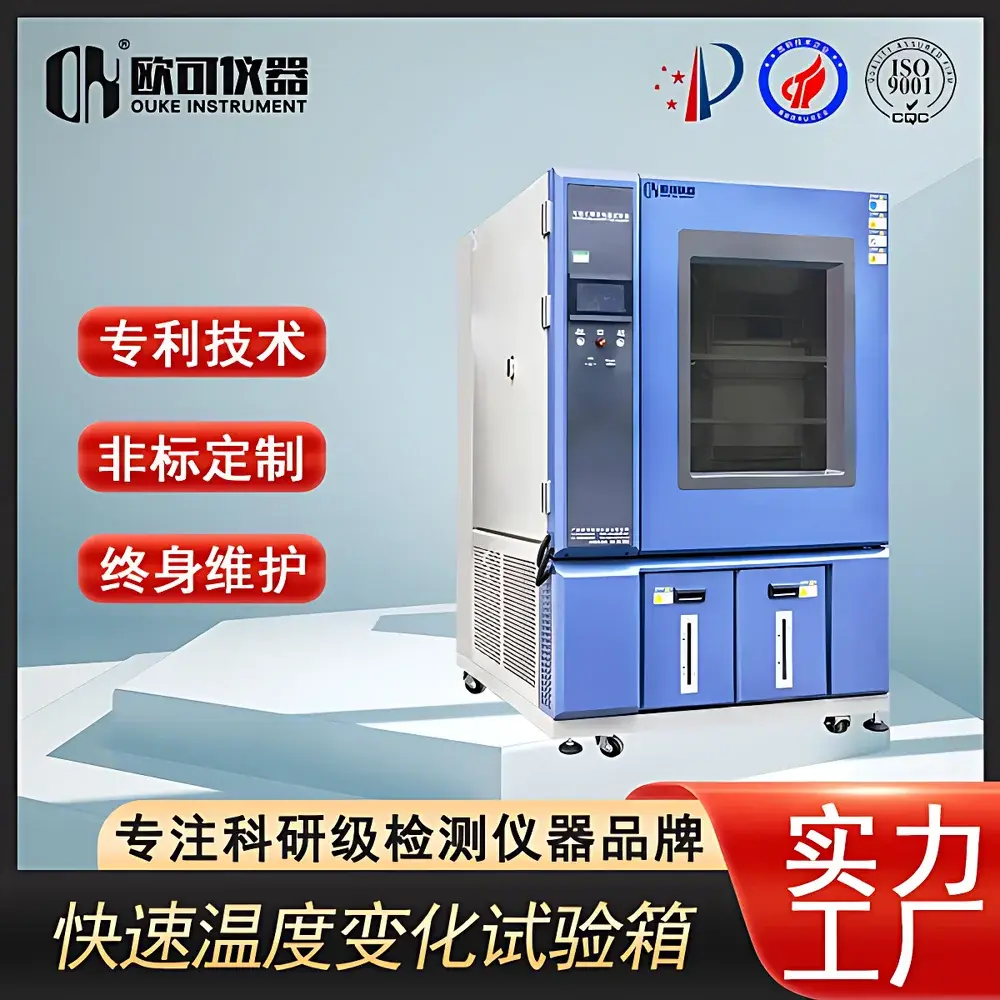
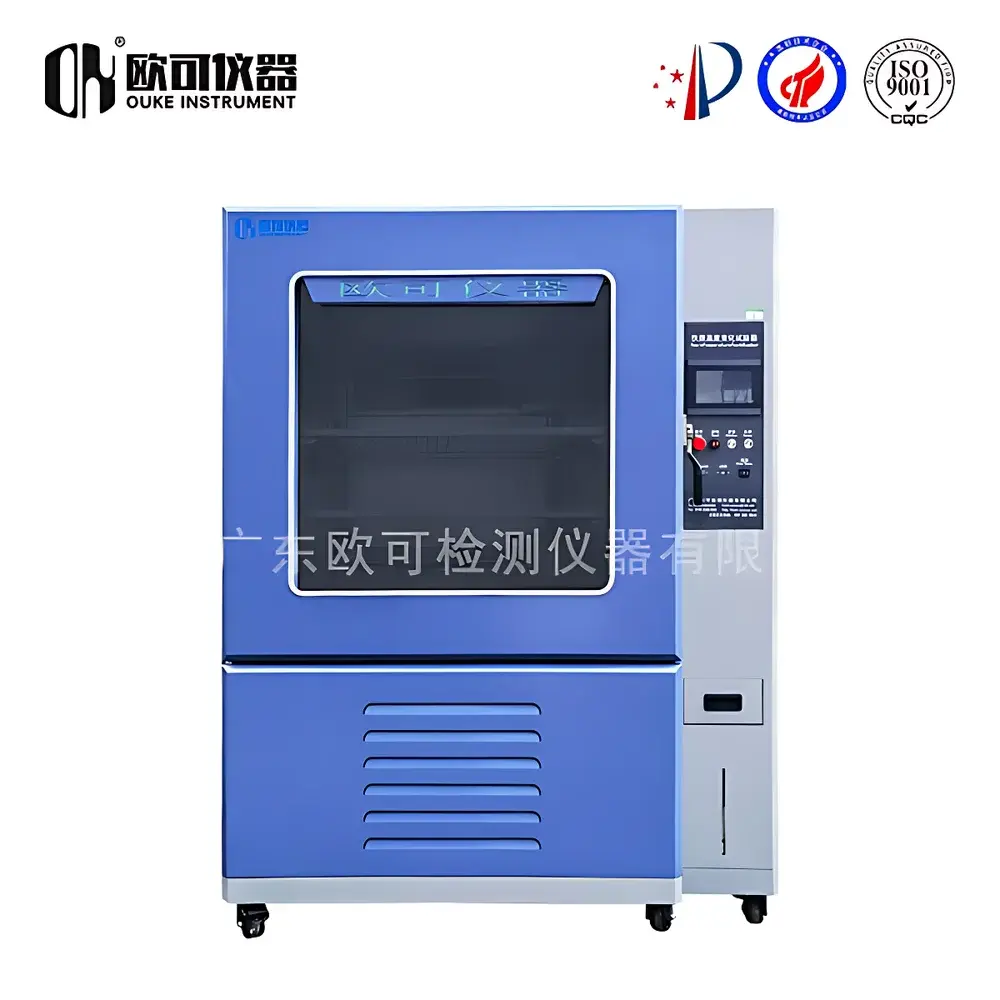
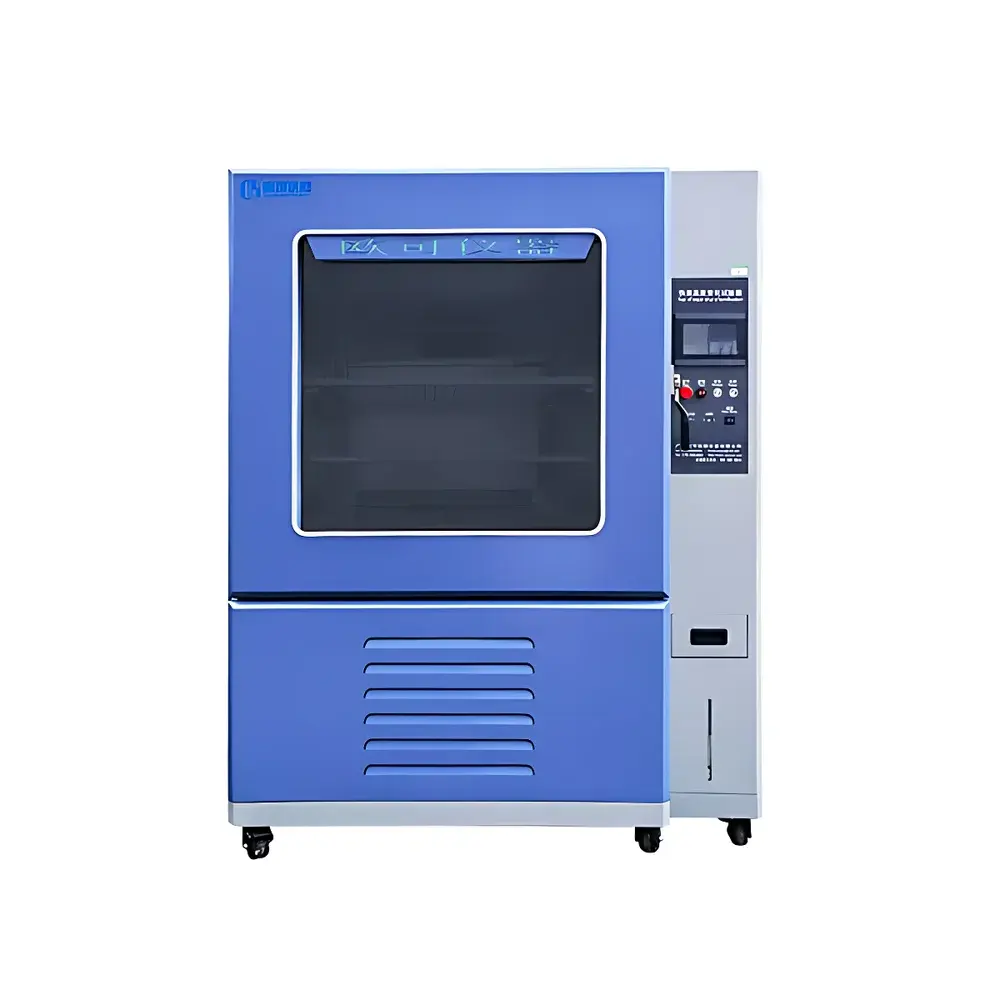
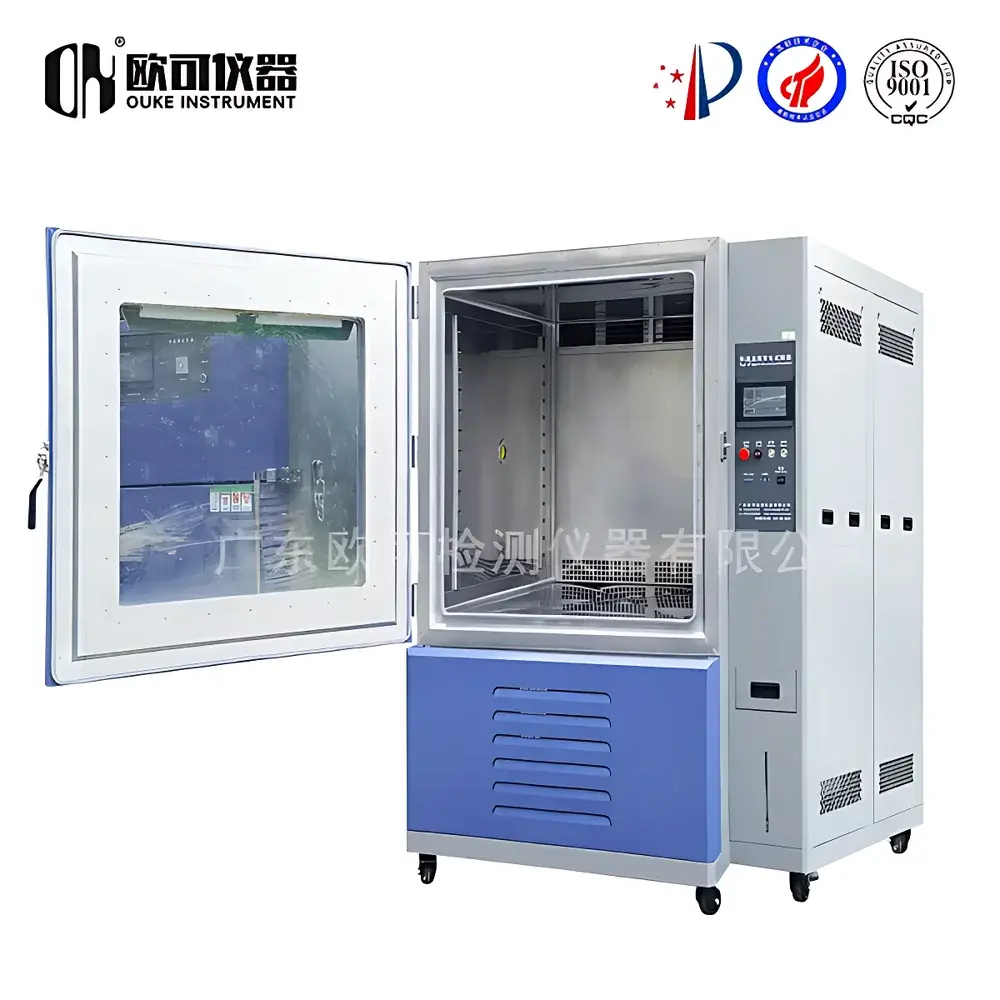
OK KS-TH-800 Rapid Temperature Transition Environmental Test Chamber
| Brand | OK Instruments |
|---|---|
| Origin | Guangdong, China |
| Manufacturer Type | OEM/ODM Producer |
| Country of Origin | China |
| Model | KS-TH-800 |
| Price | ¥98,000 CNY |
| Temperature Range | −70 °C to +150 °C |
| Refrigeration Method | Cascade Compressor System (Dual-Stage) |
| Explosion-Proof Option | Standard (Non-Explosion-Proof) |
| Temperature Fluctuation | ±0.5 °C |
| Temperature Uniformity | ±2.0 °C |
| Temperature Deviation | ±2.0 °C |
| Ramp-Up Time | ≤60 min (−70 °C to +150 °C) |
| Ramp-Down Time | ≤45 min / ≤60 min / ≤80 min (configurable per test profile) |
| Internal Chamber Dimensions | 1000 × 1000 × 800 mm (W × D × H) |
Overview
The OK KS-TH-800 Rapid Temperature Transition Environmental Test Chamber is an engineered solution for accelerated environmental stress screening (ESS) and thermal fatigue validation in reliability engineering laboratories. Unlike conventional temperature chambers that simulate gradual ambient shifts, the KS-TH-800 implements controlled, high-rate linear temperature transitions—typically exceeding 10 °C/min under no-load conditions—to induce cyclic thermo-mechanical stress in electronic assemblies, automotive control units, aerospace avionics, and advanced material systems. Its operational principle relies on a synergistic triad: a dual-stage cascade refrigeration system with optional liquid nitrogen (LN₂) assist for rapid sub-zero ramp-down; high-power resistive heating elements integrated into a high-velocity vertical airflow duct; and a predictive PID+ feedforward control architecture that dynamically modulates refrigerant expansion, LN₂ injection timing, and heater duty cycle to maintain profile fidelity while minimizing overshoot and dwell instability. The chamber is not intended for climatic simulation but for deterministic defect excitation—accelerating failure mechanisms such as solder joint cracking, intermetallic delamination, sealant shrinkage, and PCB trace fatigue within hours rather than years.
Key Features
- High-performance cascade compressor refrigeration system (dual-stage), compatible with optional liquid nitrogen auxiliary cooling for enhanced low-temperature ramp rates below −40 °C
- Robust internal construction using SUS304 stainless steel inner chamber and ≥150 mm thick polyurethane insulation (foam density ≥40 kg/m³) for minimized thermal leakage and stable thermal inertia
- High-efficiency centrifugal blower system with optimized vertical air distribution ducting (top-out/bottom-return configuration) ensuring uniform airflow velocity (>2.5 m/s) across full load volume
- Intelligent 10.4″ color touchscreen controller with real-time waveform display, multi-segment programmable profiles (up to 999 cycles, 999 segments), and built-in self-diagnostic routines
- Comprehensive safety architecture including over-temperature cut-off, compressor high-pressure/low-pressure protection, phase failure detection, and door interlock with emergency stop
- Standard RS-485 and Ethernet interfaces supporting Modbus TCP and custom SCADA integration; USB port for data export (CSV/TXT) and firmware updates
Sample Compatibility & Compliance
The KS-TH-800 accommodates test specimens up to 1000 × 1000 × 800 mm with provision for standardized 50 mm diameter cable ports (with insulated, thermally sealed covers) and double-layer electrically heated anti-frost observation window (tempered glass + ITO coating). It supports both powered and unpowered device-under-test (DUT) configurations, with optional load capacity derating guidance provided per customer thermal mass specification. The chamber meets structural and functional requirements aligned with MIL-STD-810H Method 503.5 (Temperature Shock), IEC 60068-2-14 (Change of Temperature), JESD22-A104E (Temperature Cycling), and GJB 150.5A–2009 (Temperature Shock Testing). While not certified to ATEX or IECEx, its standard configuration complies with CE marking directives (2014/30/EU EMC, 2014/35/EU LVD) and supports GLP/GMP-aligned audit trails when used with optional data logging software.
Software & Data Management
The optional OK-TCS LabView-based remote monitoring suite enables full profile creation, real-time parameter visualization (chamber setpoint, chamber sensor feedback, LN₂ valve status, compressor discharge temperature), and synchronized multi-channel data acquisition (up to 16 external thermocouple inputs via optional expansion module). All test sessions generate timestamped binary logs with CRC-32 integrity verification, exportable in CSV format compliant with ASTM E29–23 rounding conventions. Audit trail functionality includes user login history, parameter modification timestamps, and alarm event categorization (warning/critical/fatal)—fully traceable for FDA 21 CFR Part 11 compliance when deployed with Windows domain authentication and electronic signature modules. Raw data files retain metadata including chamber serial number, firmware version, calibration certificate ID, and operator ID.
Applications
- Environmental Stress Screening (ESS) of printed circuit board assemblies (PCBAs) per GJB 1032A–2019 and IPC-9701A standards
- Thermal cycling validation of battery management systems (BMS), ADAS sensors, and power electronics modules under ISO 16750-4 automotive environmental requirements
- Failure mode reproduction and root cause analysis (RCA) for field returns linked to thermal expansion mismatch or CTE-induced microcracking
- Qualification testing of space-grade components per ECSS-Q-ST-70-08C, including thermal vacuum compatibility assessment pre-qualification
- Material science research on polymer matrix composites, ceramic coatings, and MEMS packaging under repeated thermal shock loading
- Process validation for reflow soldering line changes, conformal coating formulations, and underfill material selection
FAQ
What distinguishes rapid temperature transition from thermal shock testing?
Rapid temperature transition employs continuous, linear ramping between extremes (e.g., −55 °C → +125 °C at 15 °C/min), inducing cumulative thermo-mechanical fatigue. Thermal shock uses discontinuous, near-instantaneous transfers between separate hot/cold zones—producing brittle fracture-dominated failure modes.
Can the KS-TH-800 operate without liquid nitrogen?
Yes. The base configuration uses only cascade mechanical refrigeration and achieves −70 °C with ramp-down times ≤80 min. LN₂ assist is optional and reduces ramp-down time to ≤45 min, particularly beneficial for high-cycle-count ESS protocols.
How is temperature uniformity validated during qualification?
Per IEC 60068-3-5, a 9-point sensor array (center + eight corners) is placed at 1/10th and 9/10th chamber depth; uniformity is calculated as maximum deviation from mean across all points during stabilized hold phases.
Is remote firmware update supported?
Yes—via secure HTTPS interface using signed .bin packages verified by SHA-256 hash prior to installation; rollback capability preserved for critical revisions.
What maintenance intervals are recommended for the cascade refrigeration system?
Compressor oil and filter replacement every 8,000 operating hours; annual refrigerant purity analysis (moisture <25 ppm, acidity <0.1 mg KOH/g); biannual calibration of platinum RTD sensors traceable to NIST standards.



