
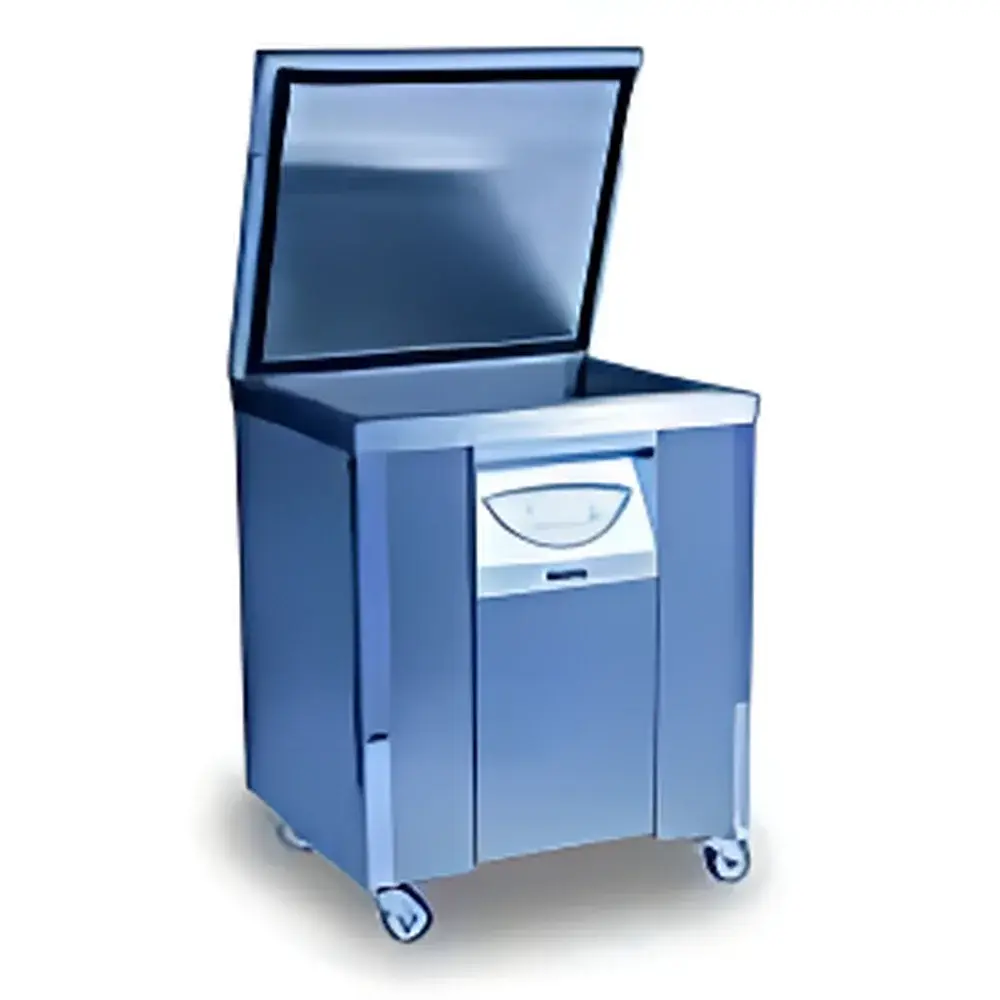
KUDOS SK-12TC / SK-18TC / SK-24TC / SK-36TC Advanced Floor-Standing Heated Ultrasonic Cleaner with LCD Control
| Brand | KUDOS |
|---|---|
| Origin | Shanghai, China |
| Model Series | SK-12TC / SK-18TC / SK-24TC / SK-36TC |
| Tank Capacity | 26–123 L |
| Ultrasonic Frequency | 25 kHz |
| Ultrasonic Power Output | 500–1500 W (adjustable from 40% to 100% in 1% increments) |
| Heating Range | 20–60 °C |
| Heating Power | 450–1900 W |
| Timer Range | 1–199 min |
| Tank Material | 304 Stainless Steel |
| Drain Valve | Integrated 304 stainless steel valve |
| Transducer Count | 12 / 18 / 24 / 36 units |
| External Dimensions (W×D×H) | 44×45×52 cm to 90×70×82 cm |
| Internal Tank Dimensions (W×D×H) | 38×28×25 cm to 83×53×28 cm |
Overview
The KUDOS SK-TC Series represents a purpose-engineered line of floor-standing heated ultrasonic cleaners designed for high-throughput laboratory and industrial cleaning applications requiring consistent thermal energy input and robust acoustic cavitation. Operating at a fixed frequency of 25 kHz, these systems generate stable, low-frequency ultrasonic waves optimized for dislodging tenacious particulate contamination—such as metal oxides, machining oils, biological residues, and dried polymer films—from complex geometries, blind holes, and porous substrates. The integration of precision digital temperature control (20–60 °C), wide-range power modulation (40–100% in 1% steps), and extended timer capability (1–199 min) enables method reproducibility aligned with standard operating procedures (SOPs) in quality-controlled environments. All models feature a corrosion-resistant 304 stainless steel tank with welded seams, reinforced structural framing, and an integrated drain valve—ensuring long-term reliability under continuous duty cycles.
Key Features
- Four scalable configurations (SK-12TC to SK-36TC) supporting tank volumes from 26 L to 123 L—optimized for batch processing of large fixtures, glassware racks, or multiple instrument components.
- Digital LCD interface with real-time display of setpoint and actual values for temperature, time, and power level—enabling precise parameter recall and operator verification.
- Adjustable ultrasonic power output (500–1500 W) delivered via 12–36 piezoelectric transducers bonded to the tank bottom—engineered for uniform energy distribution and minimized standing-wave interference.
- Independent heating system with 450–1900 W capacity and ±1 °C thermal stability—supporting temperature-sensitive cleaning protocols without compromising cavitation efficiency.
- Compliance-ready design: 304 stainless steel construction meets ASTM A240 requirements; drain valve facilitates ISO 14644-compliant cleanroom maintenance; all electrical components conform to IEC 61010-1 safety standards.
Sample Compatibility & Compliance
The SK-TC series accommodates a broad range of sample types—including surgical instruments, optical lenses, semiconductor wafers, printed circuit boards (PCBs), ceramic substrates, and reusable labware—without risk of surface pitting or etching when operated within recommended parameters. Its 25 kHz frequency provides deeper penetration than higher-frequency alternatives, making it especially suitable for heavy-duty removal of carbonized residues and sintered particulates. Units are compatible with common aqueous detergents and low-volatility solvents (e.g., isopropanol, ethanol, and mild alkaline formulations). For regulated environments, the system supports GLP/GMP documentation workflows: time/temperature/power settings are manually logged per cycle, and the absence of network connectivity ensures data integrity in air-gapped facilities. While not inherently 21 CFR Part 11 compliant, audit trails can be maintained externally using calibrated external loggers and SOP-based recordkeeping.
Software & Data Management
These units operate via embedded microcontroller firmware—no external software or driver installation required. Parameter settings are retained in non-volatile memory after power cycling. Though no proprietary PC interface is included, the LCD panel allows full manual configuration of cleaning cycles, including sequential multi-step protocols (e.g., pre-rinse → ultrasonic soak → heated dwell → final rinse), each with independent time, temperature, and power assignments. Optional RS-232 or analog 0–10 V output modules (available upon request) enable integration into centralized facility monitoring systems for environmental logging and preventive maintenance scheduling.
Applications
- Pre-analytical sample preparation in clinical labs: decontamination of pipette tips, centrifuge rotors, and electrophoresis trays prior to nucleic acid extraction.
- Maintenance of metrology equipment: cleaning of CMM probe styli, laser interferometer optics, and calibration standards without micro-scratching.
- Electronics manufacturing: post-reflow flux residue removal from SMT assemblies and PCB edge connectors.
- Research instrumentation servicing: restoration of vacuum chamber components, mass spectrometer ion sources, and HPLC autosampler vials.
- Academic core facilities: high-volume cleaning of teaching lab glassware, histology cassettes, and microbiology Petri dishes across shared-use platforms.
FAQ
What is the recommended maintenance interval for transducer performance verification?
Transducer resonance and impedance should be verified annually using a calibrated impedance analyzer—or semi-annually in high-utilization environments—to ensure consistent cavitation intensity and prevent harmonic drift.
Can the unit operate without heating enabled while maintaining ultrasonic function?
Yes. Temperature control is fully decoupled from ultrasonic activation; users may run cold ultrasonic cycles (20 °C ambient) for thermally sensitive substrates such as certain polymers or protein-coated surfaces.
Is the tank geometry optimized for degassing prior to cleaning?
The rectangular tank design, combined with the 25 kHz frequency and programmable sweep mode (standard on all SK-TC models), promotes efficient dissolved gas removal during the initial 3–5 min of operation—critical for achieving maximum cavitation bubble collapse energy.
How does the drain valve facilitate compliance with ISO 13485 cleaning validation protocols?
The front-mounted, drip-free 304 stainless steel valve allows complete tank evacuation without disassembly—enabling repeatable rinse volume recovery tests and residue swab sampling at defined locations per ISO 13485 Annex B guidance.
Are replacement transducers field-serviceable by qualified technicians?
Yes. Transducer modules are mechanically bolted and electrically connected via IP67-rated quick-disconnect terminals—permitting individual unit replacement without tank removal or welding intervention.
Related Products



