
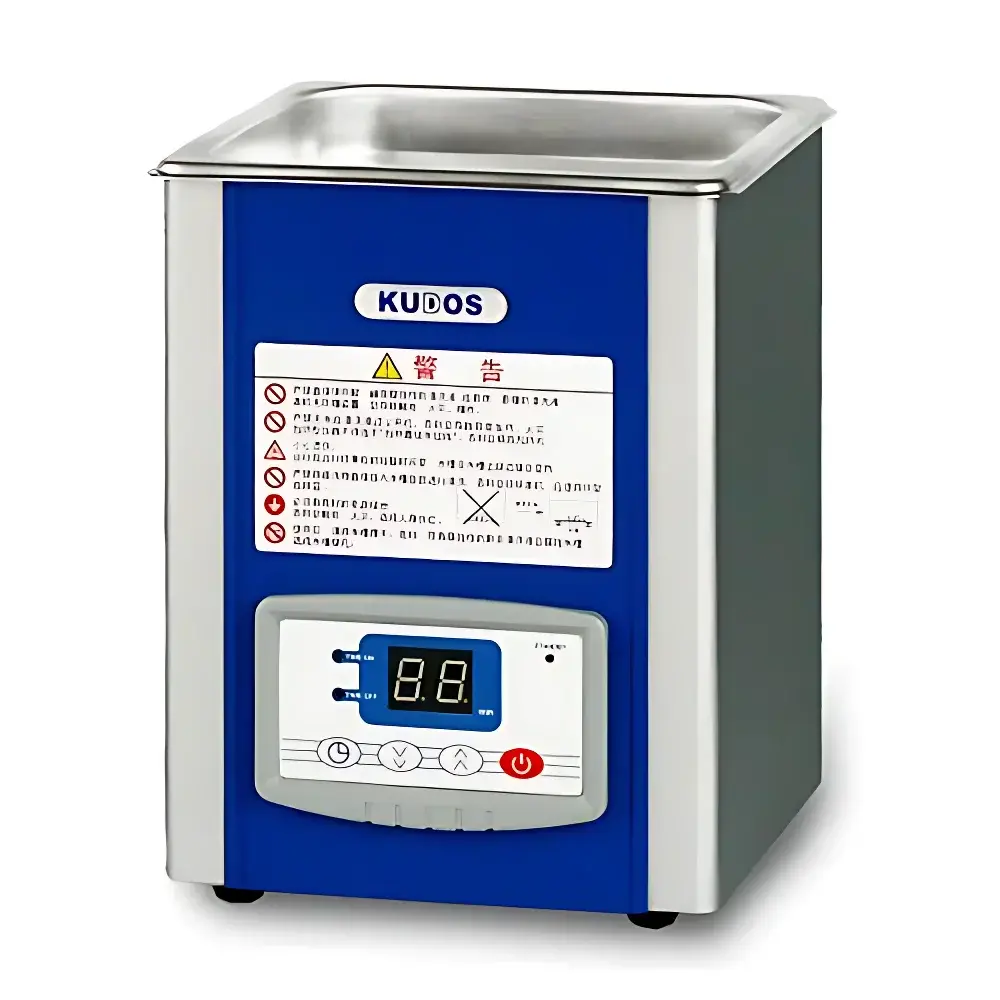
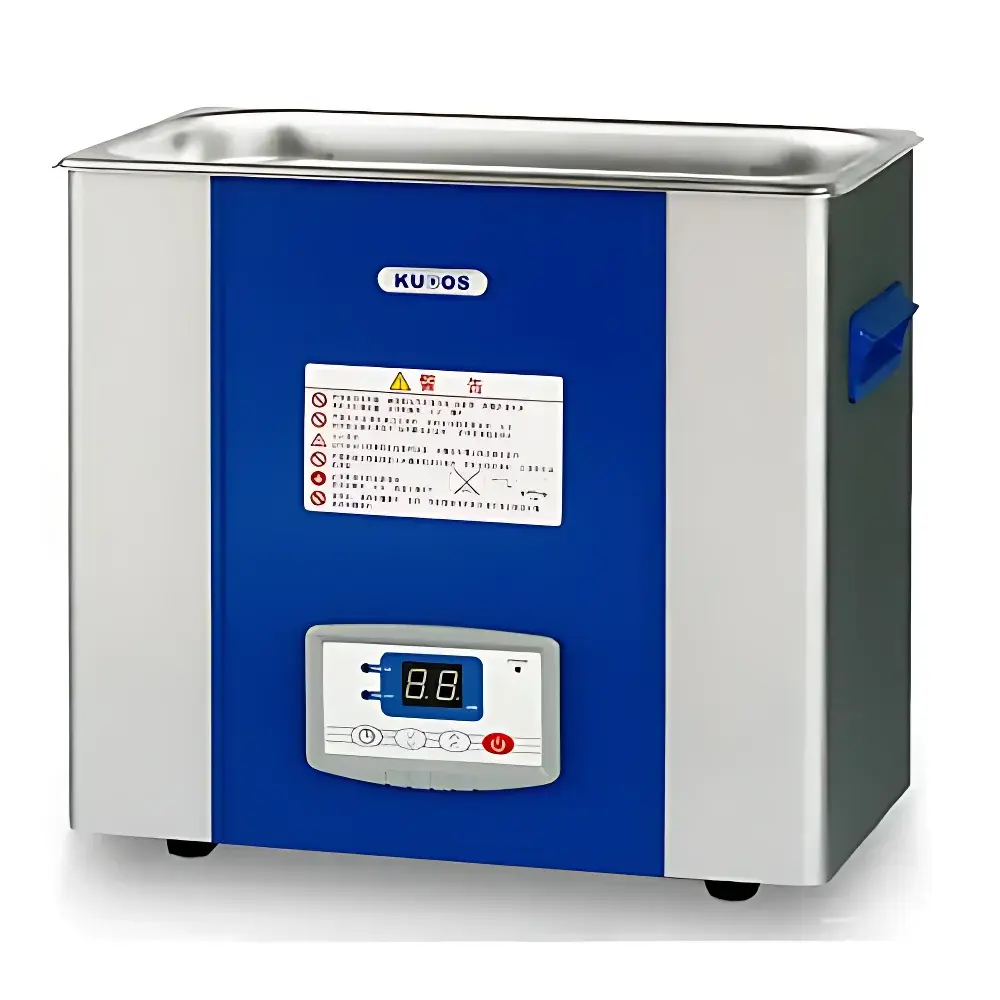
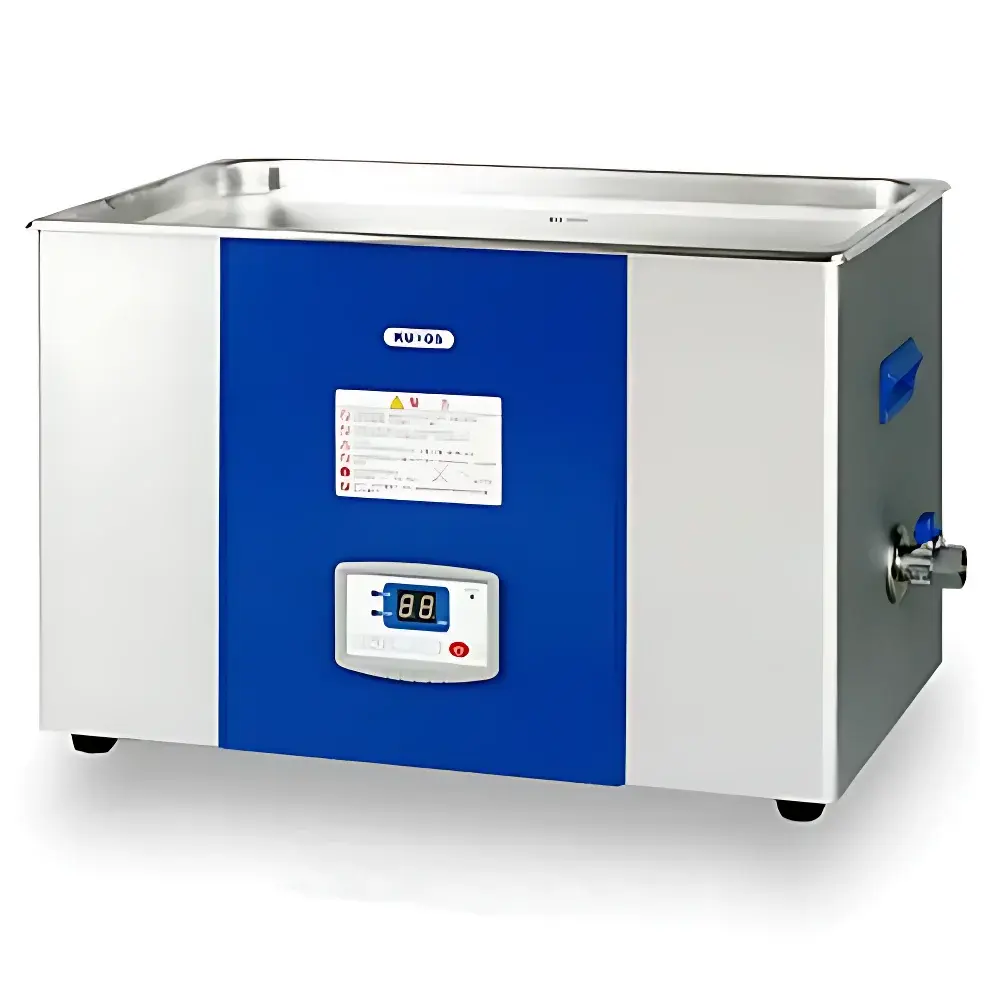
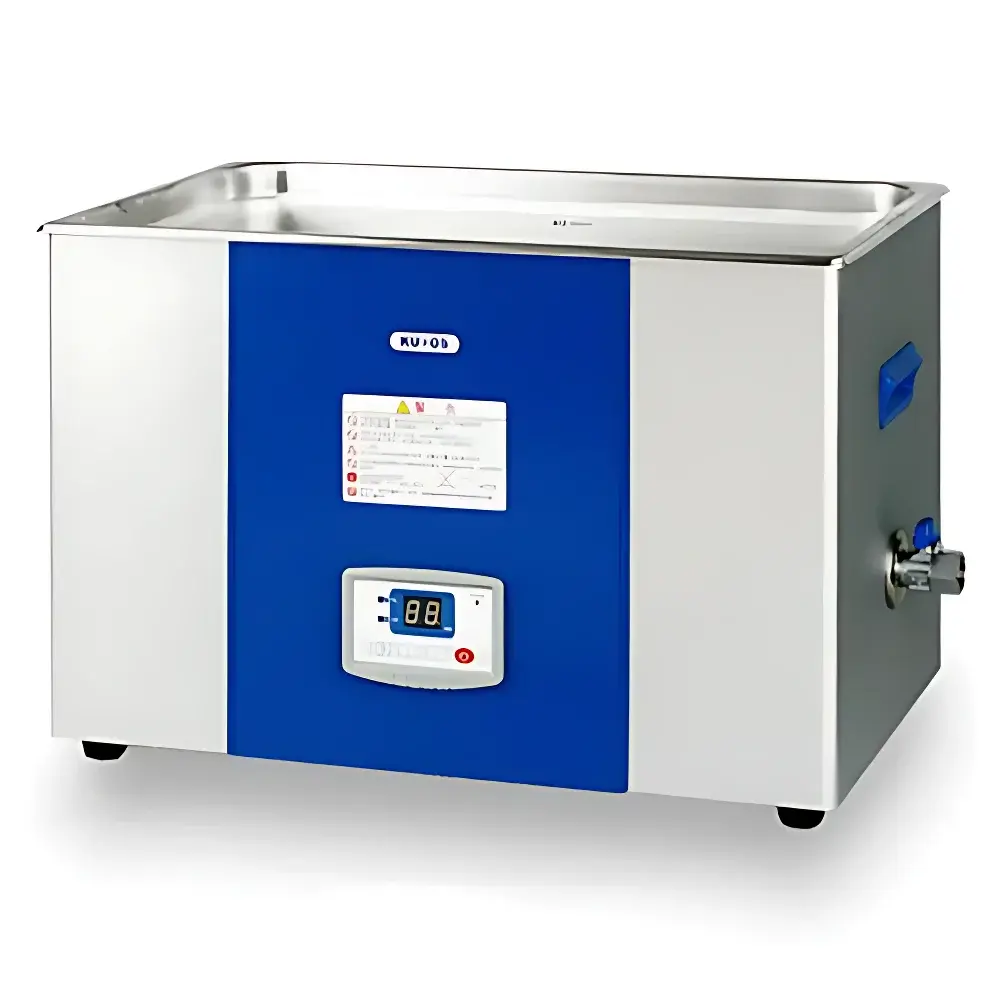
KUDOS SK1200B–SK7200B Series Benchtop Low-Frequency Ultrasonic Cleaner
| Brand | KUDOS |
|---|---|
| Origin | Shanghai, China |
| Model Range | SK1200B, SK2200B, SK3300B, SK5200B, SK7200B |
| Tank Capacity | 2–10 L |
| Ultrasonic Frequency | 35 kHz |
| Ultrasonic Power Output | 50–200 W |
| Timer Range | 1–99 min (digital display) |
| Tank Material | 304 Stainless Steel |
| Lid | Sound-Dampening Cover Included |
| Drain/Refill | Manual Control |
| Temperature Control | Not Available |
| Instrument Type | General-Purpose Ultrasonic Cleaner |
Overview
The KUDOS SK1200B–SK7200B Series Benchtop Low-Frequency Ultrasonic Cleaner is engineered for reliable, repeatable cleaning of laboratory components, precision parts, glassware, and small instrumentation accessories. Operating at a fixed frequency of 35 kHz, this series leverages low-frequency ultrasonic cavitation—characterized by larger, more energetic bubble collapse events—to deliver effective removal of particulate contaminants, oils, and loosely adhered residues from surfaces with moderate to high mass density. Unlike high-frequency systems (>80 kHz), which prioritize gentle cleaning of delicate microstructures, the 35 kHz architecture provides higher mechanical energy transfer per cycle, making it especially suitable for routine decontamination of metal tools, ceramic substrates, pipette tips, filter housings, and reusable labware prior to sterilization or analytical use. The unit’s compact benchtop form factor, integrated digital timer, and corrosion-resistant 304 stainless steel tank ensure compatibility with standard laboratory workflows under ISO/IEC 17025-aligned environments.
Key Features
- Benchtop design with footprint optimized for shared lab spaces and fume hood integration
- Digital timer with precise 1–99 minute resolution and automatic shutdown
- Sound-dampening lid reduces ambient noise to ≤55 dB(A) during operation, supporting compliance with occupational health guidelines (e.g., OSHA 29 CFR 1910.95)
- 304 stainless steel tank construction resists pitting, chloride-induced corrosion, and solvent exposure common in aqueous and mild alkaline cleaning solutions
- Fixed 35 kHz transducer array mounted to tank bottom ensures uniform energy distribution across all volume configurations (2 L to 10 L)
- Manual fill/drain system enables rapid solution exchange without plumbing requirements—ideal for labs operating under GLP or GMP where solution traceability and batch segregation are critical
- CE-marked power supply (220 V / 50 Hz) with internal overcurrent and thermal cutoff protection
Sample Compatibility & Compliance
The SK-series accommodates a broad range of sample geometries and materials, including but not limited to: borosilicate glass vials and cuvettes, stainless steel forceps and tweezers, aluminum sample holders, PTFE-coated fixtures, and ceramic crucibles. It is not recommended for cleaning MEMS devices, thin-film coated optics, or soft polymer gaskets due to the mechanical intensity of 35 kHz cavitation. While the unit itself does not include temperature regulation, its open-loop design allows integration with external water baths or chillers when thermal control is required for specific cleaning protocols. The device meets general safety requirements per IEC 61010-1:2010 for electrical equipment used in laboratory settings and supports documentation traceability for audit-ready environments (e.g., FDA 21 CFR Part 11-compliant SOPs when paired with electronic logbooks).
Software & Data Management
This analog-digital hybrid platform operates without proprietary software or network connectivity. All operational parameters—including elapsed time and activation status—are displayed via LED digits on the front panel. No firmware updates, cloud synchronization, or data export functionality is provided. This architecture intentionally minimizes cybersecurity surface area and eliminates validation overhead associated with computerized systems, aligning with Annex 11 (EU GMP) and ALCOA+ principles for non-critical cleaning steps where electronic records are not mandated. For laboratories requiring full audit trails, integration with standalone time-stamped video monitoring or external PLC-based logging is feasible via dry-contact relay output (optional accessory).
Applications
- Pretreatment of HPLC vials, autosampler trays, and column hardware prior to solvent rinsing
- Removal of solder flux and machining oils from PCB test fixtures and calibration standards
- Routine cleaning of weighing boats, spatulas, and volumetric flasks in QC/QA labs
- Decontamination of reusable filtration assemblies before integrity testing (e.g., ASTM F838-22)
- Supporting ASTM D2272 and ISO 13320 particle dispersion protocols where sonication is specified as a dispersion aid
- Preparation of reference material carriers in environmental and pharmaceutical stability studies
FAQ
Is temperature control available on this model?**
No. The SK1200B–SK7200B series does not incorporate heating elements or thermostatic regulation. Users requiring controlled temperature must employ external water baths or recirculating chillers.
Can this cleaner be used with organic solvents?**
Only with compatible, non-flammable aqueous-based detergents or low-volatility solvents (e.g., isopropanol below flash point thresholds). Flammable solvents such as acetone or hexane are strictly prohibited due to lack of explosion-proof certification.
What maintenance is required for long-term reliability?**
Routine inspection of transducer adhesion integrity, periodic descaling of the tank using 5% citric acid solution (every 200 operating hours), and verification of timer accuracy against a calibrated stopwatch every six months.
Does the unit support continuous operation beyond 99 minutes?**
No. The maximum programmable duration is 99 minutes. For extended cycles, manual restart is required after completion.
Is the sound-dampening lid removable for large-item loading?**
Yes—the lid is hinged and fully lift-off capable, enabling placement of oversized or irregularly shaped items while maintaining operator safety during active sonication.



