
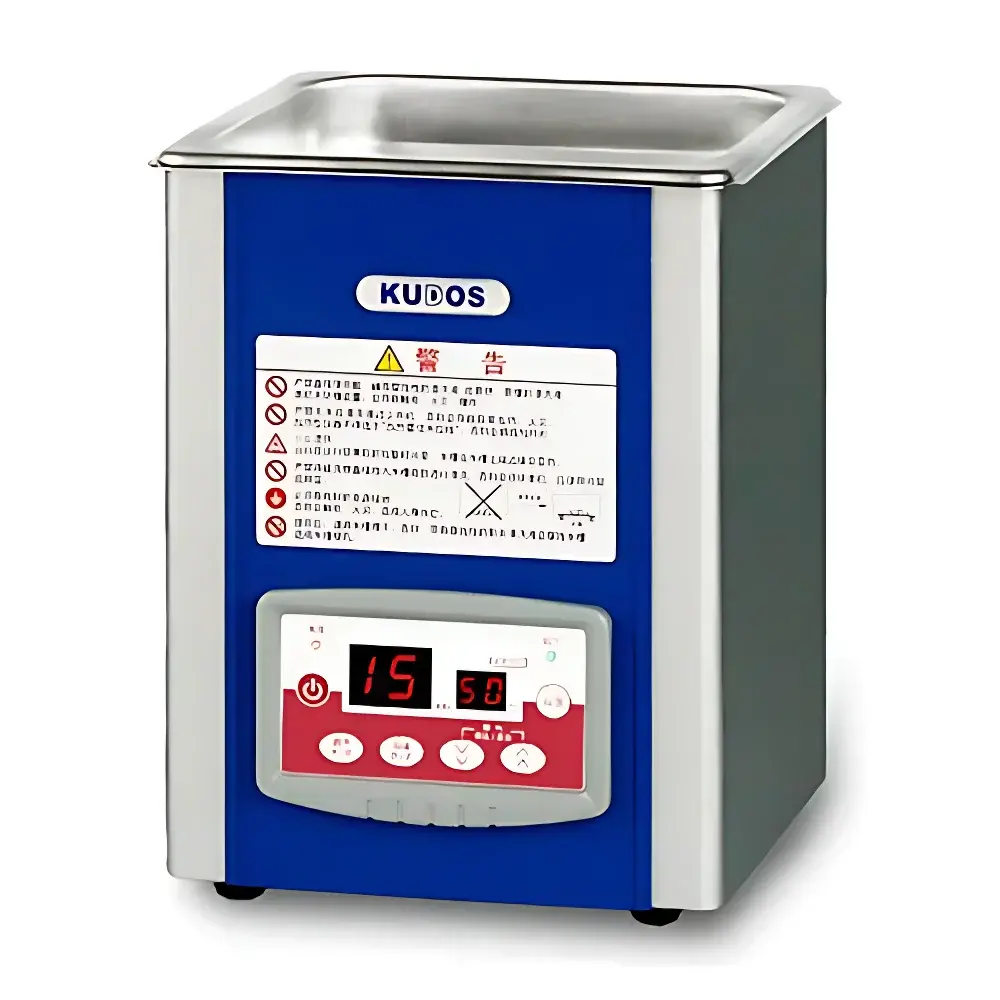
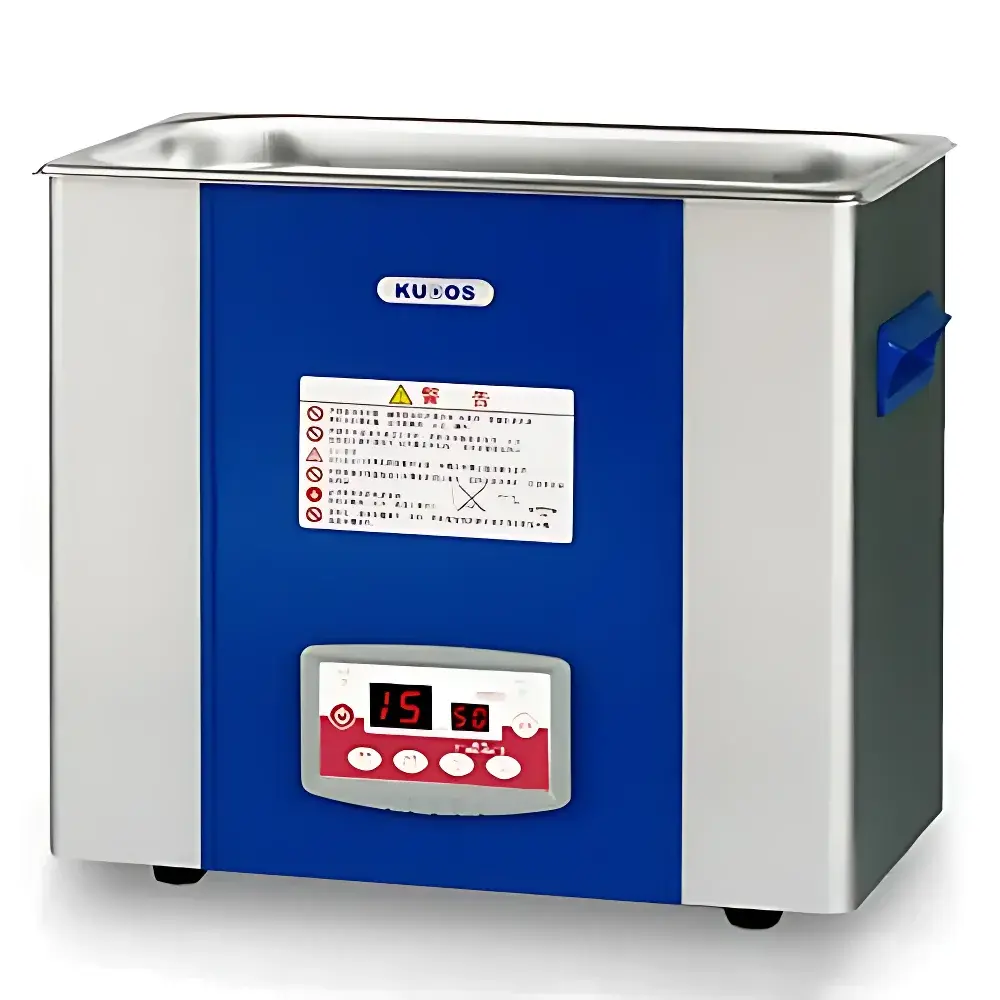
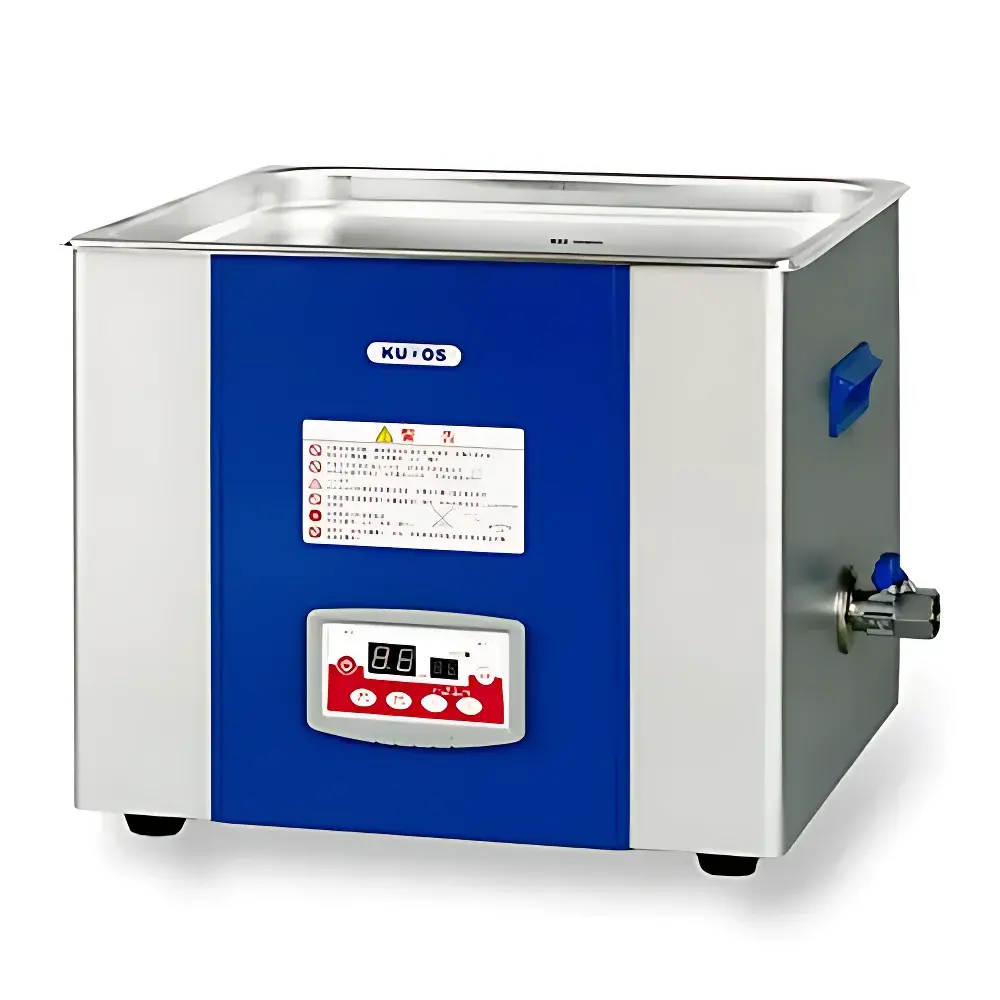
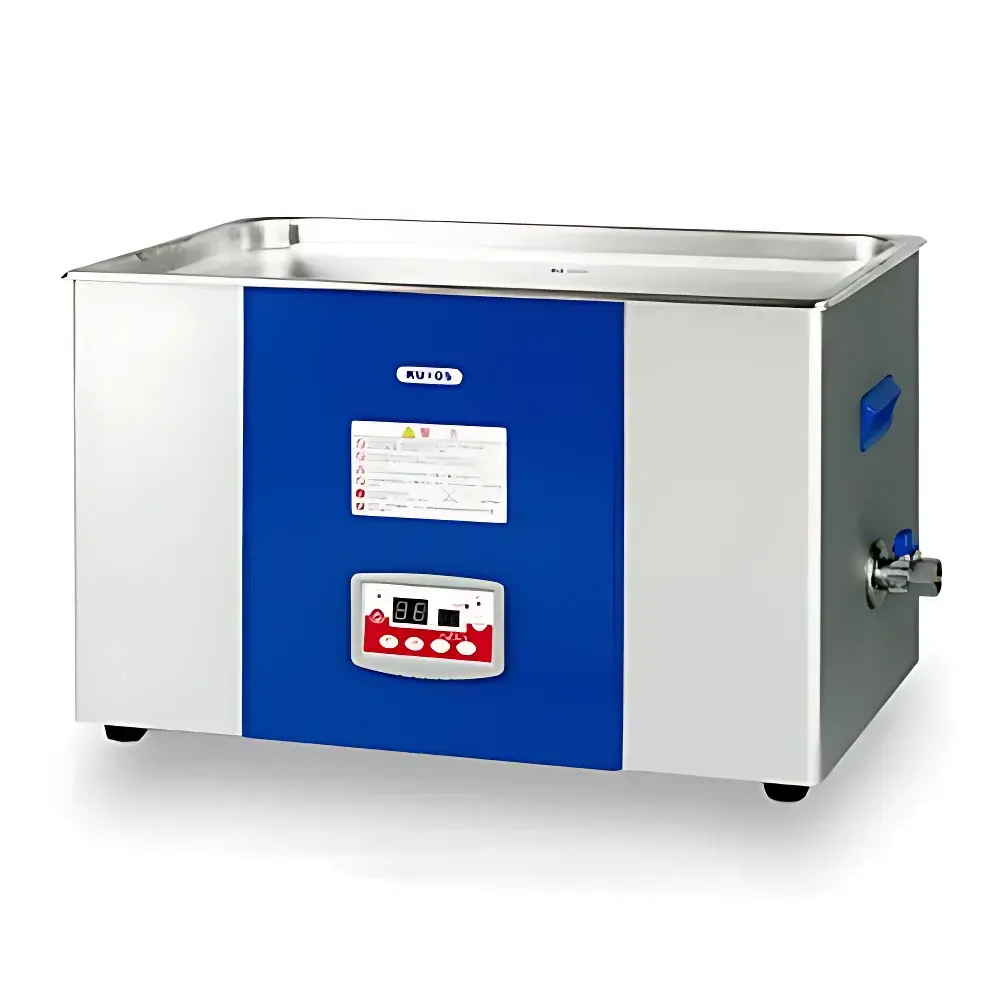
KUDOS SK1200GT/SK2200GT/SK3300GT/SK5200GT Series Low-Frequency Degassing & Heated Benchtop Ultrasonic Cleaner
| Brand | KUDOS |
|---|---|
| Origin | Shanghai, China |
| Model(s) | SK1200GT, SK2200GT, SK3300GT, SK5200GT, SK7200GT, SK8200GT, SK8300GT |
| Tank Capacity | 2–30 L |
| Ultrasonic Frequency | 35 kHz |
| Ultrasonic Power Output | 50–600 W |
| Temperature Control Range | 20–69 °C |
| Digital Timer Range | 1–99 min |
| Degassing Function | Yes |
| Lid | Sound-Dampening Cover |
| Drain/Inlet | Manual Valve |
| Tank Material | 304 Stainless Steel |
| Power Supply | 220 V / 50 Hz |
Overview
The KUDOS SK-Series Low-Frequency Degassing & Heated Benchtop Ultrasonic Cleaner is engineered for consistent, reproducible cleaning of delicate laboratory components—including glassware, pipette tips, filtration membranes, metal parts, and precision instrumentation—where cavitation intensity, thermal assistance, and dissolved gas removal are critical. Operating at a fixed 35 kHz frequency, this series leverages low-frequency ultrasonics to generate larger, more energetic cavitation bubbles compared to higher-frequency systems (e.g., 80 or 130 kHz), resulting in enhanced mechanical scrubbing action ideal for removing tenacious particulates, oils, and dried residues from macro-structured surfaces. Integrated heating (20–69 °C) accelerates solvent activity and reduces surface tension, while the built-in degassing mode—activated prior to cleaning—removes dissolved air from the cleaning solution, ensuring optimal cavitation efficiency and minimizing bubble shielding effects on sample surfaces.
Key Features
- Optimized Low-Frequency Cavitation: 35 kHz transducer array delivers high-amplitude acoustic energy with superior penetration into complex geometries and porous substrates—particularly effective for heavy soiling on stainless steel, ceramic, and borosilicate glass.
- Precise Thermal Management: PID-controlled heating system maintains setpoint stability within ±1.5 °C across the full 20–69 °C range, supporting temperature-sensitive protocols such as enzymatic residue removal or low-volatility solvent activation.
- Degassing Cycle Integration: Dedicated pre-cleaning degas function evacuates dissolved oxygen and nitrogen from aqueous or aqueous-alcoholic solutions, significantly improving cavitation onset time and uniformity—critical for repeatable cleaning validation per ISO 13485 or ASTM D4299.
- Robust Construction: Seamless 304 stainless steel tank with reinforced transducer mounting and corrosion-resistant housing ensures long-term durability under continuous operation in humid or chemically aggressive environments.
- User-Controlled Operation: Intuitive digital interface enables independent adjustment of cleaning duration (1–99 min), temperature setpoint, and degas timing; real-time display of elapsed time and current bath temperature supports GLP-compliant documentation.
- Acoustic Containment: Hinged sound-dampening lid reduces ambient noise to ≤55 dB(A) at 1 m distance, meeting occupational safety guidelines for shared lab spaces without requiring dedicated acoustic enclosures.
Sample Compatibility & Compliance
This ultrasonic cleaner accommodates a wide range of sample types and container formats—from microcentrifuge tubes and watch glasses to large-volume beakers (up to 30 L tank capacity). It is routinely deployed in QC laboratories for cleaning HPLC vials, GC autosampler inserts, and dissolution test apparatus components. The unit complies with IEC 61000-6-3 (EMC emission standards) and IEC 61010-1 (safety requirements for electrical equipment for measurement, control, and laboratory use). While not certified for sterile processing, its design supports integration into validated cleaning workflows aligned with ISO 15883-1 (washer-disinfectors) and FDA guidance on cleaning validation for reusable devices (21 CFR Part 211.67).
Software & Data Management
The SK-Series operates via embedded firmware with no external PC dependency. All operational parameters—including start time, duration, temperature setpoint, and degas activation—are stored in non-volatile memory and recalled upon power-up. Though not equipped with Ethernet or USB data export, the unit supports manual logbook entry for audit trails. For labs requiring electronic records, the timer and temperature displays are compatible with external time-lapse imaging or thermal logging systems. Optional accessories include stainless steel baskets with adjustable height supports and custom-fit tank liners compliant with USP analytical instrument qualification protocols.
Applications
- Cleaning of optical components (lenses, cuvettes, spectrometer cells) without surface pitting or coating damage
- Preparation of SEM/TEM sample holders and electron microscopy grids
- Removal of solder flux, machining oils, and polishing compounds from metal calibration standards
- Routine decontamination of reusable pipette tips, filter housings, and chromatography column frits
- Supporting ASTM E1269 (thermal analysis) and ISO 11439 (gas cylinder testing) sample preparation steps requiring particle-free surfaces
- Validation of cleaning efficacy per ISO 19436-2 (cleaning process verification for medical devices)
FAQ
Is this unit suitable for cleaning delicate MEMS devices or semiconductor wafers?
No—35 kHz ultrasonics generate high-energy cavitation unsuitable for sub-micron feature structures; for such applications, higher-frequency (≥80 kHz) or megasonic (≥1 MHz) systems are recommended.
Can the degassing function be used independently of the cleaning cycle?
Yes—the degas mode operates as a standalone sequence with user-defined duration, enabling optimization of solution conditioning prior to loading samples.
Does the unit support continuous operation beyond 99 minutes?
No—maximum timer setting is 99 minutes; for extended cycles, manual restart is required, and thermal cut-off protection activates if internal temperature exceeds safe limits.
What cleaning solutions are compatible with the heated tank?
Aqueous alkaline, neutral, and mild acidic formulations are compatible; avoid halogenated solvents (e.g., chloroform, carbon tetrachloride) and strong oxidizers (e.g., undiluted nitric acid) due to material compatibility and safety constraints.
Is calibration documentation provided with the unit?
Factory calibration certificates for temperature sensor accuracy (traceable to NIST standards) and timer linearity are available upon request; users are responsible for periodic in-house verification per ISO/IEC 17025 requirements.



