Kulite XTL Series Cryogenic Pressure Sensor
| Origin | USA |
|---|---|
| Manufacturer Type | Authorized Distributor |
| Origin Category | Imported |
| Model | XTL Series |
| Price | Upon Request |
Overview
The Kulite XTL Series Cryogenic Pressure Sensor is a high-performance, silicon-on-silicon piezoresistive pressure transducer engineered for precision measurement in extreme low-temperature environments down to –200 °C. Utilizing Kulite’s proprietary wafer-bonded, leadless construction, the XTL series eliminates traditional wire bonds and metallic interconnects—minimizing thermal stress, hysteresis, and drift under cryogenic thermal cycling. Unlike charge-mode piezoelectric sensors, the XTL delivers a stable, ratiometric 100 mV full-scale (FS) analog output without requiring external charge amplifiers, enabling direct integration with standard data acquisition systems compliant with IEEE 1451.4 TEDS or MIL-STD-1553B interfaces. Its monolithic sensing element ensures high natural frequency (>500 kHz typical), excellent linearity (<±0.1 % FS), and long-term zero stability (<±0.05 % FS/year), making it suitable for demanding aerospace propulsion testing, liquid hydrogen/liquid oxygen (LH₂/LOX) tank monitoring, superconducting magnet cooling loop instrumentation, and cryogenic wind tunnel applications.
Key Features
- Operating temperature range: –200 °C to +260 °C (standard configuration); extended variants available up to +1100 °C
- Piezoresistive silicon-on-silicon sensing architecture with hermetic Inconel or Hastelloy C-276 diaphragm options
- Full-scale output: 100 mV ±1 mV at rated excitation (typically 10 V DC)
- Accuracy: <±0.1 % FS combined error (nonlinearity, hysteresis, repeatability)
- High-frequency response: >500 kHz small-signal bandwidth (dependent on packaging and mounting)
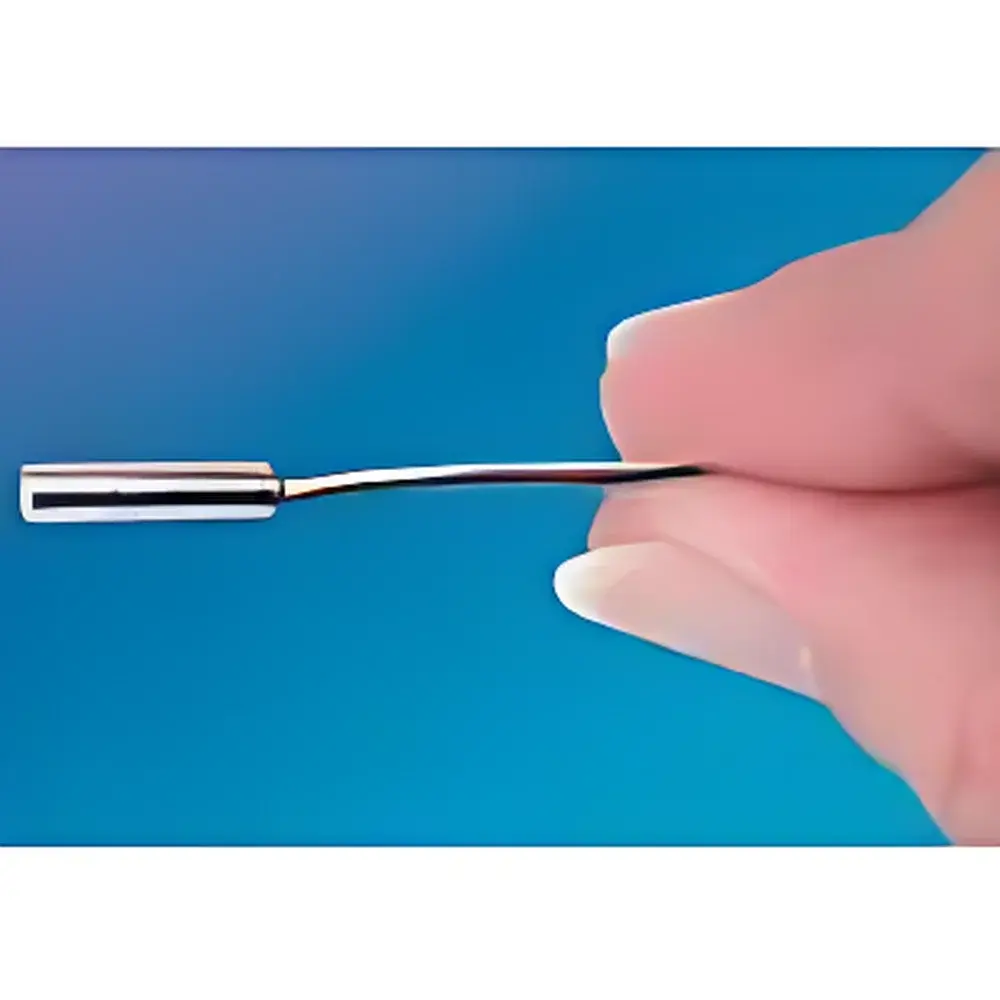
- Compact form factor: minimum diameter 1.6 mm, length 2.54 mm (probe-style variant)
- Integrated acceleration compensation for operation in high-vibration environments (e.g., rocket engine test stands)
- Media compatibility with liquid nitrogen, liquid helium, LH₂, LOX, fluorinated coolants, and aggressive process gases
Sample Compatibility & Compliance
The XTL series is validated for use with cryogenic fluids per ASTM E2584 (Standard Practice for Ultrasonic Testing of Composite Materials) and ISO 21028-1 (Safety of machinery — Pressure equipment — Part 1: General requirements). Sensor housings meet MIL-DTL-83528 Class B environmental specifications for shock, vibration, and thermal shock resistance. Electrical outputs comply with IEC 61000-6-2 (EMC immunity) and IEC 61000-6-4 (EMC emissions). For regulated industries, optional traceable calibration certificates conform to ISO/IEC 17025:2017 and NIST-traceable standards. The sensor design supports FDA 21 CFR Part 11–compliant data integrity when paired with validated DAQ software featuring audit trail, electronic signature, and change control.
Software & Data Management
Kulite provides the K-Link™ Configuration & Diagnostics Suite (v4.2+), a Windows-based application supporting real-time sensor calibration coefficient loading, TEDS parameter editing, and live signal conditioning diagnostics. Raw analog outputs interface seamlessly with National Instruments PXI, Keysight DAQ, or Dewesoft X systems. All firmware and configuration files are digitally signed; version history and modification timestamps are automatically logged. Optional API libraries (C/C++, .NET, Python) enable integration into custom LabVIEW, MATLAB, or Python-based test orchestration frameworks. Data export formats include CSV, HDF5, and ASAM MDF 4.1 for post-processing in AVL CRUISE™, Siemens Simcenter Testlab, or NASA’s TSTools.
Applications
- Cryogenic propulsion system monitoring (rocket engine manifolds, turbopump inlets, tank ullage pressure)
- Superconducting magnet quench detection and coolant loop pressure profiling
- Low-temperature physics experiments (dilution refrigerators, adiabatic demagnetization stages)
- Aerospace ground test facilities: transonic/supersonic cryogenic wind tunnels (e.g., NASA Glenn 10×10 ft Tunnel)
- Industrial liquefied gas storage and transfer systems (LNG, LH₂, LN₂)
- High-reliability vacuum chamber pressure mapping with thermal gradient compensation
- Research-grade microfluidic platforms operating below 77 K
FAQ
What is the lowest operational temperature supported by the standard XTL series?
The standard XTL configuration is rated for continuous operation from –200 °C to +260 °C. Custom variants with specialized die attach materials and housing alloys extend the lower limit to –269 °C (4 K) for dilution refrigerator applications.
Does the XTL require external signal conditioning?
No. It provides a calibrated, ratiometric 100 mV FS output referenced to its excitation voltage. A stable, low-noise 10 V DC supply is sufficient for most laboratory and industrial DAQ systems.
Can the sensor be calibrated for non-standard media such as supercritical CO₂ or helium gas?
Yes. Kulite offers media-specific calibration services per ISO 5725 and ASTM E74, including pressure–temperature cross-sensitivity characterization for non-ideal gases and cryogenic two-phase flows.
Is explosion-proof or intrinsically safe certification available?
ATEX Category II 2G Ex ia IIC T4 Ga and IECEx ia IIC T4 Ga certifications are available upon request for specific housing configurations and cable assemblies.
How is long-term stability verified during factory calibration?
Each unit undergoes a 168-hour thermal soak at –196 °C followed by 72-hour bias stability testing at rated pressure and temperature. Zero and span drift are recorded and reported in the final calibration certificate.