
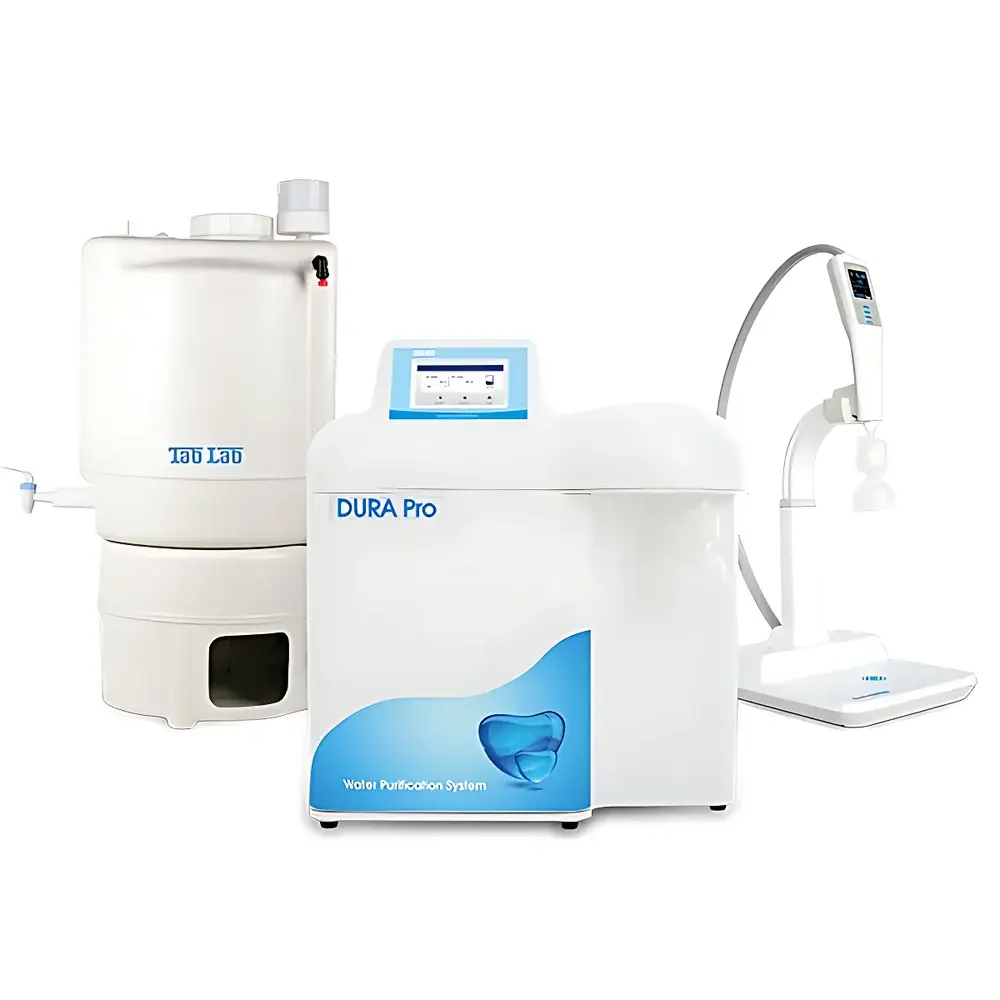
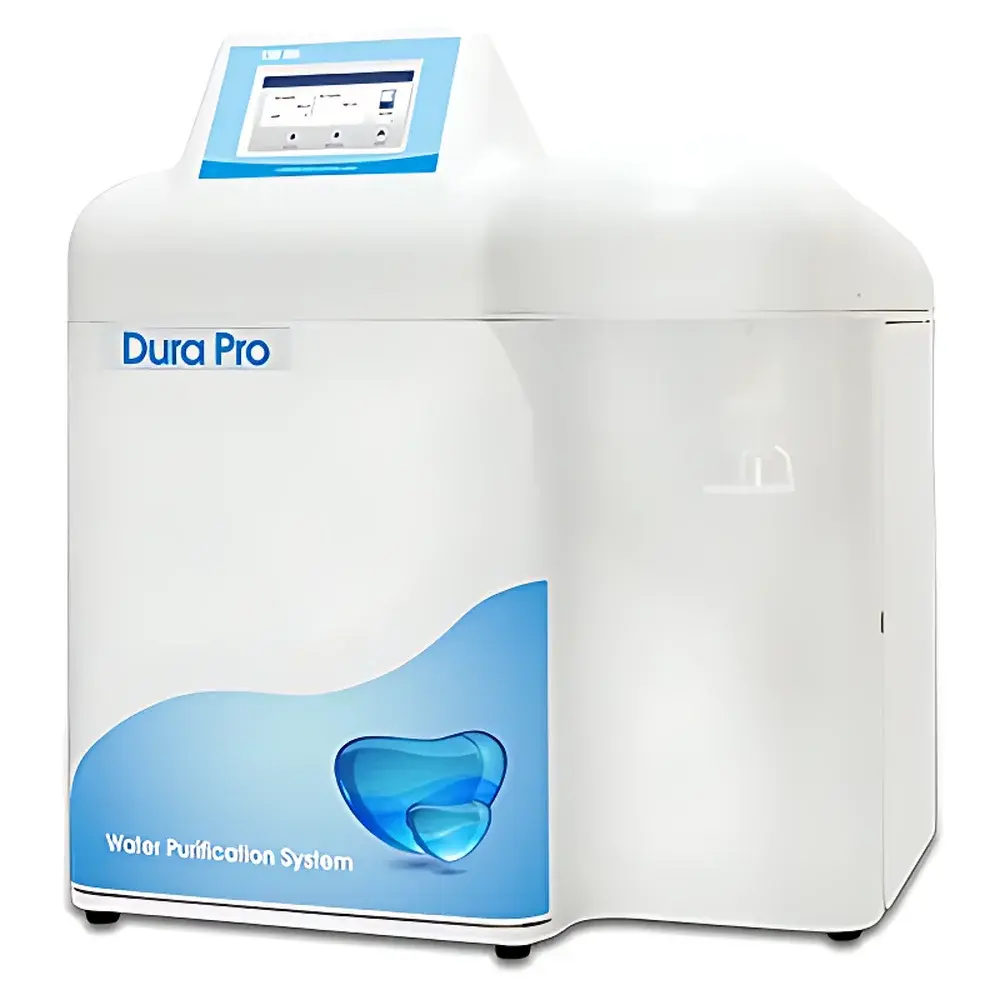
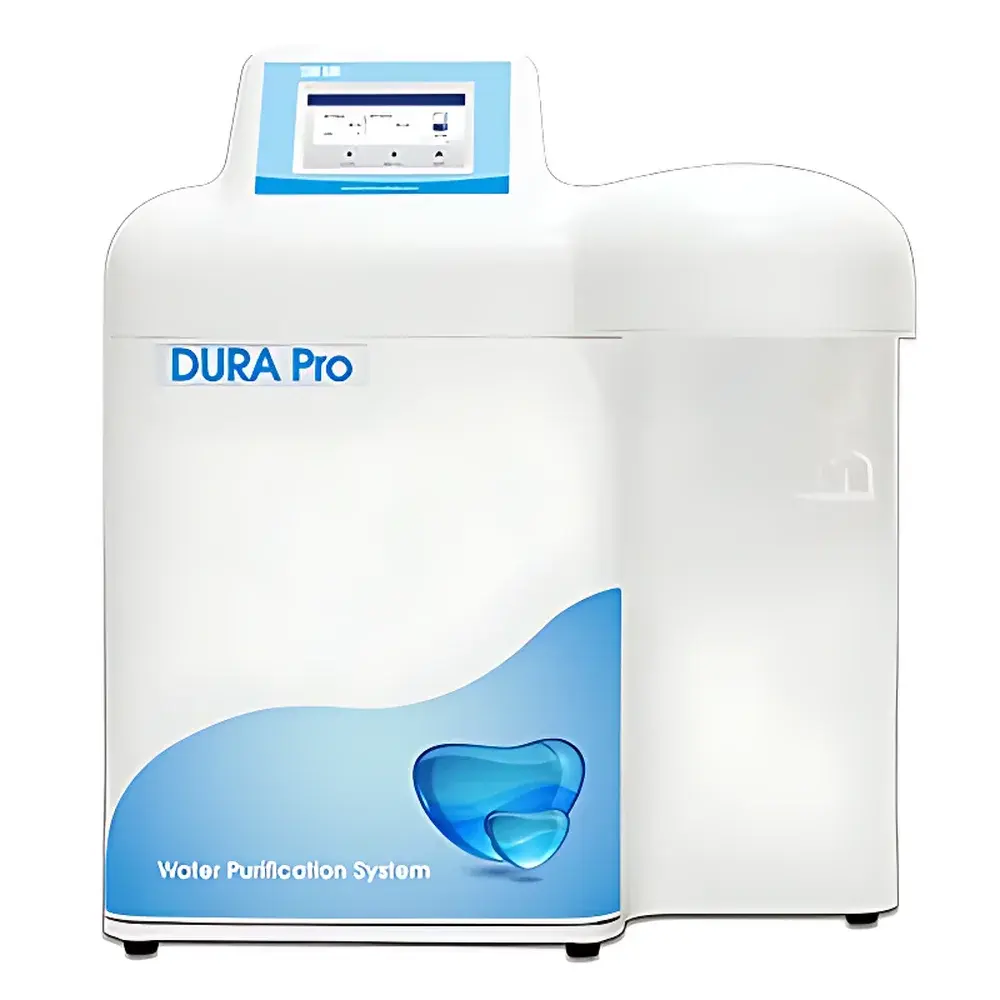
The Lab Dura Pro 12/24 Ultra-Pure Water System
| Brand | The Lab |
|---|---|
| Origin | Shanghai, China |
| Model | Dura Pro 12 / Dura Pro 24 |
| Pure Water Output | 12 / 24 L/h |
| Ultra-Pure Water Output | Up to 2.0 L/min (with full tank) |
| Resistivity (UP) | 18.2 MΩ·cm @ 25°C |
| Heavy Metals & Soluble Silica | <0.01 ppb |
| Total Organic Carbon (TOC) | <3 ppb |
| Microbial Count | <0.01 CFU/mL |
| Endotoxin | <0.001 EU/mL |
| Particles (>0.1 µm) | <1/mL |
| DI Water Resistivity | >16 MΩ·cm |
| RO Water Conductivity | 1–5 µS/cm (2nd stage) |
| Dimensions (L×W×H) | 545 × 470 × 610 mm |
| Weight | ~22 kg |
| Power Supply | 220 V, 50 Hz, 240 W |
Overview
The Lab Dura Pro 12/24 Ultra-Pure Water System is an integrated, multi-stage laboratory water purification platform engineered for consistent production of Type I ultrapure water per ASTM D1193, ISO 3696, CLSI EP22-A2, USP , and GB/T 6682–2008 standards. It employs a validated, sequential purification architecture: dual-stage reverse osmosis (RO), electrodeionization (EDI)-compatible deionization (DI), and final ultra-purification via dual-wavelength UV (254 nm + 185 nm), ultrafiltration (UF), and dual-layer terminal filtration (0.45 + 0.1 µm PES). Designed for continuous operation in analytical, life science, and quality control laboratories, the system delivers stable resistivity ≥18.2 MΩ·cm at 25°C with TOC <3 ppb and endotoxin <0.001 EU/mL—meeting stringent requirements for HPLC, LC-MS, cell culture, molecular biology, and trace elemental analysis.
Key Features
- Optimized dual-pump, dual-membrane RO module with intermediate storage tank—reducing wastewater ratio by up to 35% and enhancing long-term membrane stability and salt rejection consistency.
- Integrated 50 L conical-bottom PE reservoir with integrated CO2-adsorbing air filter and optional 254 nm UV irradiation module for microbial suppression during storage.
- Remote mobile dispensing arm with 2.0″ color graphical display—showing real-time resistivity, temperature, flow rate, and dispensed volume; height-adjustable (200–450 mm) and detachable pipette-style handle for ergonomic, contamination-minimized delivery within a 3 m hose radius.
- Continuous recirculation loop with programmable intermittent operation—maintaining ultrapure water quality while minimizing energy consumption and biofilm risk.
- Comprehensive consumables lifecycle management: configurable usage thresholds and auto-alerts for PP prefilter, KDF/AC carbon block, RO membranes (Dow FilmTec™), nuclear-grade mixed-bed resin (Dow Optipore™), UF (5,000 Da MWCO), and dual-wavelength UV lamps.
- NSF-certified fluid path components—including 316L stainless steel UV chamber, PES terminal filters, and low-TOC polypropylene tubing—to ensure minimal organic leaching and compliance with GLP/GMP documentation requirements.
Sample Compatibility & Compliance
The Dura Pro 12/24 supports diverse application-specific configurations: standard (Dura Pro 12/24), endotoxin-free (F-series), low-TOC (V-series), and combined endotoxin/low-TOC (FV-series). All variants meet or exceed specifications for ASTM Type I water and are validated for use in regulated environments requiring audit-ready traceability. System firmware supports 21 CFR Part 11-compliant user access control (dual-level password protection), timestamped event logging (including alarms, consumable changes, and manual disinfection cycles), and secure data export via USB or internal SD card (1-year buffered history). Certifications include NSF/ANSI Standard 58 (RO), NSF/ANSI Standard 61 (materials), and CE marking per Directive 2014/30/EU (EMC) and 2014/35/EU (LVD).
Software & Data Management
The 5.0″ capacitive touchscreen interface provides animated, context-aware navigation with real-time visualization of all three water streams (RO, DI, UP) without requiring physical sampling. Built-in data logging captures resistivity, TOC, temperature, flow, pressure, and alarm events at 1-minute intervals. Historical records—including consumable usage duration, calibration timestamps, and manual maintenance actions—are exportable as CSV or PDF reports. Optional software integration enables remote monitoring via Ethernet or Wi-Fi (via external gateway), supporting centralized lab asset management platforms compliant with ISO/IEC 17025 Clause 5.9.
Applications
This system serves as a primary water source for high-sensitivity instrumentation including ICP-MS, GF-AAS, and ion chromatography; preparation of cell culture media and IVF buffers where endotoxin and RNase/DNase levels must be controlled; synthesis of reference standards and calibration solutions for pharmaceutical QC; and routine analytical workflows such as HPLC mobile phase preparation, spectrophotometric reagent dilution, and ELISA plate washing. Its modular design allows seamless adaptation to evolving regulatory demands—e.g., adding UF for monoclonal antibody formulation or low-TOC configuration for semiconductor rinse validation.
FAQ
What standards does the Dura Pro 12/24 comply with for ultrapure water production?
It meets ASTM D1193 Type I, ISO 3696 Grade 1, USP , CLSI EP22-A2, CAP Laboratory Standards, and GB/T 6682–2008 for Type I water.
Can the system be validated for GMP/GLP environments?
Yes—its audit trail functionality, electronic signatures, role-based access control, and 21 CFR Part 11–ready firmware support IQ/OQ/PQ execution and regulatory inspection readiness.
How often do consumables require replacement under typical lab usage?
RO membranes last 2–3 years; nuclear-grade resin cartridges typically require replacement every 6–12 months depending on feed water quality and daily usage volume.
Is the mobile dispensing arm compatible with tall glassware and biosafety cabinets?
Yes—the vertical adjustment range (200–450 mm) and 0.9 m handheld reach enable precise delivery into flasks, carboys, and laminar flow hoods without cross-contamination risk.
Does the system support automated sanitization protocols?
It includes programmable RO membrane anti-scaling flush cycles, manual “loop disinfection”, “dispenser port sterilization”, and full-system thermal or chemical sanitization sequences with status feedback and cycle verification logs.



