
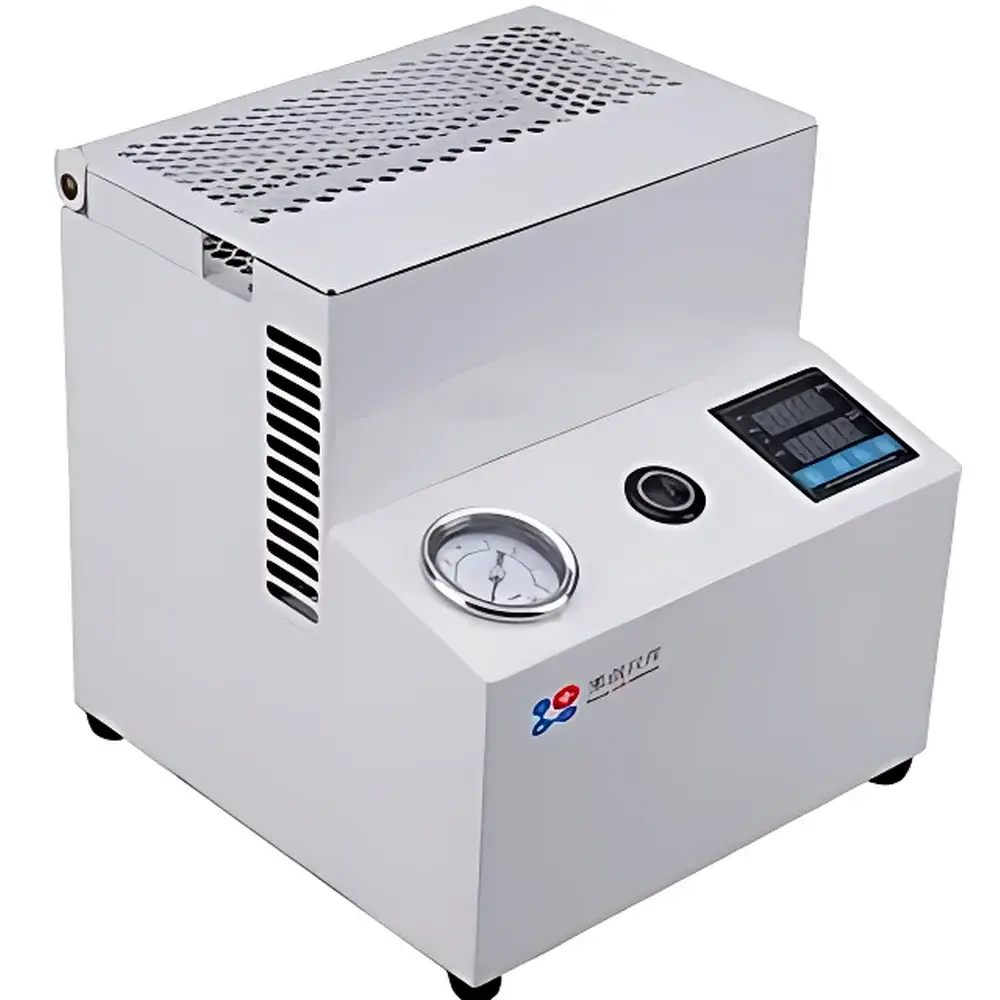
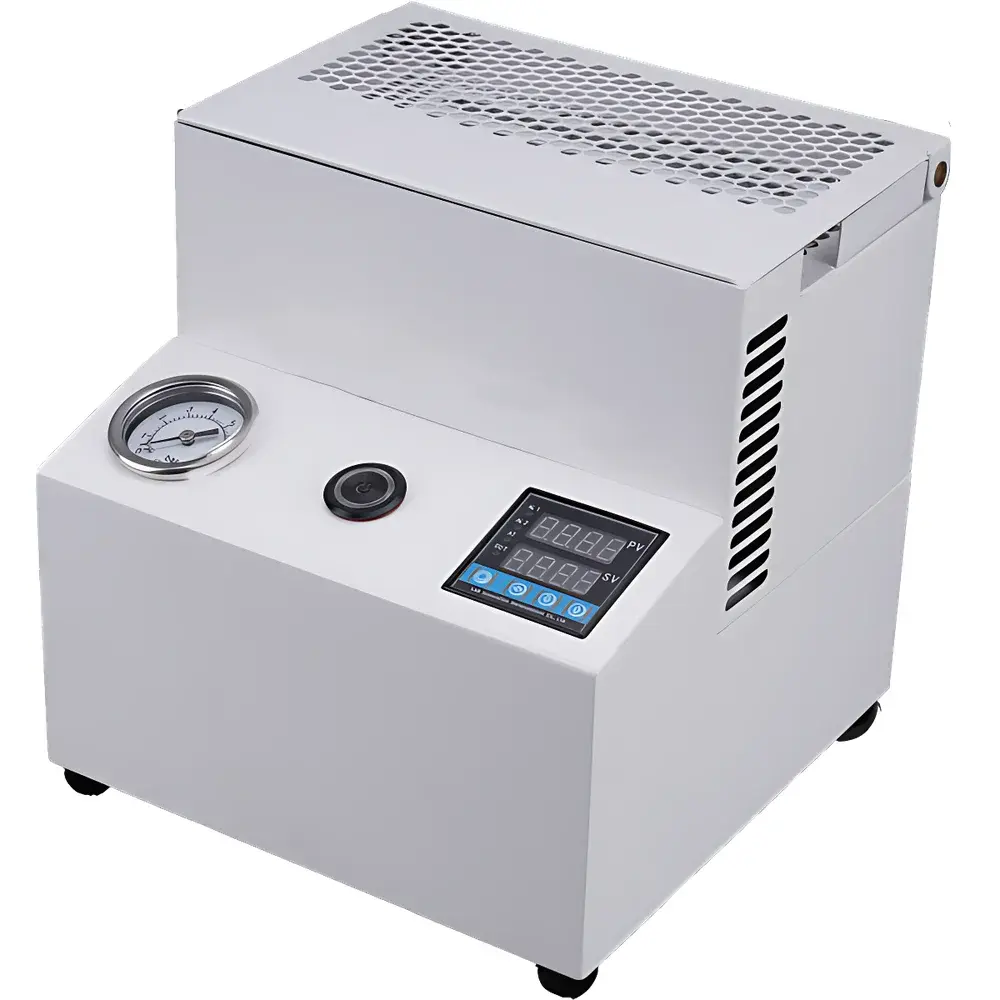
LAB-T200mini Adsorption Tube Conditioning Oven
| Brand | 4Labplus |
|---|---|
| Origin | Guangdong, China |
| Manufacturer | Yes |
| Country of Origin | China |
| Model | LAB-T200mini |
| Sample Capacity | 20 positions |
| Heating Rate | ≤3 min to 300°C |
| Safety Features | Intelligent Carrier Gas Pressure Detection with Auto-Shutoff |
| Gas Flow Control | Patented Independent Channel Design |
| Operating Mode | Flexible Batch Size (1–20 tubes) |
| Construction Materials | Low-Background, Inert Components |
| Audible Alert | Integrated Buzzer Timer |
| Dimensions | Compact Benchtop Form Factor |
| Compliance | Designed for ISO/IEC 17025-aligned laboratory workflows |
Overview
The LAB-T200mini Adsorption Tube Conditioning Oven is a purpose-built thermal conditioning system engineered for the rigorous pretreatment of sorbent-packed adsorption tubes used in volatile organic compound (VOC) analysis by thermal desorption–gas chromatography–mass spectrometry (TD-GC-MS). Unlike generic ovens, the LAB-T200mini operates on a controlled inert gas purge principle—applying precise, uniform heating under continuous carrier gas flow—to thermally clean and stabilize tubes prior to analytical use. This process removes residual contaminants, desorbs native volatiles from sorbent media (e.g., Tenax TA, Carbopack, Carboxen), and establishes consistent baseline performance—critical for achieving low detection limits, high method reproducibility, and regulatory compliance in environmental air monitoring, indoor air quality (IAQ), and occupational hygiene laboratories.
Key Features
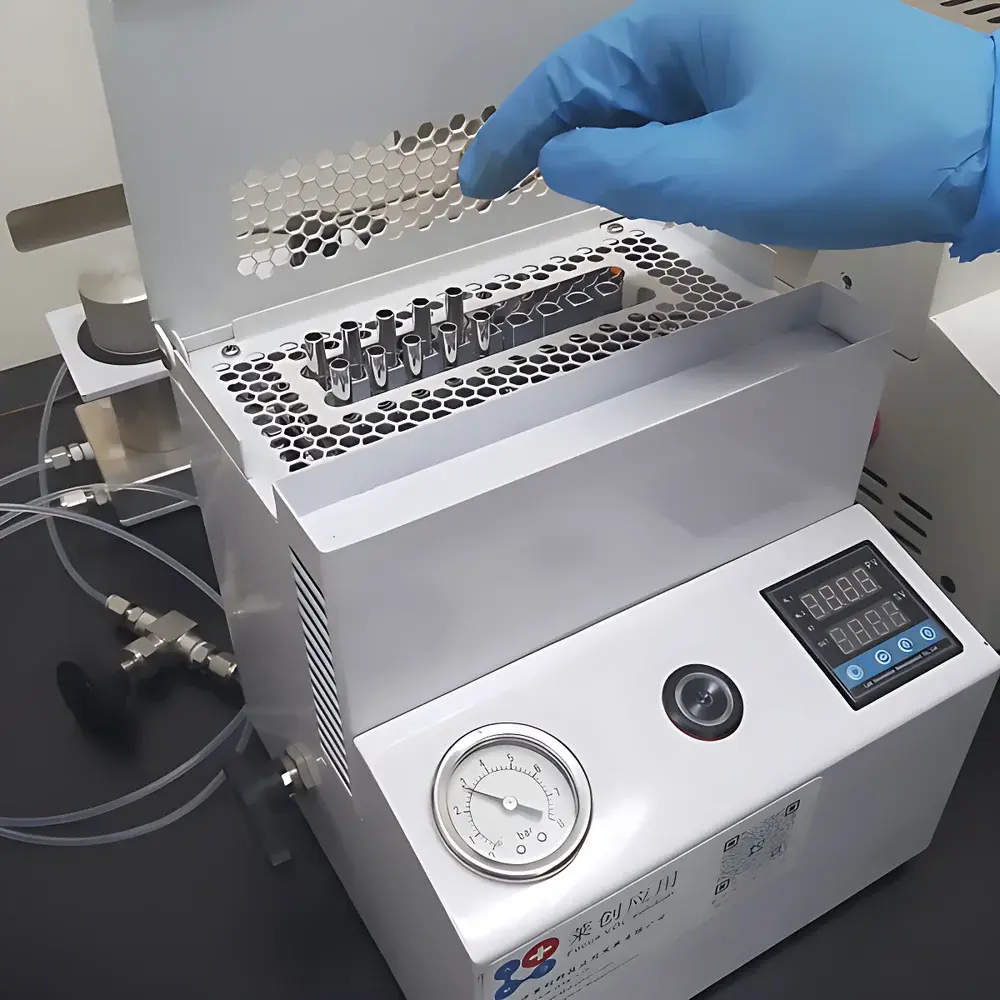
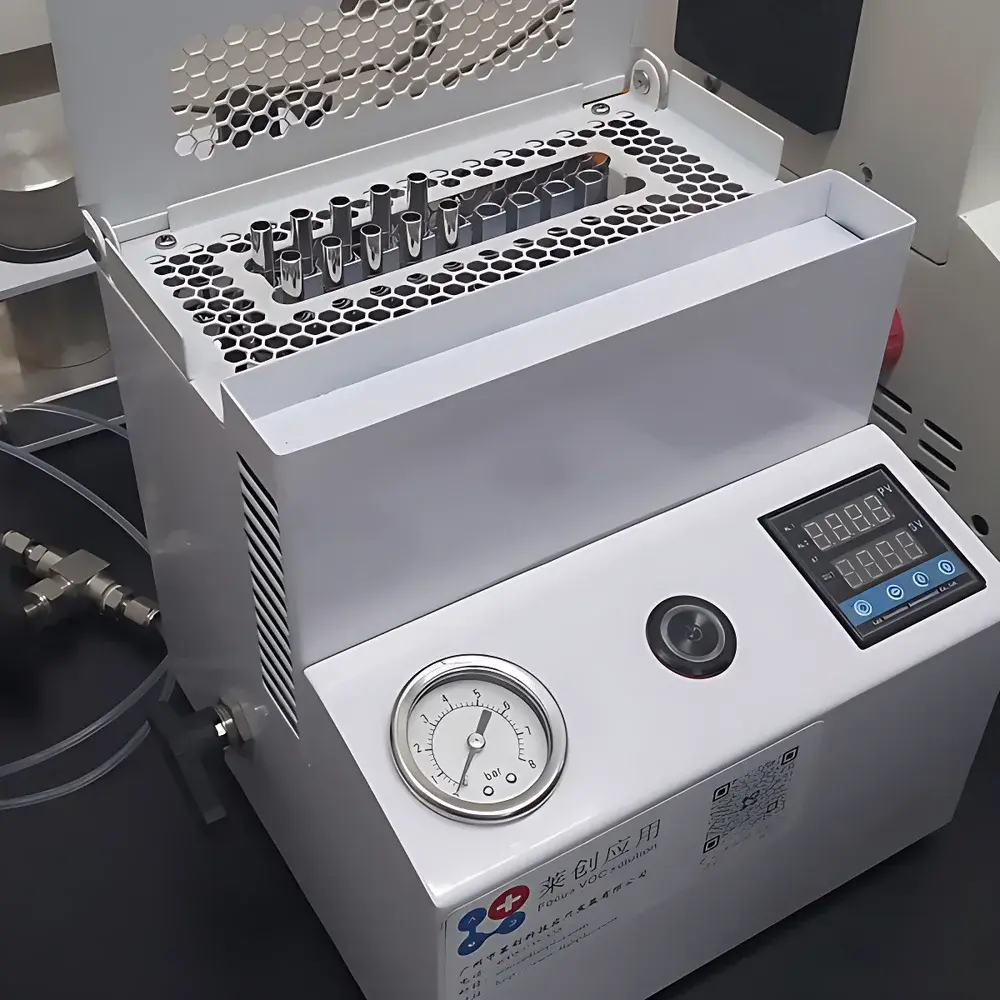
- Tool-free plug-and-play tube insertion: 20-position modular rack enables rapid loading/unloading without mechanical fasteners or alignment tools.
- Compact benchtop footprint (W × D × H ≈ 320 × 280 × 260 mm): Optimized for fume hood integration or dedicated cleanroom placement.
- Intelligent carrier gas pressure monitoring: Real-time pressure sensing triggers automatic power cutoff below threshold—preventing dry-heating and tube degradation during gas supply interruption.
- Patented independent channel gas distribution: Each tube position receives isolated, non-interfering gas flow; eliminates cross-contamination risk and ensures uniform conditioning across heterogeneous batches.
- High-pressure, low-flow architecture: Maintains stable, laminar purge flow (typically 20–100 mL/min) even at elevated backpressures—critical for maintaining sorbent integrity and avoiding channeling or particle displacement.
- Scalable conditioning protocol: Supports single-tube or partial-batch operation (1–20 tubes); avoids unnecessary energy consumption and thermal cycling wear when full capacity is not required.
- Ultra-low background construction: All wetted surfaces—including heating chamber lining, gas manifolds, and sealing gaskets—are fabricated from electropolished stainless steel and fluoropolymer-coated components to minimize VOC leaching and blank contributions.
- Rapid thermal ramping: Achieves 300°C setpoint in under 3 minutes with ±1°C temperature uniformity across all positions (per ASTM E2775-22 calibration methodology).
- Programmable audible alert: Built-in buzzer signals completion of user-defined conditioning cycles—supporting unattended operation and workflow synchronization.
Sample Compatibility & Compliance
The LAB-T200mini accommodates standard 1/4″ OD stainless steel or glass adsorption tubes (60–120 mm length), including those from PerkinElmer (U-Tube series), Markes International (UNITY-xr, TD100-xr), Dani Instruments (DANI-TD), and domestic manufacturers compliant with ISO 16000-6 and EPA TO-17 specifications. Its design supports method validation per US EPA Method TO-17 Annex A (tube preconditioning requirements) and aligns with GLP/GMP documentation practices. The unit’s closed-loop gas path and inert materials meet ISO 16000-22 criteria for low-background instrumentation, and its programmable timer logs support audit-ready records for ISO/IEC 17025 Clause 7.7 (result reporting traceability).
Software & Data Management
The LAB-T200mini operates via an embedded microcontroller interface with dual digital displays (setpoint/actual temperature) and tactile membrane keypad navigation. While it does not require PC connectivity for routine operation, time-stamped cycle logs—including start time, duration, final temperature, and gas pressure status—are retained in non-volatile memory for up to 500 cycles. Optional RS-232 output enables integration with LIMS or ELN systems for automated data capture. All firmware complies with IEC 61000-4 electromagnetic compatibility standards and supports 21 CFR Part 11–compatible electronic signature workflows when paired with validated third-party software.
Applications
- Preconditioning of multi-sorbent tubes for ambient and indoor air sampling (ISO 16000-6, EN 16755).
- Regulatory method adherence: EPA TO-11A, TO-17, and ASTM D6196 tube cleaning protocols.
- Quality control of new tube lots prior to field deployment or archival storage.
- Reconditioning of reused tubes in high-throughput environmental labs (e.g., municipal air monitoring networks).
- Method development studies requiring systematic evaluation of thermal history effects on sorbent performance.
FAQ
What tube formats are supported by the LAB-T200mini?
Standard 1/4″ outer diameter metal or glass tubes (60–120 mm length), compatible with PerkinElmer, Markes, Dani, and most ISO 16000-6–compliant domestic brands.
Does the unit require external gas regulation?
Yes—a regulated inert carrier gas source (N₂ or He, 0.1–0.5 MPa inlet pressure) is required; the instrument includes internal pressure regulation and failsafe cutoff.
Can conditioning parameters be saved as user profiles?
No—parameter entry is manual per cycle; however, repeatable settings are maintained via stable analog control architecture with digital verification.
Is the LAB-T200mini suitable for Class 1000 cleanroom environments?
Yes—the sealed chamber, low-outgassing materials, and absence of internal fans or oil-lubricated components meet ISO 14644-1 Class 6 (Class 1000) particulate requirements.
How is temperature uniformity verified during qualification?
Per ASTM E2775-22, 9-point thermal mapping using NIST-traceable PT100 probes is recommended during IQ/OQ; typical deviation is ≤±0.8°C across all 20 positions at 300°C.
Related Products






