
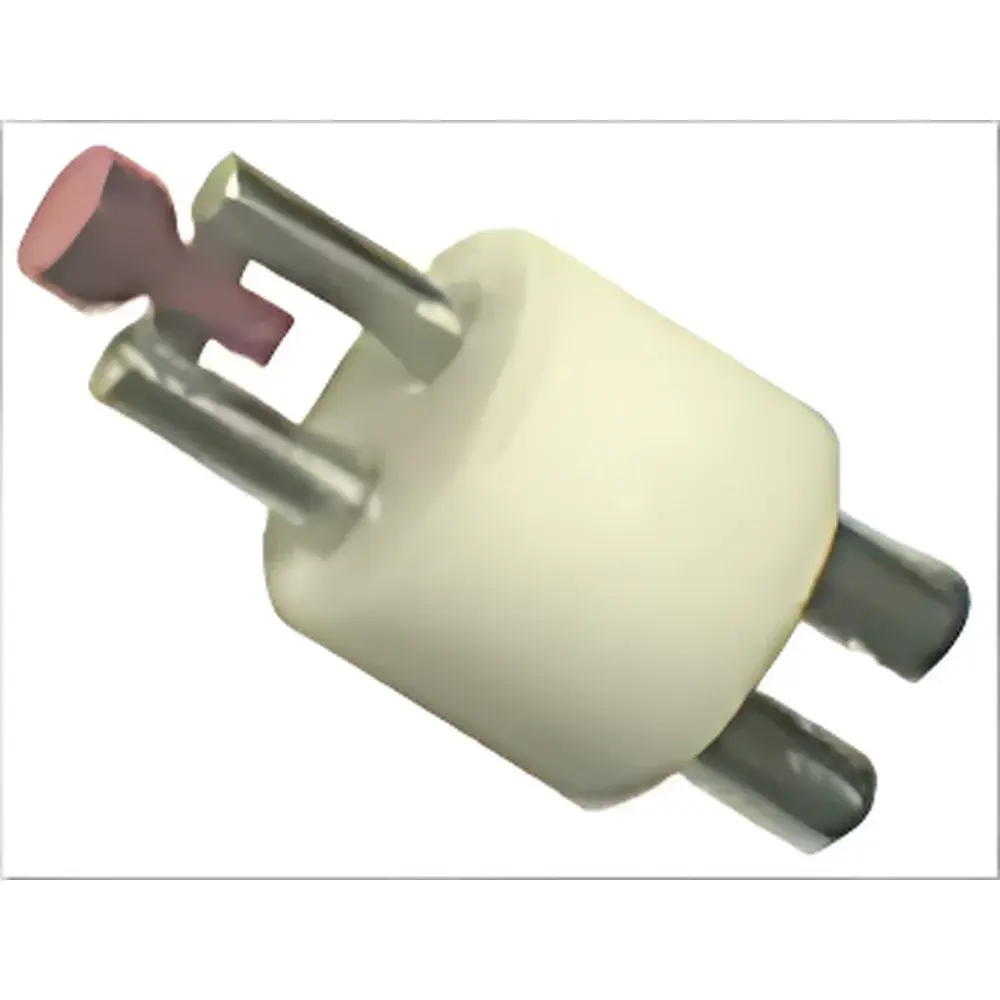
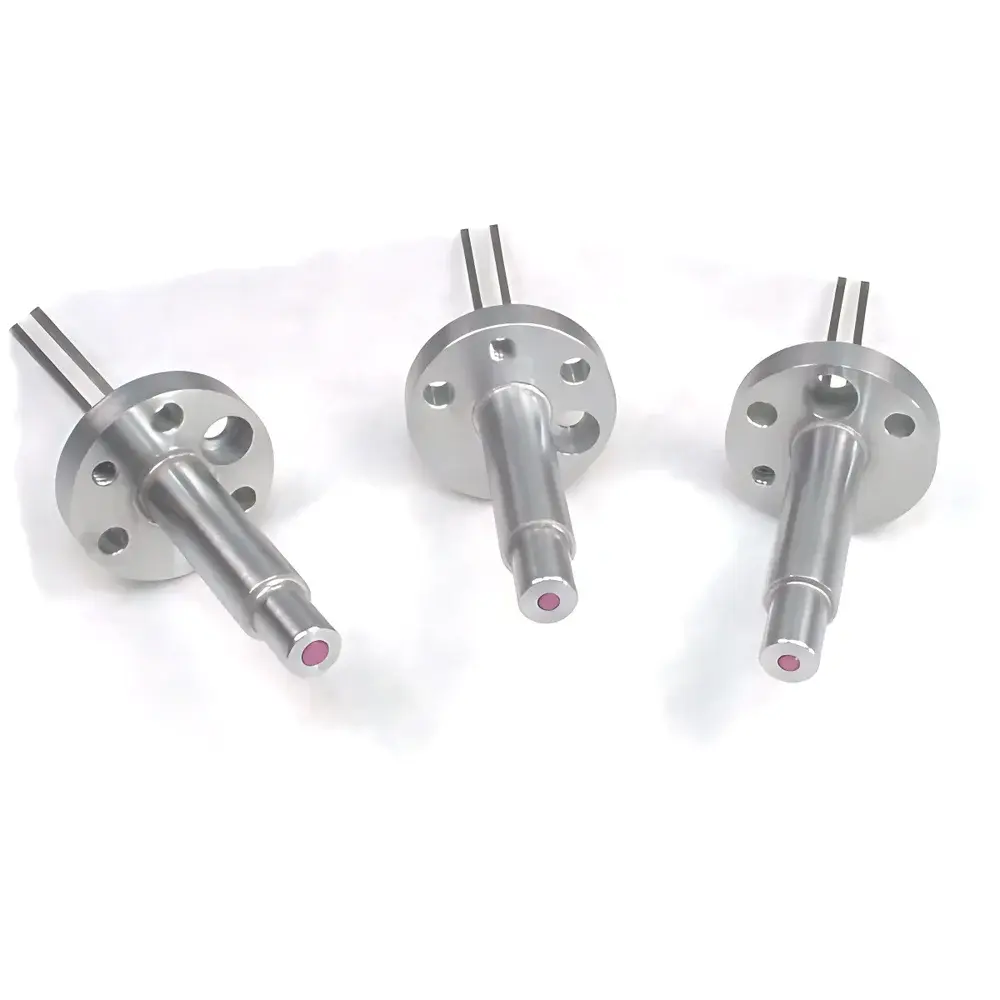
LaB6 Cathode Electron Source
| Brand | HeatWave Labs |
|---|---|
| Origin | USA |
| Model | LaB6 |
| Operating Temperature | 950–1200 °C |
| Emission Current Density | ≥3–5 A/cm² (CW), >15 A/cm² (pulsed) |
| Cathode Material | Lanthanum Hexaboride (LaB6) |
| Insulation | Alumina (Al₂O₃) |
| Structural Body | Molybdenum (Mo) |
| Lifetime | >10,000 hours under optimal vacuum and thermal conditions |
| Electrical Isolation | Dual independent power leads fully isolated from housing |
| Gas-Free Operation | Yes |
| Optional Coatings | Os/Ru (M-type), Os/W, IR-emission-enhancing coatings |
| Scan Configurations Available | 311, 532, 411, 612, M (customizable per request) |
Overview
The HeatWave Labs LaB6 Cathode Electron Source is a high-brightness, thermionic electron emitter engineered for demanding ultra-high vacuum (UHV) and high-precision electron optical systems. Based on single-crystal lanthanum hexaboride (LaB6), this cathode operates stably within a temperature range of 950–1200 °C, delivering superior brightness and spatial coherence compared to tungsten filaments—without requiring activation or gas exposure. Its emission mechanism relies on thermionic emission governed by the Richardson–Dushman equation, with work function reduction enabled by the intrinsic electronic structure of LaB6 (≈2.7 eV). Designed for integration into electron microscopes, electron beam lithography (EBL) columns, surface analysis instruments (e.g., AES, LEED), and specialized magnetic measurement platforms—including those requiring low-noise, high-current-density electron beams—the LaB6 source provides consistent, reproducible output under continuous-wave (CW) or pulsed operation modes.
Key Features
- High-brightness thermionic emission: ≥3–5 A/cm² CW current density; >15 A/cm² achievable in short-pulse mode for transient beam applications.
- Robust structural architecture: Molybdenum support body with alumina (Al₂O₃) electrical insulation ensures mechanical stability and dielectric integrity at elevated temperatures.
- Ultra-clean, gas-free operation: No reactive gases or reservoirs required—ideal for UHV environments where hydrocarbon or oxygen contamination must be minimized.
- Dual electrically isolated power leads: Prevent ground loops and electromagnetic interference (EMI), supporting stable biasing in sensitive magnetic or low-current detection setups.
- Extended operational lifetime: >10,000 hours under nominal vacuum (≤1×10⁻⁷ Torr) and thermal cycling protocols—validated via accelerated life testing per ASTM F1875.
- Configurable crystallographic orientation: Standard 311 orientation; optional 532, 411, 612, or M-type cut planes available to optimize emission anisotropy and angular distribution for specific beam optics.
- Enhanced variants: Optional osmium-ruthenium (Os/Ru), osmium-tungsten (Os/W), or infrared-emission-optimized coatings available for tailored spectral output or secondary electron yield enhancement.
Sample Compatibility & Compliance
The LaB6 cathode is compatible with standard UHV-compatible flange interfaces (CF-35, CF-63, ISO-KF 40) and integrates seamlessly into OEM electron optical columns and custom-built magnetic characterization systems. It complies with ISO 14644-1 Class 4 cleanroom handling requirements during assembly and meets RoHS Directive 2011/65/EU for hazardous substance restrictions. While not a standalone measurement instrument, its use in certified magnetic measurement systems supports adherence to ASTM A977 (standard test method for magnetic properties of permanent magnet materials) and IEC 60404-5 when deployed as part of calibrated electron-beam-assisted magnetization or domain imaging configurations. The cathode itself requires no regulatory certification but must be operated within system-level safety frameworks compliant with IEC 61010-1 for laboratory electrical equipment.
Software & Data Management
As a passive hardware component, the LaB6 cathode does not incorporate embedded firmware or native software control. However, it is fully compatible with industry-standard electron-optical control suites including Thermo Fisher’s Velox, JEOL’s JSM-IT Series platform, and custom LabVIEW- or Python-based DAQ systems interfacing via analog voltage/current feedback loops. When integrated into GLP/GMP-regulated magnetic test stations, traceable calibration logs—including filament temperature vs. emission current curves, vacuum history, and thermal cycling records—can be maintained in accordance with FDA 21 CFR Part 11 requirements using validated electronic lab notebook (ELN) systems such as LabArchives or IDBS E-WorkBook. Real-time emission monitoring is supported via precision shunt resistors and digitized current sensing (±0.1% full-scale accuracy).
Applications
- High-resolution scanning electron microscopy (SEM) and transmission electron microscopy (TEM) sources requiring stable, high-coherence illumination.
- Electron beam-induced current (EBIC) and cathodoluminescence (CL) mapping in magnetic semiconductor heterostructures.
- Spin-polarized low-energy electron diffraction (SPLEED) and spin-resolved photoemission spectroscopy (spin-ARPES) auxiliary sources.
- Electron beam lithography (EBL) systems requiring uniform, low-aberration beam profiles for nanoscale magnetic device patterning.
- In-situ magnetic domain imaging via Lorentz microscopy, where minimal beam-induced heating and long-term emission stability are critical.
- Calibration reference sources in metrology-grade magnetic field mapping systems utilizing electron trajectory deflection analysis.
FAQ
What vacuum level is required for optimal LaB6 cathode performance?
A base pressure ≤1×10⁻⁷ Torr is recommended; prolonged exposure above 1×10⁻⁶ Torr accelerates oxidation and reduces lifetime.
Can the LaB6 cathode be used in magnetic fields exceeding 1 Tesla?
Yes—its molybdenum body and alumina insulation provide inherent magnetic immunity; however, beam trajectory correction may be required upstream in high-field electron optical paths.
Is the M-type crystal orientation suitable for spin-polarized emission?
M-type (mosaic) orientation enhances secondary electron yield but does not intrinsically polarize primary emission; spin polarization requires subsequent filtering or exchange-scattering stages.
How is emission current calibrated and stabilized during long-term operation?
Via closed-loop temperature control (±0.5 °C) using calibrated thermocouples and real-time current monitoring with NIST-traceable shunts; drift compensation algorithms are implemented in host system software.
Are replacement cathodes supplied with pre-characterized emission data?
Yes—each unit ships with individual emission I–V curves, thermal time-constant measurements, and vacuum compatibility validation reports.



