
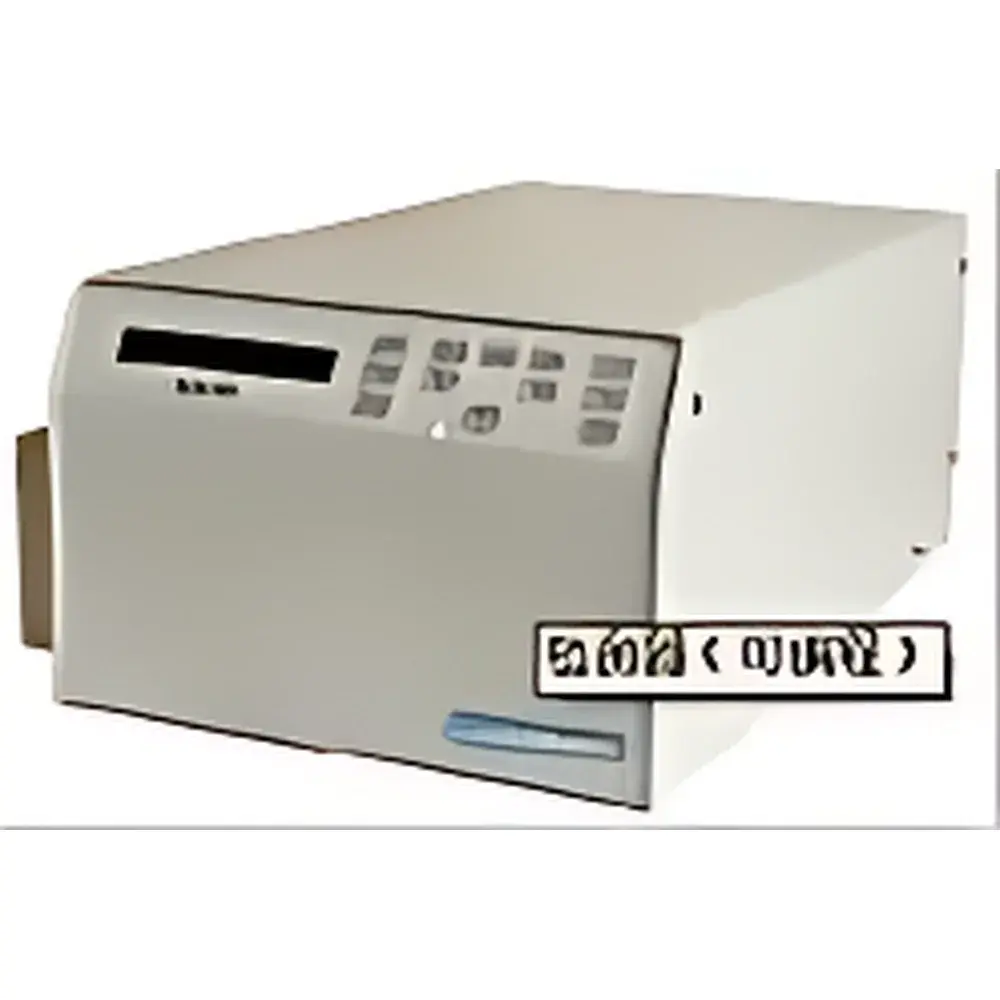
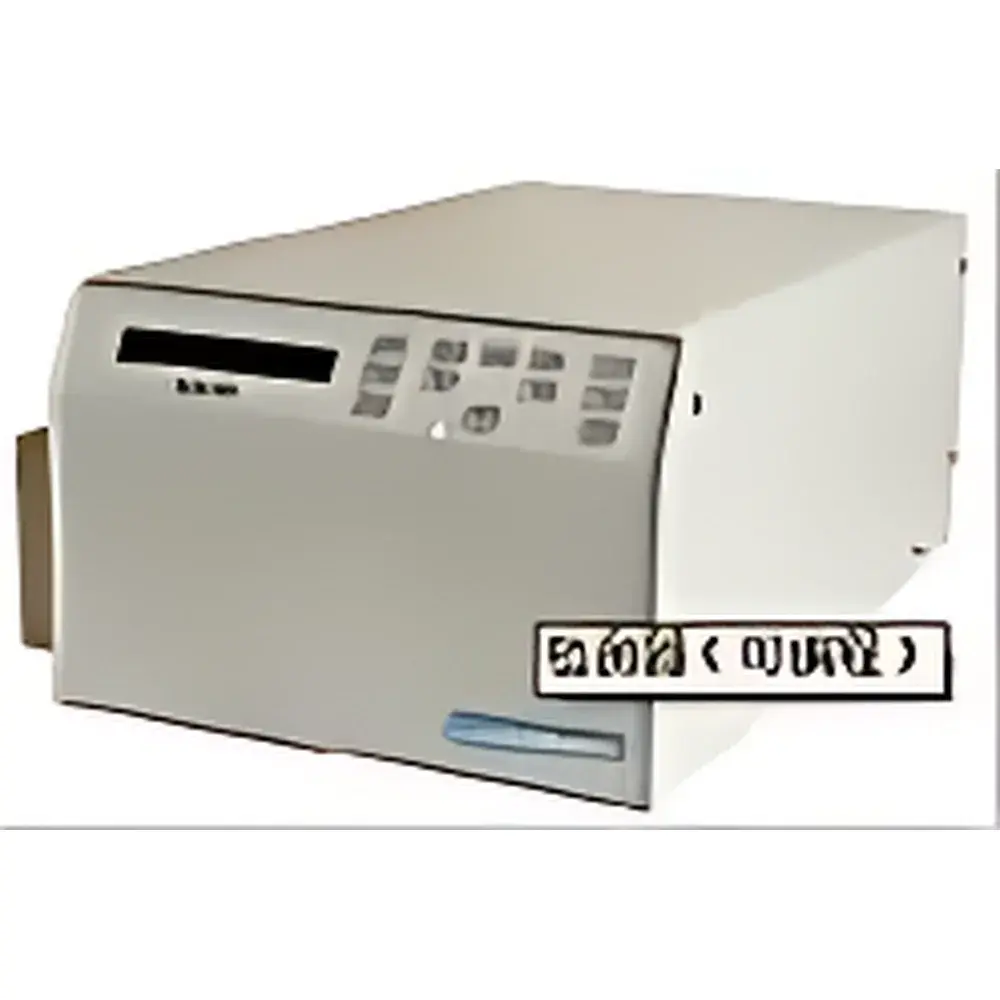
LABA 2000 Programmable UV-Vis Detector
| Brand | LABA (Tianjin) |
|---|---|
| Origin | USA |
| Manufacturer Type | Authorized Distributor |
| Product Category | Imported Instrument |
| Model | 2000 |
| Instrument Type | UV-Vis Absorbance Detector |
| Wavelength Range | 190–900 nm |
| Optical Design | Dual-Beam |
| Light Source | Deuterium Lamp |
| Spectral Scanning Capability | Yes |
| Flow Cell Options | Stainless Steel & Kel-F (Chemically Inert, Biocompatible) |
| Programmable Peak Detection | Yes |
| Baseline Correction Algorithm | Adaptive |
| Lamp Access | Side-Mounted for Quick Replacement |
| Flow Cell Access | Side-Mounted for Tool-Free Exchange |
Overview
The LABA 2000 Programmable UV-Vis Detector is a high-stability, dual-beam absorbance detector engineered for integration with HPLC, UHPLC, and preparative chromatography systems. It operates on the principle of Beer–Lambert absorption spectroscopy, measuring analyte concentration through quantitative attenuation of ultraviolet and visible light across a broad spectral range (190–900 nm). Its core optical architecture employs a concave holographic grating monochromator, delivering high wavelength accuracy (< ±1 nm), low stray light ( 0.999 over 0–2.5 AU). Designed for laboratory environments requiring regulatory compliance and method robustness, the 2000 detector supports both fixed-wavelength quantitation and full-spectrum acquisition—enabling peak identification, purity assessment, and method development without hardware reconfiguration.
Key Features
- Dual-beam optical path with real-time reference beam compensation, minimizing baseline drift caused by lamp intensity fluctuations or solvent absorption shifts.
- Programmable wavelength switching during gradient runs: users define time-based wavelength tables to optimize sensitivity for co-eluting compounds or monitor multiple chromophores simultaneously.
- Integrated adaptive baseline correction algorithm that dynamically adjusts for solvent front artifacts, column bleed, or temperature-induced refractive index changes—reducing manual post-run intervention.
- Modular flow cell design with side-access mounting: stainless steel cells (10 µL, 8 mm path length) for standard analytical applications; Kel-F™ polymer cells (2.5–50 µL, path lengths 3–10 mm) for aggressive solvents (e.g., THF, DMSO) and biologics-compatible workflows.
- Deuterium lamp housed in a thermally stabilized compartment with automatic warm-up monitoring and end-of-life prediction based on arc current and spectral output decay trends.
- Front-panel LCD with intuitive menu navigation and USB host port for firmware updates; RS-232 and optional Ethernet interfaces support legacy and modern data system integration.
Sample Compatibility & Compliance
The LABA 2000 accommodates a wide range of mobile phases—including aqueous buffers, acetonitrile, methanol, isopropanol, and chlorinated solvents—without optical degradation or cell corrosion, thanks to its Kel-F wetted-path option. All flow cells meet ASTM E2657-22 specifications for UV-transparent polymeric materials used in chromatographic detection. The detector’s analog output (0–1 V, 0–5 V, or 0–10 V selectable) and digital signal integrity comply with IEC 61000-4-3 (EMC immunity) and UL 61010-1 safety standards. When operated under validated SOPs, it supports GLP/GMP documentation requirements, including audit-trail-capable software logging (via optional LABA ChromoLink Suite) aligned with FDA 21 CFR Part 11 electronic record provisions.
Software & Data Management
The LABA 2000 interfaces natively with third-party chromatography data systems (CDS) such as Thermo Chromeleon, Waters Empower, and Agilent OpenLab via standard ASCII or binary data protocols. Its optional ChromoLink Suite provides local control, spectral library building (with peak deconvolution tools), and method validation reports compliant with USP and ISO/IEC 17025. Raw absorbance spectra are stored in .spc format (compatible with Omnic, GRAMS/AI), while time-resolved chromatograms export to .csv or .cdf (NetCDF) for statistical process control (SPC) or multivariate analysis (MVA). All parameter changes—wavelength, gain, filter time constant—are timestamped and user-ID logged when audit mode is enabled.
Applications
- Pharmaceutical QC: Quantification of active pharmaceutical ingredients (APIs) per USP monographs requiring UV detection at specified λmax (e.g., paracetamol at 243 nm, ciprofloxacin at 277 nm).
- Biopolymer analysis: Monitoring protein elution profiles in SEC using 280 nm detection; assessing nucleic acid purity via A260/A280 ratios with spectral confirmation.
- Environmental testing: PAHs and nitroaromatics detection in EPA Method 8330B extracts using programmable dual-wavelength ratioing to correct for matrix interference.
- Food & beverage: Caffeine, preservatives (sorbic acid), and artificial colorants (e.g., tartrazine at 425 nm) in complex matrices with baseline-compensated integration.
- Academic research: Reaction monitoring in LC-GC heart-cutting setups where spectral fidelity across 190–900 nm enables simultaneous detection of UV-absorbing and visible chromophores.
FAQ
Does the LABA 2000 support post-acquisition spectral reprocessing?
Yes—full-spectrum data (.spc files) retain raw pixel-intensity values, enabling retrospective extraction of chromatograms at any wavelength within 190–900 nm without re-injection.
Is the Kel-F flow cell compatible with 100% TFA or HFIP?
Kel-F exhibits exceptional resistance to strong acids and fluorinated solvents; however, prolonged exposure to >5% TFA at elevated temperatures (>40 °C) may affect long-term seal integrity—stainless steel is recommended for such conditions.
Can the detector be calibrated traceable to NIST standards?
Yes—optional NIST-traceable holmium oxide and didymium filters (certified for 241.5, 279.4, 361.5, 536.2 nm peaks) are available for wavelength verification per ASTM E275.
What is the maximum data acquisition rate in full-spectrum mode?
Up to 10 Hz (100 ms dwell time per spectrum) with 1.2 nm resolution; rate decreases linearly with increased spectral resolution or extended wavelength range.
Does the dual-beam design eliminate the need for blank injections?
It significantly reduces baseline variability from solvent and system effects but does not replace method-specific blank subtraction for absolute quantitation in regulated environments.





