
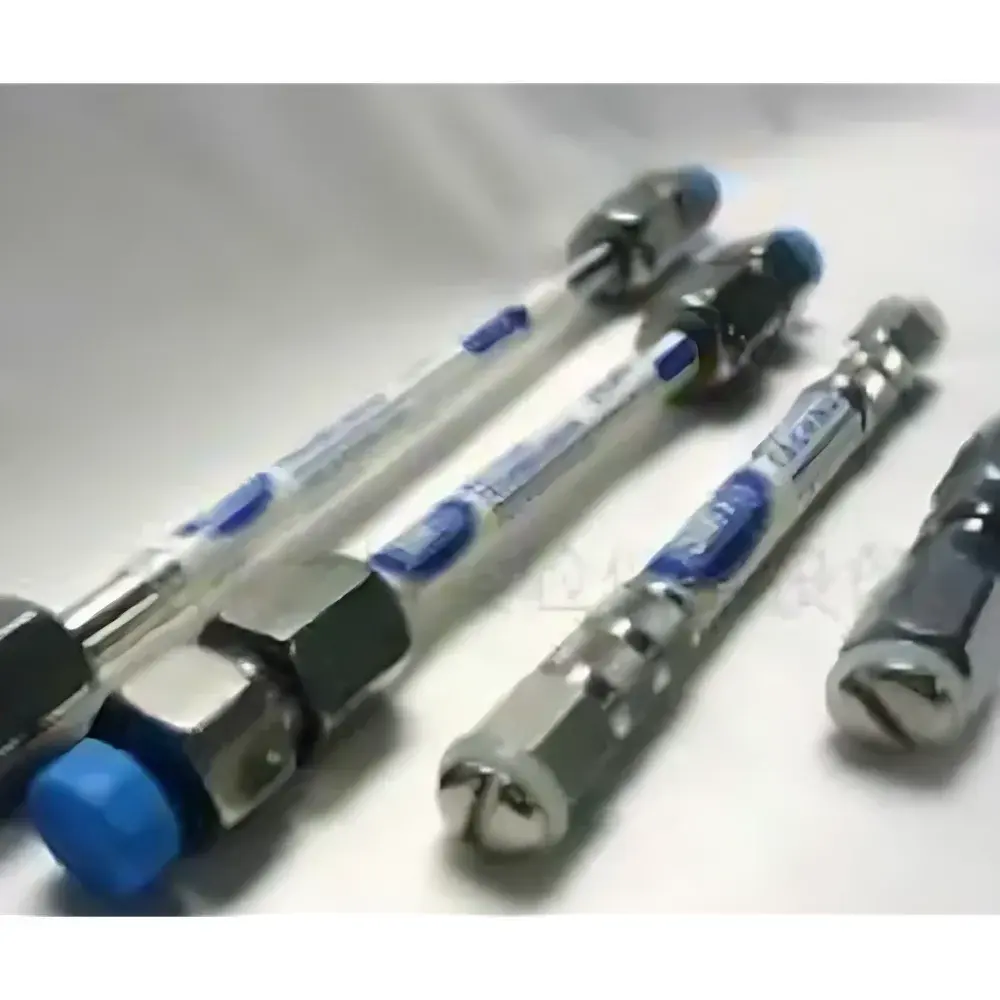
LABA AA9800 Amino Acid Analyzer with Post-Column Derivatization Column System
| Brand | LABA (Tianjin Lanbo) |
|---|---|
| Origin | USA |
| Manufacturer Type | Authorized Distributor |
| Product Category | Imported Instrument |
| System Model | AA9800 |
| Instrument Type | Post-Column Derivatization Amino Acid Analyzer |
| Pump Flow Rate | 0.001–10.000 mL/min |
| Maximum Pump Pressure | 6000 psi |
| Autosampler Injection Volume | 0.1–500 µL |
| Autosampler Temperature Control | 4–40 °C |
| Post-Column Reactor Temperature Range | Ambient to 200 °C |
| Detection Wavelengths | 570 nm and 440 nm |
| Flow Cell Volume | 10 µL |
Overview
The LABA AA9800 Amino Acid Analyzer is a dedicated high-performance liquid chromatography (HPLC) system engineered for precise, reproducible quantification of primary and secondary amino acids in complex biological, food, pharmaceutical, and clinical matrices. Unlike generic reversed-phase HPLC systems, the AA9800 employs post-column derivatization (PCD) coupled with ion-exchange chromatography — a methodology standardized by AOAC, ISO 13903, and USP for amino acid analysis. The system separates underivatized amino acids on specialized cation-exchange columns (Li⁺ or Na⁺ format), followed by on-line reaction with ortho-phthalaldehyde (OPA) and ninhydrin reagents in thermally controlled reactors. Detection at dual wavelengths (440 nm for proline/hydroxyproline; 570 nm for all other primary amino acids) ensures orthogonal signal validation and minimizes interferences from co-eluting compounds or matrix effects.
Key Features
- Modular architecture supporting both lithium-form and sodium-form cation-exchange columns — including standard dimensions: 4.0 × 100 mm, 4.6 × 75 mm, 3.0 × 250 mm (Li⁺); and 4.0 × 150 mm, 4.6 × 110 mm, 3.0 × 250 mm (Na⁺)
- High-pressure binary gradient pump delivering stable flow from 0.001 to 10.000 mL/min with pressure capability up to 6000 psi — enabling robust method transfer across column geometries and particle sizes
- Refrigerated autosampler with temperature-controlled tray (4–40 °C) and programmable injection volumes (0.1–500 µL), optimized for low-volume biological samples and high-throughput clinical batches
- Thermally regulated post-column reactor with precise setpoint control from ambient to 200 °C — critical for consistent OPA and ninhydrin reaction kinetics and peak shape reproducibility
- Dual-wavelength UV-Vis detector with 10 µL flow cell, calibrated for simultaneous monitoring at 440 nm and 570 nm — facilitating automated peak identification and ratio-based qualification per AOAC 994.12
- Integrated system controller with embedded method storage, real-time pressure/temperature monitoring, and hardware-level error logging compliant with 21 CFR Part 11 audit trail requirements
Sample Compatibility & Compliance
The AA9800 accommodates diverse sample types including hydrolyzed proteins (acidic or enzymatic), serum, urine, tissue homogenates, fermentation broths, and fortified food extracts. Sample preparation follows established protocols (e.g., ISO 13903:2005 for feedstuffs; CLSI C37-A for clinical specimens). Column selection is method-driven: lithium-form columns offer superior resolution for basic amino acids (e.g., arginine, lysine) and improved separation of isomers (leucine/isoleucine); sodium-form columns provide faster run times and enhanced robustness for routine QC applications. All hardware components meet CE marking requirements and are validated for use in GLP and GMP environments. Column hardware complies with ASTM D7219 for chromatographic column dimensional tolerances.
Software & Data Management
The system operates via LABA ChromaSuite™ v4.x — a Windows-based acquisition and processing platform supporting ICH Q2(R2)-aligned validation packages. Software features include sequence-based batch processing, automatic baseline correction using Savitzky-Golay filtering, retention time locking for column-to-column reproducibility, and customizable calibration curve models (linear, quadratic, weighted least-squares). Raw data files (.lcd) are stored in vendor-neutral format with embedded metadata (operator ID, instrument serial, method version, audit trail timestamps). Electronic signatures, user role management (admin/operator/auditor), and secure database archiving support compliance with FDA 21 CFR Part 11 and EU Annex 11.
Applications
- Quantitative profiling of essential amino acids in infant formula and dietary supplements (per FDA 21 CFR §107.100 and Codex Alimentarius STAN 72-1981)
- Stability-indicating assays for biopharmaceuticals — monitoring deamidation (asparagine → aspartic acid) and oxidation (methionine → methionine sulfoxide) during accelerated aging studies
- Clinical nutrition assessment: plasma amino acid panels for inborn errors of metabolism (e.g., phenylketonuria, maple syrup urine disease)
- Quality control of hydrolyzed vegetable protein (HVP) and yeast extract products — verifying label claims and detecting adulteration
- Research-grade metabolomics workflows integrating with LC-MS confirmation — where PCD-HPLC serves as orthogonal screening prior to high-resolution MS/MS verification
FAQ
What column formats are supported by the AA9800 system?
The system is fully compatible with both lithium-type and sodium-type cation-exchange columns in multiple configurations: 4.0 × 100 mm, 4.6 × 75 mm, 3.0 × 250 mm (Li⁺); and 4.0 × 150 mm, 4.6 × 110 mm, 3.0 × 250 mm (Na⁺). Column selection depends on required resolution, analysis time, and sample matrix complexity.
Is the AA9800 compliant with regulatory submission requirements?
Yes — the system meets hardware and software requirements for 21 CFR Part 11, EU Annex 11, and ISO/IEC 17025:2017. Full validation documentation, including IQ/OQ/PQ protocols and traceable calibration certificates, is available upon request.
Can the system be integrated into an existing LIMS environment?
The ChromaSuite™ software supports ASTM E1461-compliant data export (CSV, XML, PDF) and offers optional OPC UA interface for direct LIMS synchronization without proprietary middleware.
What maintenance intervals are recommended for the post-column reactor and detection flow cell?
Reactor tubing should be inspected quarterly and replaced annually under continuous operation; the 10 µL flow cell requires cleaning with 10% acetonitrile/water every 200 injections and full disassembly every 6 months per preventive maintenance schedule.






