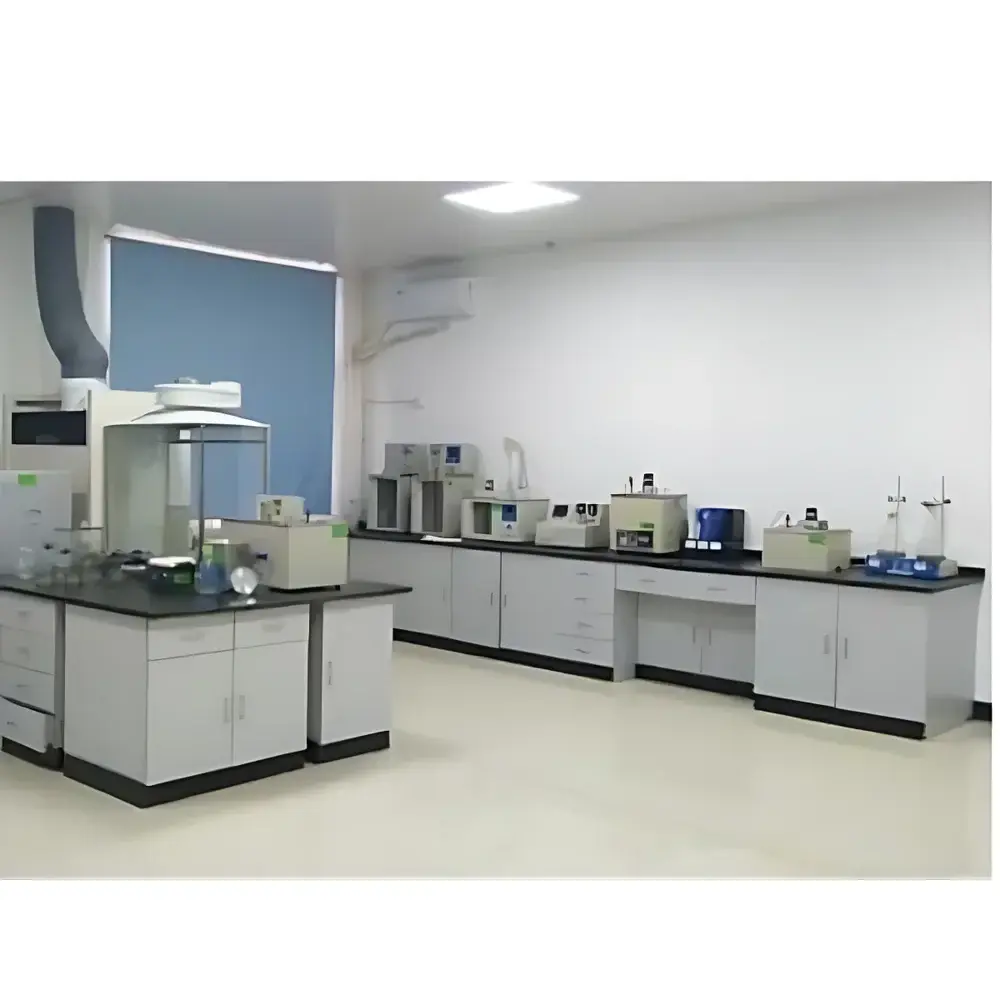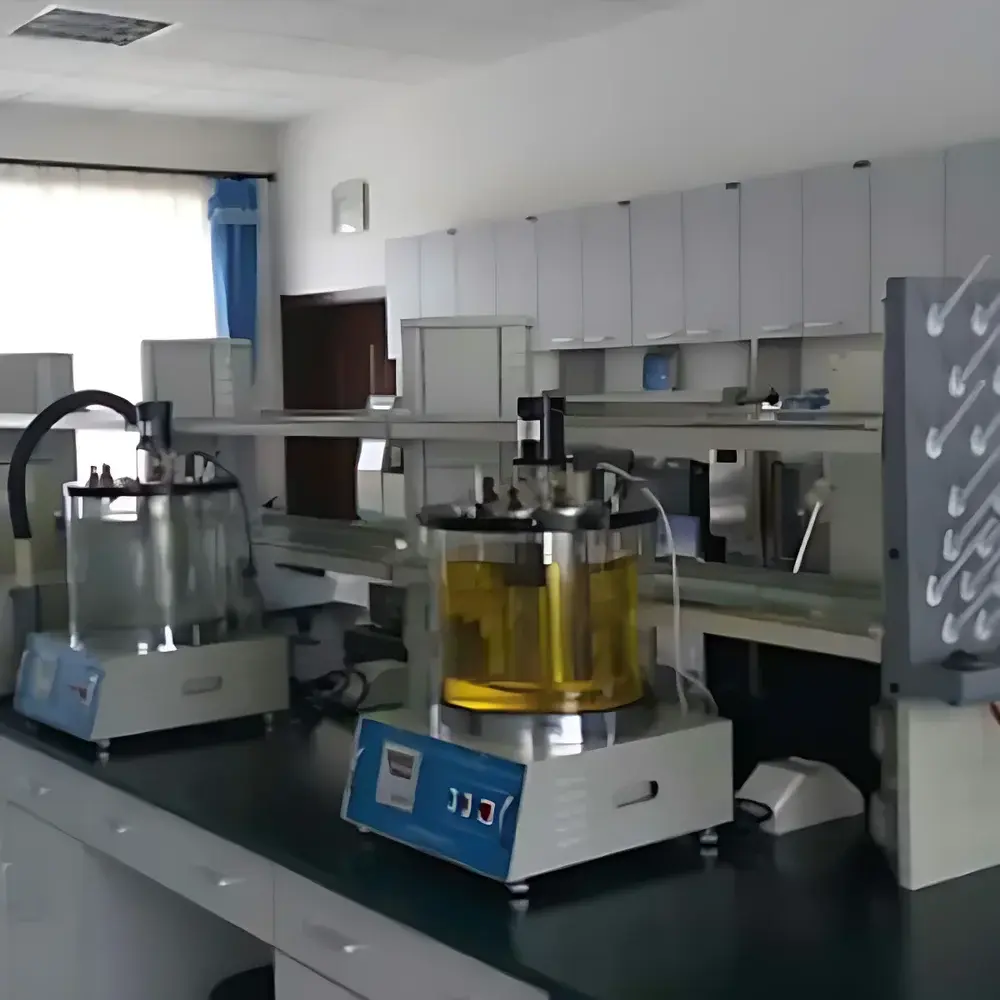
Laboratory Gas Piping Installation Service
| Origin | Shanghai |
|---|---|
| Manufacturer Type | Distributor |
| Origin Category | Domestic |
| Model | E&I |
| Quotation | Upon Request |
| Service Fee Range | USD 7,200–14,400 (based on project scope) |
| Project Experience | 100+ completed installations |
Overview
Laboratory gas piping installation is a mission-critical infrastructure service that ensures safe, reliable, and contamination-free delivery of high-purity gases—including nitrogen, oxygen, hydrogen, argon, helium, compressed air, and specialty gas mixtures—to analytical instruments and process equipment. The E&I laboratory gas piping system is engineered for precision pressure regulation, leak integrity (<1×10⁻⁹ mbar·L/s helium leak rate per ASME B31.3 and ISO 8573-1 Class 1), and long-term material compatibility with ultra-high-purity (UHP) gas streams. Designed in accordance with CGA G-4.1, SEMI F57, and ISO 14644-1 Class 5 cleanroom requirements where applicable, the system integrates seamlessly with chromatography systems (GC, GC-MS), mass spectrometers, ICP-OES/MS, FTIR, and semiconductor fabrication tools. Unlike generic industrial piping, E&I gas distribution systems incorporate electropolished stainless steel (SS316L EP, Ra ≤ 0.4 µm), orbital welding, and validated purge protocols to eliminate particulate shedding, moisture ingress, and hydrocarbon contamination—critical for sub-ppb detection limits and regulatory compliance.
Key Features
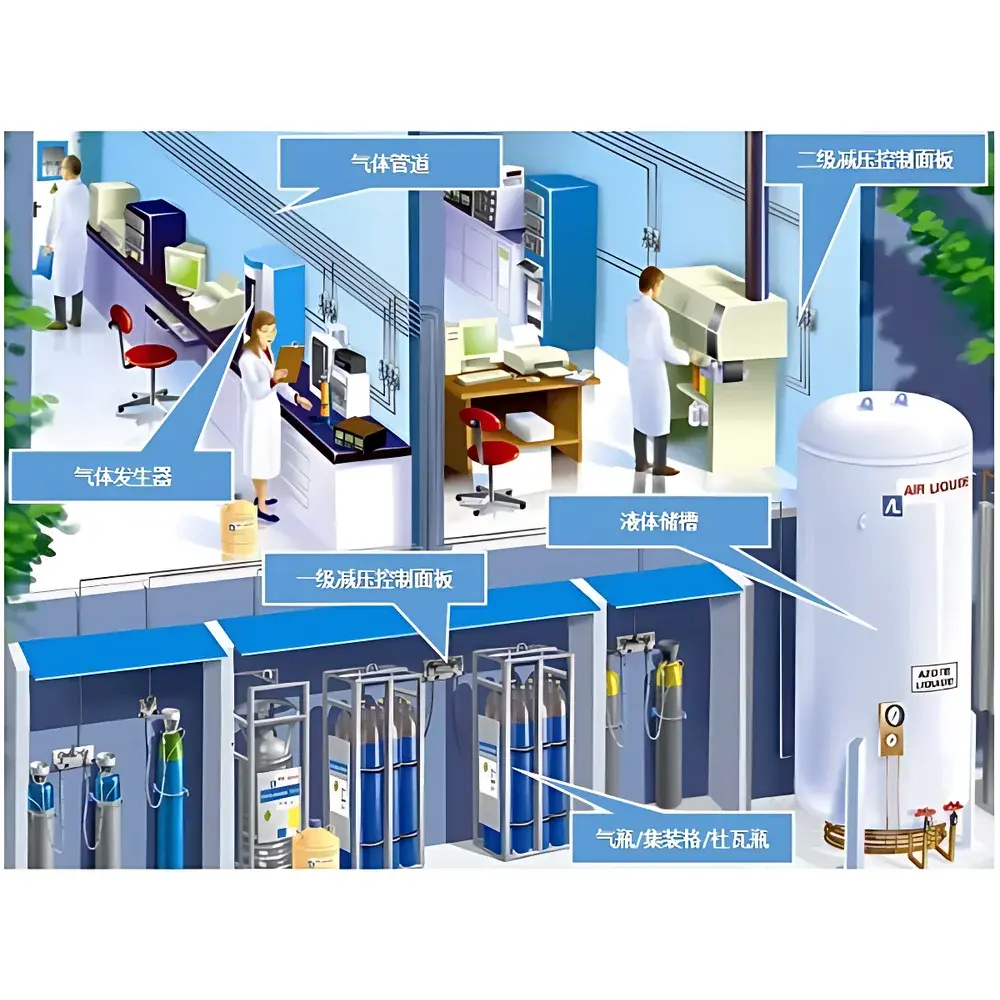
- Multi-tiered panel architecture: Primary manifold (semi-automatic gas switching panel) with dual-source redundancy and automatic failover; secondary local panels with individual pressure regulators, particle filters (0.003 µm), and residual oxygen analyzers (0–10 ppm range).
- Material traceability & certification: All SS316L tubing, fittings, and valves supplied with full mill test reports (MTRs), surface roughness verification, and passivation validation per ASTM A967.
- Leak-tight construction: 100% helium mass spectrometer leak testing post-installation; pressure decay testing per ISO 15848-1 for fugitive emissions control.
- Gas-specific zoning: Segregated lines for inert, reactive, and flammable gases—including dedicated hydrogen lines with thermal shut-off valves and explosion-proof conduit routing.
- Documentation package: As-built drawings (AutoCAD & PDF), weld logs with welder ID and WPS/PQR references, commissioning reports, and calibration certificates for all pressure instrumentation.
Sample Compatibility & Compliance
The E&I gas piping system supports all major laboratory instrumentation requiring certified gas purity levels per ISO 8573-1 (Class 1 for particles, Class 2 for water, Class 2 for oil) and CGA G-4.1 Grade 5 specifications. It complies with local fire codes (NFPA 55, NFPA 56), electrical safety standards (IEC 60079 for hazardous areas), and occupational health requirements (OSHA 1910.101, EU Directive 2010/32/EU). For regulated environments—including GLP, GMP, and ISO/IEC 17025-accredited laboratories—the system supports audit-ready documentation, including change control records, preventive maintenance logs, and traceable calibration of monitoring devices. Integration with building management systems (BMS) via Modbus RTU or BACnet MS/TP is available upon request.
Software & Data Management
While the E&I gas distribution system is hardware-centric, optional digital integration includes a web-accessible gas monitoring dashboard (E&I GasTrack™) that logs real-time pressure, flow, and oxygen/hydrocarbon contamination data from inline sensors. All data are timestamped, user-authorized, and stored with audit trail functionality compliant with FDA 21 CFR Part 11 (electronic signatures, record retention ≥ 3 years). Historical trends support predictive maintenance scheduling and root-cause analysis during instrument downtime events. Raw sensor outputs are exportable in CSV or XML format for LIMS integration (e.g., LabWare, STARLIMS, Thermo SampleManager).
Applications
- Chromatography labs requiring carrier and detector gases with <0.1 ppb hydrocarbon background
- Mass spectrometry facilities demanding stable, pulse-free gas supply for ESI, APCI, and ICP sources
- Automotive emission testing laboratories (e.g., WLTP/RDE cycles) using certified calibration gases at precise flow rates
- Pharmaceutical QC/QA labs operating under USP , ICH Q3C, and EU Annex 15 guidelines
- Materials science labs utilizing reactive gases (e.g., NH₃, Cl₂) for CVD/PVD processes
- Environmental testing chambers requiring zero-background synthetic air for VOC reference generation
FAQ
What gas purity levels can the E&I system deliver?
Dependent on source gas quality and configuration, the system maintains ISO 8573-1 Class 1 (particles), Class 2 (water), and Class 2 (oil) downstream of final filtration—validated via periodic particle counting and dew point measurement.
Is orbital welding performed on-site or off-site?
All orbital welding is conducted on-site under controlled environmental conditions (ISO 14644-1 Class 7 clean tent), with real-time weld parameter logging and post-weld visual/penetrant inspection.
Can the system be expanded after initial installation?
Yes—the modular manifold design allows for future branch additions without system shutdown; expansion requires updated hazard analysis (HAZOP) and re-validation per ISO/IEC 17025 Clause 5.4.2.
Do you provide validation documentation for GxP environments?
Yes—IQ/OQ protocols aligned with ASTM E2500 and Annex 15 are available; PQ support includes challenge testing with certified gas standards and instrument response correlation.
Related Products