
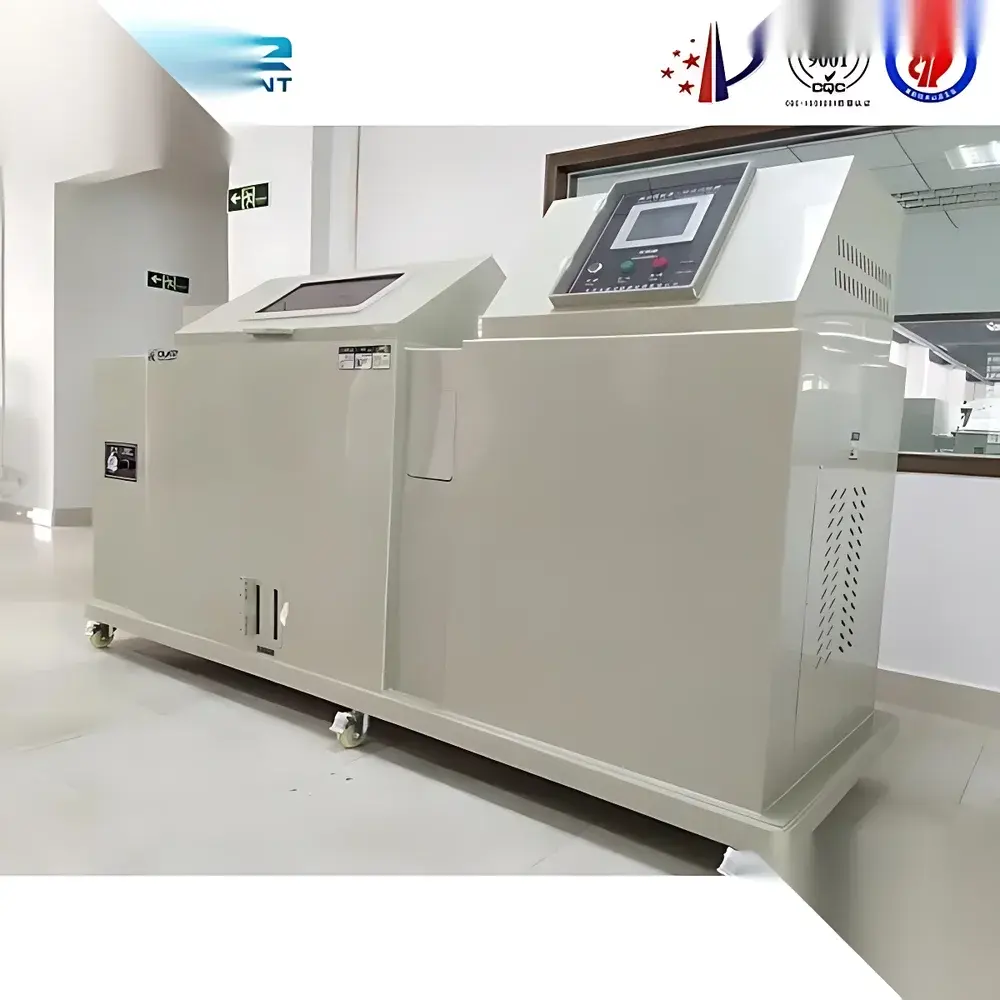
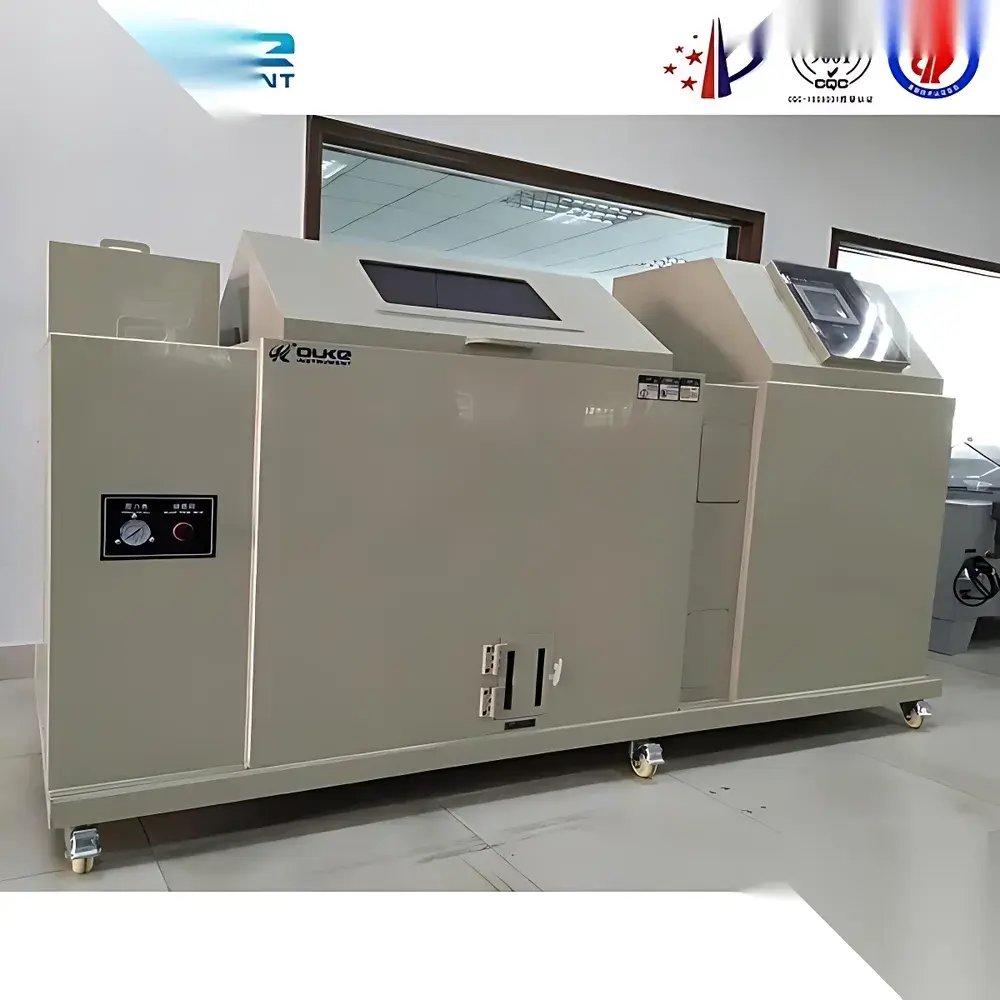
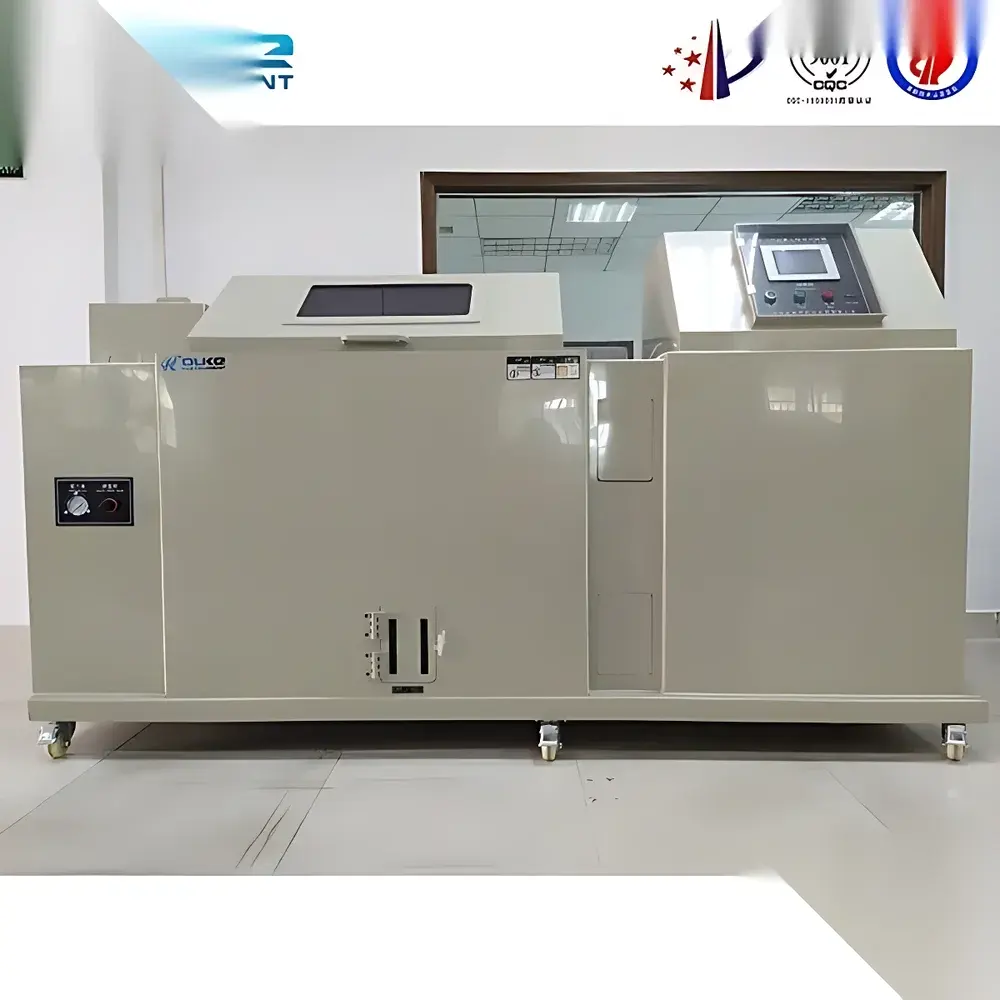
Laboratory SO₂/Sulfide Corrosion Test Chamber
| Brand | OEM |
|---|---|
| Origin | Imported |
| Manufacturer Type | Authorized Distributor |
| Temperature Range | RT+10°C to 50°C |
| Humidity Range | 85–98% RH |
| Temperature Uniformity | ≤2°C |
| Temperature Fluctuation | ±0.5°C |
| SO₂ Concentration Range | 0.1–1% v/v |
| Gas Delivery Method | Pressurized Cylinder System |
| Chamber Interior Material | PVC Plastic Sheet |
| Exterior Casing Material | Reinforced PVC Rigid Board |
| Viewing Window | Transparent Impact-Resistant Acrylic Lid |
| Sealing Method | Water-Tight Gasket Seal |
| Heating Method | Immersed Water-Bath Heater in Inner Tank |
| Standard Compliance | GB/T 9789–1988, DIN 50018, ISO 6988 (referenced) |
Overview
The Laboratory SO₂/Sulfide Corrosion Test Chamber is a precision-engineered environmental test system designed for accelerated corrosion evaluation of metallic and non-organic coated materials under controlled sulfur-containing atmospheres. It operates on the principle of exposing specimens to a saturated humid environment enriched with precisely regulated concentrations of sulfur dioxide (SO₂) or hydrogen sulfide (H₂S), simulating aggressive industrial or coastal atmospheric conditions where sulfur compounds accelerate electrochemical degradation. Unlike conventional salt spray chambers focused solely on chloride-induced pitting, this chamber enables standardized assessment of sulfide-induced tarnishing, blackening, and intergranular corrosion—critical for evaluating protective coatings on automotive trim, electrical contacts, architectural metals, and aerospace fasteners. The chamber complies with key international test methodologies including GB/T 9789–1988 (“Metallic and Other Inorganic Coatings — Sulfur Dioxide Corrosion Testing Under Condensing Conditions”), DIN 50018 (“Sulfur Dioxide Corrosion Testing in Saturated Atmospheres”), and serves as a functional reference platform aligned with ISO 6988 and ASTM G87 practices.
Key Features
- Robust dual-layer construction: exterior casing of reinforced PVC rigid board provides structural integrity and long-term resistance to acid gas permeation; interior chamber lined with seamless PVC plastic sheeting ensures chemical inertness and ease of decontamination.
- Full-view transparent acrylic lid fabricated from imported impact-resistant material enables real-time visual monitoring without compromising seal integrity; pneumatically assisted lifting mechanism ensures smooth, ergonomic operation.
- Water-tight gasket sealing between lid and chamber body eliminates gas leakage, maintaining stable SO₂ concentration and operator safety—validated per EN 14175-3 requirements for fume containment.
- Immersion-type water-bath heating system located within the inner tank delivers rapid thermal response and uniform temperature distribution (≤2°C deviation across working volume), minimizing condensation variability during prolonged exposure cycles.
- Precision gas dosing via calibrated pressure-reducing regulator and mass flow controller ensures repeatable SO₂ delivery at 0.1–1% v/v—traceable to NIST-traceable calibration standards and compatible with optional H₂S cylinder integration.
- Integrated humidity control maintains 85–98% RH with ±0.5°C temperature stability, replicating dew-point conditions essential for electrolyte film formation on specimen surfaces.
Sample Compatibility & Compliance
This chamber accommodates flat, cylindrical, or irregularly shaped specimens up to 200 L active volume (OK-SH-200 model). Specimen racks are non-metallic (PVC or PTFE-coated) to prevent galvanic interference. The system supports standard test coupons (e.g., ASTM B117-compliant panels), electronic connectors, printed circuit boards with conformal coatings, and painted steel substrates. All operational parameters—including gas concentration, temperature, humidity, and exposure duration—are fully documentable for GLP/GMP-aligned quality systems. The chamber design facilitates audit readiness for ISO/IEC 17025-accredited laboratories and satisfies documentation requirements for FDA 21 CFR Part 11 when paired with compliant data logging software.
Software & Data Management
Equipped with a programmable digital controller featuring password-protected parameter setting, real-time trend logging, and USB export capability. Optional Ethernet-enabled controllers support Modbus TCP integration into centralized lab monitoring networks. All recorded data—including chamber temperature, relative humidity, SO₂ concentration (via optional electrochemical sensor), cycle start/end timestamps, and alarm events—are time-stamped and stored with immutable audit trails. Raw logs comply with ALCOA+ principles (Attributable, Legible, Contemporaneous, Original, Accurate, Complete, Consistent, Enduring, Available) for regulatory submissions and internal quality reviews.
Applications
- Evaluation of anti-tarnish performance of silver-plated contacts and copper alloys in telecom infrastructure.
- Validation of paint adhesion and blister resistance on automotive chassis components exposed to sulfur-rich urban exhaust environments.
- Corrosion resistance screening of zinc-nickel and trivalent chromium coatings per ASTM B766 and ISO 2081.
- Accelerated aging studies of polymer-based encapsulants used in LED lighting housings subjected to industrial SO₂ emissions.
- Qualification testing of stainless steel grades (e.g., 316L, 2205) for offshore oil & gas instrumentation housings.
FAQ
What standards does this chamber directly support?
GB/T 9789–1988, DIN 50018, and ISO 6988 Annex A for SO₂ corrosion testing under condensing conditions.
Can hydrogen sulfide (H₂S) be substituted for SO₂ in the same chamber?
Yes—provided appropriate cylinder certification, gas-specific regulator, and ventilation verification per OSHA 1910.1200; H₂S requires additional leak detection and emergency purge protocols.
Is the chamber suitable for cyclic corrosion testing (CCT)?
It supports static SO₂/humidity exposure; for full CCT sequences (e.g., wet/dry/salt/SO₂ phases), integration with an external climatic chamber or multi-function test system is recommended.
How often must the SO₂ concentration sensor be calibrated?
Electrochemical SO₂ sensors require zero/span calibration before each test series and quarterly full verification using certified gas standards.
Does the system include exhaust gas neutralization?
No—exhaust must be ducted to a certified scrubber system meeting local EPA or EU Directive 2010/75/EU requirements for acidic gas abatement.



