
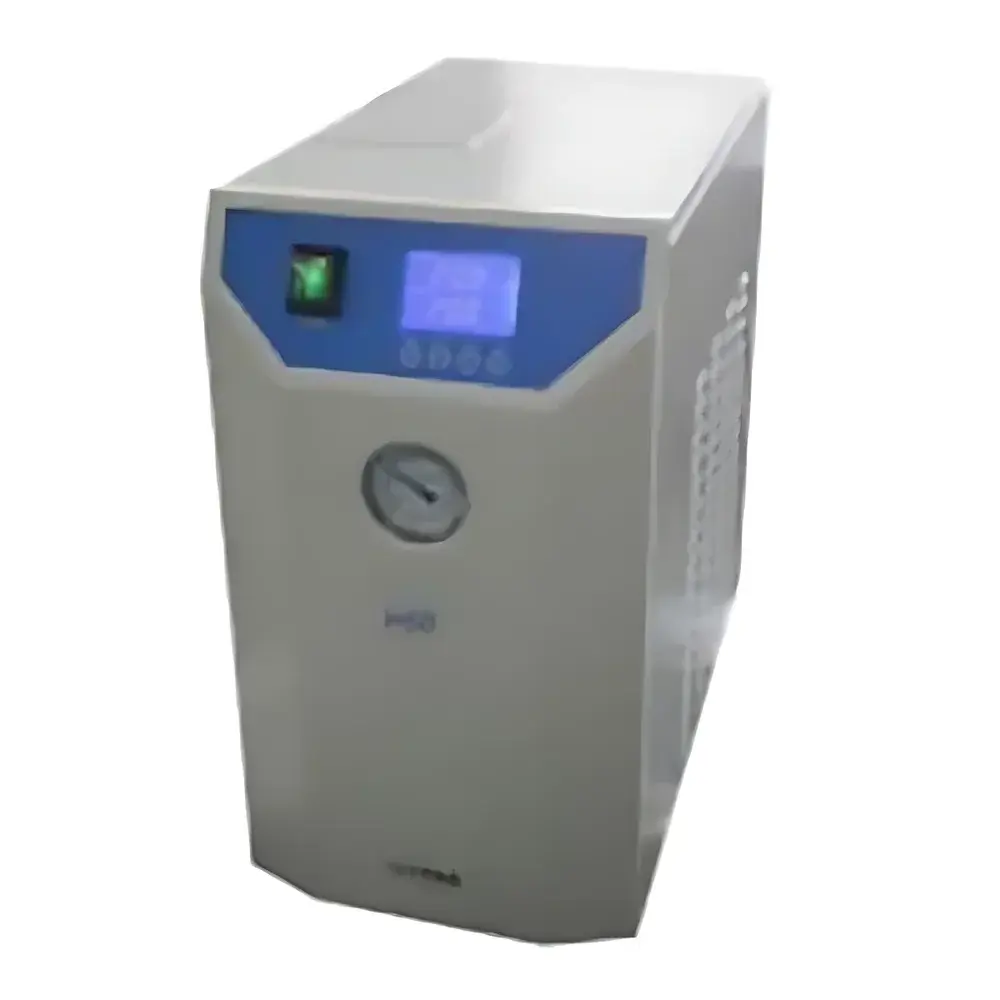
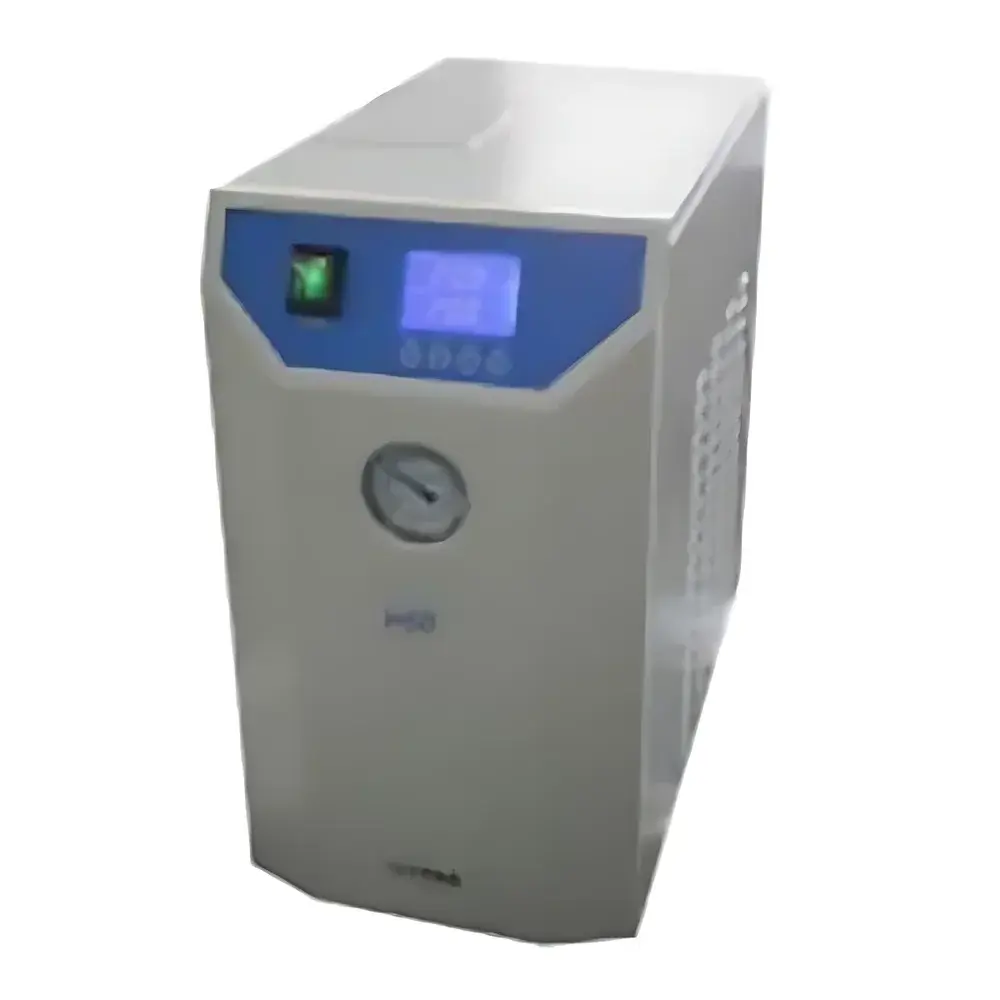
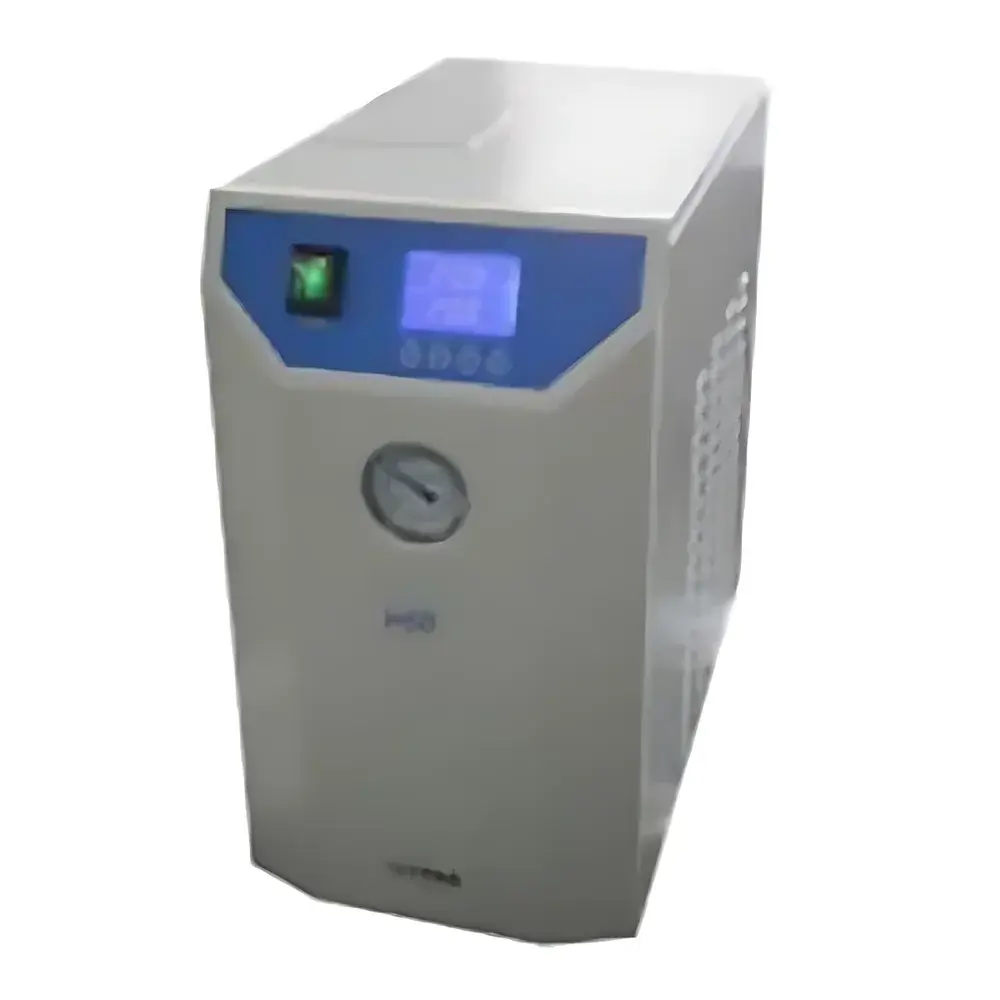
LabTech H35 Compact Circulating Chiller
| Brand | LabTech |
|---|---|
| Origin | Beijing, China |
| Model | H35 |
| Instrument Type | Integrated Circulating Chiller |
| Cooling Method | Water-Cooled |
| Temperature Range | −5 to 35 °C |
| Cooling Capacity | 350 W (at 20 °C ambient) / 500 W (at 25 °C ambient) |
| Temperature Stability | ±0.3 °C |
| Circulation Pump Pressure | 1.0 bar |
| Circulation Flow Rate | 3.5 L/min |
| Reservoir Volume | 1.8 L |
| Operation Mode | Continuous |
| Control Technology | PID Digital Temperature Control + Hot Gas Bypass Compressor Modulation |
| Heat Exchanger | Plate-Type |
| Refrigerant | R134a (CFC-free, ozone-friendly) |
| Display | Backlit LCD |
Overview
The LabTech H35 Compact Circulating Chiller is an integrated, water-cooled thermal management system engineered for precision temperature control in laboratory and analytical instrumentation applications. It operates on a closed-loop circulation principle, delivering stable coolant flow to external devices—such as spectrometers, laser sources, ICP-MS torches, rotary evaporators, and electrophoresis systems—requiring consistent thermal regulation. Unlike conventional on/off compressor cycling chillers, the H35 employs Hot Gas Bypass (HGB) modulation, a well-established refrigeration strategy widely adopted across European and North American OEMs for high-stability applications. In this architecture, the compressor runs continuously while refrigerant flow is dynamically adjusted via a hot gas bypass valve, eliminating thermal shock, reducing mechanical wear, and enabling fine-grained temperature response within ±0.3 °C stability over its full −5 to 35 °C operating range. The system integrates a brazed plate heat exchanger for high thermal transfer efficiency, compact footprint, and rapid thermal equilibration—critical when supporting instruments with transient thermal loads.
Key Features
- Hot Gas Bypass (HGB) compressor modulation ensures continuous operation without start-stop cycling, enhancing long-term reliability and minimizing temperature overshoot during setpoint transitions.
- PID digital temperature control algorithm with real-time feedback loop delivers precise, repeatable thermal setpoints across the full −5 to 35 °C range.
- Compact, space-efficient design (1.8 L reservoir) optimized for benchtop integration in crowded lab environments—ideal for coupling with HPLC columns, UV-Vis detectors, or X-ray diffractometers.
- High-efficiency plate-type heat exchanger enables rapid heat dissipation and fast cooldown from ambient to −5 °C, supporting time-sensitive experimental protocols.
- Low-power consumption profile: rated at 350 W (20 °C ambient) and 500 W (25 °C ambient), reflecting optimized refrigeration cycle efficiency and reduced operational cost over extended use.
- CFC-free R134a refrigerant complies with Montreal Protocol requirements and EU F-Gas Regulation (EU No 517/2014), ensuring environmental responsibility without compromising performance.
- Backlit LCD interface provides intuitive access to setpoint, actual bath temperature, pump status, and error codes—supporting unambiguous operator interaction under varied lighting conditions.
Sample Compatibility & Compliance
The H35 is designed for use with deionized or distilled water-based coolants and is compatible with standard laboratory tubing (¼″–⅜″ OD) and common quick-connect fittings. It meets general electrical safety requirements per IEC 61010-1:2010 (Edition 3) for laboratory equipment. While not certified to specific ISO/IEC 17025 or GLP audit criteria as a standalone unit, its stable thermal output supports method validation in regulated environments where instrument cooling consistency directly impacts data integrity—e.g., in ASTM E2912-compliant spectroscopic calibration or USP analytical instrument qualification. Its continuous operation mode and low temperature drift align with GMP-relevant expectations for ancillary support equipment used in QC labs.
Software & Data Management
The H35 operates as a stand-alone hardware controller with no embedded network interface or remote software protocol. All configuration and monitoring occur locally via the front-panel LCD and tactile keypad. No data logging, USB export, or Ethernet connectivity is provided—consistent with its role as a dedicated, low-maintenance utility device. For laboratories requiring audit trails or electronic records, integration with external environmental monitoring systems (e.g., via 4–20 mA analog output or optional relay modules) may be implemented at the facility level. The unit does not implement FDA 21 CFR Part 11 controls, as it lacks user authentication, electronic signature, or secure data storage capabilities.
Applications
- Thermal stabilization of high-resolution mass spectrometry sources (e.g., ESI, APCI) and collision cells requiring sub-degree temperature constancy.
- Cooling of high-power LED light engines and solid-state lasers in optical metrology setups where wavelength drift must be minimized.
- Support of chromatographic systems—including preparative HPLC and UHPLC—by maintaining column oven and detector cell temperatures within narrow tolerances.
- Heat removal from vacuum pumps, plasma generators, and RF amplifiers in materials science and semiconductor characterization labs.
- Continuous cooling of electrophoresis tanks and DNA sequencers during multi-hour runs where buffer temperature rise could compromise separation resolution.
FAQ
What refrigerant does the H35 use, and is it compliant with international environmental regulations?
The H35 uses R134a—a zero-ozone-depletion-potential (ODP = 0), non-CFC refrigerant—fully compliant with the Montreal Protocol and EU F-Gas Regulation.
Can the H35 operate continuously for 24/7 applications?
Yes. Engineered for uninterrupted duty cycles, the H35’s Hot Gas Bypass architecture eliminates compressor cycling stress, supporting reliable 24/7 operation in production QC and long-duration research protocols.
Is the reservoir volume sufficient for connection to external equipment with large fluid volumes?
With a 1.8 L internal reservoir and 3.5 L/min flow rate, the H35 is optimized for direct-coupled instruments—not open-loop or large-volume jacketed reactors. For systems exceeding 5 L total loop volume, external expansion tanks or higher-capacity models (e.g., H60/H100 series) are recommended.
Does the H35 support external temperature sensors for remote bath monitoring?
No. Temperature sensing is internal only; the unit does not accept external PT100 or thermistor inputs. Closed-loop control is based solely on the integrated sensor located in the reservoir return line.
What maintenance intervals are recommended for optimal performance?
Annual inspection of condenser coil cleanliness, refrigerant pressure verification, and pump seal integrity is advised. Filter replacement is not required—the system contains no inline particulate filters, relying instead on pre-filtered coolant in properly maintained loops.
Related Products



