
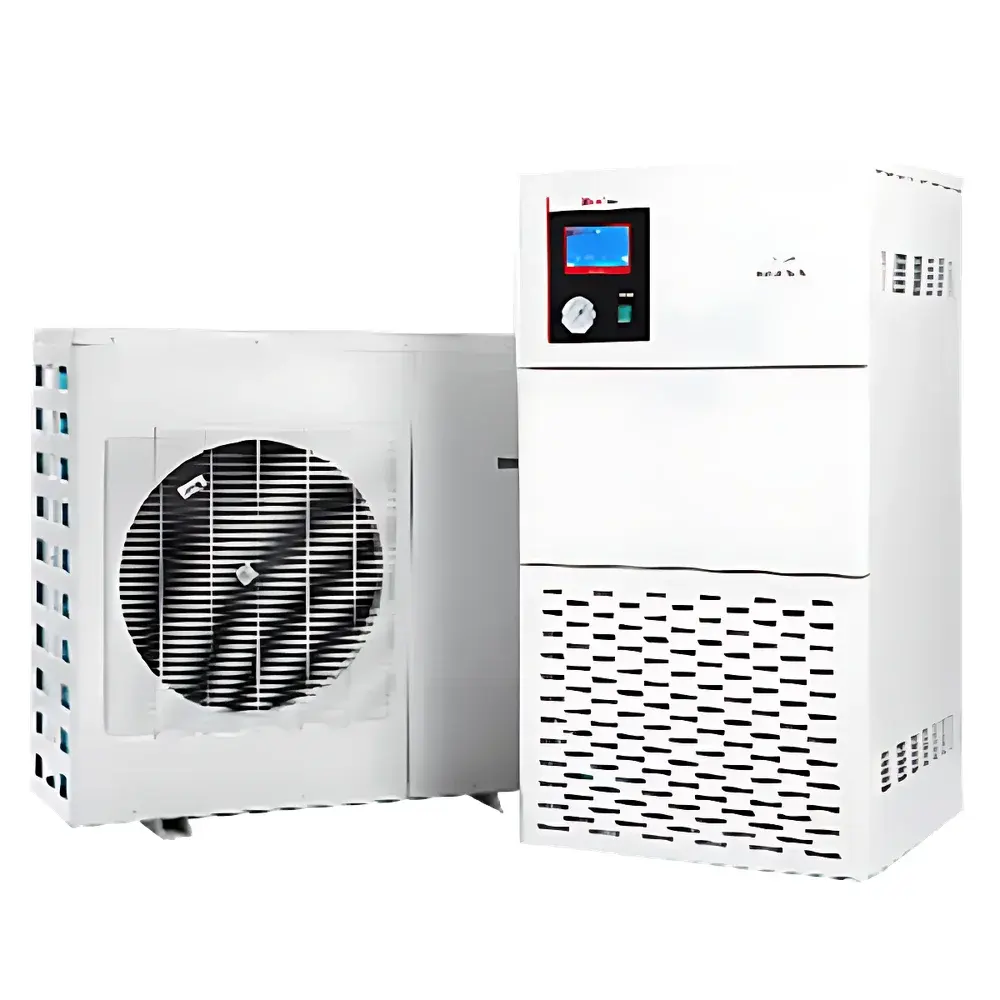
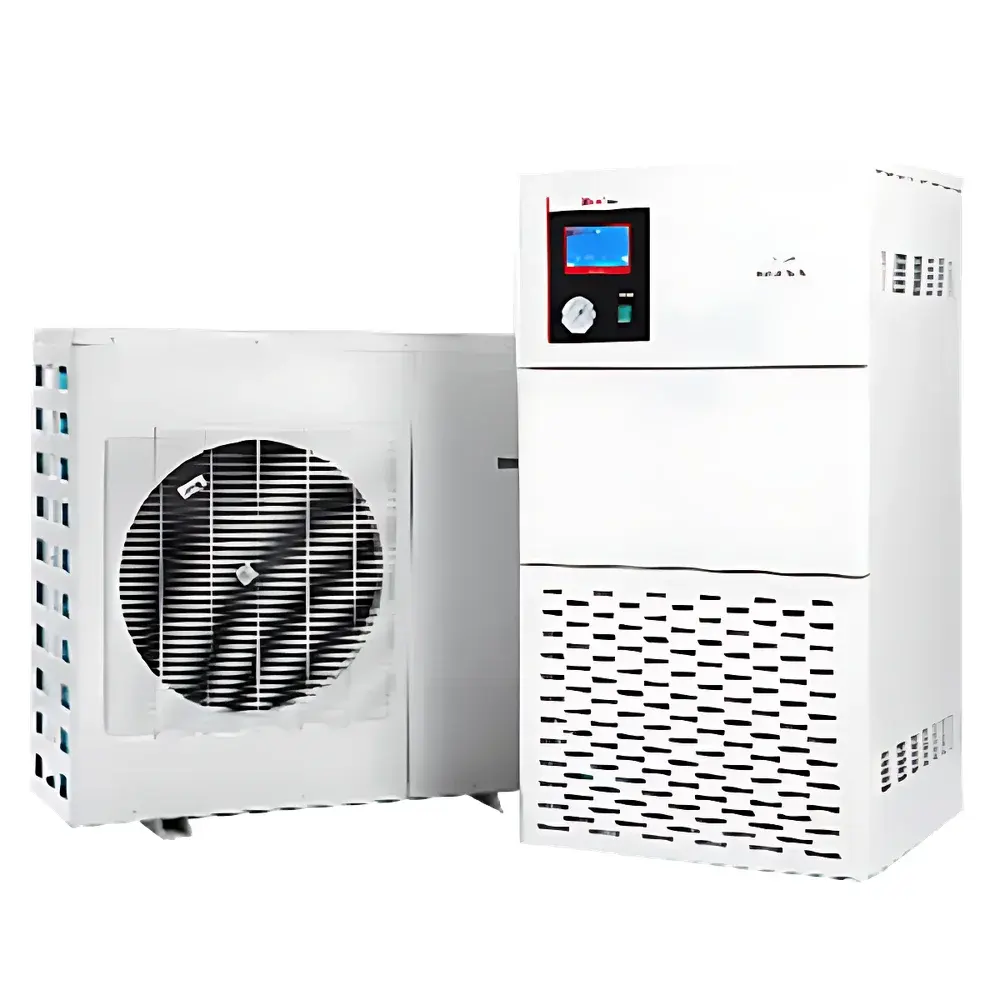
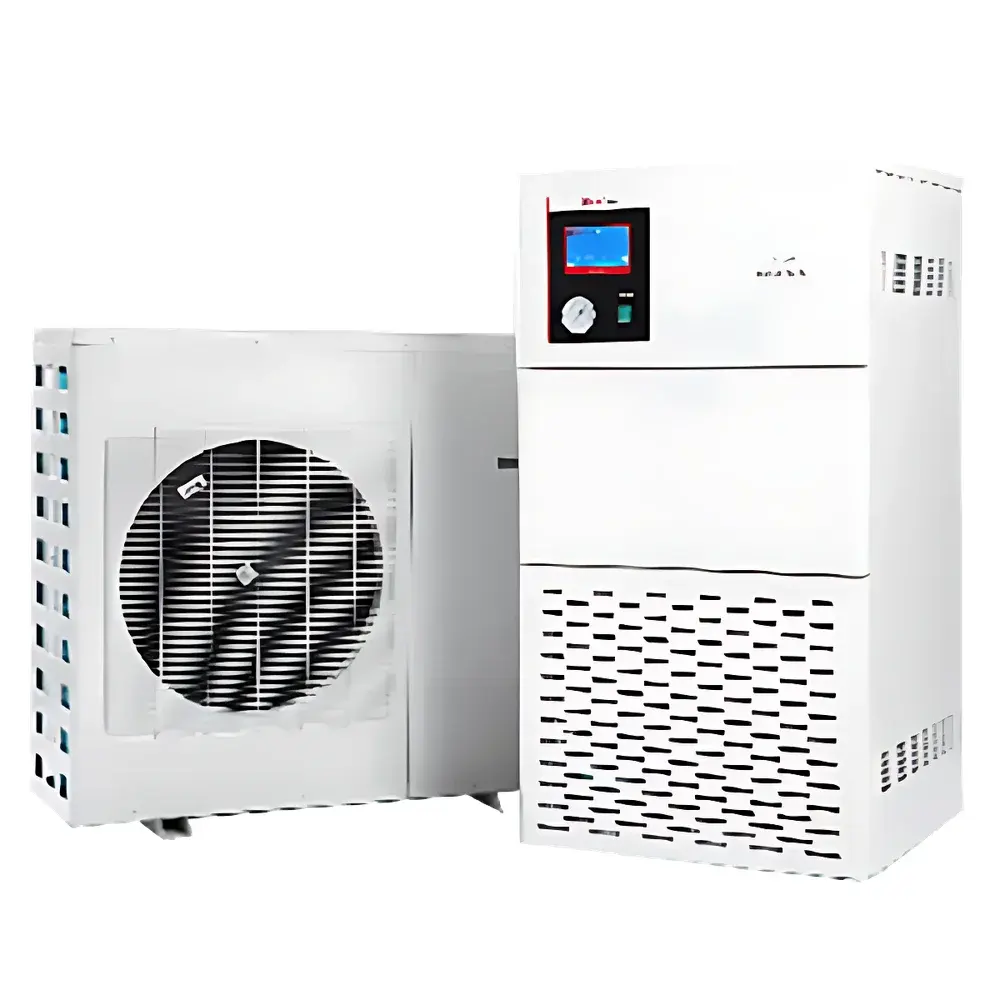
LabTech H500 Large-Capacity Circulating Chiller
| Brand | LabTech |
|---|---|
| Origin | Beijing, China |
| Model | H500 |
| Instrument Type | Integrated Circulating Chiller |
| Cooling Method | Water-Cooled |
| Temperature Stability | ±0.2 °C |
| Design Architecture | Separated Refrigeration and Heat Dissipation Units |
| Low-Temperature Operation Capability | Functional at outdoor ambient temperatures down to −25 °C |
| Control Interface | Full-Color Touchscreen with Real-Time Multi-Parameter Display |
| Safety System | 13 Diagnostic Alarm Codes |
| Operational Flexibility | 12 Configurable System Parameter Sets |
| Hot Gas Bypass Technology | Integrated |
| PID Digital Temperature Control | Standard |
Overview
The LabTech H500 Large-Capacity Circulating Chiller is an engineered thermal management solution designed for laboratory instruments with high heat dissipation requirements—such as ICP-MS, laser ablation systems, high-power NMR preamplifiers, X-ray diffractometers, and industrial-scale analytical spectrometers. Unlike compact benchtop chillers, the H500 employs a split-system architecture: refrigeration components (compressor, evaporator, expansion valve) are housed in the main unit, while heat rejection is delegated to a physically separate air-cooled condensing unit. This modular configuration enables flexible installation—condenser placement outdoors or in ventilated utility spaces—reducing acoustic emissions within sensitive lab environments and optimizing floor space utilization. The system operates on R410A or R134a refrigerant (model-dependent), with compressor capacity modulated via hot gas bypass in conjunction with precision PID digital temperature control. This dual-control strategy ensures stable setpoint maintenance across dynamic thermal loads while minimizing thermal overshoot and cycling fatigue.
Key Features
- Split-system design with independent refrigeration and heat rejection modules for noise reduction and spatial flexibility
- PID-based digital temperature regulation achieving ±0.2 °C stability over extended operation periods
- Low-temperature startup capability verified at outdoor ambient conditions as low as −25 °C, enabled by integrated condenser heater and refrigerant circuit optimization
- Full-color capacitive touchscreen interface supporting real-time display of coolant temperature, flow rate, pressure differential, compressor status, and system fault codes
- Comprehensive safety protocol with 13 standardized diagnostic alarm codes—covering high/low pressure, flow interruption, sensor failure, refrigerant leak detection, and overtemperature events
- Twelve user-accessible system parameter sets allow rapid adaptation to different host instrument profiles without firmware reconfiguration
- Corrosion-resistant stainless steel reservoir and circulation loop compatible with deionized water, 30% ethylene glycol/water mixtures, and other non-aggressive coolants
Sample Compatibility & Compliance
The H500 is not a sample-contacting device; it functions exclusively as a closed-loop thermal transfer medium delivery system. Its coolant circuit interfaces with external equipment via standardized 1/2″–3/4″ BSP or NPT fittings, supporting both pressurized and gravity-fed return configurations. The chiller complies with IEC 61000-6-3 (EMC emission limits) and IEC 61000-6-2 (immunity requirements) for laboratory environments. Electrical safety conforms to IEC 61010-1:2010 (Measurement, Control and Laboratory Equipment – Safety Requirements). While not certified under FDA 21 CFR Part 11, its event-log functionality—including timestamped alarm records and parameter change history—supports GLP/GMP-aligned documentation practices when integrated into validated workflows.
Software & Data Management
The embedded controller logs operational data—including temperature setpoint deviations, compressor runtime, alarm triggers, and parameter modifications—to internal flash memory with retention exceeding 12 months. Data export is supported via USB 2.0 port (CSV format); no proprietary software or cloud dependency is required. Optional RS485 Modbus RTU interface enables integration into centralized building management systems (BMS) or LIMS platforms for remote monitoring and automated alerting. Audit trail generation meets basic ALCOA+ principles (Attributable, Legible, Contemporaneous, Original, Accurate) for routine QC applications.
Applications
- Thermal stabilization of plasma sources in ICP-OES and ICP-MS systems requiring continuous high-flow cooling (>20 L/min)
- Heat load management for multi-kilowatt laser systems used in LIBS, LA-ICP-MS, and materials processing
- Support of cryogen-free superconducting magnet cooling loops in compact NMR spectrometers
- Temperature-controlled operation of high-resolution XRD goniometers and synchrotron beamline optics
- Industrial QA/QC labs deploying parallelized HPLC-MS or GC-MS clusters with aggregated thermal output
FAQ
What is the minimum ambient temperature at which the outdoor condensing unit can operate?
The condensing unit is rated for reliable start-up and continuous operation at ambient temperatures as low as −25 °C, achieved through integrated trace heating and refrigerant charge optimization.
Is the H500 compatible with glycol-based coolant mixtures?
Yes—the fluid path is constructed from 316 stainless steel and EPDM elastomers, supporting aqueous solutions containing up to 30% ethylene or propylene glycol.
Does the system support remote monitoring via Ethernet or Wi-Fi?
No native Ethernet or Wi-Fi module is included; however, RS485 Modbus RTU communication is available for integration with third-party SCADA or BMS infrastructure.
Can the chiller maintain temperature stability during rapid thermal transients?
The combination of hot gas bypass modulation and adaptive PID tuning allows recovery within ±0.3 °C of setpoint following step-load changes typical of pulsed laser or RF generator duty cycles.
What documentation is provided for validation purposes?
Factory calibration certificates (temperature sensor and pressure transducer), electrical safety test reports, and a complete I/O pinout schematic are supplied with each unit. IQ/OQ protocols are available upon request.



