
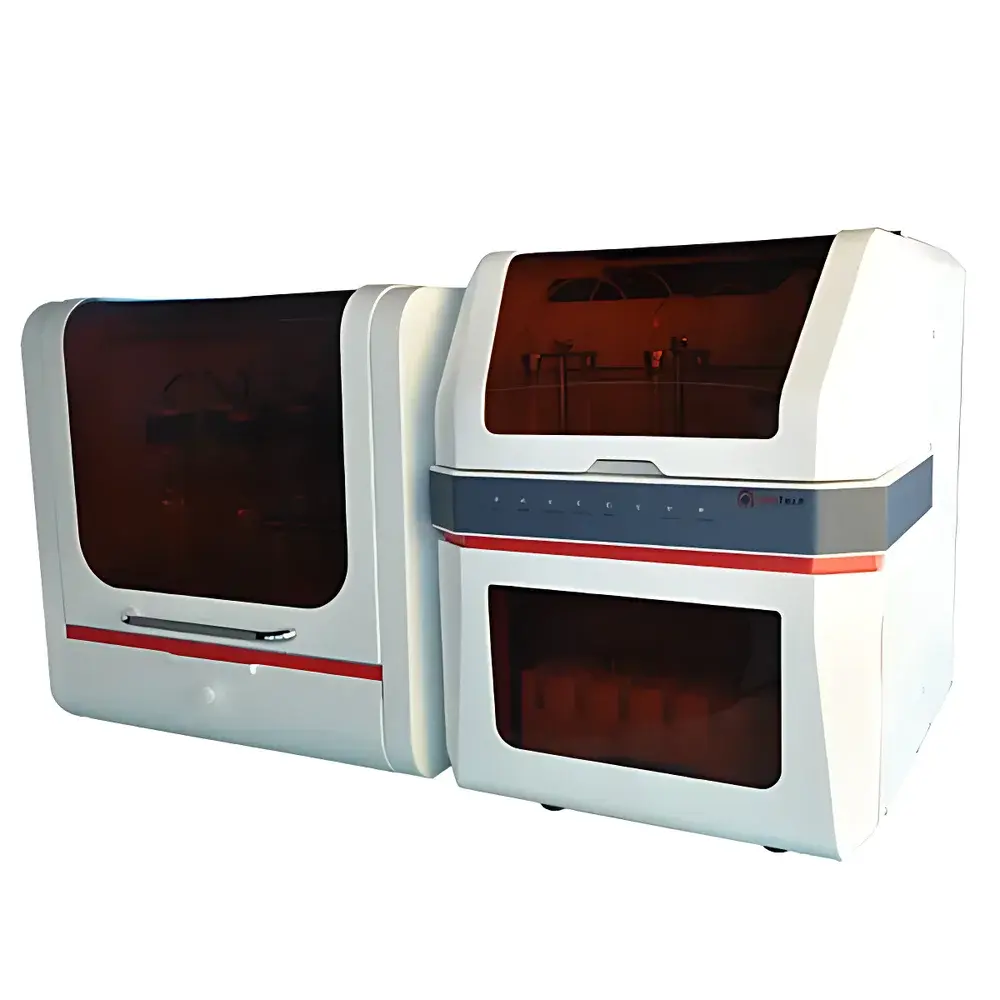
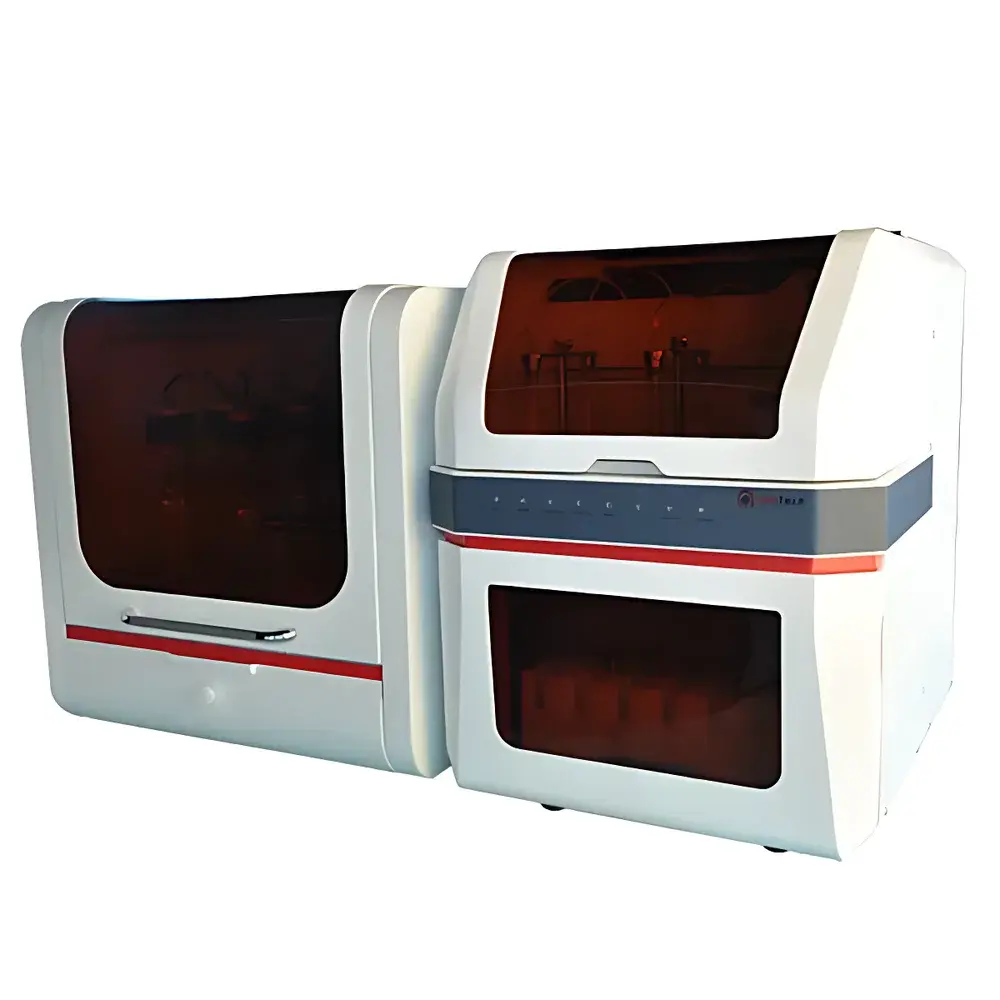
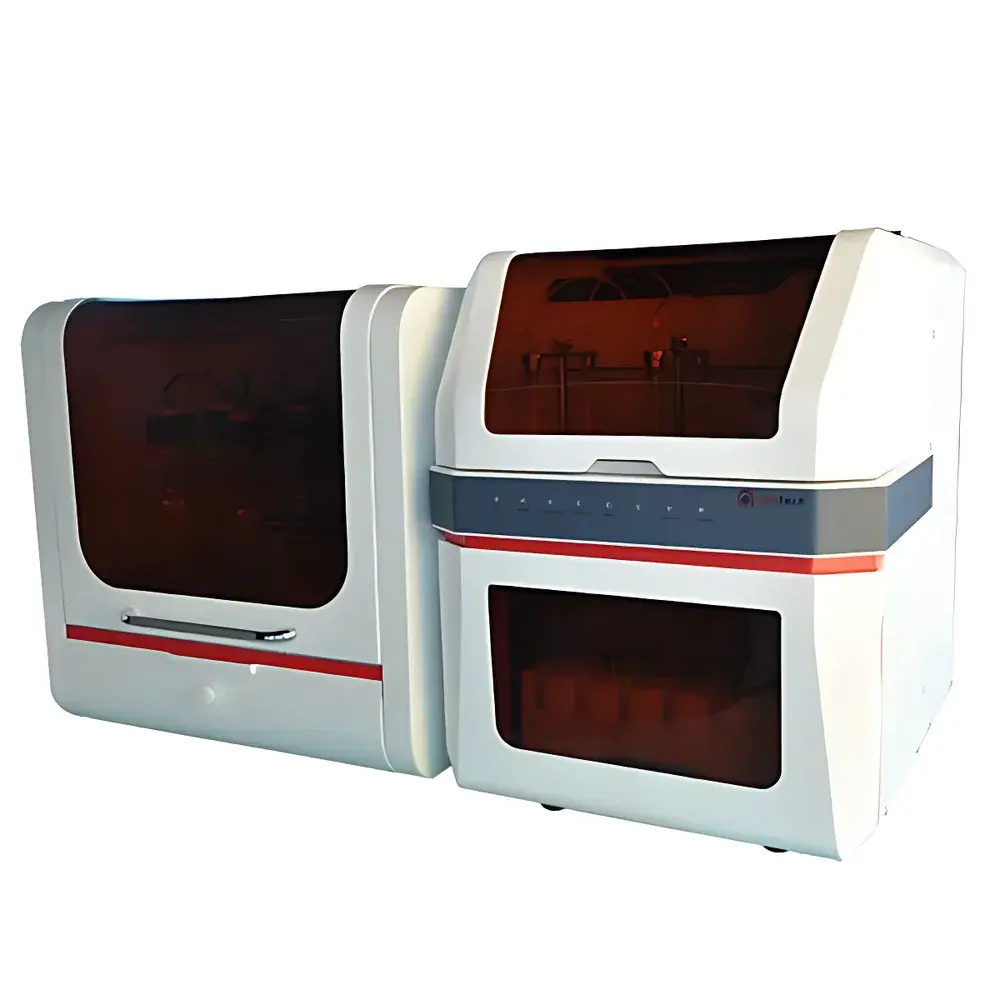
LabTech Sepaths UP Fully Automated Column-Membrane Universal Solid Phase Extraction System
| Brand | LabTech |
|---|---|
| Origin | Beijing, China |
| Model | Sepaths UP |
| Automation Level | Fully Automated |
| Channel Count | Multi-Channel |
| Extraction Type | Membrane-Based SPE |
| Flow Rate Control | 0–120 mL/min |
| Solvent Selection | 8 Independent Solvent Lines |
| Sample Capacity | Up to 12 Samples Simultaneously |
| Sample Loading Volume | 1–20 mL |
| Wetted Materials | PTFE and Stainless Steel |
Overview
The LabTech Sepaths UP is a fully automated, column-membrane universal solid phase extraction (SPE) system engineered for high-throughput, reproducible isolation and concentration of trace organic analytes from aqueous matrices. Unlike conventional single-format SPE platforms, the Sepaths UP employs a dual-mode fluidic architecture that natively supports both traditional sorbent-packed columns and hydrophobic/hydrophilic membrane disks (e.g., Empore™-type membranes) without hardware modification. Its operational principle relies on precise positive-pressure-driven solvent delivery and vacuum-assisted elution control, enabling consistent flow dynamics across variable bed geometries—critical for maintaining binding efficiency, minimizing breakthrough, and ensuring quantitative recovery in regulated environmental and food safety workflows. Designed for laboratories performing routine monitoring under EPA Methods 508.1, 525.3, 537.1, and ISO 17993, the system delivers robust performance in drinking water, surface water, groundwater, wastewater, and industrial effluent analysis.
Key Features
- Fully automated operation with programmable method sequencing for up to 12 independent samples—each configurable with unique protocols (loading, conditioning, washing, elution).
- Universal compatibility with both 1–6 mL SPE cartridges and 47 mm membrane disks, eliminating the need for platform duplication or manual format switching.
- Precision flow control (0–120 mL/min) via integrated peristaltic and syringe-pump hybrid delivery, ensuring optimal residence time for analyte retention on diverse sorbents (C18, HLB, SAX, Florisil, etc.).
- Intelligent solvent management with eight chemically resistant solvent lines, each independently valved and pressure-regulated to prevent cross-contamination and support gradient elution strategies.
- Integrated immersion function: optical liquid-level sensors detect solvent meniscus height to automatically initiate controlled soaking of membranes or cartridges prior to elution—enhancing analyte desorption kinetics and improving recovery consistency.
- Complete sample bottle rinsing post-loading: a dedicated spray nozzle ensures quantitative transfer of entire sample volume (1–20 mL), minimizing wall loss and increasing overall method recovery by ≥5% versus non-rinsing protocols.
- Hermetically sealed manifold with built-in ventilation, LED illumination, and overpressure relief—meeting OSHA and CLP-compliant lab safety requirements for volatile organic solvent handling.
Sample Compatibility & Compliance
The Sepaths UP accommodates a broad range of aqueous environmental samples without pre-filtration when using membrane formats, including turbid surface waters and clarified wastewater effluents. It is validated for use with EPA-approved sorbents and certified membrane media (e.g., polytetrafluoroethylene (PTFE)-backed C18 membranes). All wetted components—including fluid paths, valves, and reservoirs—are constructed from PTFE and 316 stainless steel to ensure chemical inertness against acetonitrile, methanol, dichloromethane, ethyl acetate, and acidic/basic aqueous solutions. The system conforms to GLP documentation standards and supports 21 CFR Part 11-compliant audit trails when integrated with LabTech’s optional LIMS-ready software module.
Software & Data Management
Controlled via LabTech’s proprietary SPEMaster™ v4.2 software, the Sepaths UP provides intuitive graphical method builder, real-time run monitoring, and event-logged parameter tracking (flow rate, pressure, solvent selection, dwell time). All method files are digitally signed and timestamped; raw execution logs—including sensor-triggered events (e.g., “membrane soak initiated at 02:14:33”)—are exportable in CSV and PDF formats for regulatory submission. Software supports IQ/OQ documentation templates aligned with ISO/IEC 17025:2017 and ASTM D8255-21 validation frameworks.
Applications
- Multi-residue analysis of pesticides, pharmaceuticals, endocrine disruptors, and PFAS in drinking water per U.S. EPA Method 537.1 and EU Directive 2020/2184.
- Routine monitoring of polycyclic aromatic hydrocarbons (PAHs) and chlorinated benzenes in groundwater per EPA Method 8270D.
- High-volume (≥500 mL) enrichment of polar micropollutants from wastewater influent/effluent using stacked membrane configurations.
- Method development for novel sorbent materials, including molecularly imprinted polymers (MIPs) and metal–organic frameworks (MOFs), leveraging the system’s flexible pressure and flow programming.
- Support for accredited environmental testing laboratories requiring traceability, repeatable inter-laboratory performance, and full compliance with ISO/IEC 17025 clause 7.2.2 (method validation).
FAQ
Does the Sepaths UP require external vacuum or compressed gas sources?
No—the system integrates an internal diaphragm vacuum pump and electronically regulated positive-pressure manifold, eliminating dependency on facility-supplied nitrogen or house vacuum.
Can it be used with non-LabTech membrane disks or SPE cartridges?
Yes—mechanical and fluidic interfaces comply with ASTM D5295-19 dimensional standards; third-party 47 mm membranes and 1–6 mL cartridges are fully supported.
Is method transfer from manual SPE possible?
Yes—SPEMaster™ includes a method migration wizard that converts legacy manual protocols into validated automated sequences, including soak times, rinse volumes, and fraction collection triggers.
What maintenance intervals are recommended for long-term reliability?
PTFE tubing should be replaced every 6 months under continuous operation; stainless-steel valves undergo automatic self-cleaning cycles after each run; full system OQ verification is advised annually or after major component replacement.



