
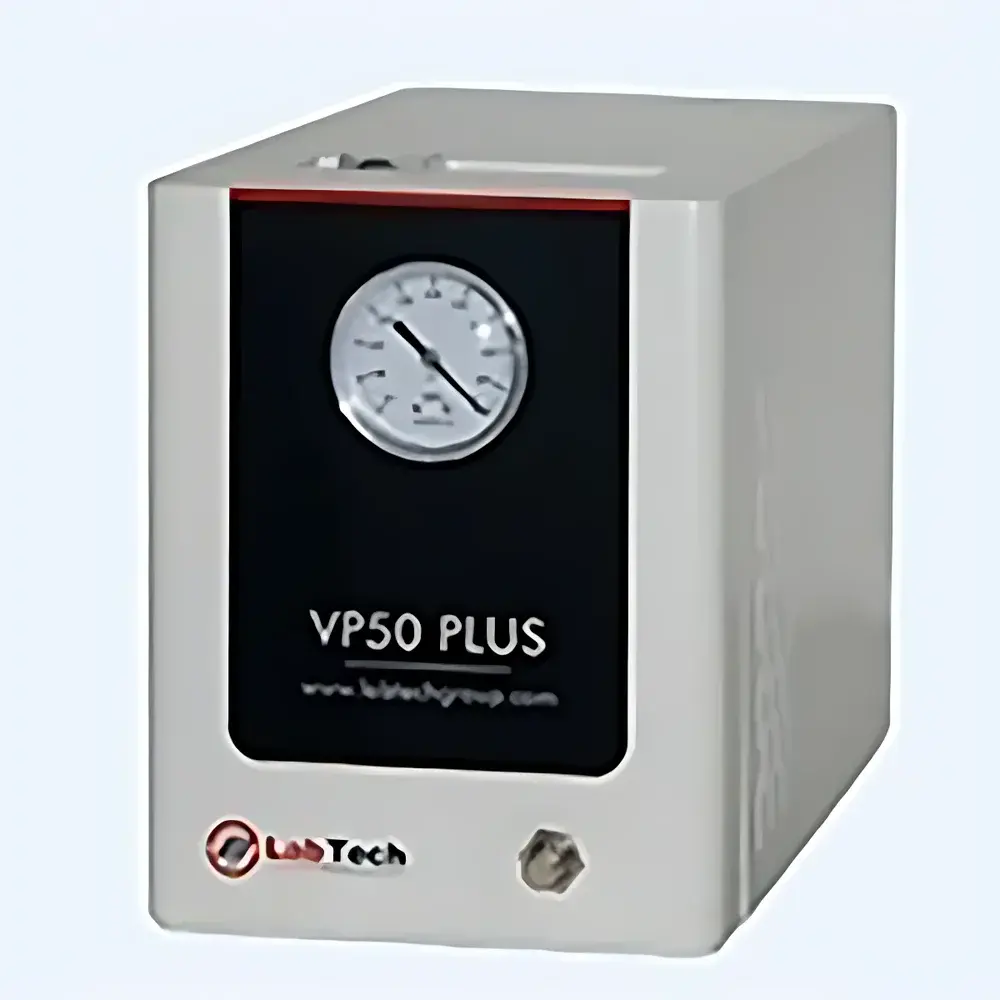
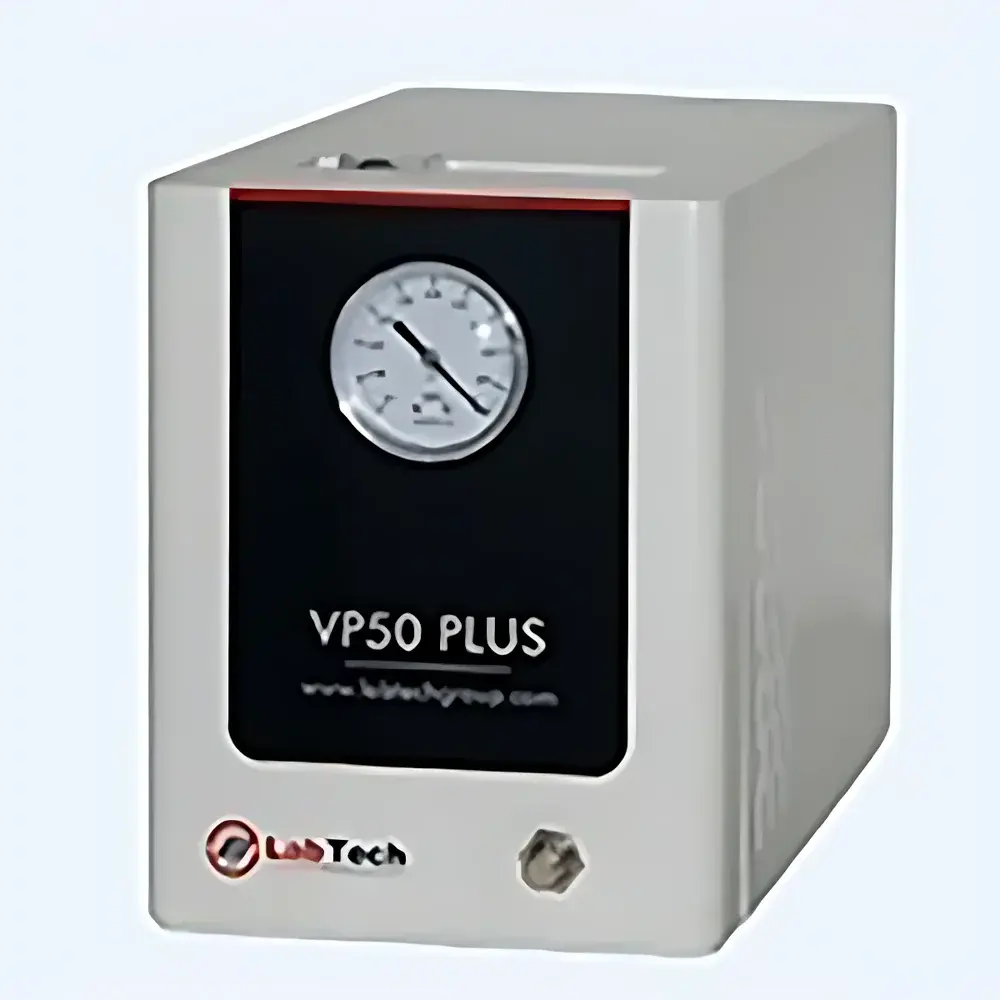
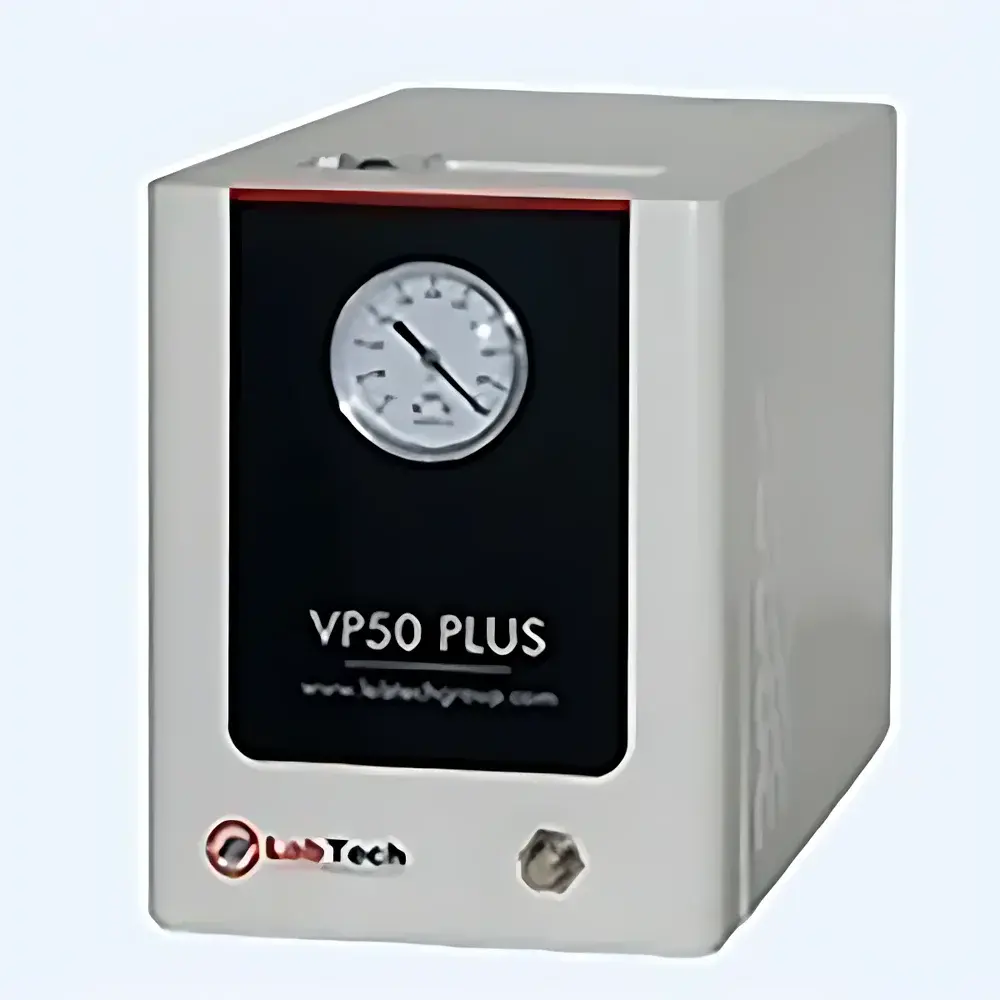
LabTech VAC-PTFE Series Oil-Free Vacuum Filtration Pump
| Brand | LabTech |
|---|---|
| Origin | Beijing, China |
| Manufacturer Type | Authorized Distributor |
| Country of Origin | China |
| Model | VAC-PTFE Series |
| Pricing | Available Upon Request |
| Lubrication | Oil-Free Mechanical Design |
| Diaphragm Material | Monolithic PTFE (One-Piece Molded) |
| Diaphragm Thickness | Enhanced for Extended Duty Cycle |
| Construction | Corrosion-Resistant Coated Housing & Internals |
| Noise Level | <52 dB(A) |
| Vibration | Low-Amplitude Balanced Drive |
| Vacuum Range Options | -0.08 MPa to -0.098 MPa (adjustable by model variant) |
| Air Displacement | High-Capacity Dual-Head Diaphragm Configuration |
| Compatibility | Suitable for Aqueous, Organic, Acidic, and Particle-Laden Filtrates |
Overview
The LabTech VAC-PTFE Series Oil-Free Vacuum Filtration Pump is a precision-engineered diaphragm vacuum pump designed specifically for laboratory-scale solid–liquid separation under demanding chemical and particulate conditions. Unlike rotary vane or piston pumps requiring oil lubrication, this unit operates exclusively on a dry, oil-free mechanical principle—eliminating the risk of hydrocarbon contamination in filtrates, vacuum lines, or downstream analytical instrumentation. Its core operational mechanism relies on reciprocating PTFE diaphragms actuated via an eccentric camshaft and precision-balanced drive train, generating consistent negative pressure across a defined vacuum range without internal lubricants or seals susceptible to chemical degradation. This architecture ensures intrinsic compatibility with aggressive solvents (e.g., acetone, chloroform, concentrated acids), volatile organic compounds, and slurries containing suspended solids—making it suitable for routine use in environmental sample preparation, pharmaceutical QC filtration, food safety residue analysis, and industrial wastewater characterization.
Key Features
- Monolithic PTFE diaphragm fabricated via single-stage compression molding—ensuring uniform wall thickness, high tensile resilience, and resistance to swelling or creep under prolonged vacuum duty cycles.
- Corrosion-resistant housing and wetted components treated with electrophoretic epoxy coating or passivated stainless-steel alloys, validated for continuous exposure to pH 1–12 aqueous media and common organic vapors.
- Dual-head diaphragm configuration delivering high volumetric air displacement (up to 45 L/min free-air capacity, depending on model), enabling rapid dewatering of large-volume filter cakes or viscous suspensions (e.g., activated sludge, polymer emulsions, yeast cultures).
- Acoustically optimized motor mount and vibration-damping feet reduce operational noise to ≤52 dB(A) at 1 m distance and limit structural transmission—critical for shared lab spaces and noise-sensitive instrumentation suites.
- Modular vacuum regulation system supporting discrete preset vacuum levels (e.g., −0.080 MPa, −0.090 MPa, −0.098 MPa), each calibrated against traceable NIST-traceable pressure standards and documented in factory test reports.
Sample Compatibility & Compliance
The VAC-PTFE Series is routinely deployed in workflows aligned with ASTM D5127 (filtration of petroleum products), ISO 11930 (microbiological challenge testing of cosmetic preservatives), and EPA Method 1664A (oil and grease extraction). Its oil-free operation satisfies USP and FDA 21 CFR Part 11 requirements for equipment used in GMP-compliant environments where extractables/leachables must be minimized. All wetted surfaces comply with USP Class VI biocompatibility testing protocols. The pump’s sealed construction prevents cross-contamination between sequential filtration batches—an essential attribute for GLP-regulated environmental labs conducting multi-analyte water testing per EPA 500–600 series methods.
Software & Data Management
While the VAC-PTFE Series operates as a standalone analog device, optional digital vacuum controllers (VAC-DCU module) provide RS-485 Modbus RTU interface for integration into LIMS or ELN platforms. These controllers log real-time vacuum setpoint, actual pressure deviation (±0.5 kPa accuracy), runtime hours, and thermal event flags—supporting 21 CFR Part 11 audit trails when paired with compliant electronic signature workflows. Factory firmware supports configurable alarm thresholds and automatic shutdown on sustained overpressure or motor temperature excursions (>65°C).
Applications
- Routine gravimetric analysis of total suspended solids (TSS) in municipal wastewater per Standard Methods 2540D.
- Filtration of acidic digestates in heavy metal leaching studies (TCLP, SPLP) without pump corrosion or seal failure.
- Pre-concentration of pesticide residues from aqueous food extracts prior to GC-MS analysis—avoiding hydrocarbon interference from oil-lubricated pumps.
- Cell harvesting in bioprocessing R&D where sterility and absence of silicone/oil aerosols are mandatory.
- High-throughput filter plate processing in clinical microbiology labs handling blood culture broths or sputum homogenates.
FAQ
Is the VAC-PTFE Series certified for use in explosion-proof environments?
No—this pump is rated for general laboratory use (IEC 61000-6-3, EMC Class B) but lacks ATEX or IECEx certification. For flammable solvent applications, consult LabTech’s intrinsically safe VAC-IS series.
Can the PTFE diaphragm be replaced in-house without specialized tools?
Yes—the diaphragm assembly utilizes standardized M6 fasteners and tool-free snap-fit valve plates; replacement kits include torque-spec alignment jigs and calibration verification checklists.
What maintenance intervals are recommended for continuous 8-hour daily operation?
Diaphragm inspection every 1,500 operating hours; full drive train lubrication (grease-free ceramic bearings) every 5,000 hours; inlet filter cleaning after each 10 filtration cycles involving particulate-laden samples.
Does LabTech provide validation documentation for IQ/OQ protocols?
Yes—factory-issued IQ/OQ templates, as-found/as-left calibration records, and material compliance certificates (RoHS, REACH, ISO 9001:2015) are supplied with each unit upon request.
How does the pump handle condensable vapors during filtration of warm solutions?
An integrated cold trap (optional VAC-CT1 accessory) reduces vapor load on the diaphragm; the PTFE membrane’s low surface energy also minimizes condensate adhesion, preserving cycle consistency across temperature gradients.
Related Products



