
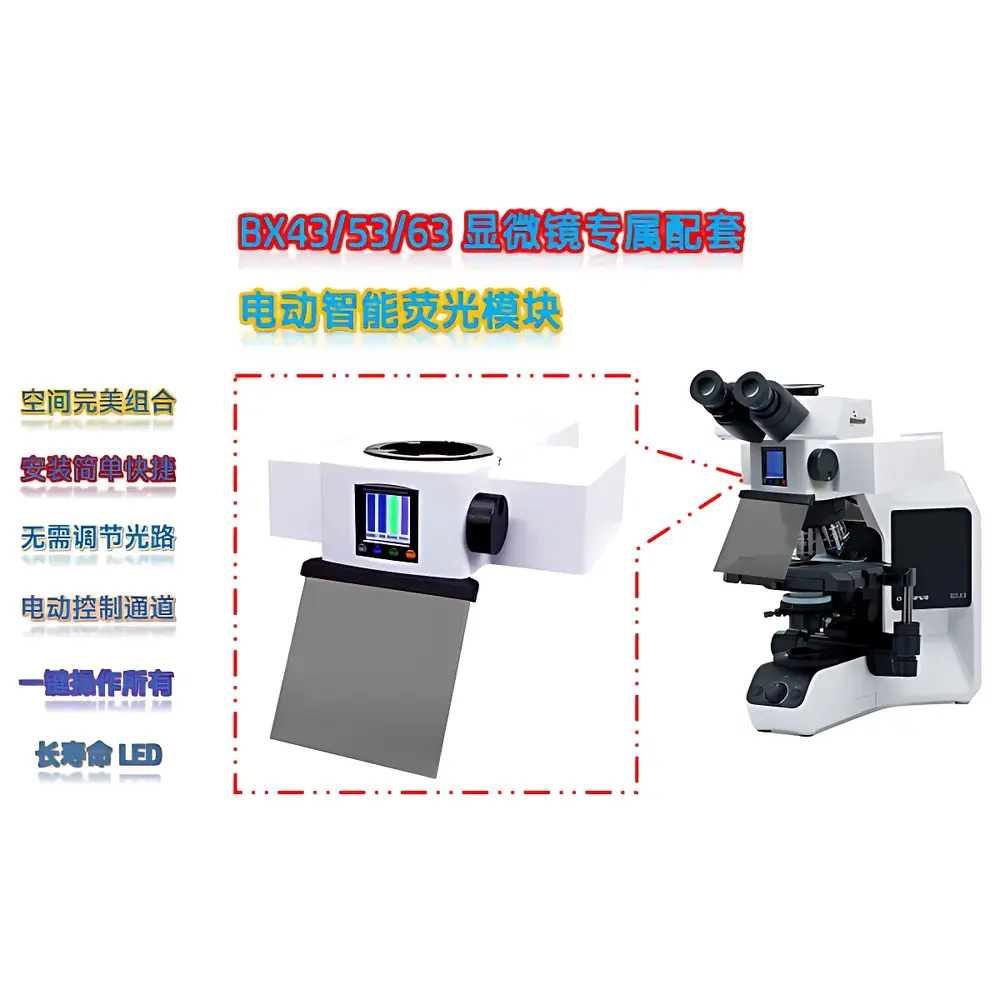
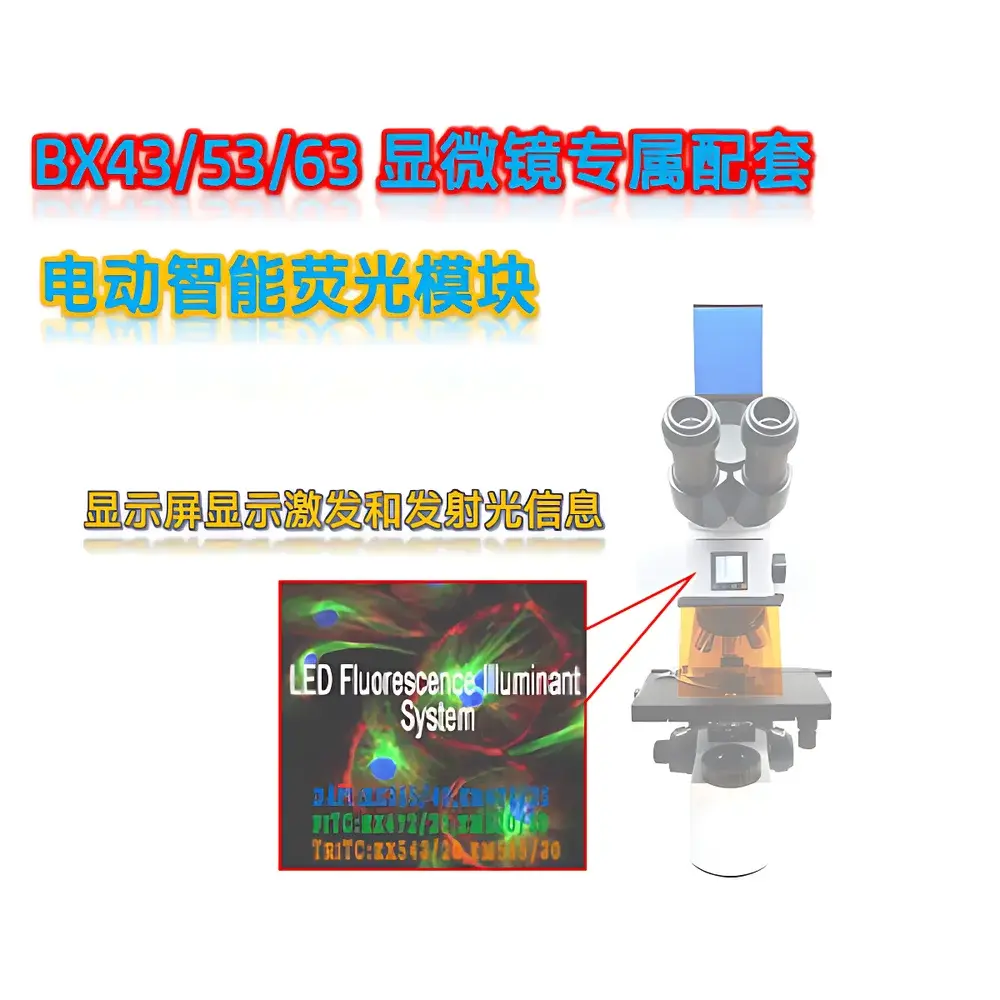
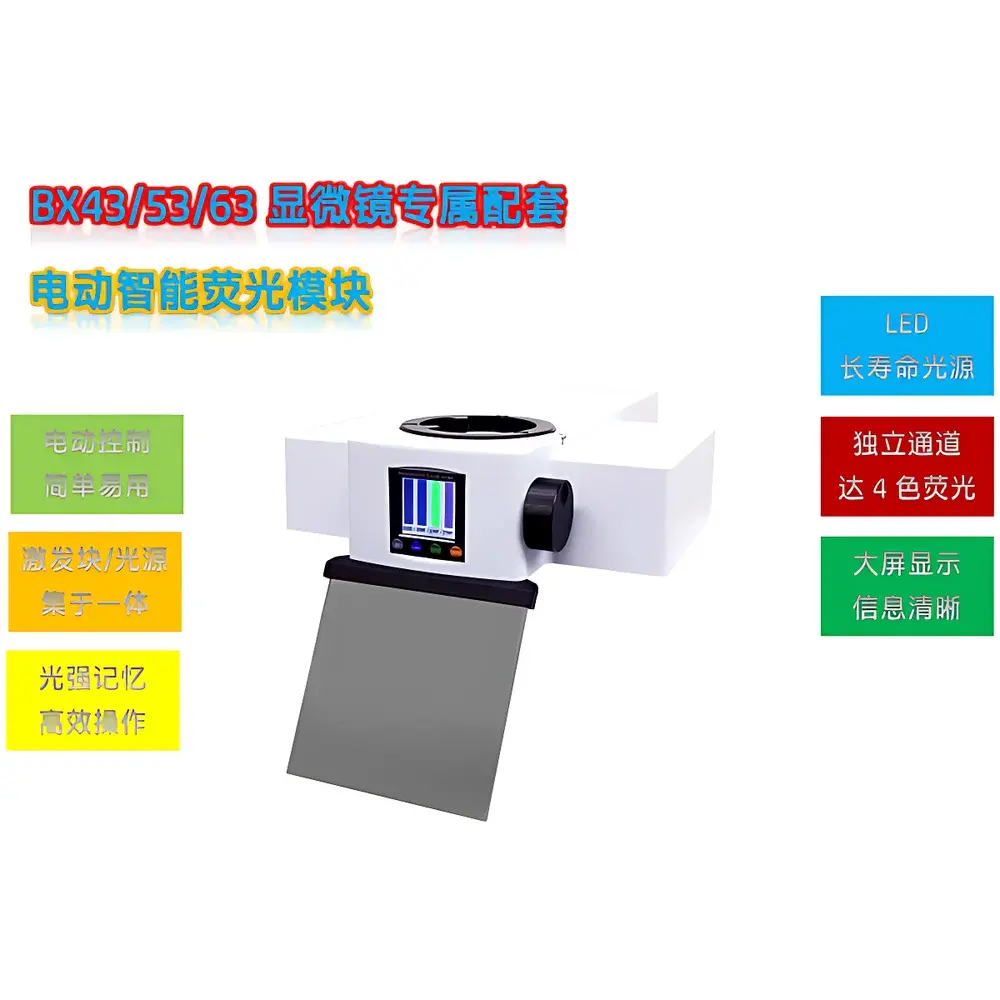
Laite BX-UVBGY-E LED Fluorescence Illumination Module for Olympus BX43/BX53/BX63 Upright Microscopes
| Brand | Laite |
|---|---|
| Origin | Guangdong, China |
| Manufacturer Type | OEM/ODM Producer |
| Model | BX-UVBGY-E |
| Instrument Type | Upright Research-Grade Fluorescence Microscope Module |
| Excitation Source | High-Power LED (3 W / 5 W / 10 W) |
| Control Mode | Motorized (Electric) |
| Filter Configuration | Integrated LED-Based Filter Cube Assembly |
| Standard Filter Sets | DAPI, GFP/FITC, TRITC/Cy3, mCherry, Cy5 |
| Optional Filters | Custom excitation/emission band selection available |
| Thermal Management | Active Air-Cooled Heat Sink |
| Software Interface | RS232/USB Protocol Support for External Control and Synchronization |
| Regulatory Status | Not a Medical Device |
| Compliance | Designed for GLP-compliant laboratory environments |
Overview
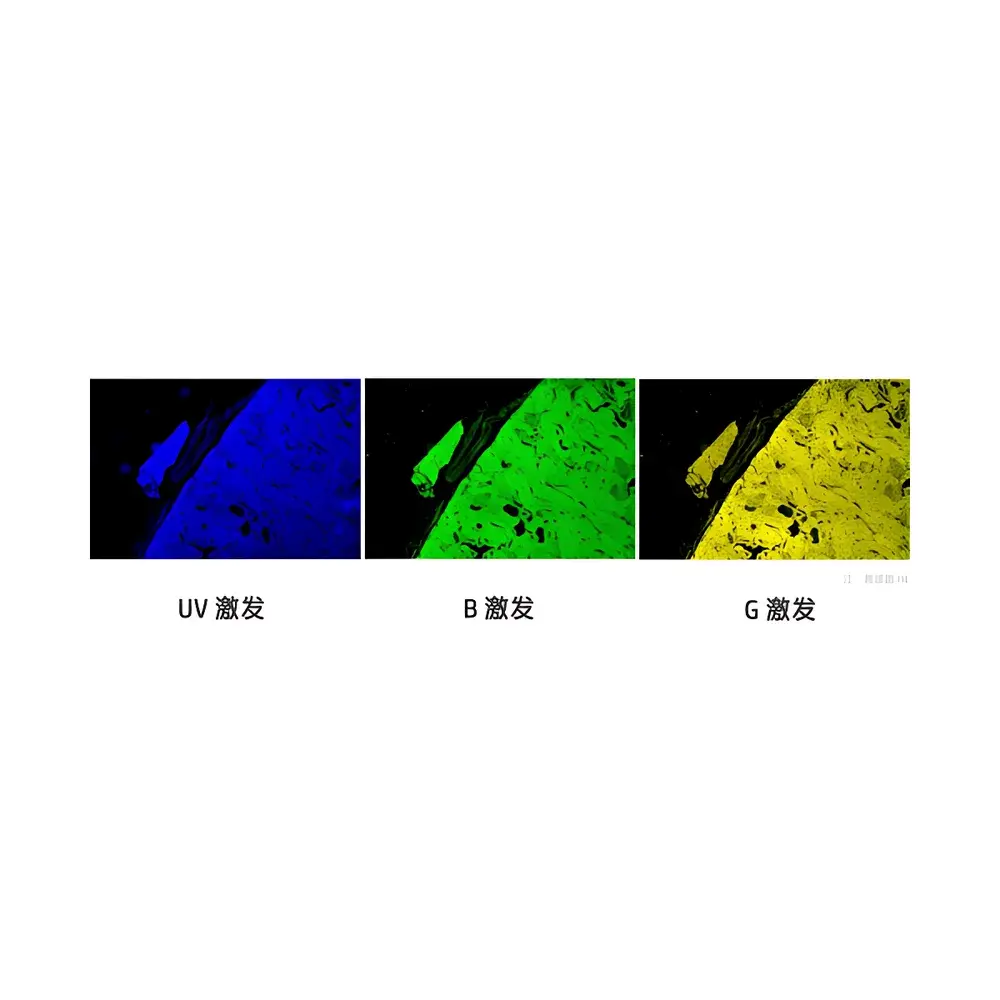
The Laite BX-UVBGY-E is a modular, motorized LED fluorescence illumination system engineered specifically for integration with Olympus BX43, BX53, and BX63 upright research microscopes. Unlike traditional mercury or metal-halide arc lamps, this module employs high-efficiency, multi-wavelength LED sources—available in 3 W, 5 W, and 10 W configurations—to deliver stable, low-noise excitation across ultraviolet (UV), blue, green, yellow, and red spectral bands. Its optical architecture follows Köhler illumination principles, utilizing precision-molded aspheric condenser lenses to ensure uniform intensity distribution across the field of view with minimal photobleaching and thermal drift. The system operates without warm-up or cool-down periods, enabling immediate acquisition start-up and seamless transition between fluorescence channels—critical for time-lapse imaging, multi-label co-localization studies, and live-cell observation protocols.
Key Features
- Motorized filter cube turret with programmable positioning accuracy ±0.1°, supporting rapid switching among up to eight predefined fluorescence channels (DAPI, GFP/FITC, TRITC/Cy3, mCherry, Cy5, and custom configurations)
- Intelligent light-intensity memory function: automatically recalls and applies pre-set irradiance levels per channel, eliminating manual recalibration during multi-channel acquisitions
- Active forced-air thermal management system with temperature-sensing feedback loop, maintaining LED junction temperature below 65°C under continuous operation
- High-transmission, hard-coated bandpass and longpass filter sets (OD ≥6 blocking outside passband), optimized for signal-to-noise ratio in demanding low-light applications
- Full RS232 and USB 2.0 digital interface for bidirectional communication with third-party acquisition software (e.g., NIS-Elements, MetaMorph, μManager) and microscope control units
- Front-panel 4.3-inch color TFT display with intuitive touch-enabled GUI for standalone operation, exposure timing, intensity ramping, and error diagnostics
Sample Compatibility & Compliance
The BX-UVBGY-E is validated for use with standard glass-bottom dishes (e.g., MatTek P35G-1.5-14-C), coverslip-mounted tissue sections (No. 1.5H, 0.17 mm), and live specimens in perfusion chambers. Its LED-based excitation minimizes infrared emission and sample heating—making it suitable for prolonged imaging of thermosensitive primary neurons, zebrafish embryos, and organoids. While not classified as a medical device under FDA 21 CFR Part 809 or EU MDR Annex XVI, the module conforms to IEC 61000-6-3 (EMC emissions) and IEC 60950-1 (safety). It supports audit-ready metadata logging (timestamp, intensity, filter ID, exposure duration) required for GLP and ISO/IEC 17025-accredited laboratories.
Software & Data Management
The module communicates via ASCII-based serial protocol (baud rate 115200, 8N1), enabling full remote control—including intensity ramping, shutter sequencing, and filter position synchronization—from external scripts or acquisition platforms. Firmware supports firmware-over-the-air (FOTA) updates via USB. All operational parameters are logged in CSV-compatible format with UTC timestamps, facilitating traceability in regulated environments. Integration with Olympus cellSens or third-party Python-based automation frameworks (e.g., PySerial + OpenCV) is documented in the developer SDK provided upon request.
Applications
- Multi-color immunofluorescence imaging of fixed tissues using DAPI, FITC, Cy3, and Cy5 conjugates
- Live-cell calcium dynamics monitoring with GCaMP6s or R-GECO reporters under low-phototoxicity blue/green excitation
- Subcellular organelle tracking (mitochondria, lysosomes, ER) using mCherry-tagged probes and narrow-band red excitation
- Quantitative FRET analysis requiring precise intensity stability and spectral separation between donor/acceptor pairs
- High-content screening (HCS) workflows where reproducible illumination uniformity and inter-session intensity repeatability (CV < 2.3% over 8 h) are essential
FAQ
Is the BX-UVBGY-E compatible with non-Olympus microscope frames?
No—it is mechanically and optically calibrated exclusively for Olympus BX-series upright stands (BX43/BX53/BX63), including alignment of the epi-fluorescence port flange, filter cube insertion depth, and beam path height.
Can I retrofit my existing mercury lamp housing with this module?
No—the BX-UVBGY-E replaces the entire epi-illuminator assembly and requires native BX-series mounting interfaces and power supply connectors.
What is the typical lifetime of the LED arrays under continuous use?
Rated L70 lifetime exceeds 25,000 hours at 25°C ambient, verified per IES LM-80 testing standards; output degradation is linear and predictable, enabling intensity compensation in post-processing pipelines.
Are custom filter cubes available for uncommon fluorophores like CF dyes or Alexa Fluor variants?
Yes—Laite offers OEM filter design services with transmission profiles matched to vendor-specified excitation/emission maxima, subject to minimum order quantities and lead time confirmation.
Does the module support TTL-triggered exposure synchronization?
Yes—dedicated BNC input accepts 3.3 V / 5 V TTL pulses for hardware-gated image acquisition, with latency < 5 µs from trigger edge to LED full-on state.




