
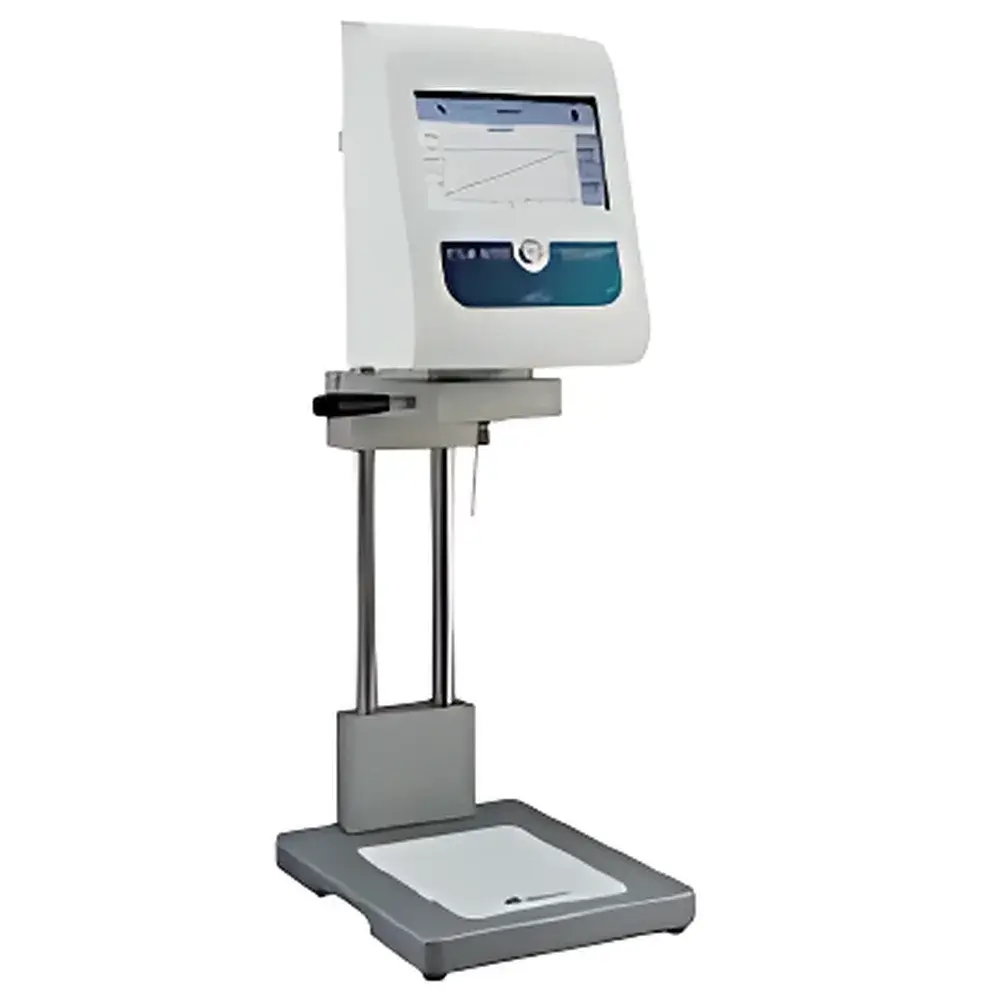
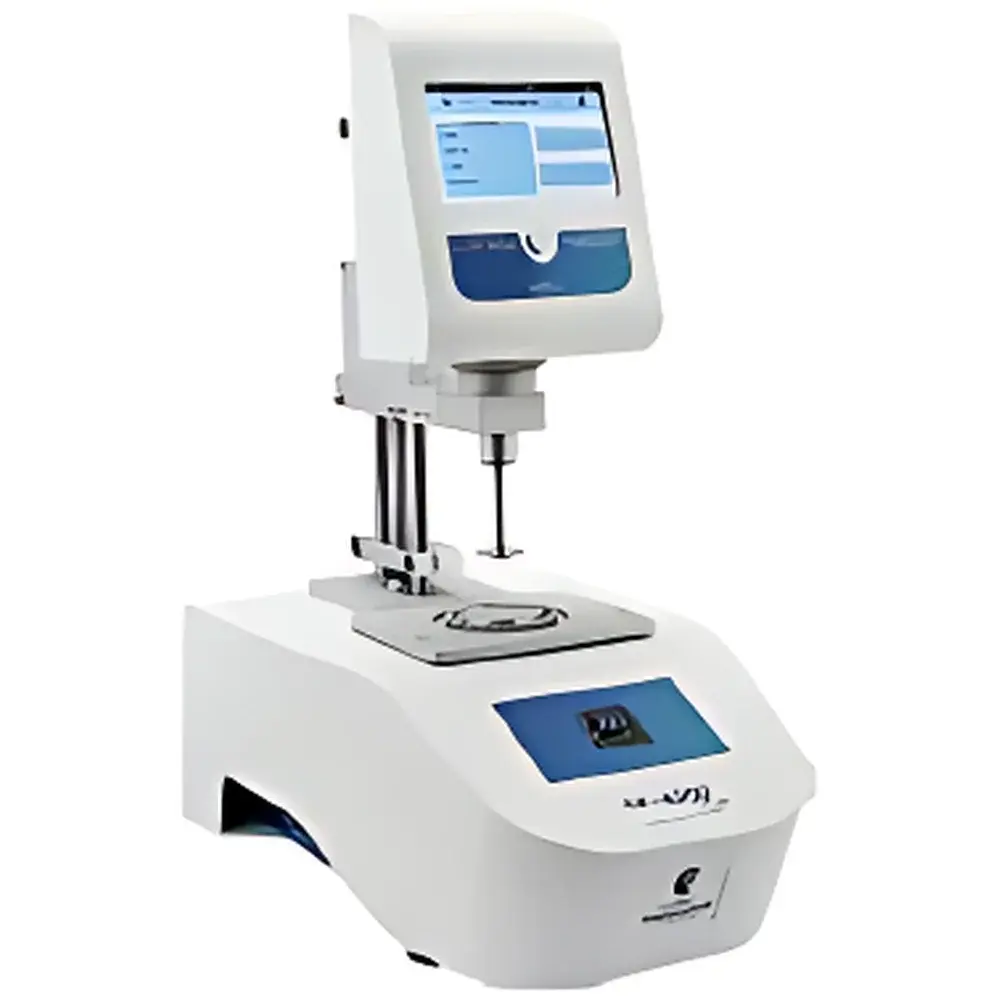
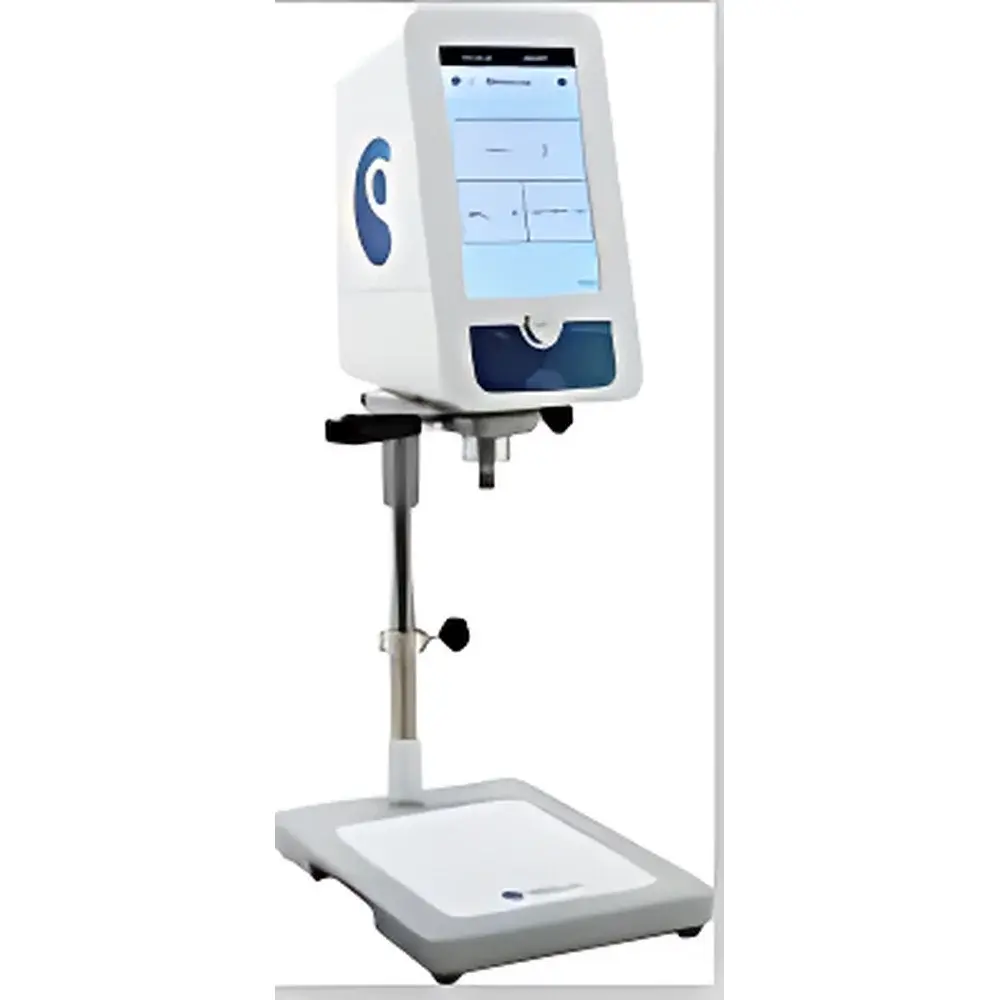
Lamy DSR 500 Advanced Rotational Rheometer
| Origin | France |
|---|---|
| Manufacturer Type | Authorized Distributor |
| Origin Category | Imported Instrument |
| Model | DSR 500 |
| Quotation | Available Upon Request |
| Rotation Speed Range | 0.3–1500 rpm |
| Torque Range | 0.05–30 mN·m |
| Temperature Control Range | −50 °C to 300 °C |
| Accuracy | ±1% of full scale |
| Repeatability | ±0.2% |
| Viscosity Range | 1–5.4×10⁸ mPa·s (dependent on spindle geometry) |
| Display | 7-inch capacitive touchscreen |
| Data Output | USB, RS232, 4–20 mA analog (user-configurable) |
| Power Supply | 90–240 VAC, 50/60 Hz |
| Dimensions (measuring head) | 180 × 135 × 250 mm |
| Stand Dimensions | 280 × 200 × 30 mm |
| Stainless Steel Spindle Rod Length | 500 mm |
| Weight | 6.7 kg |
| Compliance | CE, RoHS, ISO 2555, ASTM D2196, USP <911> (rheological characterization), GLP-compliant data logging |
Overview
The Lamy DSR 500 Advanced Rotational Rheometer is a benchtop-controlled stress/strain rheological instrument engineered for precision viscoelastic characterization of complex fluids under defined shear conditions. Based on Couette-type rotational measurement principles, it employs a motor-driven concentric cylinder or cone-plate geometry—depending on selected spindle configuration—to apply controlled shear rates (0.3–1500 rpm) or direct torque control, enabling both steady-state and transient flow analysis. Designed and manufactured in France, the DSR 500 integrates a high-resolution torque sensor (0.05–30 mN·m), embedded Pt100 temperature probe, and active thermal management system capable of operation from −50 °C to 300 °C. Its architecture supports both shear-rate-controlled (viscometric) and shear-stress-controlled (yield-stress) protocols—critical for evaluating structural breakdown, thixotropy, and time-dependent recovery behavior in non-Newtonian systems.
Key Features
- Integrated 7-inch industrial-grade capacitive touchscreen interface with real-time graphical display of viscosity, shear stress, shear rate, torque, temperature, and time—no external PC required for basic operation.
- Onboard rheological modeling engine supporting Newtonian, Bingham, Casson, and Ostwald–de Waele (power-law) regressions; calculates yield stress, plastic viscosity, flow index, consistency coefficient, and thixotropic area without third-party software.
- Programmable ramp profiles—including linear, logarithmic, and custom-defined shear rate/time sequences—with automatic curve fitting and statistical residuals reporting.
- Direct USB printing support for PDF or CSV reports; optional integration with Lamy’s RheoTex software for advanced data export, multi-curve overlay, and audit-trail-enabled GLP documentation.
- Modular spindle system compatible with standard DIN, ASTM, and ISO geometries (e.g., coaxial cylinders, cone-and-plate, vane spindles); enables calibration traceability to NIST-certified reference oils.
- Embedded temperature control unit with PID regulation and ±0.1 °C stability over full range; supports cryogenic cooling (with external chiller) and high-temperature heating modules.
Sample Compatibility & Compliance
The DSR 500 accommodates samples ranging from low-viscosity solvents (1 mPa·s) to highly structured gels and pastes exceeding 5.4×10⁸ mPa·s, provided appropriate spindle selection and gap calibration are applied. It meets essential regulatory and methodological standards for quality control laboratories, including ISO 2555 (polymer solutions), ASTM D2196 (paints and coatings), USP (pharmaceutical semi-solids), and EN ISO 16940 (food texture analysis). All data acquisition pathways—including USB storage, RS232 transmission, and analog 4–20 mA output—are configurable to support 21 CFR Part 11 compliance when used with validated RheoTex software and electronic signature workflows. The instrument’s mechanical design conforms to IEC 61000-6-3 (EMC) and carries CE marking under the EU Machinery Directive 2006/42/EC.
Software & Data Management
While fully functional as a standalone instrument, the DSR 500 interfaces seamlessly with RheoTex—a Windows-based application offering extended capabilities: automated method libraries, multi-parameter correlation plots (e.g., viscosity vs. temperature + shear rate), batch report generation with customizable templates, and secure user access levels (administrator/operator/auditor). Data files include timestamped metadata (operator ID, environmental conditions, calibration status), and all modifications are logged with immutable audit trails. Export formats include CSV, Excel (.xlsx), XML, and PDF/A-1b for long-term archival. USB mass-storage mode allows drag-and-drop transfer of raw .rheo binary files for offline reprocessing or integration into LIMS environments.
Applications
- Pharmaceuticals: Yield stress determination of topical gels, suspension stability assessment, injectable viscosity profiling across storage temperatures.
- Food Science: Texture mapping of dairy emulsions, starch gelatinization kinetics, chocolate tempering rheology, and sauce thixotropy quantification per ISO 11047.
- Personal Care: Formulation screening of shampoos, conditioners, and toothpastes using oscillatory amplitude sweeps and creep-recovery testing.
- Coatings & Inks: Shear-thinning behavior evaluation, sag resistance prediction, and pigment dispersion stability monitoring.
- Petrochemicals: Drilling fluid yield point and gel strength analysis per API RP 13B-1; heavy fuel oil cold-flow properties.
- Academic Research: Structure–property relationships in polymer melts, colloidal gels, and biopolymer networks under controlled thermal history.
FAQ
Does the DSR 500 require a computer to operate?
No—the instrument functions autonomously via its integrated touchscreen interface for measurement execution, real-time curve visualization, parameter calculation, and report generation.
Can it perform oscillatory rheology (e.g., G′, G″)?
The DSR 500 is configured for rotational (steady-state and transient) rheometry only; oscillatory capability requires the optional DSR 500-Osc add-on module with dedicated servo-motor control and strain amplification.
What calibration standards are recommended?
Certified mineral oil standards (e.g., Cannon N47, N1000) traceable to NIST SRM 2490 series are recommended for viscosity calibration; torque calibration uses certified dead-weight kits per ISO 17025-accredited providers.
Is temperature control available during shear-rate ramps?
Yes—temperature is actively regulated and logged synchronously with shear data; ramp profiles can be defined to include simultaneous temperature steps (e.g., “shear at 25 °C → heat to 40 °C → continue shear”).
How is data integrity ensured for regulated environments?
When paired with RheoTex in validated mode, the system enforces electronic signatures, role-based permissions, and immutable audit logs compliant with FDA 21 CFR Part 11 and EU Annex 11 requirements.



