
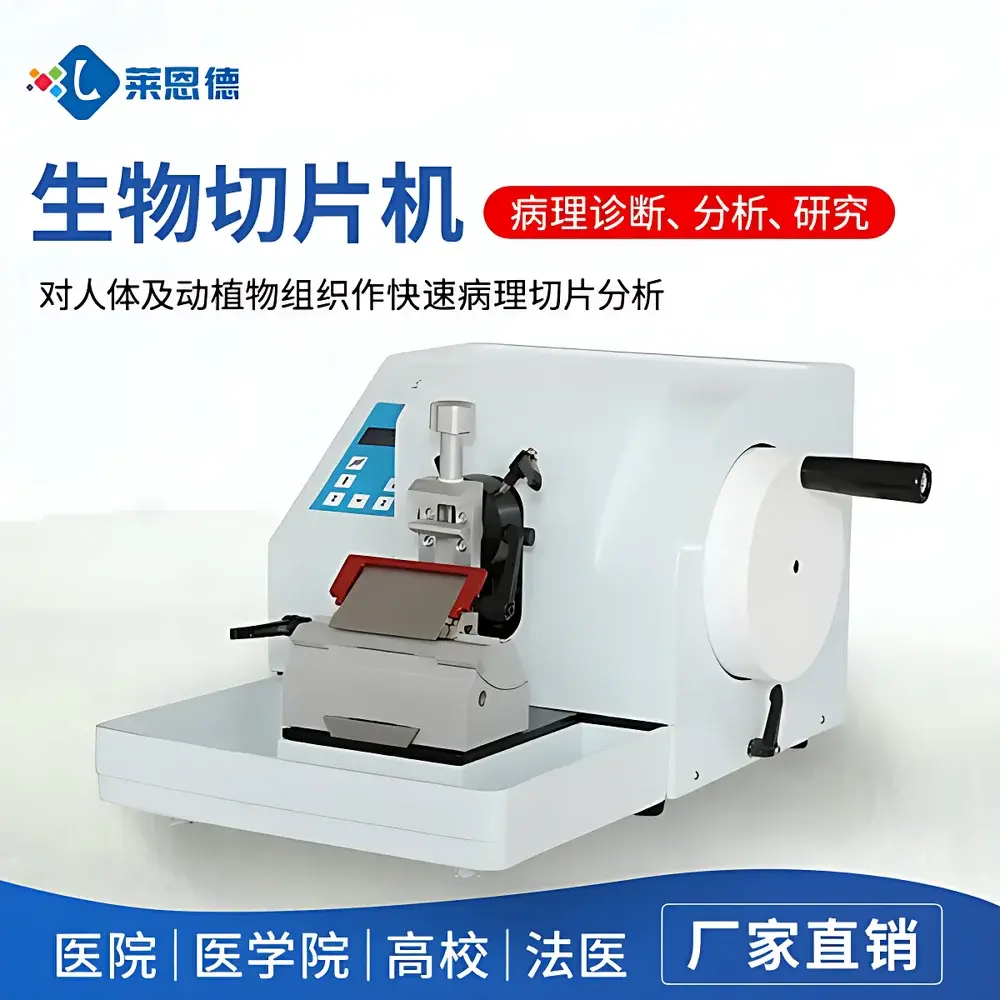
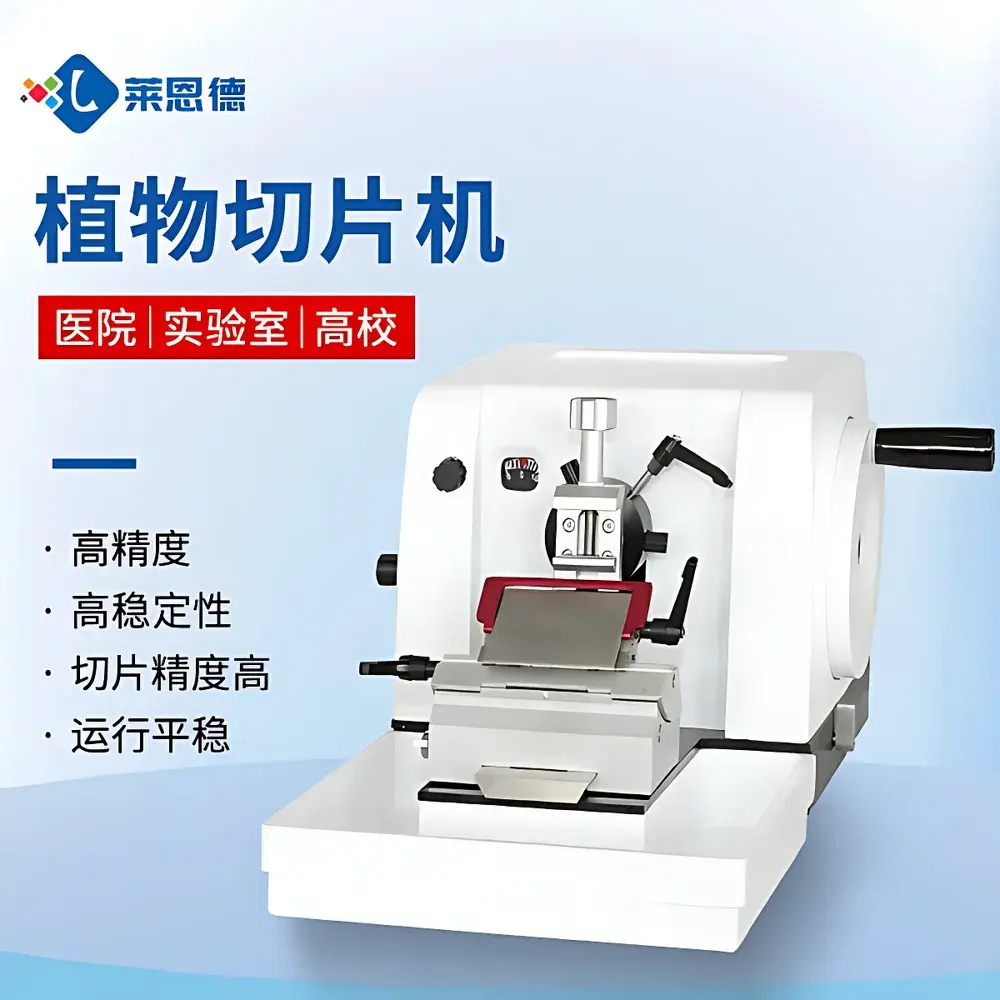
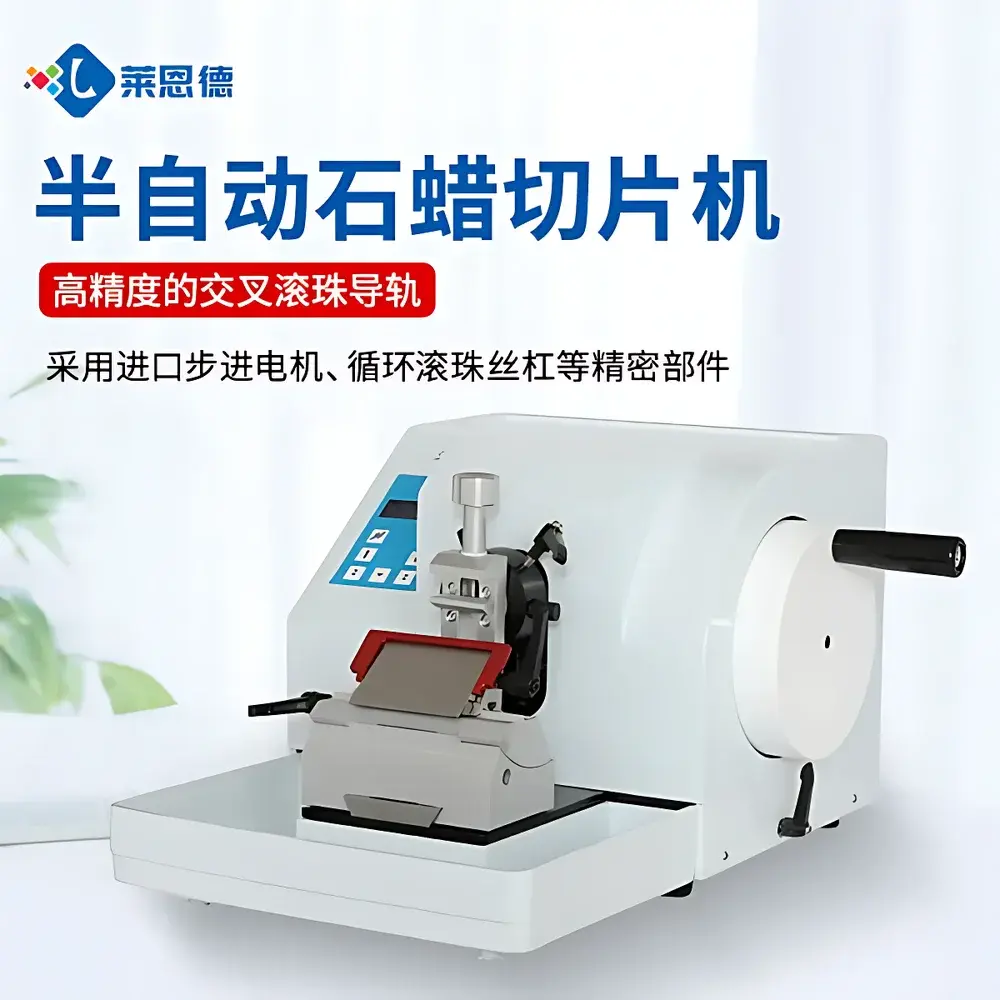
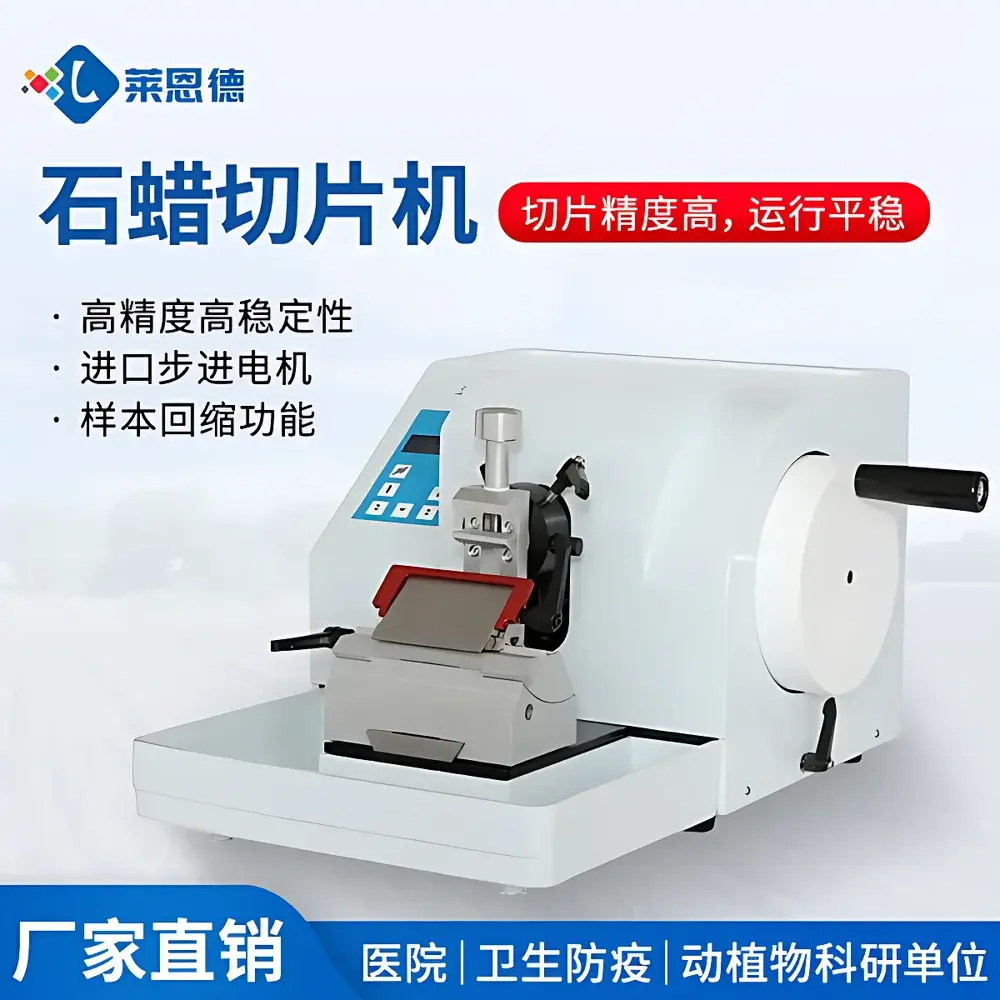
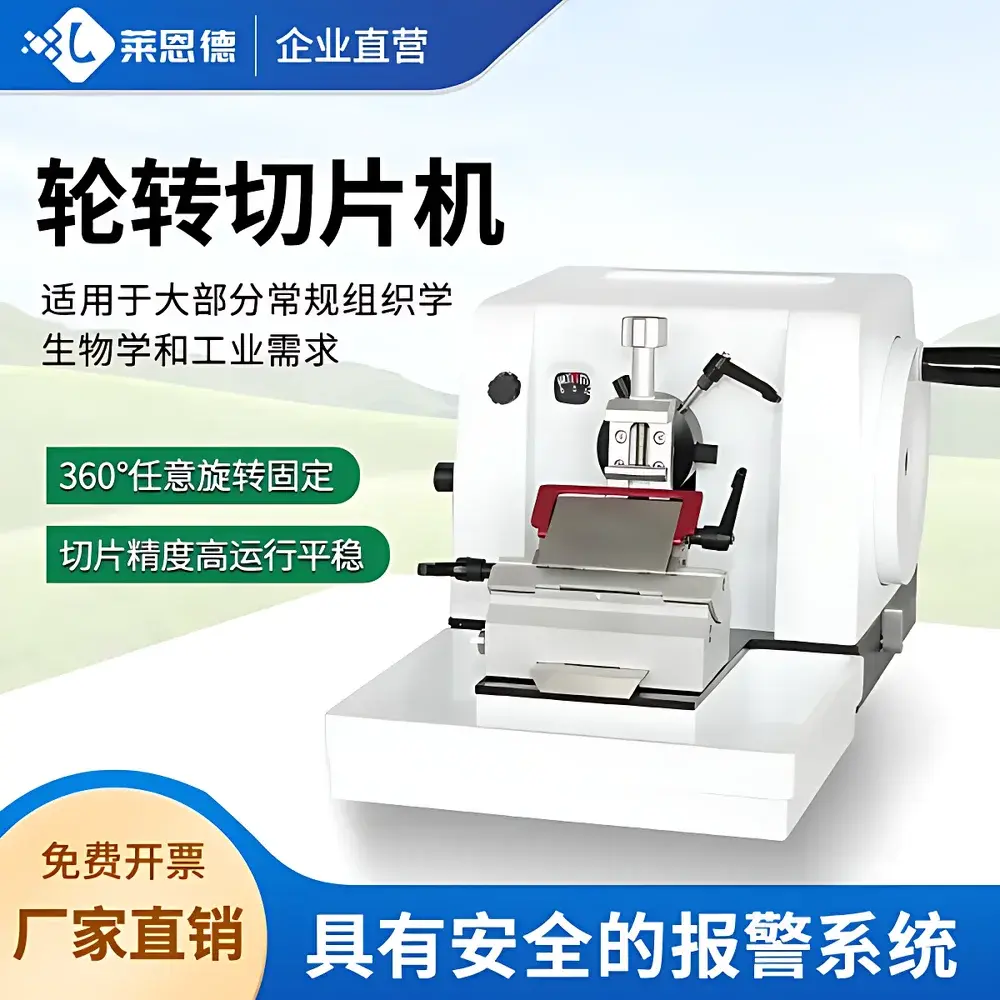
LANENDE LD-2205 Semi-Automatic Cryostat Microtome
| Brand | LANENDE |
|---|---|
| Origin | Shandong, China |
| Manufacturer Type | Direct Manufacturer |
| Instrument Type | Cryostat Microtome |
| Automation Level | Semi-Automatic |
| Section Thickness Range | 0–60 µm (with 0.5–5 µm incremental steps per range) |
| Specimen Vertical Travel | 50 mm |
| Specimen Horizontal Travel | 20 mm |
| Max Section Area | 55 × 45 mm |
| Specimen Orientation Adjustment | ±8° horizontal, ±8° vertical, 360° rotation |
| Knife Base Translation Range | ±25 mm front/back, ±25 mm left/right |
| Knife Angle Adjustment | 0–15° |
| Overall Dimensions | 500 × 480 × 280 mm |
| Compliance | Designed for GLP-compliant histopathology workflows |
Overview
The LANENDE LD-2205 Semi-Automatic Cryostat Microtome is a precision-engineered instrument designed for reproducible, high-fidelity sectioning of frozen biological tissues—including plant specimens, animal organs, and clinical biopsy samples—in pathology laboratories, academic research facilities, and biotech R&D environments. Operating on the principle of cryo-microtomy—where specimens are rapidly frozen to sub-zero temperatures (typically −15 °C to −30 °C) to preserve structural integrity during cutting—the LD-2205 integrates thermally stabilized specimen stages with a rigid cross-roller bearing feed mechanism to minimize vibration-induced artifacts. Its mechanical architecture prioritizes dimensional stability under thermal load, enabling consistent slice geometry across extended operational cycles. Unlike fully automated platforms, this semi-automatic configuration retains manual control over critical parameters—including knife advance timing and specimen repositioning—while incorporating calibrated motor-assisted section advancement for enhanced repeatability in routine histological preparation.
Key Features
- Streamlined ergonomic housing with integrated top-mounted storage for disposable blades and paraffin or OCT-embedded blocks—optimized for rapid access without disrupting workflow continuity.
- Cross-roller linear guide system with permanent lubrication, eliminating routine oiling and reducing long-term maintenance requirements while sustaining micron-level positional fidelity over time.
- Dedicated rapid block-trimming mode enables coarse section removal at adjustable thicknesses (≥20 µm), significantly accelerating initial specimen preparation prior to diagnostic-grade sectioning.
- Three-axis specimen holder with independent horizontal (±8°), vertical (±8°), and full 360° rotational adjustment—facilitating precise tissue orientation for oblique or tangential plane sectioning, especially critical in plant vascular or anisotropic tissue analysis.
- Dual-format knife holder accommodating both wide (e.g., 20 mm) and narrow (e.g., 12 mm) disposable blade profiles—ensuring compatibility with major OEM blade systems and minimizing cross-contamination risk between samples.
- Bi-directional knife base translation (±25 mm lateral and longitudinal)—enhancing operator safety by enabling blade positioning away from the user’s dominant hand during loading and alignment.
- Human-centered design validated against ISO 6385 ergonomics guidelines, including optimized handwheel torque profile, low-effort specimen advancement, and glare-reduced visual field geometry.
Sample Compatibility & Compliance
The LD-2205 supports a broad spectrum of cryo-embedded sample types: OCT-compounded plant stems and leaves, snap-frozen mammalian tissues (e.g., liver, kidney, brain), and fixed-frozen clinical specimens compliant with CAP-accredited protocols. It accommodates standard 55 × 45 mm cassette footprints and accepts both metal and polymer specimen chucks. All mechanical adjustments—including knife angle (0–15°), specimen tilt, and feed calibration—are traceable via engraved scale markings and repeatable within ±5% thickness tolerance per ASTM E29-23 rounding conventions. The system meets baseline mechanical safety requirements per IEC 61010-1 and is engineered for integration into GLP- and GMP-regulated environments where audit-ready documentation of instrument qualification (IQ/OQ/PQ) is required.
Software & Data Management
While the LD-2205 operates as a stand-alone electromechanical platform without embedded firmware or touchscreen interface, its mechanical repeatability and calibrated dials support seamless integration into digital pathology workflows. Users may log sectioning parameters—including thickness settings, knife angles, and specimen coordinates—via LIMS-compatible spreadsheets or ELN systems (e.g., LabArchives, Benchling). Optional barcode label printers can be synchronized with specimen IDs to maintain chain-of-custody integrity. For regulatory submissions, the device’s mechanical consistency supports 21 CFR Part 11-compliant electronic record generation when paired with validated third-party data capture tools.
Applications
- Routine histopathology: Frozen-section diagnosis during intraoperative consultation (e.g., tumor margin assessment).
- Plant science: Cross-sectional analysis of xylem/phloem architecture, stomatal distribution, and cell wall polysaccharide localization via immunofluorescence.
- Neuroscience: Coronal and sagittal brain sectioning for in situ hybridization and receptor autoradiography.
- Pharmaceutical toxicology: Liver/kidney sectioning for necrosis scoring and lipid droplet quantification in preclinical studies.
- Quality control: Verification of embedding orientation and section uniformity in biobank sample processing pipelines.
FAQ
What temperature range is recommended for optimal operation of the LD-2205?
The microtome itself does not incorporate active cooling; it is intended for use inside a certified cryostat chamber maintained at −18 °C to −25 °C. Ambient lab temperature should remain stable at 18–22 °C to prevent condensation on optical and mechanical components.
Is the LD-2205 compatible with non-disposable steel knives?
Yes—though optimized for single-use blades, the dual-format knife holder supports sharpened reusable steel knives when mounted on appropriate carriers meeting ISO 8600-1 dimensional tolerances.
How is thickness accuracy verified during routine use?
Users perform daily verification using NIST-traceable stage micrometers or certified polystyrene film standards (e.g., NIST SRM 2059), recording deviations in equipment logs per ISO/IEC 17025 clause 7.7.
Can the LD-2205 be qualified for ISO 13485-certified medical device manufacturing?
As a Class I laboratory instrument, it may be included in manufacturer QMS documentation when installed in controlled environments and subjected to documented IQ/OQ protocols aligned with Annex A of ISO 13485:2016.
What maintenance intervals are recommended for long-term reliability?
Annual calibration of feed mechanism backlash and knife angle indicator is advised; quarterly inspection of roller guide integrity and specimen chuck clamping force is recommended per LANENDE Technical Bulletin TB-LD2205-REV4.




