
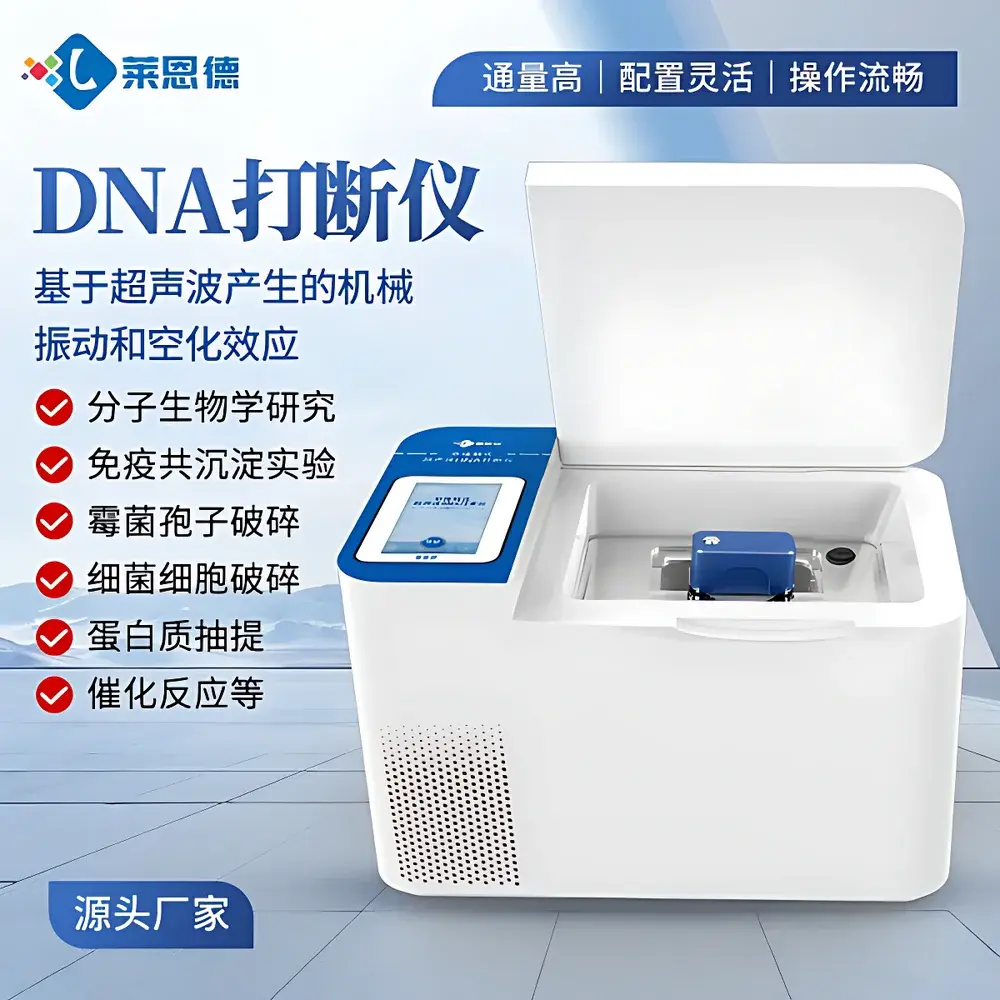
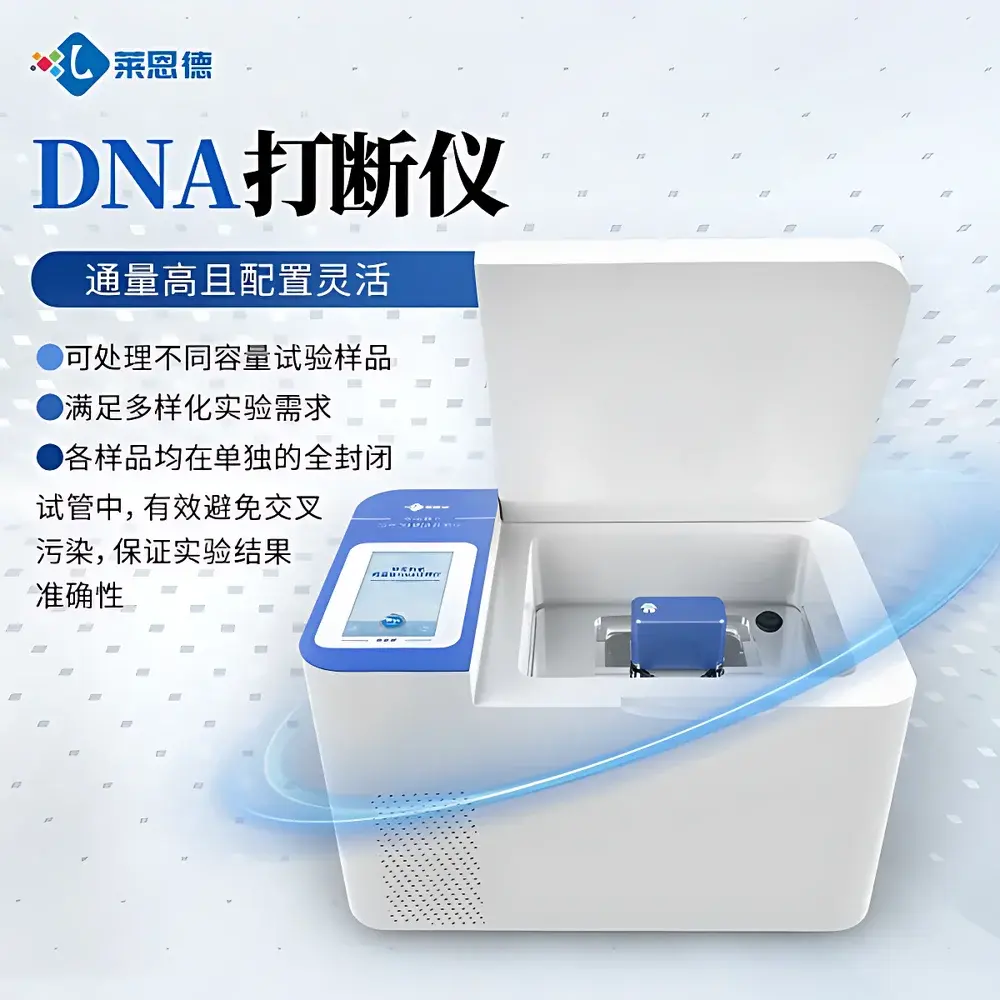
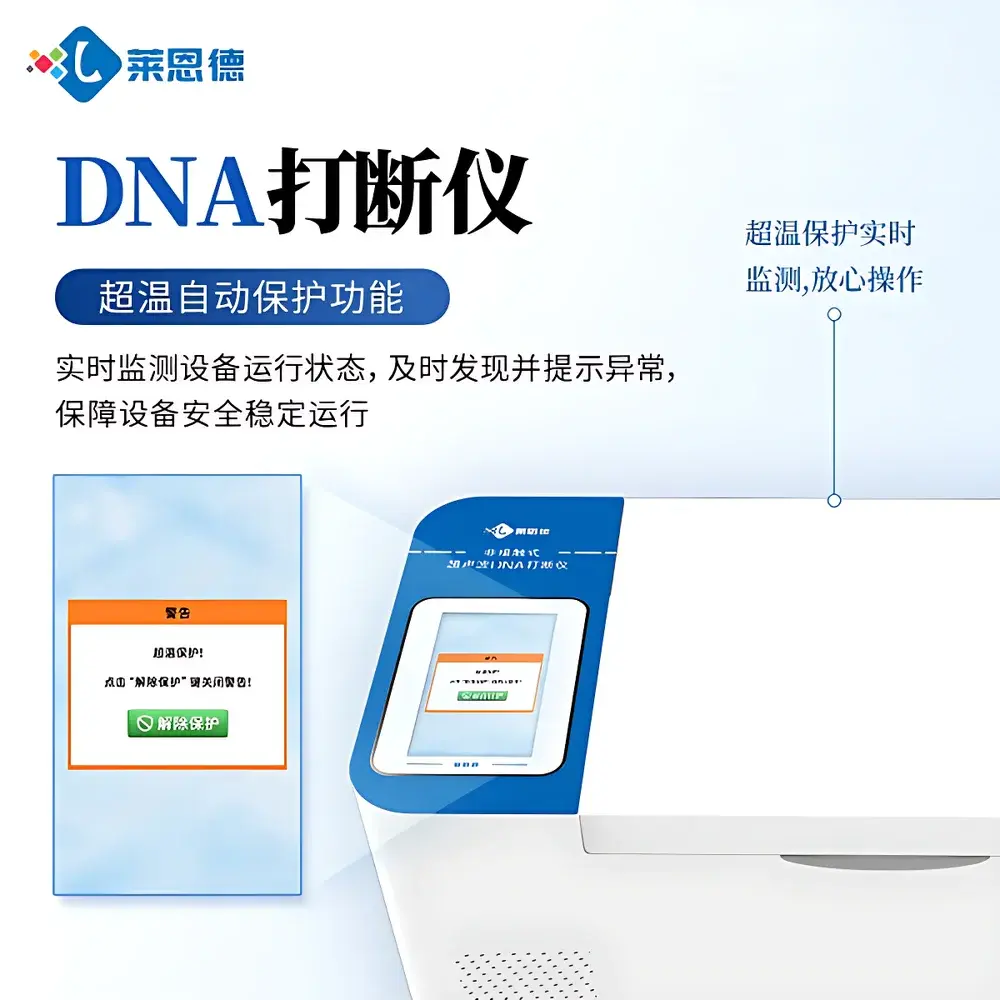
LANENDE LD-D100 Intelligent Non-contact Ultrasonic DNA Shearer
| Brand | LANENDE |
|---|---|
| Origin | Shandong, China |
| Manufacturer Type | Direct Manufacturer |
| Country of Origin | China |
| Model | LD-D100 Intelligent |
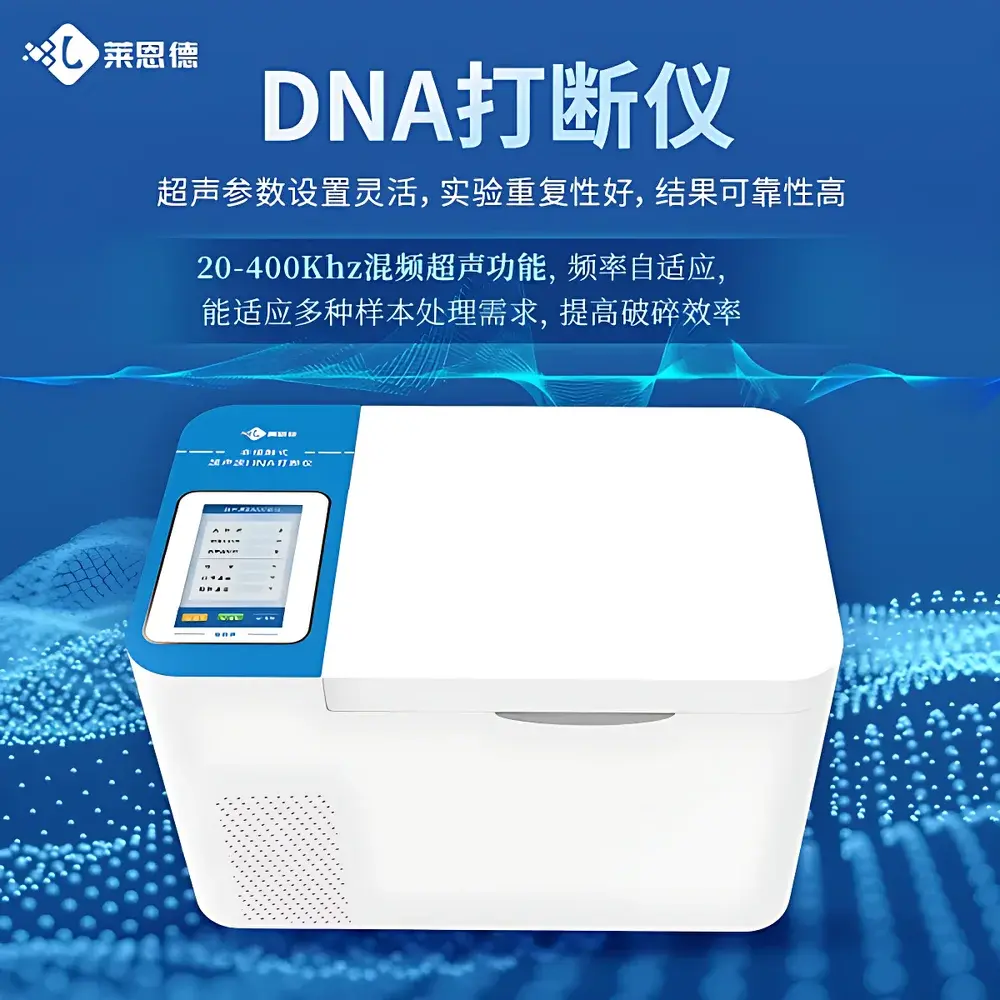
| Frequency | 23 kHz (adaptive) |
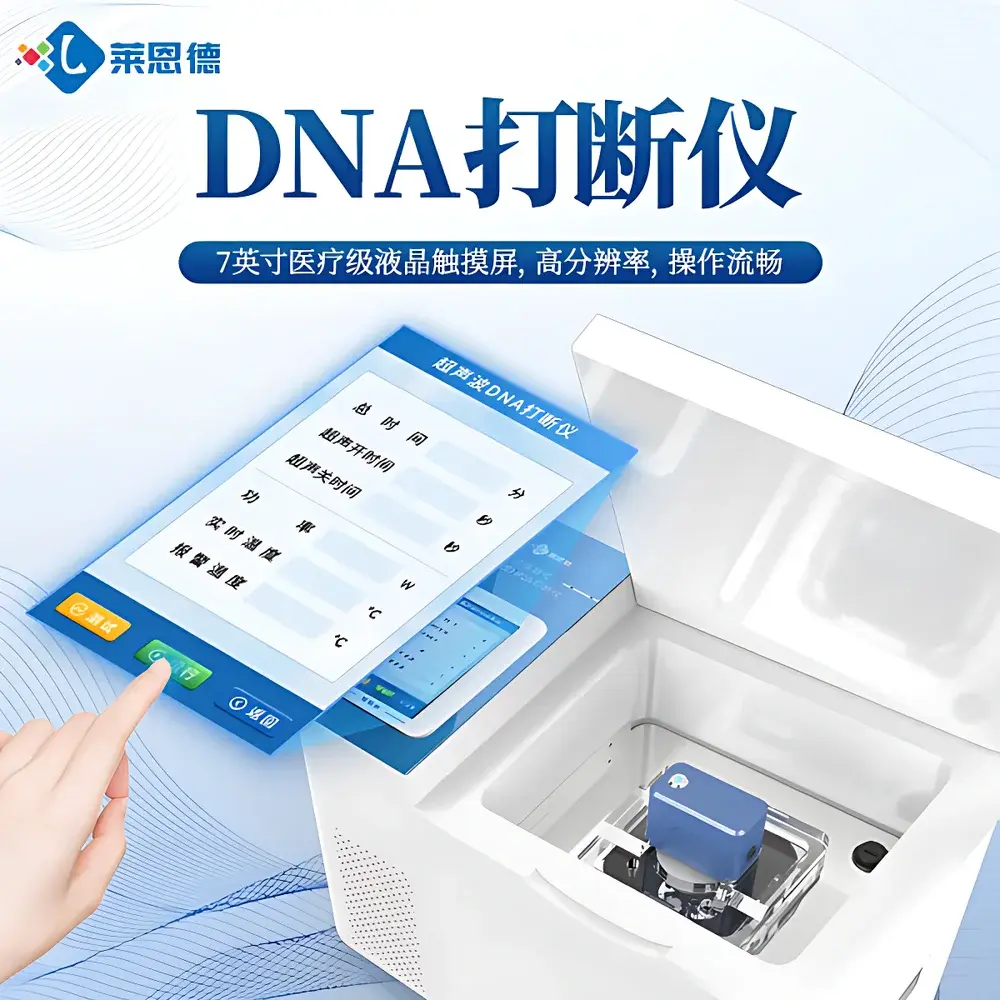
| Display | 7-inch medical-grade capacitive touchscreen |
| Temperature Monitoring | Real-time sample temperature sensing with visual display |
| Cooling Interface | External chiller port for precise thermal control |
| Safety | Auto-fault detection and audible/visual alarm system |
| Power Control | Adjustable ultrasonic power output |
| Timing Control | Programmable sonication time and duty cycle (on/off interval) |
Overview
The LANENDE LD-D100 Intelligent Non-contact Ultrasonic DNA Shearer is an engineered solution for controlled, reproducible DNA fragmentation in molecular biology laboratories. It operates on the principle of high-frequency ultrasonic cavitation—where acoustic energy at 23 kHz induces transient microbubble formation, growth, and implosive collapse within the liquid medium surrounding biological samples. This process generates localized shear forces, microstreaming, and shockwaves sufficient to cleave double-stranded DNA into defined size ranges without direct probe contact. Unlike conventional probe-based sonicators, the LD-D100 employs a non-contact transducer configuration coupled with a rotating sample rack, ensuring uniform energy distribution across multiple tubes while eliminating cross-contamination risk and probe-induced sample heating. Its design supports routine integration into GLP-compliant workflows for NGS library preparation, epigenomic profiling, and diagnostic nucleic acid processing.
Key Features
- Non-contact ultrasonic architecture with rotating sample holder—eliminates physical probe insertion and minimizes contamination risk
- Adaptive 23 kHz frequency operation—dynamically adjusts to load impedance and sample viscosity for consistent energy delivery
- Programmable sonication parameters: continuous or pulsed mode with user-defined on-time, off-time, total duration, and power level
- Real-time sample temperature monitoring via integrated sensor; visual readout on 7-inch medical-grade capacitive touchscreen
- Dedicated external cooling port compatible with standard laboratory chillers (e.g., 4–10 °C recirculating systems) to maintain thermal stability during extended runs
- Battery-powered rotation motor—enables rapid setup without dedicated power routing to the rotor assembly
- Comprehensive fault diagnostics: overtemperature, transducer detachment, power anomaly, and timeout detection with audible and visual alerts
- Modular tube compatibility: accommodates standard 1.5 mL, 2.0 mL, and 15 mL conical tubes using interchangeable aluminum adapters
Sample Compatibility & Compliance
The LD-D100 is validated for use with diverse biological matrices including cultured mammalian cells, bacterial pellets, FFPE-derived lysates, chromatin suspensions (for ChIP-seq), and isolated nuclei (for ATAC-seq). All sample vessels remain fully sealed during sonication, preserving integrity of volatile or hazardous reagents. The system meets essential mechanical and electrical safety requirements per IEC 61010-1:2010 for laboratory equipment. While not certified for clinical diagnostics under ISO 13485, its operational repeatability, audit-ready parameter logging (via optional USB export), and temperature traceability support alignment with internal SOPs compliant with ISO/IEC 17025 and FDA 21 CFR Part 11 principles when deployed in regulated research environments.
Software & Data Management
The embedded firmware enables full protocol storage (up to 99 user-defined methods), timestamped run logs, and real-time parameter visualization. All settings—including power percentage, cycle count, cumulative sonication time, and peak recorded temperature—are stored internally and exportable via USB flash drive in CSV format. No proprietary software installation is required; exported data is compatible with common LIMS platforms and statistical analysis tools (e.g., R, Python pandas). Audit trails include operator ID (manually entered), method name, start/end timestamps, and deviation flags (e.g., “cooling failure detected at T+4 min”). Data retention follows local institutional policies; no cloud connectivity or remote access functionality is implemented.
Applications
- Next-generation sequencing (NGS): Fragmentation of genomic DNA prior to end-repair, A-tailing, and adapter ligation in WGS, WES, and targeted panel workflows
- Epigenomics: Controlled shearing of crosslinked chromatin for ChIP-seq and open-chromatin mapping in ATAC-seq assays
- Molecular diagnostics: Standardized fragmentation of degraded or formalin-fixed DNA to improve library complexity and sequencing uniformity
- Synthetic biology: Generation of precisely sized DNA fragments for Gibson assembly, Golden Gate cloning, or CRISPR library construction
- Forensic science: Reproducible processing of low-input, inhibitor-rich samples from trace evidence while maintaining allelic balance
- Proteomics support: Co-lysis of cells for simultaneous nucleic acid and protein extraction without protease activation artifacts
FAQ
What is the maximum recommended sample volume per tube?
The LD-D100 is optimized for volumes between 50 µL and 800 µL in 1.5 mL microcentrifuge tubes. Volumes exceeding 1.2 mL may reduce shearing efficiency due to acoustic attenuation.
Can the device be used for RNA shearing?
Yes—when operated at lower power settings (≤30% amplitude) and shorter durations (<30 sec total), it achieves RNA fragmentation suitable for RNA-seq library prep; however, RNase-free handling protocols must be strictly observed.
Is calibration required before use?
No routine calibration is needed. The system performs self-diagnostics at startup; users are advised to verify temperature sensor accuracy annually using a traceable NIST-calibrated thermometer.
Does the LD-D100 comply with FDA 21 CFR Part 11?
It supports Part 11-aligned practices (electronic signatures via password-protected method editing, audit trail export), but formal validation documentation must be generated by the end user per their internal quality system requirements.
What maintenance is recommended?
Monthly inspection of transducer coupling surface cleanliness, annual verification of chiller interface seal integrity, and biannual review of touchscreen responsiveness and alarm functionality. No consumables or scheduled part replacements are specified.



