
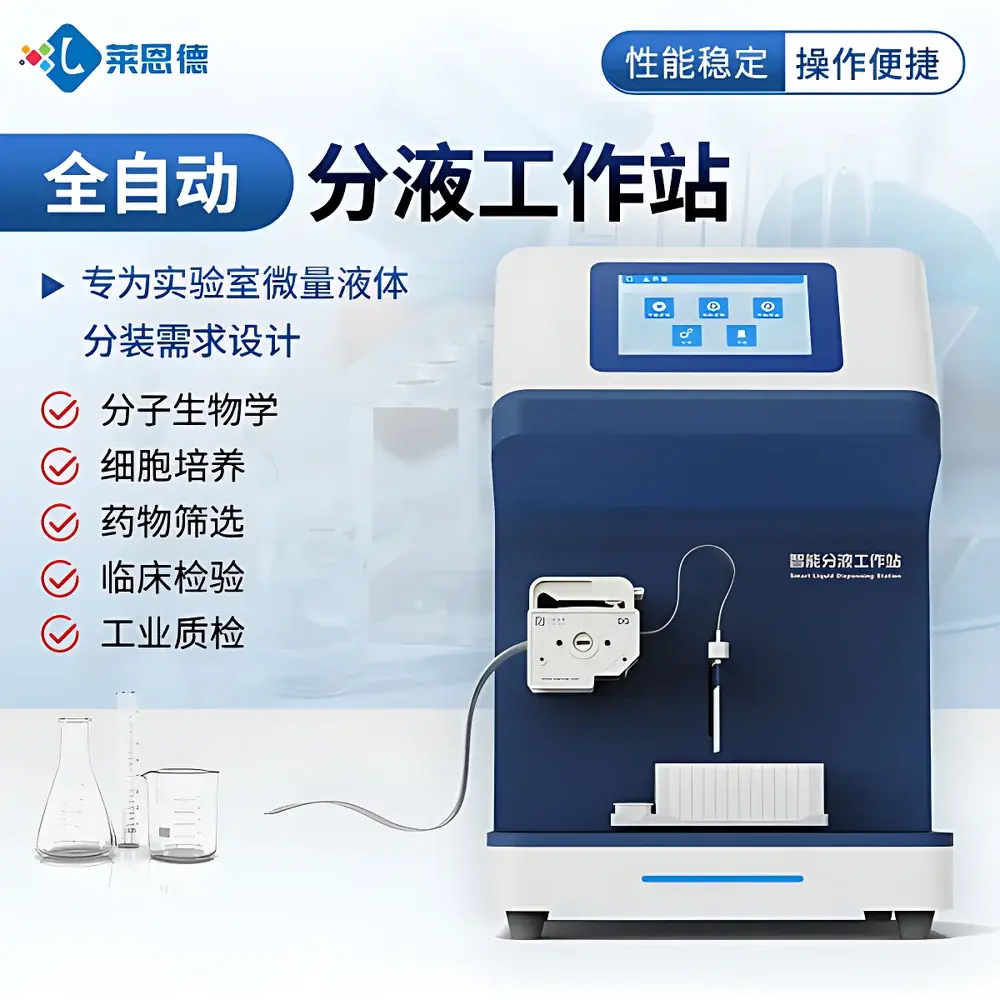
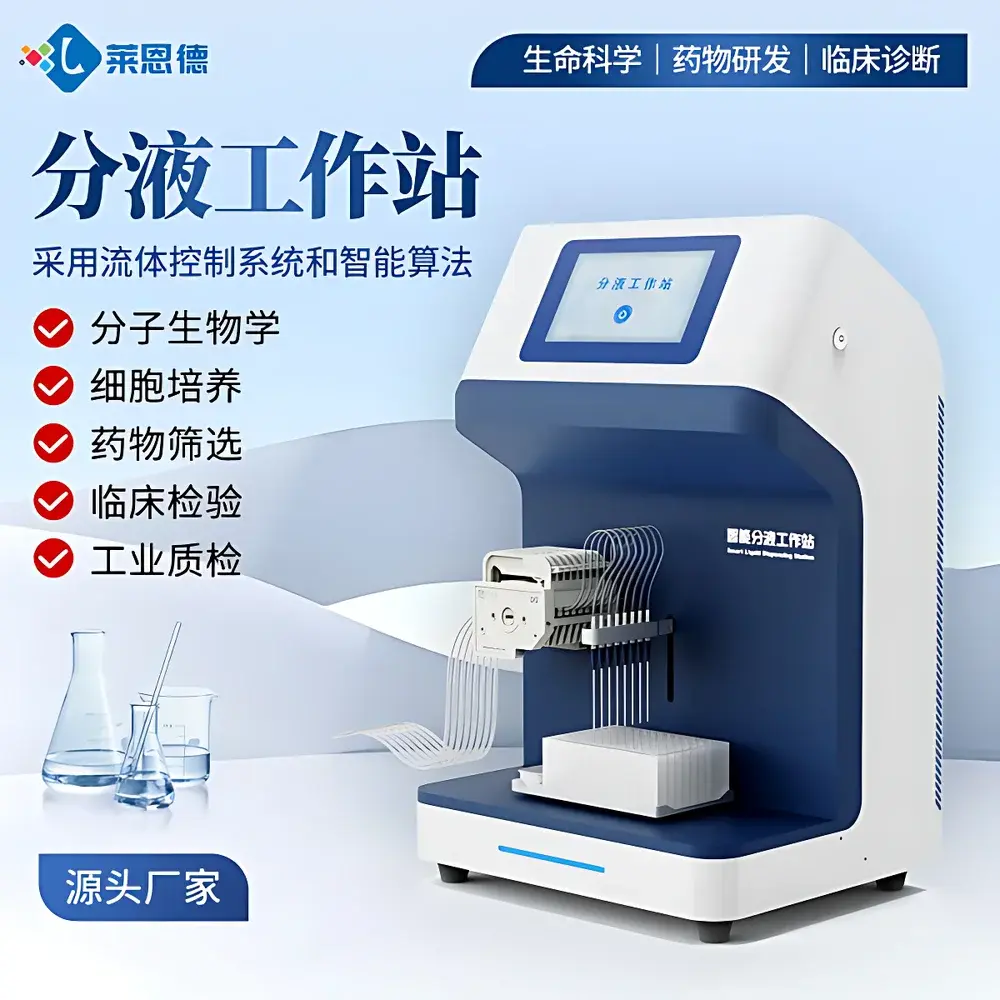
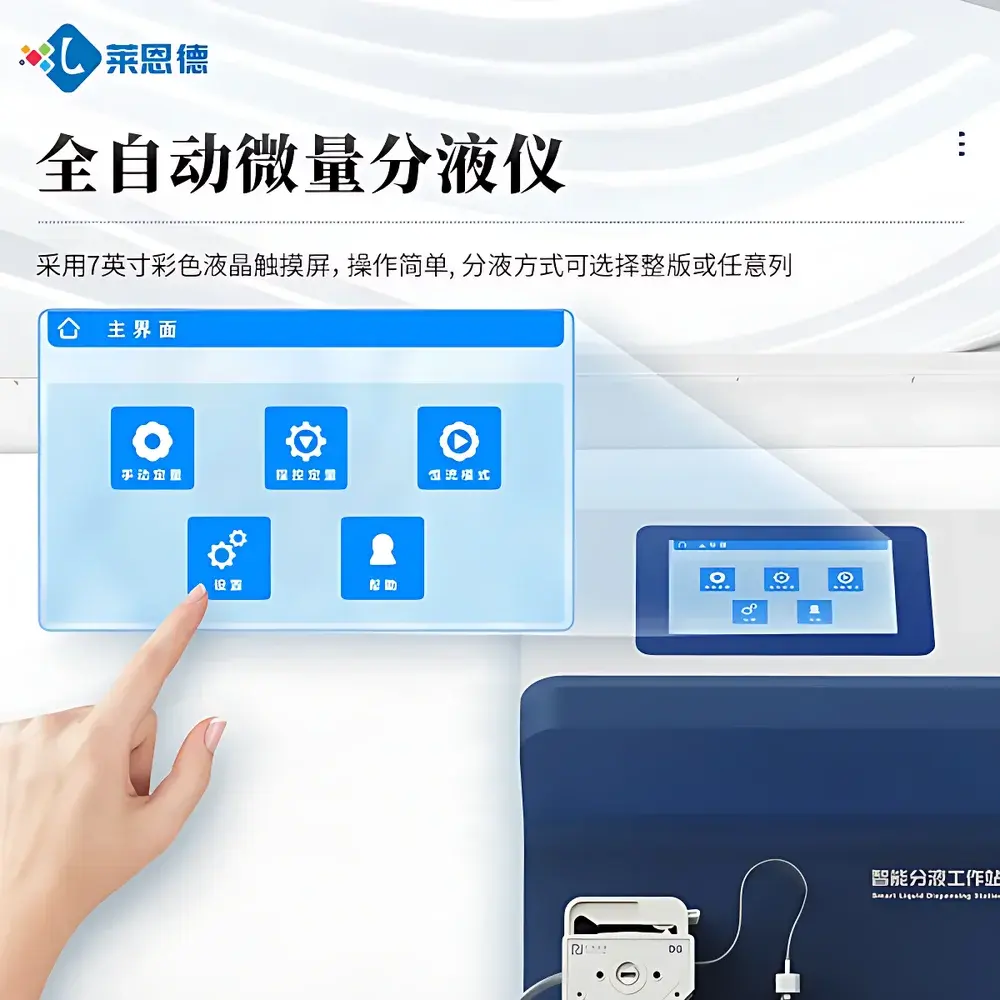
LANENDE LD-F8 8-Channel Automated Liquid Dispensing Workstation
| Brand | LANENDE Intelligent Technology |
|---|---|
| Model | LD-F8 |
| Origin | Shandong, China |
| Manufacturer Type | Direct Manufacturer |
| Category | Domestic Equipment |
| Price | USD 3,100 (approx.) |
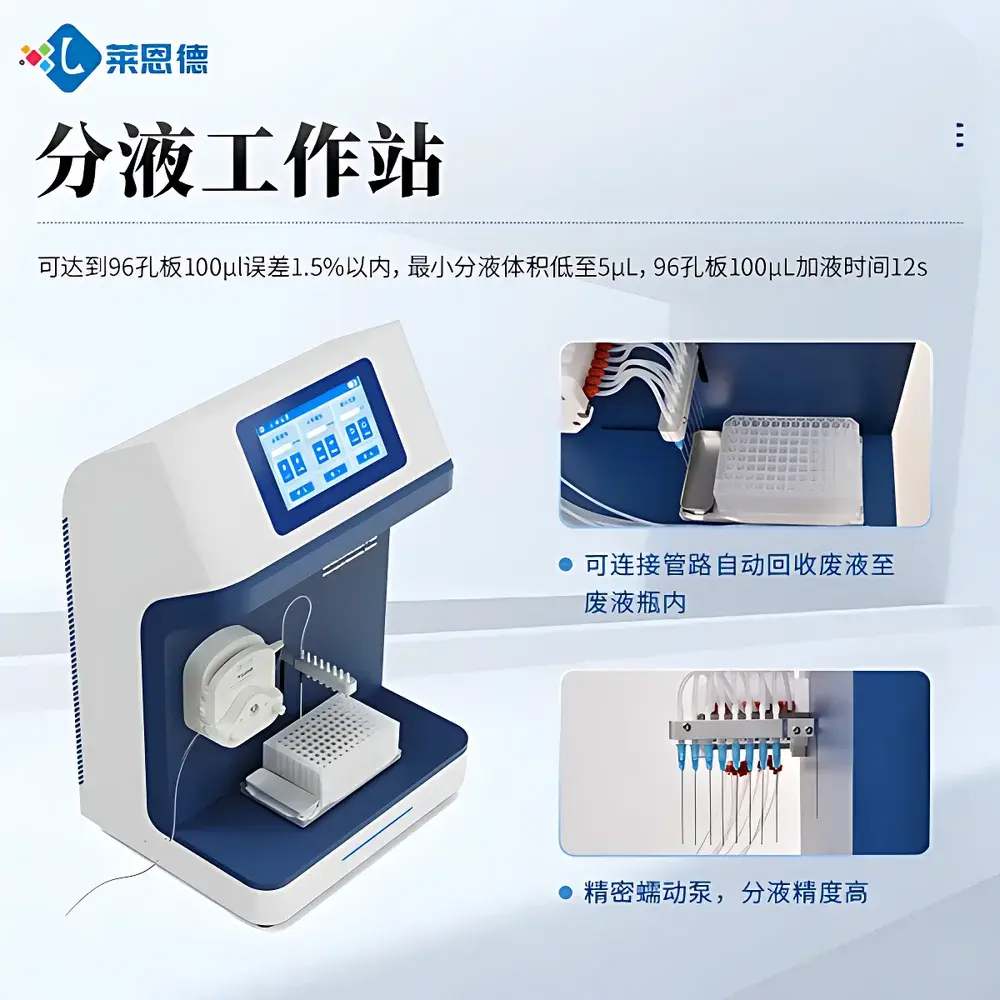
| Dispensing Accuracy | ≤1.5% CV at 100 µL (96-well plate) |
| Minimum Dispense Volume | 5 µL |
| Throughput | Full 96-well plate in ≤12 s |
| Display | 7-inch color TFT touchscreen |
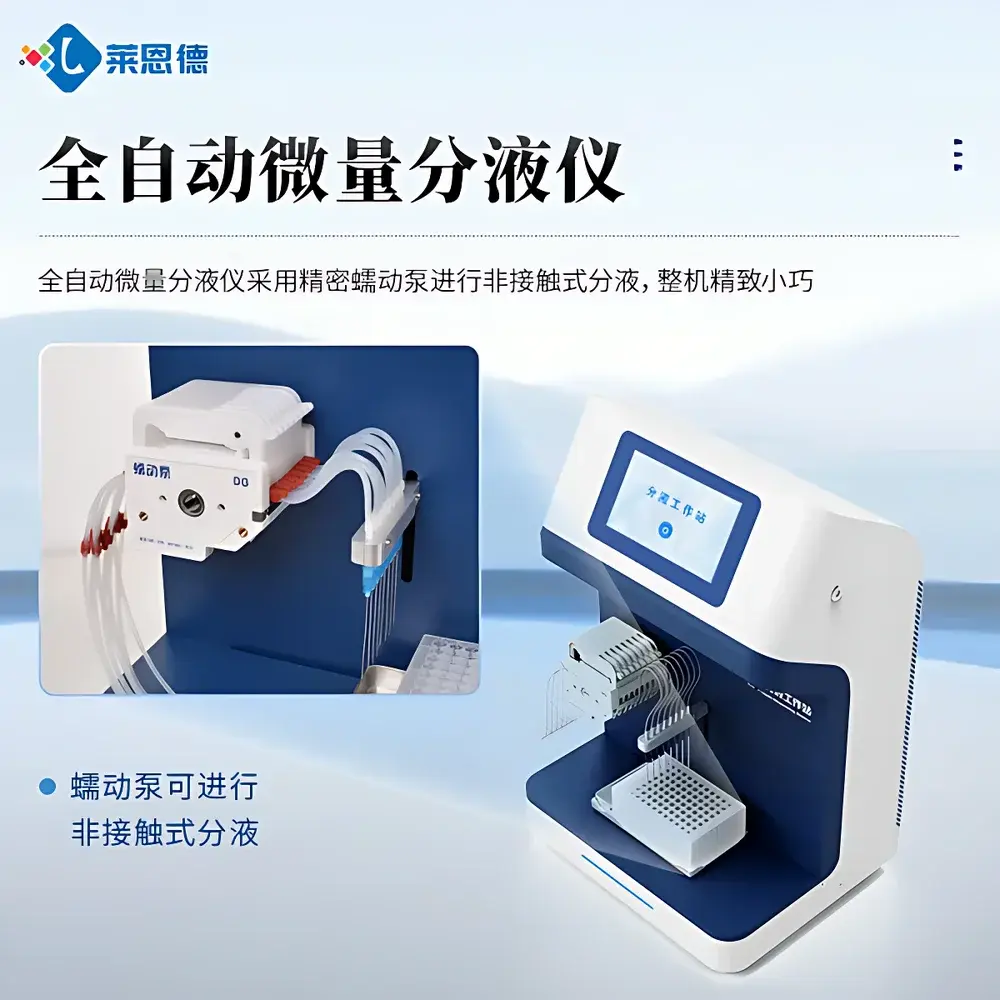
| Dispensing Mechanism | Precision peristaltic pump (non-contact) |
| Adjustable Flow Intensity | Dual-level (High/Low) |
| Waste Management | Removable waste tray with optional tubing for closed-loop waste collection |
Overview
The LANENDE LD-F8 8-Channel Automated Liquid Dispensing Workstation is an engineered solution for high-precision, high-throughput liquid handling in regulated and research-intensive laboratory environments. Based on positive-displacement peristaltic pumping technology, the system delivers non-contact, contamination-minimized dispensing across eight parallel channels—enabling consistent volumetric delivery without tip-based carryover or cross-contamination. Designed specifically for μL-to-mL scale applications, it operates within a validated range from 5 µL to 10 mL per dispense event, supporting both single-step and multi-step protocols. Its architecture prioritizes mechanical stability, thermal drift compensation, and flow-path inertness—critical for reproducible handling of sensitive reagents including enzymes, antibodies, nucleic acids, and viscous cell culture media. Unlike air-displacement pipettors, the peristaltic drive eliminates reliance on air cushion compression, thereby ensuring robust performance across variable fluid densities and surface tensions.
Key Features
- Eight independently controlled peristaltic channels with synchronized or staggered dispensing modes
- Calibration traceable to national metrological standards (JJF(Hebei) 233–2024 and JJF 1259–2018), supporting GLP-compliant instrument qualification
- Dual-intensity flow control (High/Low) for optimized dispensing of low-viscosity buffers and higher-viscosity solutions such as glycerol-containing master mixes or serum-supplemented media
- 7-inch capacitive touchscreen interface with intuitive icon-driven workflow navigation; supports full-plate, column-wise, or user-defined well-pattern dispensing
- Modular waste management system featuring a removable polypropylene waste tray and optional sterile tubing connection for closed-loop transfer to external waste containers
- Low-residue fluid path design with PTFE-lined tubing and chemically resistant pump heads compatible with common laboratory solvents (e.g., 70% ethanol, PBS, DMSO up to 10%) and biological buffers
- Compact footprint (W × D × H: 320 × 380 × 290 mm) suitable for biosafety cabinets, laminar flow hoods, and benchtop integration
Sample Compatibility & Compliance
The LD-F8 accommodates standard SBS-format microplates (96-well and 384-well), PCR tubes (0.2 mL and 0.5 mL), conical tubes (15 mL and 50 mL), and glass or plastic vials. It maintains compatibility with ANSI/SLAS dimensional specifications and supports ANSI-compliant plate mapping via onboard software. All wetted materials comply with USP Class VI biocompatibility requirements. The device meets electromagnetic compatibility (EMC) criteria per GB/T 18268.1–2010 (equivalent to IEC 61326-1) and electrical safety standards per GB 4793.1–2007 (IEC 61010-1). While not FDA 510(k)-cleared, its calibration framework aligns with ISO/IEC 17025 principles and supports audit-ready documentation for internal QC and method validation under GMP-relevant workflows.
Software & Data Management
The workstation runs embedded firmware with protocol storage capacity for ≥200 user-defined methods. Each method includes adjustable parameters: dispense volume per channel, aspiration/dispense speed, number of repeats, pause intervals, and plate position offsets. All operations generate timestamped log files (.csv format) containing operator ID, method name, start/end time, actual dispense volumes (if calibrated sensors are active), and error codes. Audit trail functionality records all parameter modifications, user logins, and calibration events—meeting basic data integrity expectations outlined in ALCOA+ principles. Exported logs are compatible with LIMS integration via USB mass storage mode; no proprietary cloud service or remote access capability is included.
Applications
- Molecular Biology: Accurate assembly of PCR/qPCR master mixes, cDNA library normalization, and lysis buffer distribution into deep-well plates
- Cell Culture: Automated seeding of adherent and suspension cells into multiwell plates, conditioned media replenishment, and cryopreservation solution aliquoting
- Drug Discovery: Primary and secondary compound dispensing for HTS assays, dose-response matrix generation, and assay-ready plate preparation
- Clinical Diagnostics: Serum/plasma partitioning for ELISA, multiplex immunoassays, and automated sample dilution series
- Industrial QA/QC: Preparation of certified reference material dilutions, titrant standardization, and additive dosing in formulation development
FAQ
Does the LD-F8 support serial dilution protocols?
Yes—via sequential multi-step dispensing routines programmed through the touchscreen interface; however, it does not include integrated mixing or aspiration-reverse dispensing functions.
Is third-party calibration certification available?
Yes—LANENDE provides optional NIST-traceable calibration reports issued by CNAS-accredited laboratories upon request (additional fee applies).
Can the system be integrated with robotic arms or LIS systems?
No native robotic interface (e.g., RS-232, Modbus, or Ethernet/IP) is provided; integration requires custom mechanical mounting and external PLC coordination.
What maintenance is required for long-term accuracy?
Monthly verification using gravimetric testing per JJF(Hebei) 233–2024 is recommended; pump tubing should be replaced every 6 months under continuous operation or after 500 hours of cumulative runtime.
Are disposable tips or syringes required?
No—fluid handling is performed exclusively through reusable, autoclavable PTFE/PVC tubing sets; tip-free operation reduces consumables cost and plastic waste.



