LANENDE LD-GX02 Intelligent Root System Analyzer
| Brand | LANENDE |
|---|---|
| Origin | Shandong, China |
| Manufacturer Type | Direct Manufacturer |
| Model | LD-GX02 |
| Optical Resolution | 4800 × 9600 dpi |
| Max Scanning Area (Reflective) | 355.6 mm × 215.9 mm |
| Min Pixel Size | 0.005 mm × 0.0026 mm |
| Scan Interface | USB 2.0 |
| Color Depth | 48-bit |
| Light Source | Dual Cold Cathode Fluorescent Lamp (CCFL) |
| Supported Formats | TIFF, JPEG |
| Software Features | Topological Analysis, Fractal Dimension (Box-Counting), Root Angle Quantification (Gravitropic & Horizontal), Color-Based Segmentation, Interactive Editing (Split/Merge/Reconnect), Cloud Data Sync, Dual-Language UI (English/Chinese), FDA 21 CFR Part 11–Ready Audit Trail |
Overview
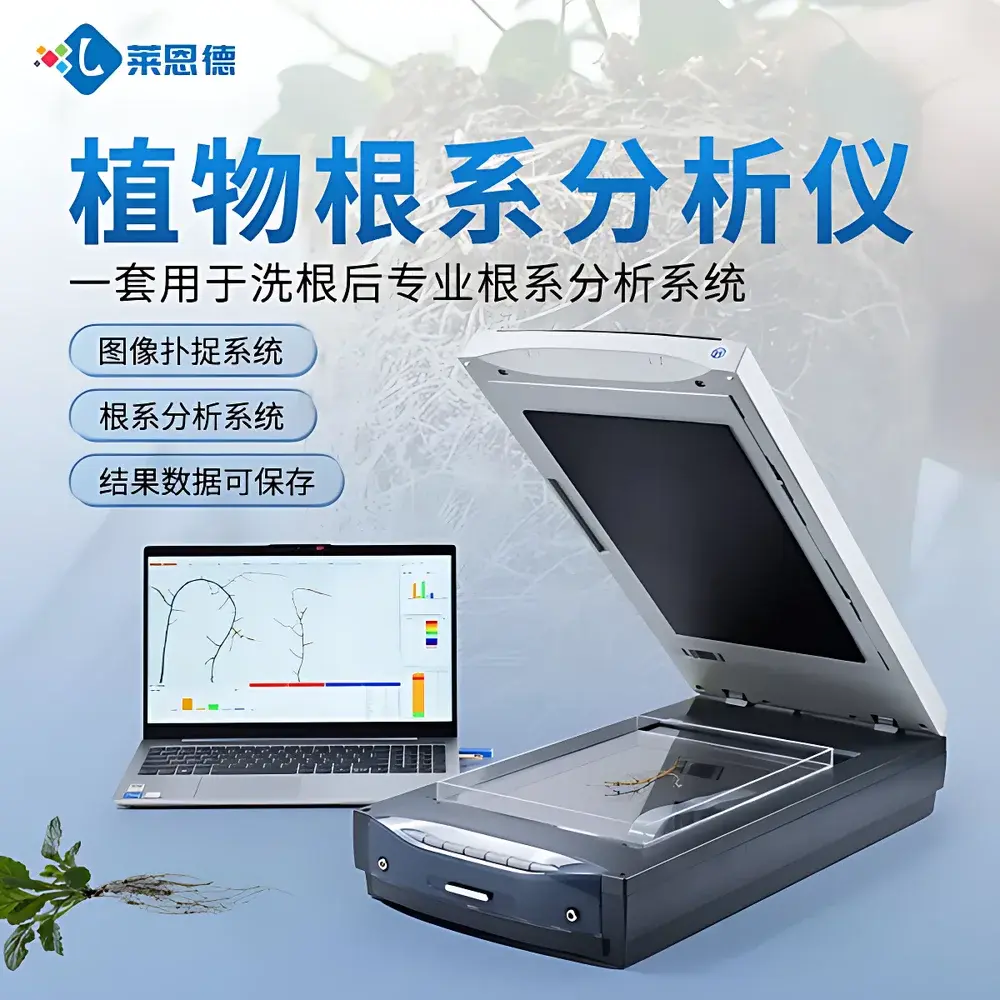
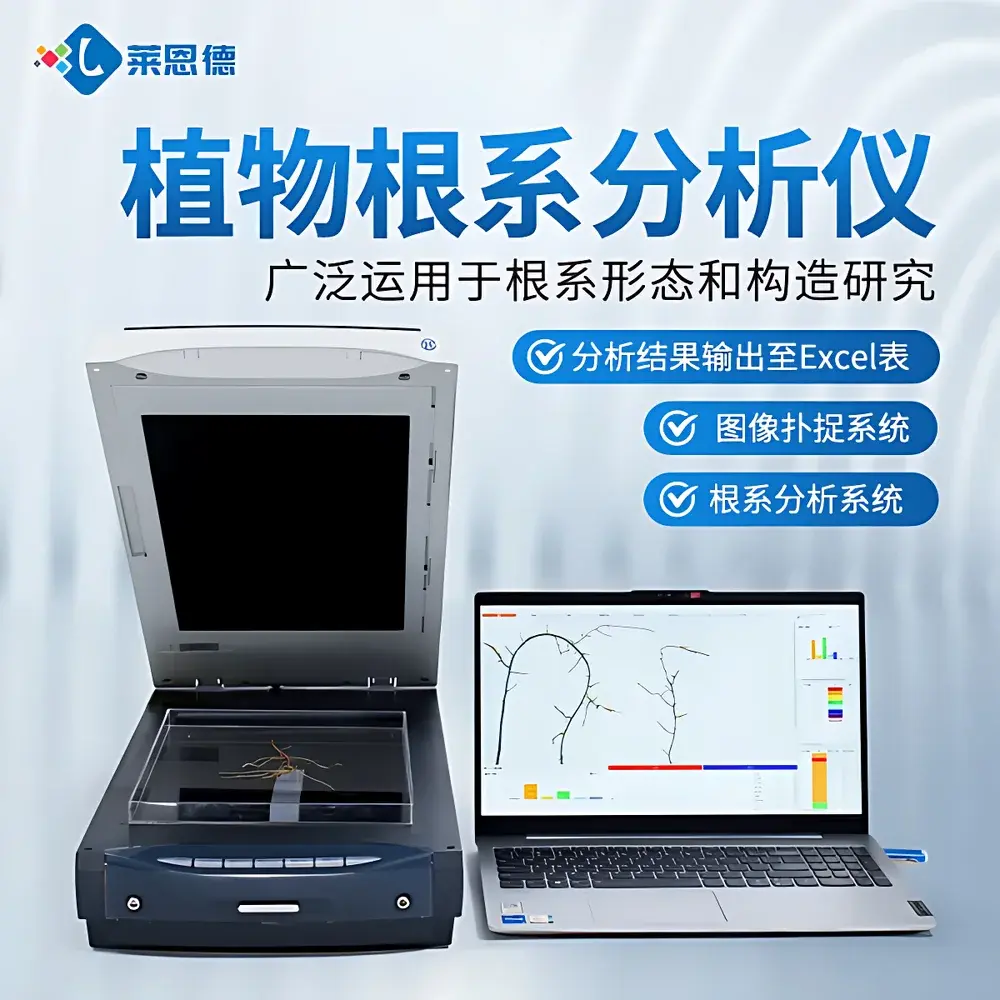
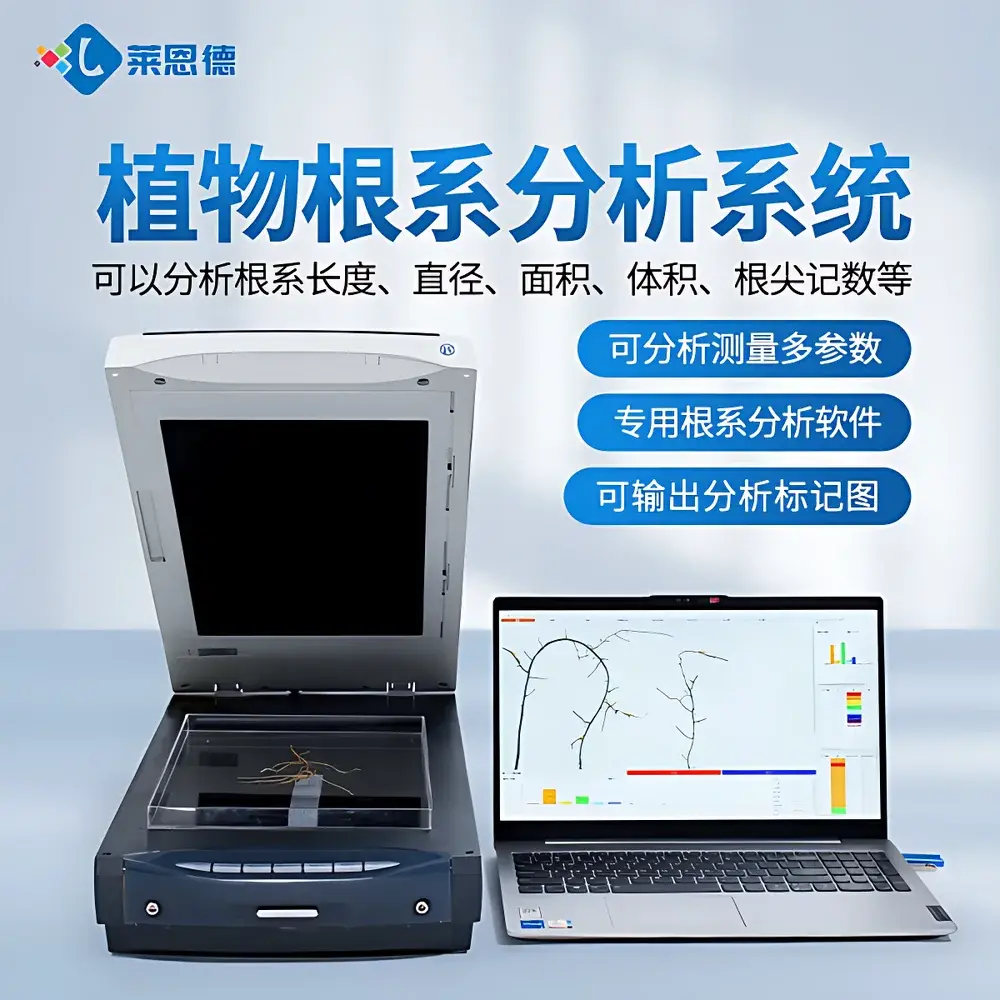
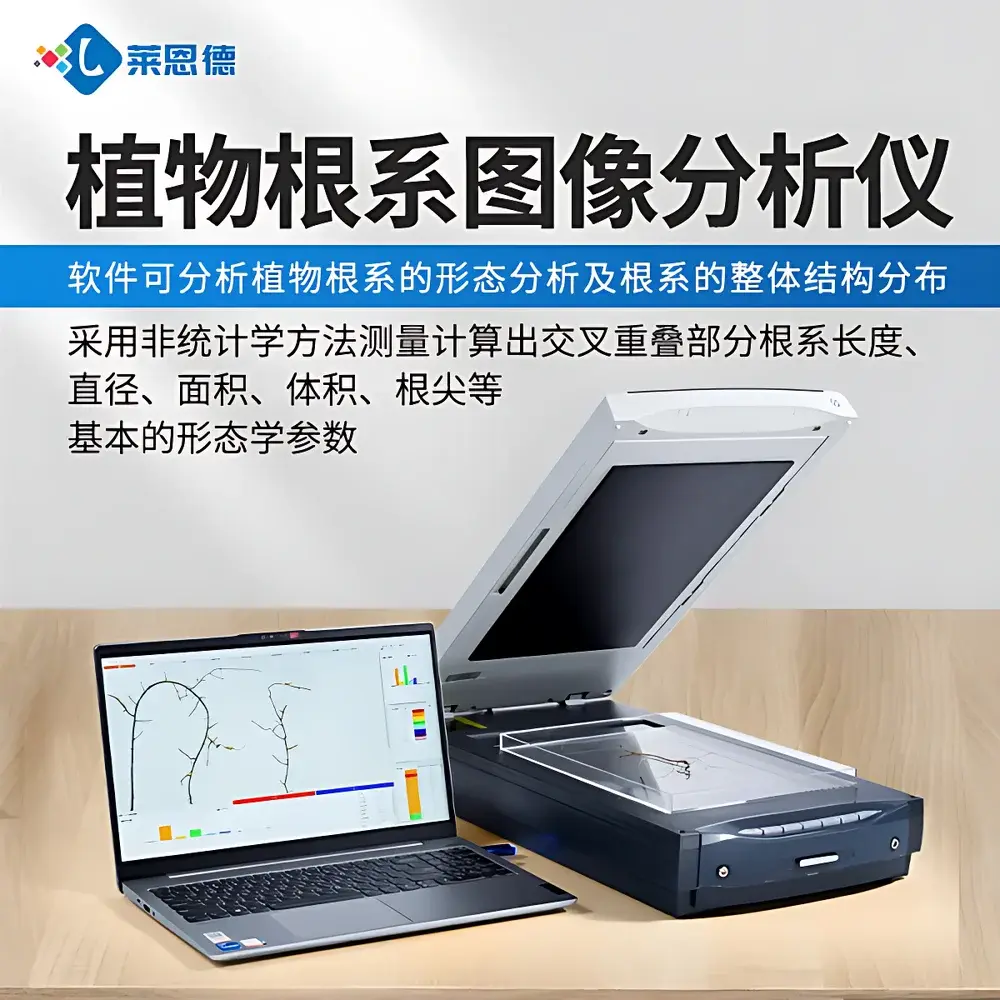
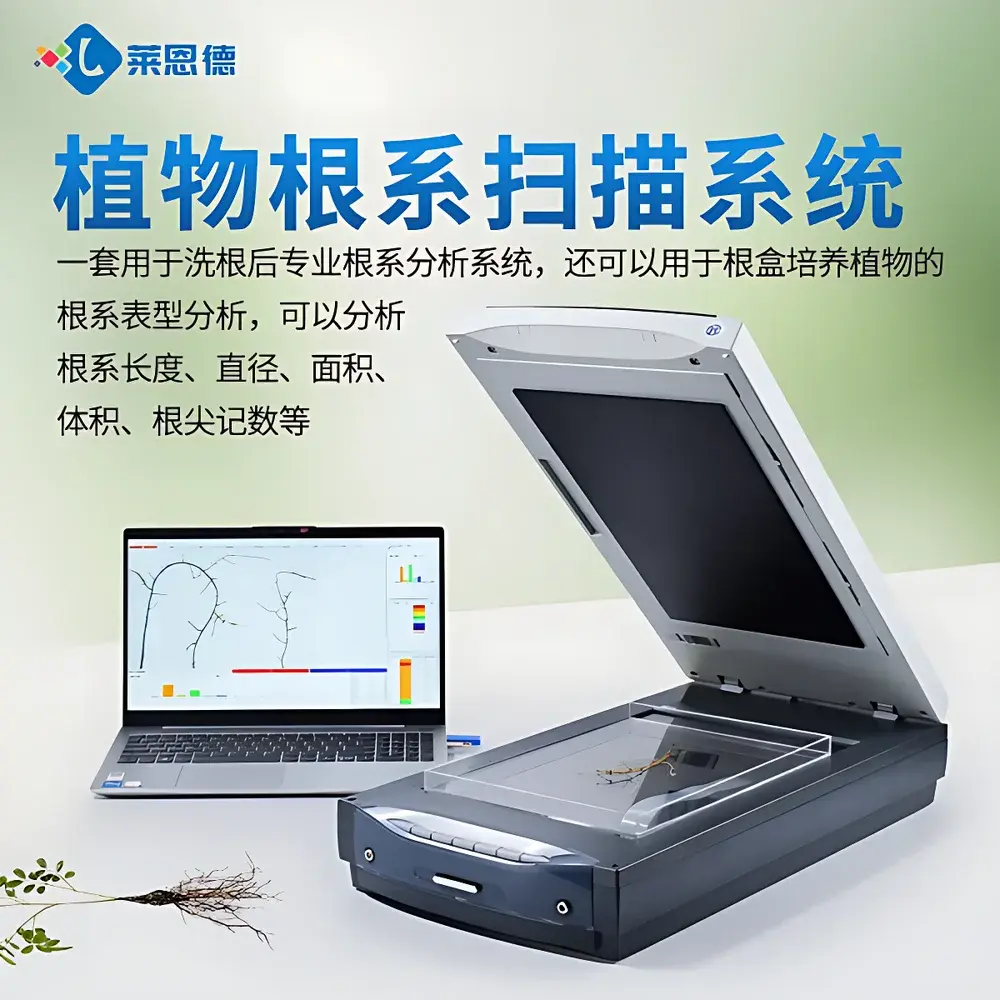
The LANENDE LD-GX02 Intelligent Root System Analyzer is a high-precision, non-destructive imaging and morphometric analysis platform engineered for quantitative plant root phenotyping. It operates on the principle of high-resolution optical scanning combined with algorithm-driven digital image segmentation and topological reconstruction. Unlike destructive or indirect estimation methods, the LD-GX02 captures intact root architecture via dual-illumination reflective scanning—eliminating shadow artifacts and ensuring uniform contrast across heterogeneous root structures (e.g., fine laterals, thick taproots, root hairs, and symbiotic nodules). The system is purpose-built for post-wash root analysis and in situ rhizobox-based studies, delivering reproducible, pixel-accurate measurements aligned with internationally accepted root phenotyping standards (e.g., RootSystemArchitectural Standards v2.0, Plant Phenomics Consortium guidelines). Its hardware-software integration supports both laboratory-scale validation and multi-site collaborative trials requiring traceable, version-controlled data outputs.
Key Features
- Dual-source CCFL illumination system with calibrated reference zones ensures consistent grayscale fidelity and minimizes specular reflection or underexposure in high-contrast root samples.
- A4+ extended scanning bed (355.6 × 215.9 mm reflective area) accommodates large root systems from cereals, legumes, and woody perennials without tiling or stitching artifacts.
- Optical resolution of 4800 × 9600 dpi enables sub-5 µm pixel-level detection—critical for resolving root hair density, cortical cell files, and nodule boundaries.
- Proprietary root segmentation engine applies adaptive thresholding, skeletonization, and branch-point identification without reliance on statistical training sets—ensuring robustness across species and growth media (hydroponics, sand, soil-gel, agar).
- Comprehensive morphometric suite includes 22 standardized parameters: total length, diameter distribution (user-defined non-uniform bins), fractal dimension (box-counting method), gravitropic angle, topological indices (link number, branching order, connection angle), and color-channel-specific quantification (e.g., red-channel intensity for nitrogen-fixing nodule identification).
- FDA 21 CFR Part 11–compliant software architecture with encrypted dongle authentication, electronic signatures, and immutable audit logs for GLP/GMP-aligned research environments.
Sample Compatibility & Compliance
The LD-GX02 accepts washed root systems, rhizobox-excised roots, and hydroponically grown specimens placed on high-transparency acrylic trays. It supports both monocot (e.g., rice, maize) and dicot (e.g., Arabidopsis, soybean, tomato) architectures. All analytical outputs conform to ISO/IEC 17025 documentation requirements for measurement uncertainty reporting. Raw images are stored in lossless TIFF format; metadata (scan date, operator ID, calibration stamp) is embedded per EXIF 2.3 standard. The system meets CE electromagnetic compatibility directives and complies with IEC 61000-4-2 for electrostatic discharge resilience. For regulatory submissions, exported Excel reports include traceable parameter definitions aligned with ASTM E2917–22 (Standard Guide for Root Morphology Measurement).
Software & Data Management
The LD-GX02 software runs on Windows 10/11 (64-bit) and features a modular GUI with real-time preview, batch processing queues, and hierarchical project folders. Each analysis session generates three output tiers: (1) annotated TIFFs with color-coded diameter segments and branch labels; (2) structured CSV/Excel files containing all 22 metrics plus confidence flags for edge-detection reliability; (3) cloud-synced datasets via optional LANENDE Cloud Portal (AES-256 encrypted, role-based access control). Version 4.2 introduces Python API hooks for custom script integration (e.g., linking root traits to genomic association models). Audit trails record every edit—including manual corrections to split/misconnected branches—with timestamps, user credentials, and pre/post-state image hashes.
Applications
- Quantitative genetics: Mapping QTLs associated with root depth, lateral density, and drought-avoidance architecture in field trials.
- Symbiosis research: Measuring nodule count, volume, and spatial distribution in Rhizobium-inoculated legumes under varying N/P/K regimes.
- Stress physiology: Tracking dynamic changes in root diameter distribution and branching frequency during salinity or heavy metal exposure.
- Soil-structure interaction: Correlating root surface area and fractal dimension with penetrometer resistance and aggregate stability indices.
- Educational use: Visualizing root developmental plasticity in controlled-environment classrooms using time-series rhizobox scans.
FAQ
Does the LD-GX02 require staining or contrast agents to visualize roots?
No. The dual-CCFL illumination and high dynamic range capture enable clear differentiation of unstained roots against transparent trays—even for pale-colored species like wheat or barley.
Can the software distinguish live vs. dead root segments?
Not inherently. However, users may integrate external viability markers (e.g., FDA/PI fluorescence overlays) by importing registered multi-channel TIFFs and applying user-defined intensity thresholds within the color analysis module.
Is calibration traceable to NIST standards?
Yes. A certified calibration slide with micron-graded line pairs (NIST-traceable SRM 2036) is included, and software validates optical resolution at installation and after firmware updates.
What file formats can be imported for re-analysis?
TIFF (8/16-bit grayscale or RGB), JPEG (with embedded ICC profiles), and PNG (lossless compression). Proprietary .RSD project files retain full edit history and mask layers.
How is data integrity maintained during cloud synchronization?
All uploads undergo SHA-256 hashing prior to transmission; differential sync ensures only modified blocks are transferred. Cloud storage complies with ISO 27001-certified infrastructure and supports on-premise server deployment for air-gapped facilities.