
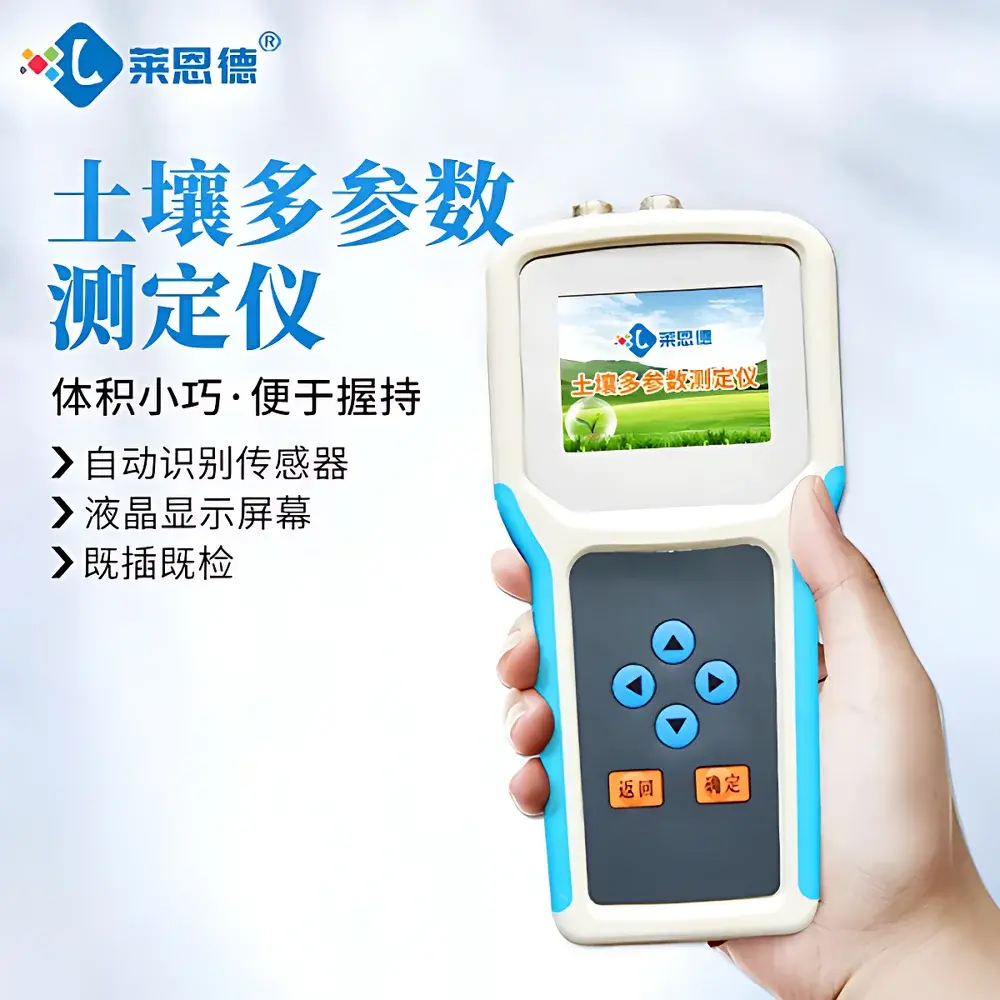
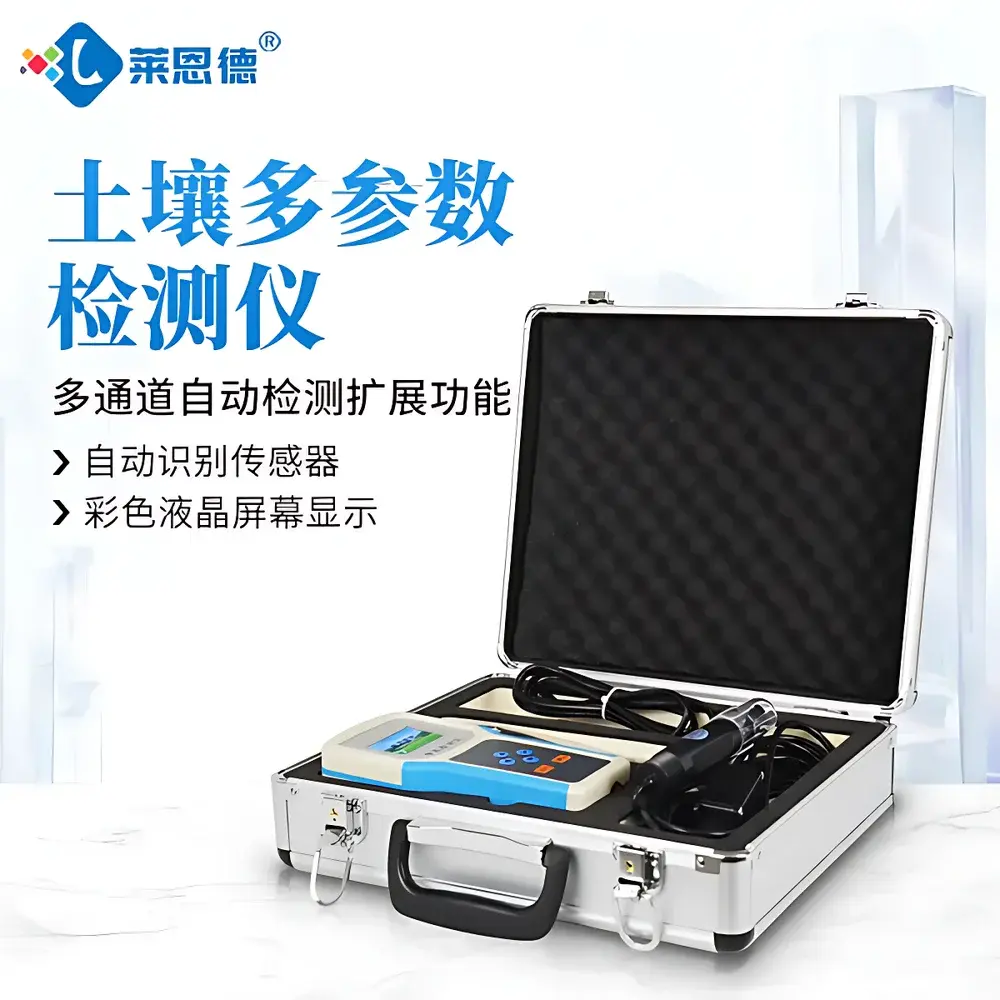
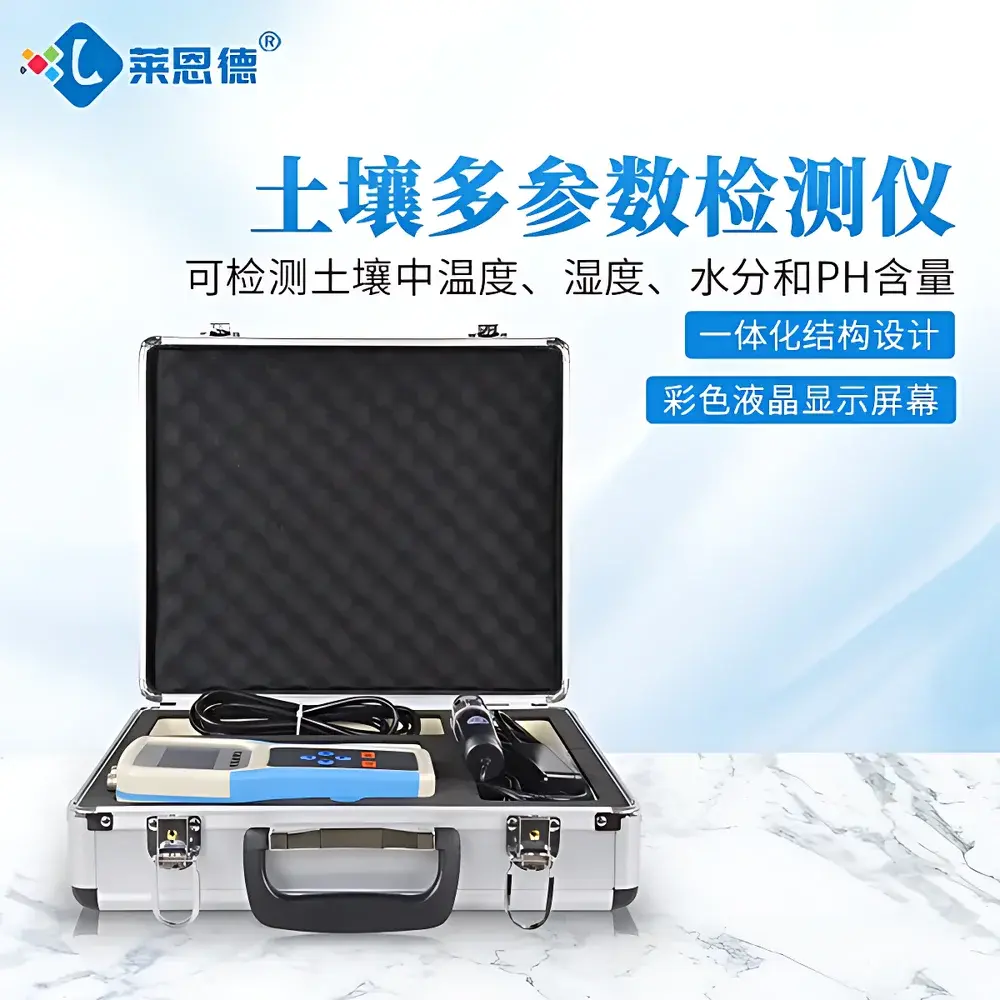
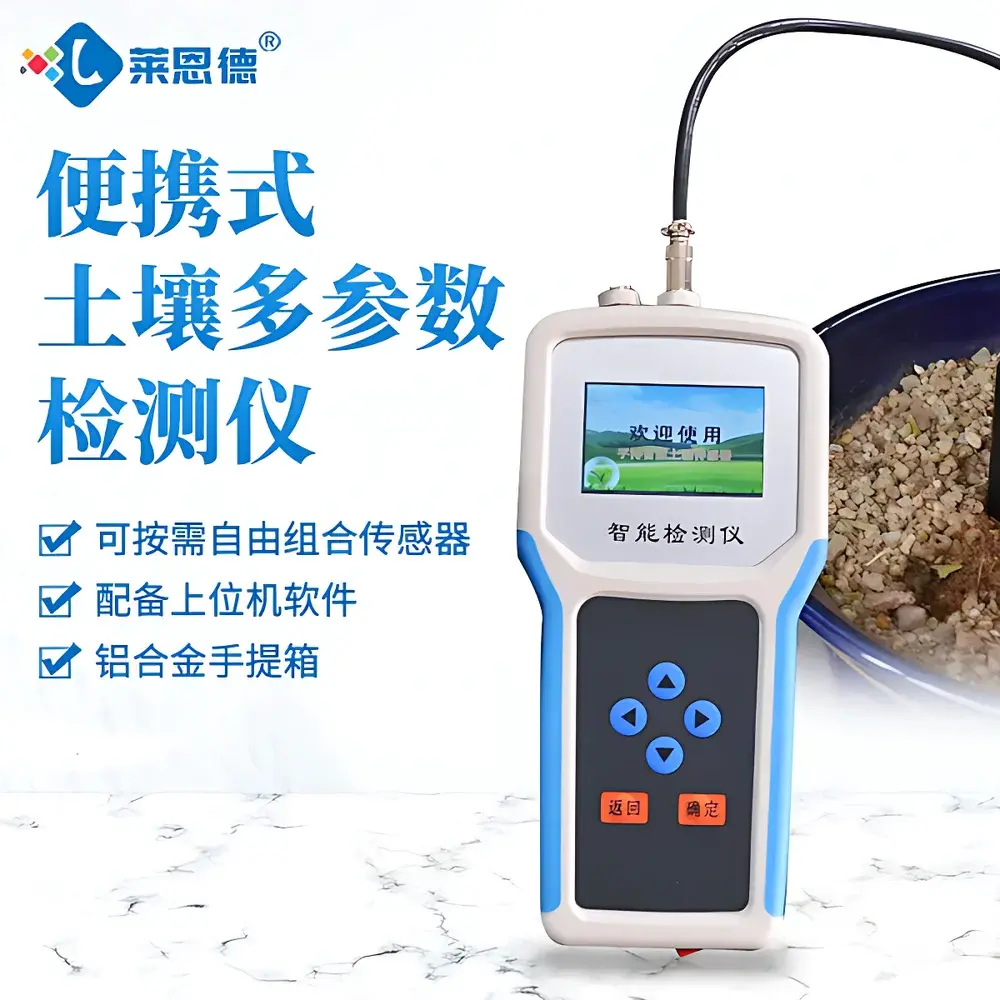
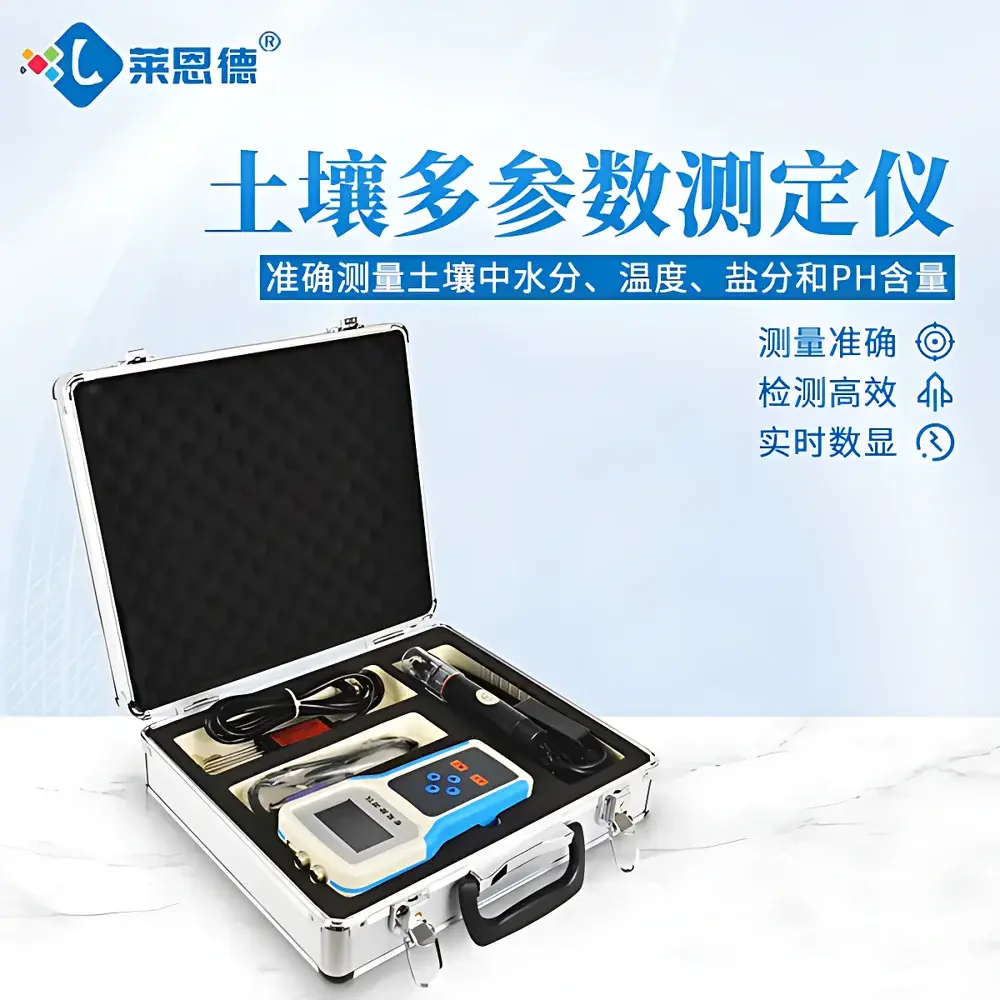
LANENDE LD-TPHn Portable Soil pH Meter
| Brand | LANENDE Intelligent Technology |
|---|---|
| Origin | Shandong, China |
| Manufacturer Type | Direct Manufacturer |
| Country of Origin | China |
| Model | LD-TPHn |
| Instrument Type | Portable |
| Functionality | Multi-parameter Soil Analyzer |
| pH Range | 0–14 |
| pH Resolution | 0.01 |
| pH Accuracy | ±0.1 |
| Dimensions | 204 × 100 × 36 mm (L × W × H) |
| Weight | 0.3 kg |
| Data Storage Capacity | 300,000 records |
| Display | Full-color LCD |
| Connectivity | USB + 4G cellular uplink |
| Software | Free PC-based data management suite with Excel export, curve plotting, and threshold-based color-coded alerting |
Overview
The LANENDE LD-TPHn Portable Soil pH Meter is an integrated, field-deployable electrochemical measurement system engineered for rapid, in-situ determination of soil acidity (pH) across heterogeneous sampling sites. Based on standardized glass electrode potentiometry per ISO 4120:2004 and ASTM D2797–18 guidelines for soil pH testing, the instrument delivers traceable, repeatable measurements without requiring laboratory extraction or buffer calibration in situ. Its compact monolithic architecture integrates sensor interface electronics, real-time data acquisition logic, and embedded non-volatile memory—enabling continuous monitoring at multiple depths and locations over extended periods. Designed specifically for environmental fieldwork, the LD-TPHn supports both discrete spot checks and time-series profiling, making it suitable for longitudinal studies in agroecological monitoring, land reclamation assessment, and regulatory soil health reporting.
Key Features
- Integrated potentiometric pH sensing module with NIST-traceable calibration compatibility and automatic temperature compensation (ATC) for ambient soil thermal variability.
- Modular multi-sensor interface supporting plug-and-play integration of optional parameters—including soil moisture (TDR), electrical conductivity (EC), and temperature—without hardware modification or recalibration.
- High-resolution full-color LCD display with real-time visualization of measured pH values, data group counters, battery status, and low-voltage warnings.
- Onboard flash memory storing up to 300,000 timestamped records; auto-save functionality preserves data during power interruption per IEC 60529 IP54-rated enclosure integrity.
- Configurable sampling interval (1 min to 24 h) via intuitive menu navigation; manual trigger mode available for immediate point measurements.
- Automatic sensor recognition protocol ensures consistent signal conditioning and eliminates manual channel mapping errors during sensor hot-swapping.
Sample Compatibility & Compliance
The LD-TPHn is validated for direct insertion into mineral soils, organic substrates, and amended growing media with particle sizes ≤ 2 mm and moisture content ≥ 15% w/w. It complies with methodological requirements outlined in USDA-NRCS Field Handbook Chapter 4 (Soil Chemical Properties), EPA Method 9045D (Soil pH by Electrode), and ISO 10390:2022 (Soil quality — Determination of pH). While not certified for GLP or GMP environments, its data logging architecture supports audit-ready traceability when used with the included software’s metadata tagging and user-defined project labeling. The device meets CE marking directives for electromagnetic compatibility (2014/30/EU) and low-voltage safety (2014/35/EU).
Software & Data Management
The bundled Windows-compatible desktop application provides comprehensive post-acquisition analysis capabilities. Data transfer occurs via standard USB 2.0 interface, with exported datasets saved natively in .CSV and Microsoft Excel (.XLSX) formats. Time-series plots are generated with adjustable axes, grid overlays, and dual-Y scaling for cross-parameter correlation. Threshold-based conditional formatting highlights pH excursions beyond user-defined limits (e.g., pH < 5.5 for aluminum toxicity risk or pH > 8.2 for micronutrient lockout), generating color-coded visual alerts directly in spreadsheet views. The software maintains immutable audit logs of all import/export actions, including timestamps and operator IDs—supporting basic data integrity requirements under FDA 21 CFR Part 11 Annex A guidance for non-critical environmental monitoring systems.
Applications
- Precision agriculture: Site-specific liming or sulfur amendment planning based on spatial pH gradients.
- Revegetation and restoration ecology: Monitoring pH recovery trajectories in post-mining or contaminated soils.
- Nursery and greenhouse operations: Real-time validation of substrate pH stability during propagation cycles.
- Environmental impact assessments: Baseline and follow-up pH profiling for EIA compliance reporting.
- Academic field research: Long-term pedological studies requiring high-frequency, low-bias pH time series.
- Extension service outreach: Rapid demonstration tools for farmer training on soil health indicators.
FAQ
What calibration standards are recommended for field use?
Standard buffer solutions at pH 4.01, 7.00, and 10.01 (certified reference materials per ISO 3696 Grade 2) are advised for two-point calibration before each deployment session.
Can the instrument operate in saturated or flooded soils?
Yes—provided the electrode tip remains in contact with soil matrix rather than standing water; prolonged submersion beyond 30 minutes may affect junction potential stability.
Is sensor drift compensated automatically during extended logging?
No—drift correction requires periodic recalibration; however, the system logs ambient temperature continuously to enable retrospective ATC-adjusted recalculations in post-processing.
Does the 4G connectivity support TLS-encrypted data transmission to third-party platforms?
Data uploads to the proprietary LANENDE Cloud Platform use HTTPS with TLS 1.2; API access for custom integrations is available under commercial licensing agreements.
How is electrode maintenance performed in remote field conditions?
The replaceable combination pH electrode includes a built-in KCl electrolyte reservoir; users should rinse with deionized water after each use and store tip moistened in pH 4 buffer solution to prevent desiccation-induced offset.
Related Products







