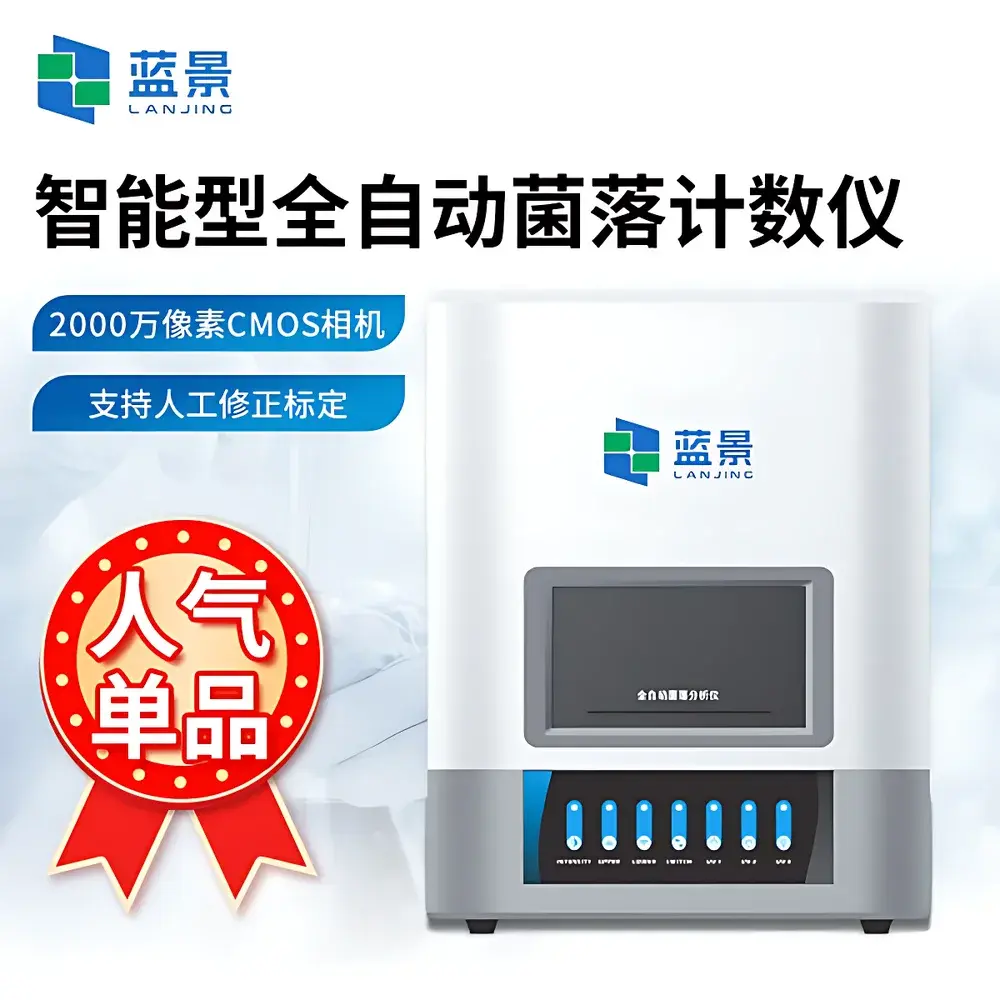
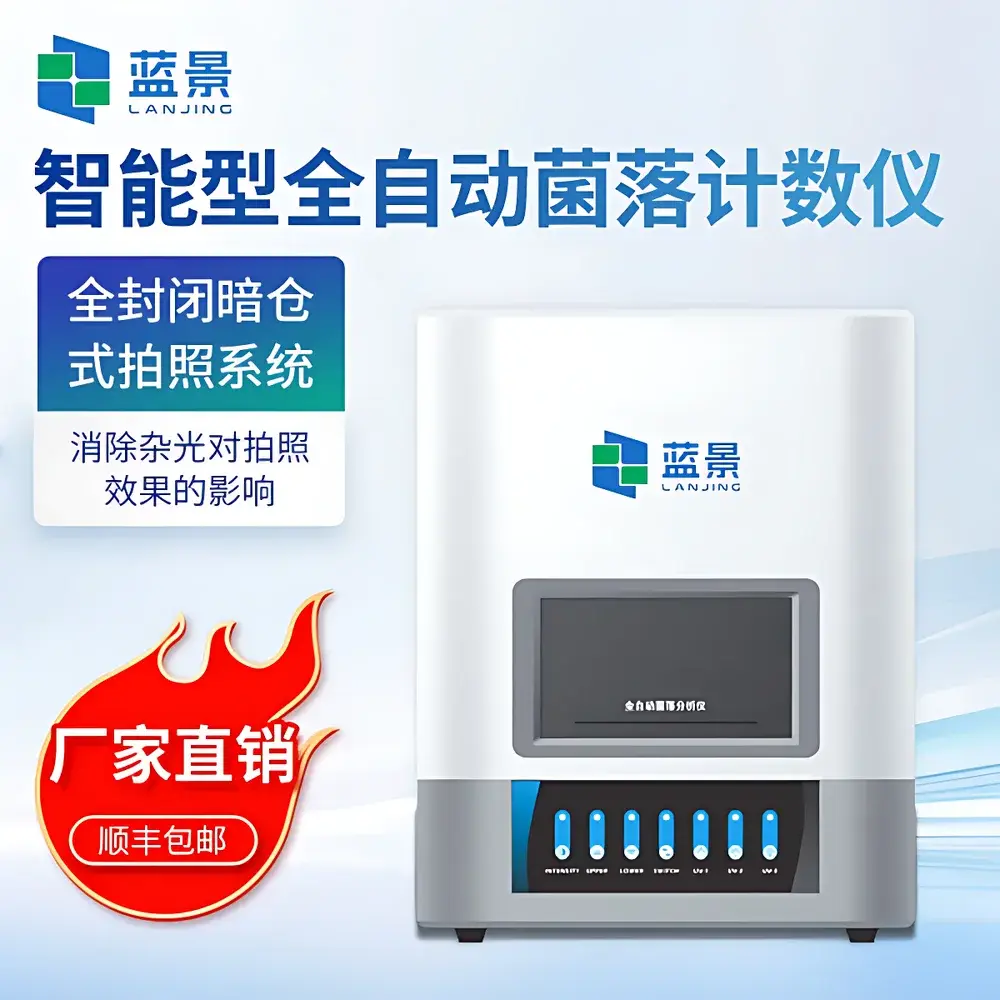
Lanjing LJ-BCA-01 Advanced AI-Powered Automated Colony Counter
| Brand | Lanjing |
|---|---|
| Origin | Shandong, China |
| Manufacturer Type | Direct Manufacturer |
| Instrument Type | Fully Automated Colony Counter |
| Model | LJ-BCA-01 |
| Imaging Sensor | 12 MP Sony Exmor Back-Illuminated CMOS (1/1.7") with 12-bit Ultra-fine HISPVP ADC & Dual-Layer Noise Reduction |
| Lens | 5 MP High-Resolution Macro Lens |
| Illumination System | Dual-Independent Adjustable LED Light Sources (Upper & Lower), 288 Total Imported Low-Voltage LEDs |
| UV Wavelengths | 254 nm, 302 nm, 366 nm Narrowband UV LEDs |
| Enclosure | Sealed Steel Dark Chamber with Matte Black Absorptive Interior |
| Sample Tray | Optical-Grade Ultra-White Glass (Max. 110 mm Petri Dish) |
| Interface | Dust-Resistant USB 3.0 Port |
| Software | ColonyAnalyse v5.2 with FDA 21 CFR Part 11–Compliant Audit Trail, GLP/GMP Data Integrity Framework, and Standardized Microbiological Calculators (GB 4789.2, GB 5750.12, HJ 1000–2018) |
| Dimensions (W×D×H) | 360 × 475 × 445 mm |
| Power Supply | AC 220 V, 50 Hz |
Overview
The Lanjing LJ-BCA-01 is a fully automated, AI-driven colony counter engineered for high-precision microbiological enumeration in regulated and research-intensive environments. It operates on the principle of digital image acquisition followed by pixel-based morphological segmentation and machine learning–enhanced classification. The system captures high-fidelity monochrome or color images under controlled, spectrally optimized illumination—eliminating ambient interference through its sealed steel dark chamber and matte-black absorptive interior. Its dual independent LED illumination architecture (288 total imported low-voltage chips) enables simultaneous top-down diffuse reflection and bottom-up dark-field transillumination, ensuring optimal contrast between translucent agar media and opaque or semi-transparent colonies—even those exhibiting low pigmentation, irregular morphology, or partial merging. The integrated 12 MP Sony Exmor back-illuminated CMOS sensor (1/1.7″ format), coupled with a 5 MP macro lens and USB 3.0 interface, delivers sub-pixel spatial resolution and consistent frame-rate acquisition essential for reproducible colony detection across heterogeneous sample sets.
Key Features
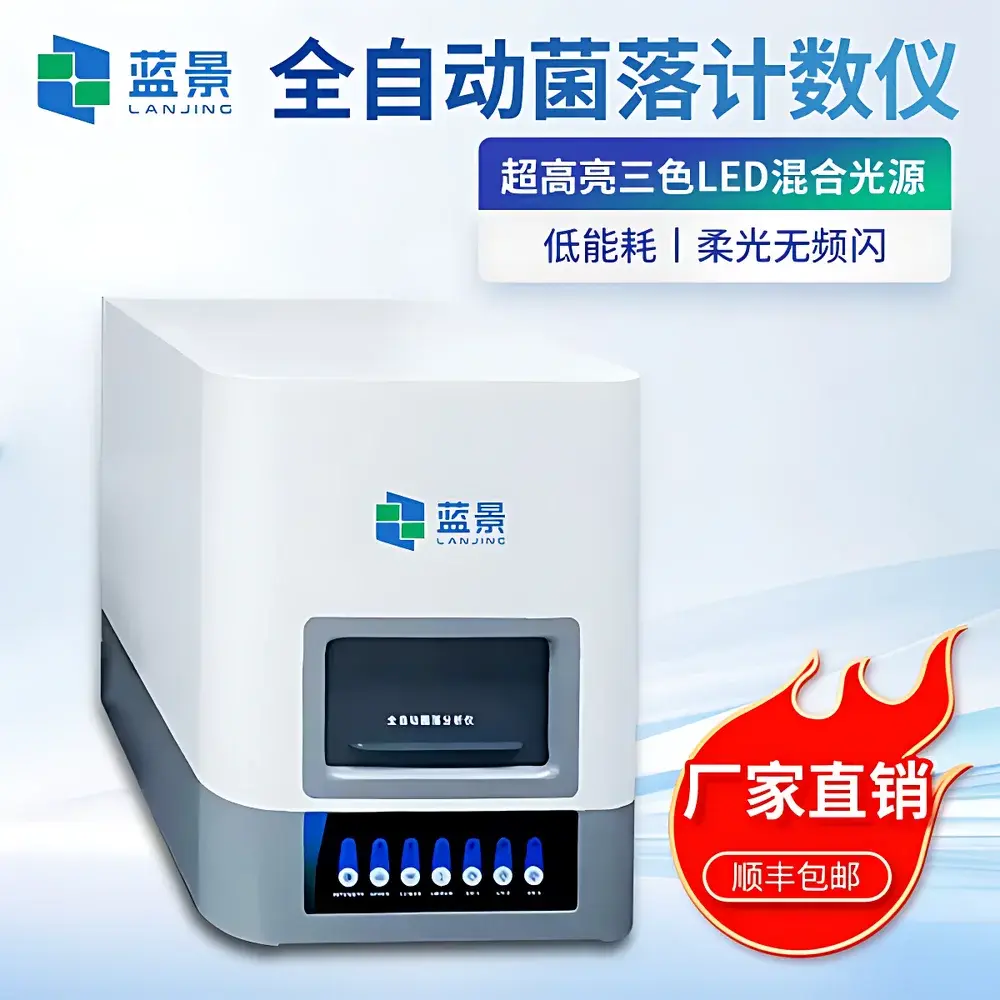
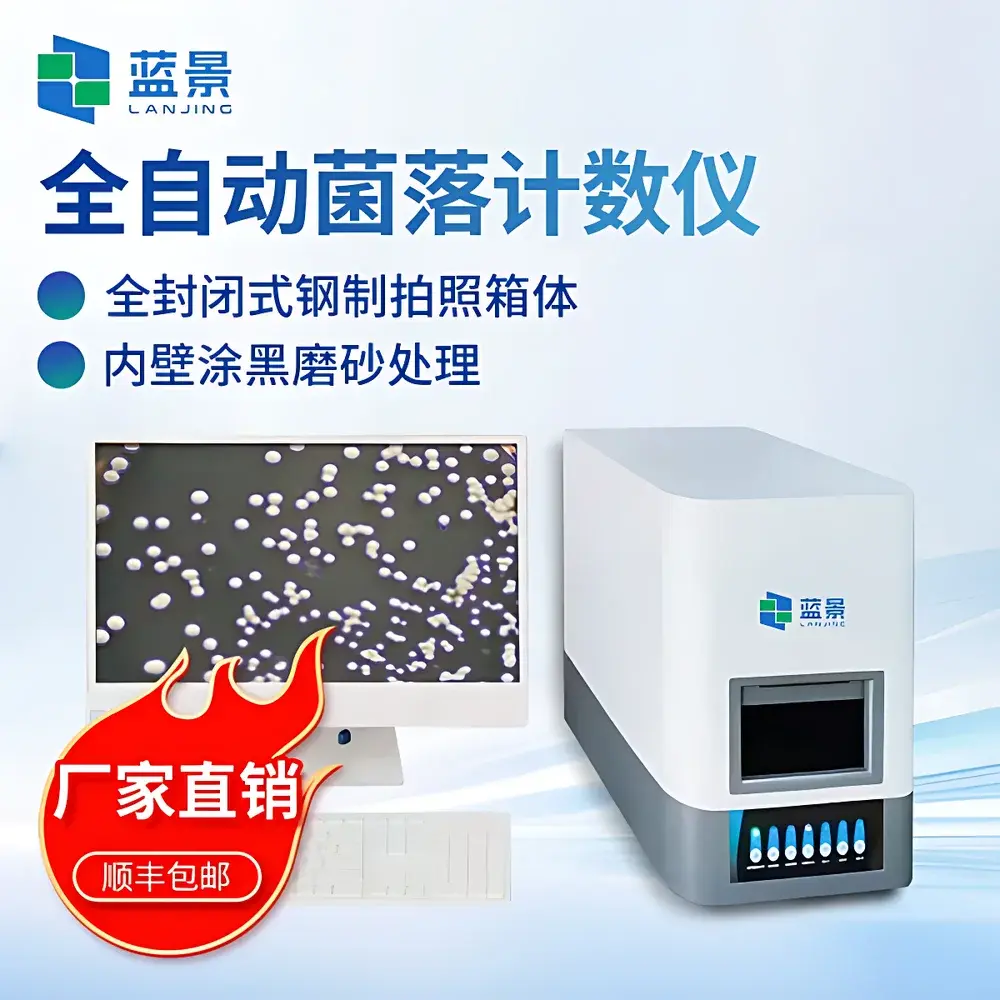
- Sealed steel imaging chamber with matte black interior finish—effectively suppresses stray light, glare, hotspots, and vignetting.
- Dual adjustable LED illumination: upper source (144 LEDs) with 2-level intensity and color temperature control; lower source (144 LEDs) featuring dark-field suspended diffuse transmission geometry for high-contrast edge definition.
- Triple-band narrowband UV module (254 nm, 302 nm, 366 nm) supports fluorescence-based colony identification (e.g., GFP-tagged strains, auto-fluorescent pathogens) and surface decontamination protocols.
- Optical-grade ultra-white glass sample tray—transmittance >92%, flatness tolerance ±2 µm—compatible with standard 90 mm and 110 mm Petri dishes.
- Motor-assisted sliding aluminum door with precision damping mechanism—enables stable positioning at any opening angle while maintaining full light isolation.
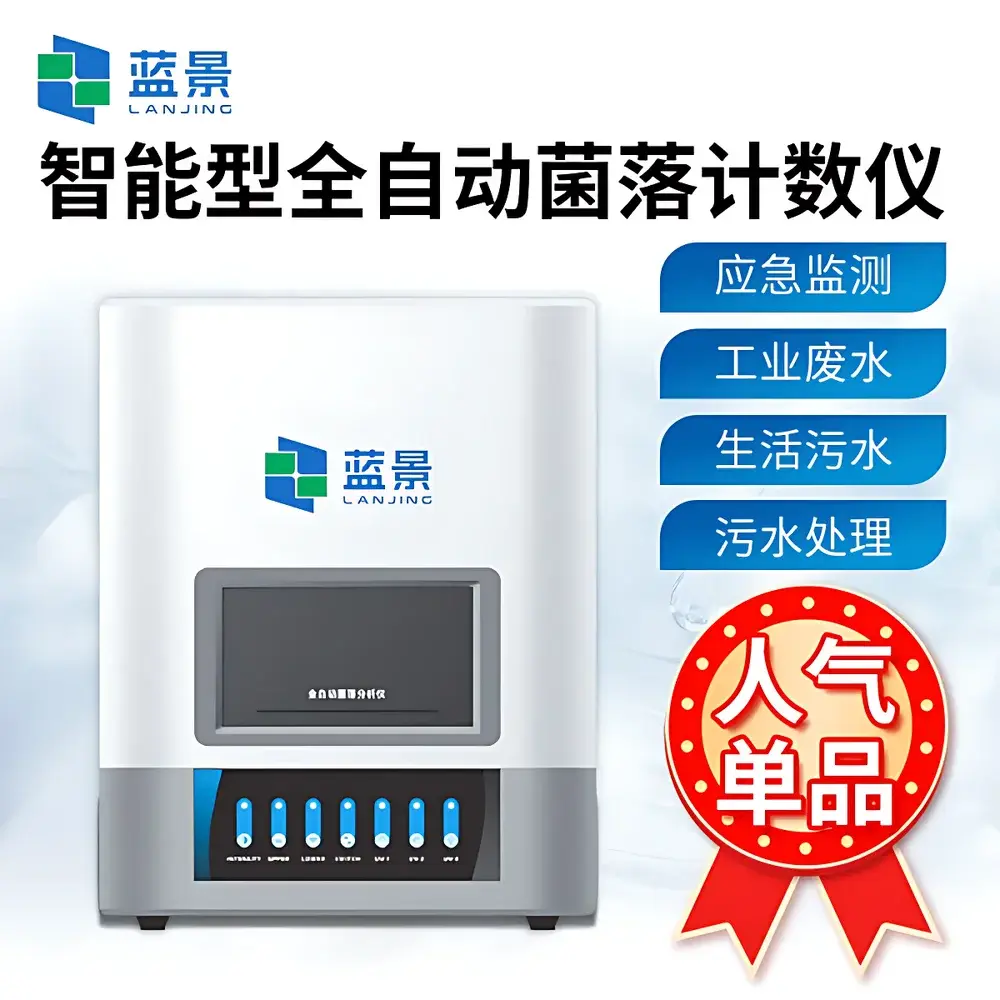
- Intuitive 7-button control panel enabling granular operation: independent on/off switching for upper/lower/UV channels; 2-step brightness adjustment per visible channel; individual UV wavelength activation.
- ColonyAnalyse v5.2 software suite with validated algorithms for adaptive thresholding, watershed-based splitting of clustered colonies, and multi-parameter morphometric analysis (equivalent diameter, perimeter, centroid coordinates, grayscale intensity distribution).
Sample Compatibility & Compliance
The LJ-BCA-01 accommodates standard agar-based solid culture media including TSA, PCA, VRBA, EMB, and chromogenic formulations used in food, water, pharmaceutical, and environmental testing. It supports both aerobic and anaerobic colony enumeration when paired with appropriate incubation protocols. All software workflows comply with internationally recognized microbiological counting standards—including ISO 4833-1:2013 (microbiology of food and animal feeding stuffs), ASTM D5542-20 (waterborne bacteria enumeration), and USP <61>/<62>. The system implements full data integrity controls aligned with FDA 21 CFR Part 11 requirements: electronic signatures, role-based access control (Operator, Reviewer, Administrator, System Manager), immutable audit trails recording timestamped user actions (login/logout, image acquisition, parameter modification, report generation), and tamper-evident export logs. Database encryption and automatic backup ensure long-term archival compliance with GLP and GMP documentation mandates.
Software & Data Management
ColonyAnalyse v5.2 provides a modular, audit-ready environment for quantitative microbiology. Core modules include: (1) Smart Count Engine with real-time sensitivity tuning, inverse counting mode, and RGB-channel selective segmentation; (2) Region-of-interest tools supporting polygonal, circular, rectangular, and freehand selection for localized enumeration; (3) Morphometric database exporting colony ID, XY coordinates, equivalent circular diameter (µm), and perimeter (µm); (4) Regulatory calculators preconfigured to GB 4789.2 (food), GB 5750.12 (drinking water), and HJ 1000–2018 (wastewater)—automatically applying the 30–300 CFU/plate acceptance criterion, outlier rejection (Dixon Q-test), parallel plate averaging, and dilution-series normalization to report final concentrations in CFU/mL or CFU/g. All reports are exportable in PDF (with embedded original + processed images) or Excel (structured CSV-compatible tables). Data storage follows a four-tier permission model; all modifications generate traceable entries in the encrypted audit log, exportable as CSV for internal QA review or regulatory inspection.
Applications
The LJ-BCA-01 serves as a primary enumeration platform in accredited microbiology laboratories conducting routine quality control and environmental monitoring. Key use cases include: total viable count (TVC) in potable water per ISO 9308-1; coliform and E. coli enumeration in wastewater effluent per EPA Method 1604; aerobic plate count (APC) in dairy, meat, and beverage products per ISO 4833-1; microbial load assessment in cleanroom monitoring swabs (ISO 14644-1); validation of sterilization efficacy in medical device manufacturing (ISO 11737-1); and research-scale screening of antimicrobial susceptibility or biofilm formation kinetics. Its UV fluorescence capability extends utility to recombinant strain verification, reporter gene assays, and metabolic activity mapping using fluorogenic substrates (e.g., resazurin, fluorescein diacetate).
FAQ
Does the LJ-BCA-01 support calibration traceability to NIST or other national standards?
Yes—the system includes a built-in calibration workflow using certified stage micrometers and grayscale reference targets. All geometric and photometric calibrations are logged with operator ID, date, and deviation metrics.
Can the software handle overlapping or chain-forming colonies common in Streptococcus or Bacillus cultures?
Yes—advanced watershed segmentation combined with user-guided manual splitting tools allows precise disambiguation of contiguous growth patterns without compromising statistical validity.
Is remote operation or network integration possible?
The instrument supports local area network deployment via static IP assignment; however, remote desktop access or cloud synchronization is intentionally disabled to maintain data sovereignty and regulatory compliance per GDPR and HIPAA-aligned policies.
What maintenance intervals are recommended for optical and illumination components?
LED sources are rated for ≥50,000 hours; annual verification of uniformity and intensity distribution using integrated diagnostic routines is advised. Lens cleaning with spectroscopic-grade methanol and lint-free wipes is recommended after every 200 runs.
How does the system manage version-controlled software updates?
Firmware and application updates are delivered as signed packages requiring administrator authentication. Each update triggers an automatic snapshot of the prior configuration state and generates a version-compliance report for QA documentation.
Related Products