
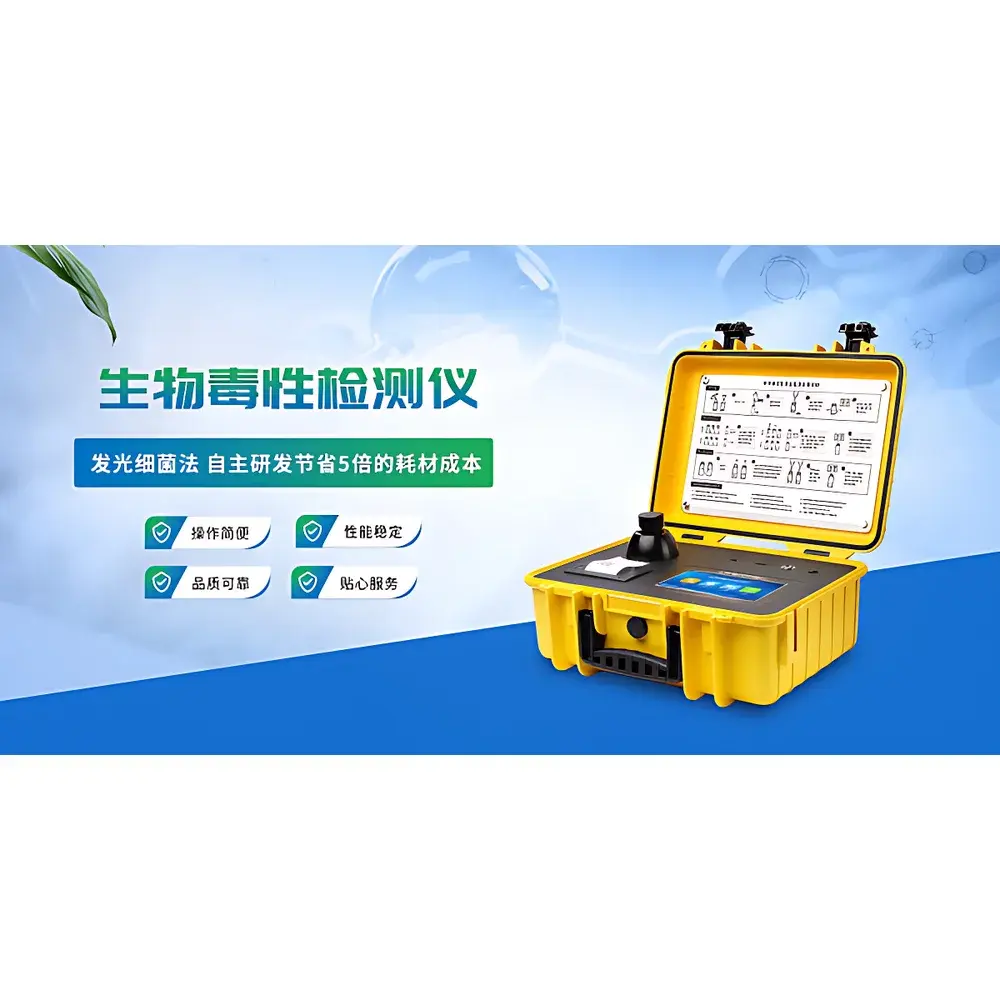
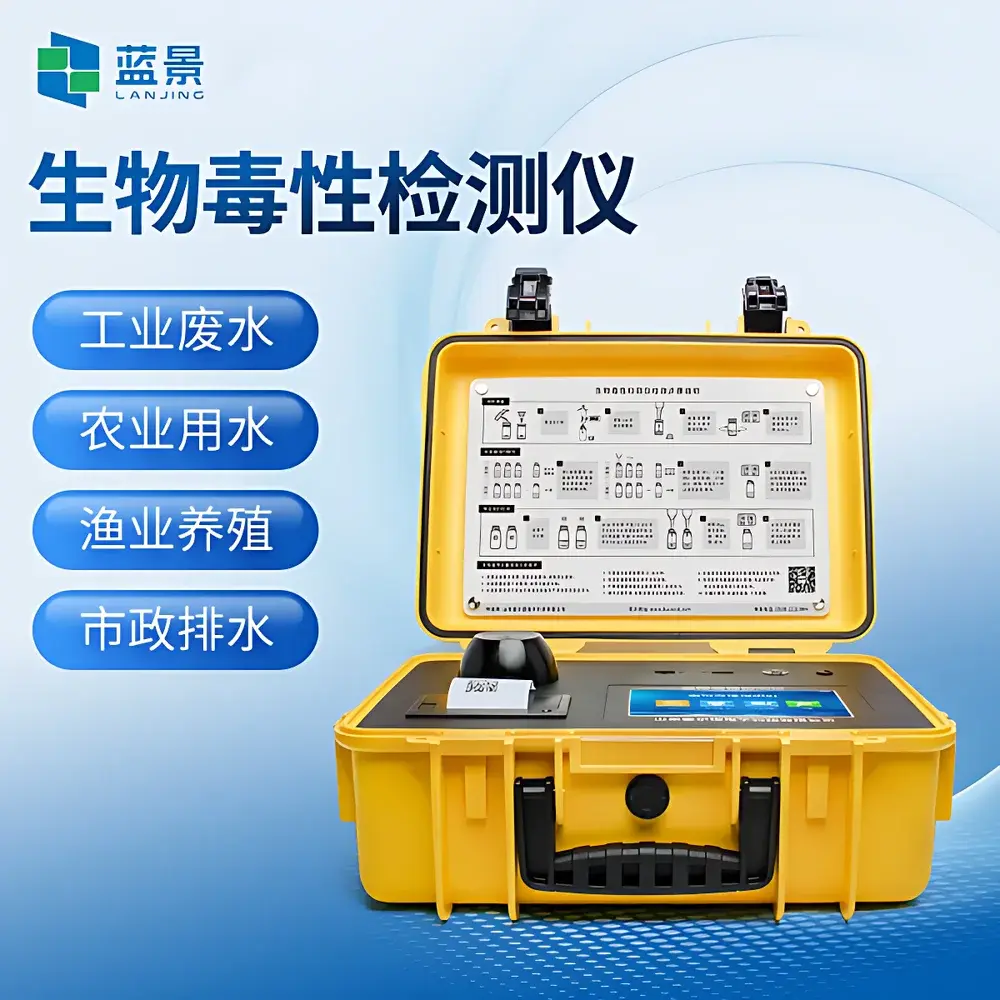
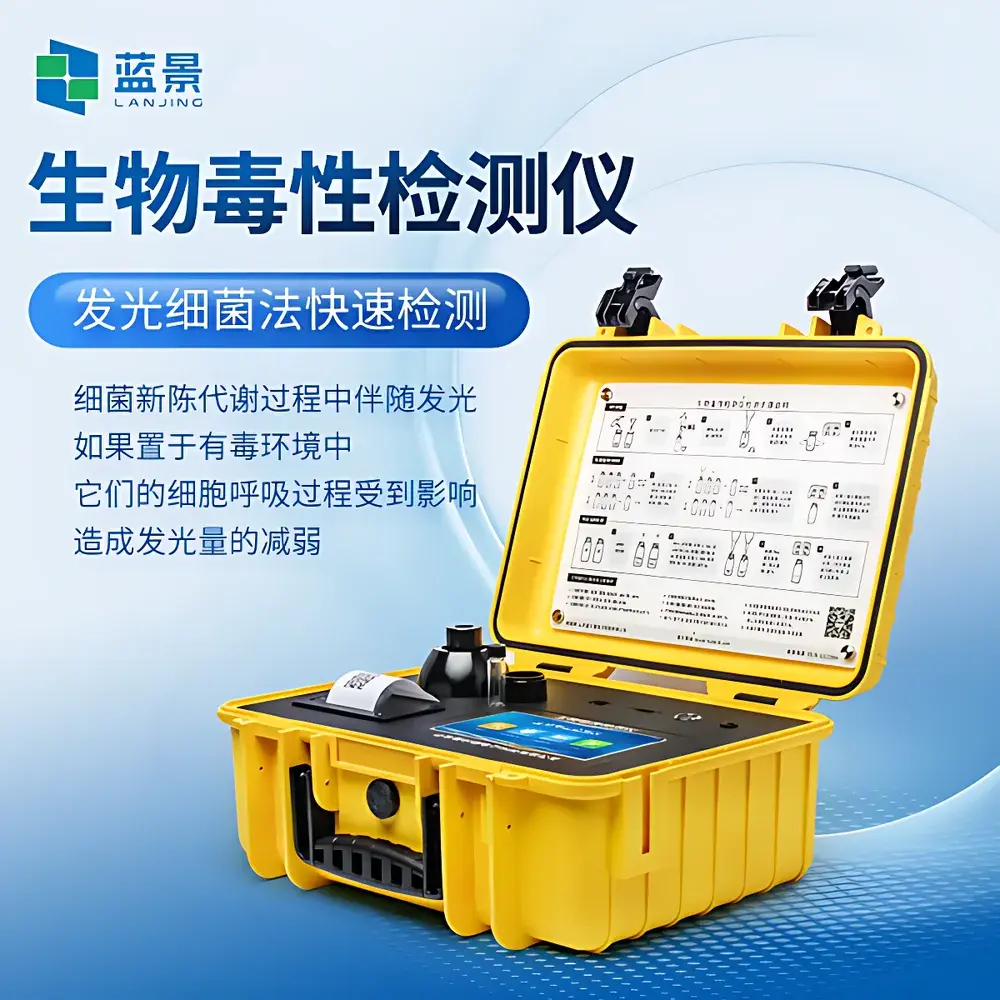
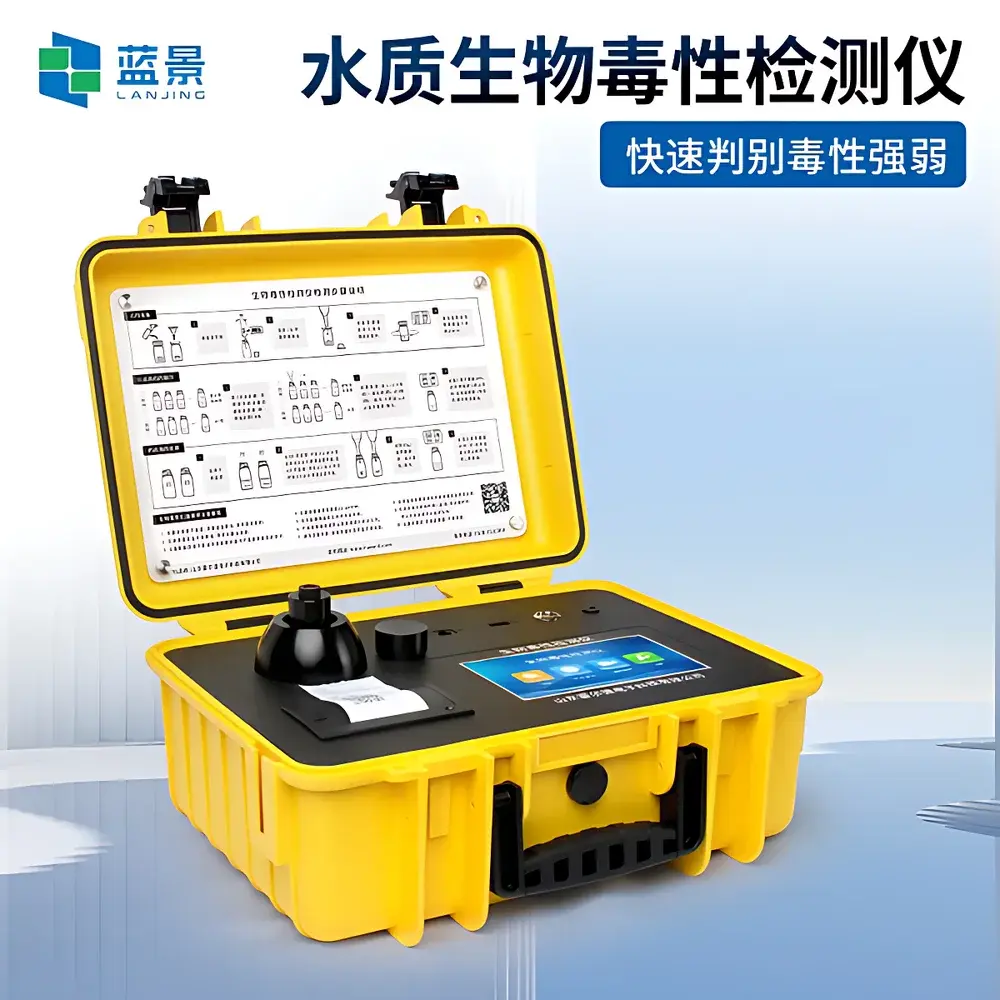
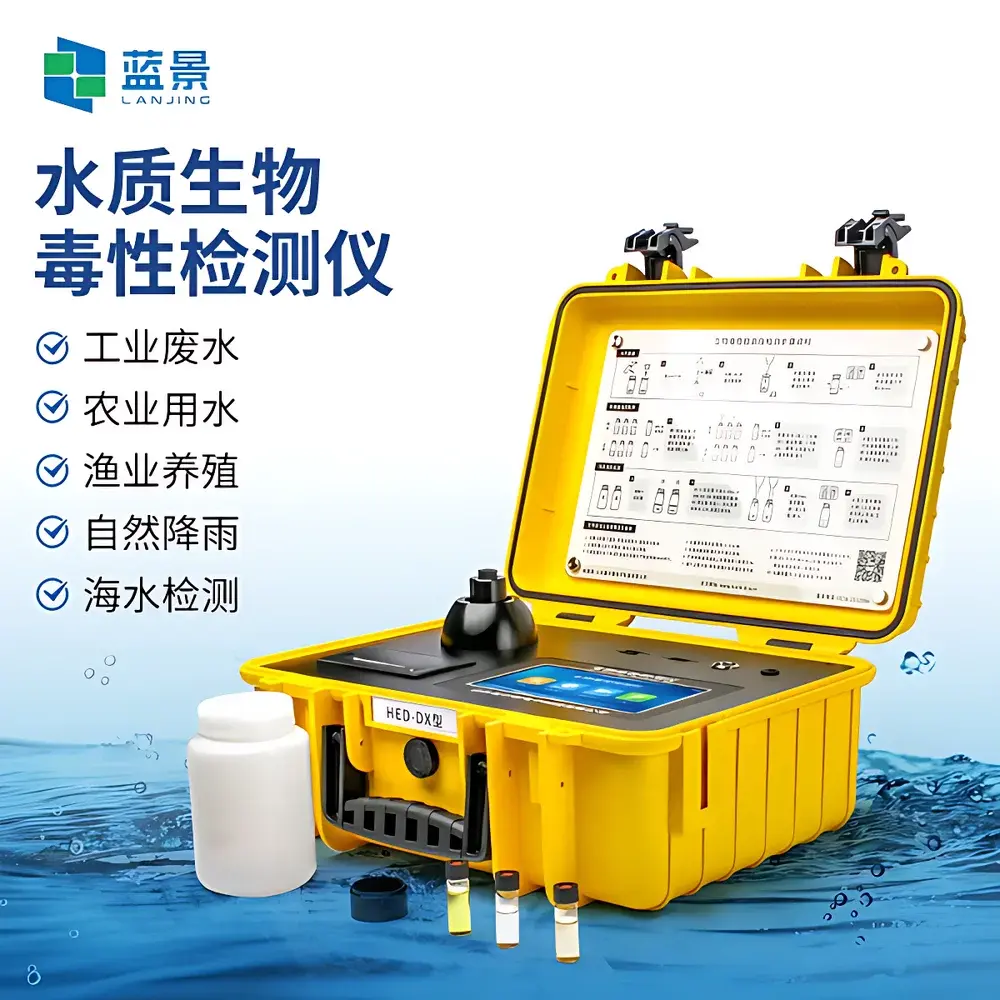
Lanjing LJ-DX Portable Bioluminescent Toxicity Analyzer
| Brand | Lanjing |
|---|---|
| Origin | Shandong, China |
| Manufacturer Type | Direct Manufacturer |
| Country of Origin | China |
| Model | LJ-DX |
| Instrument Type | Portable |
| Test Organism | Bioluminescent Bacteria (e.g., *Vibrio fischeri*, *Photobacterium phosphoreum*, *Aliivibrio qinghaiensis*) |
| Operating Temperature | +5°C to +45°C |
| Reagent Storage Temperature | −10°C to +50°C |
| Repeatability | Relative standard deviation <1% across three replicate measurements per sample |
| Assay Time | ≤15 minutes post-sample preparation |
| Spectral Response Range | 300–1100 nm |
| Detection Principle | Bioluminescence Inhibition Assay |
| Compliance | GB/T 15441–1995, ISO 11348-3 |
| Power Supply | AC 220 V / DC 12 V dual-mode |
| Battery | 6000 mAh Li-ion, >8 h continuous operation |
| Dimensions | 420 × 330 × 175 mm |
| Weight | 5 kg |
| Data Storage Capacity | ≥80,000 records |
| Connectivity | RJ45, Wi-Fi, 4G, Bluetooth, USB |
| Display | 7-inch capacitive touchscreen |
| Detector | Silicon Photomultiplier (SiPM) |
Overview
The Lanjing LJ-DX Portable Bioluminescent Toxicity Analyzer is a field-deployable, quantitative toxicity screening instrument engineered for rapid assessment of acute aquatic toxicity in water, wastewater, leachates, and extract-based samples. It operates on the internationally standardized bioluminescence inhibition principle: viable, metabolically active luminescent bacteria—such as *Vibrio fischeri*, *Photobacterium phosphoreum*, and *Aliivibrio qinghaiensis*—emit visible light (λ = 450–490 nm) as a byproduct of cellular respiration. Upon exposure to toxicants—including heavy metals, pesticides, neurotoxins, organic pollutants, and industrial effluent constituents—their respiratory chain is disrupted, resulting in measurable reduction in photon emission. The magnitude of luminescence inhibition correlates directly with toxicant concentration and potency, enabling both qualitative classification (e.g., low/moderate/severe toxicity) and semi-quantitative estimation (e.g., EC50-equivalent units or ZnSO4 reference toxicity index). Designed to meet regulatory testing timelines and field responsiveness requirements, the LJ-DX delivers reproducible results within 15 minutes after sample introduction—significantly faster than traditional bioassays using *Daphnia magna*, fish, or algae.
Key Features
- Compliant with GB/T 15441–1995 and ISO 11348-3 for standardized acute toxicity determination using luminescent bacteria.
- High-sensitivity detection enabled by silicon photomultiplier (SiPM) technology, offering superior quantum efficiency and signal-to-noise ratio over conventional PMTs in the 300–1100 nm spectral range.
- Integrated auto-lifting dark chamber eliminates ambient light interference during measurement—critical for maintaining assay integrity under variable field lighting conditions.
- Android-based embedded OS with intuitive 7-inch capacitive touchscreen interface; supports on-device video tutorials, Chinese/English bilingual input, and customizable reporting templates.
- Dual-power architecture: 6000 mAh rechargeable Li-ion battery supports ≥8 hours of uninterrupted operation in off-grid environments; also compatible with 12 V DC vehicle power or 220 V AC mains.
- Multi-modal connectivity suite including Wi-Fi, 4G LTE, Bluetooth 5.0, RJ45 Ethernet, and USB 2.0—enabling real-time data upload to centralized monitoring platforms (e.g., municipal water quality dashboards, EPA-compliant LIMS).
- Onboard thermal printer generates audit-ready reports with QR-coded traceability metadata (sample ID, operator, location, timestamp, calibration status).
- Expandable calibration curve functionality: up to 20 concentration points per standard curve; selective inclusion/exclusion of points during regression analysis ensures metrological rigor.
- Internal storage ≥4 GB ROM accommodates >80,000 test records; exportable to Excel (.xlsx) via USB without proprietary software dependencies.
- Optional GPS module provides geotagged sampling coordinates—essential for spatially referenced environmental incident response and regulatory compliance mapping.
Sample Compatibility & Compliance
The LJ-DX accepts liquid samples—including raw surface water, treated effluent, industrial discharge, stormwater runoff, sediment elutriates, soil leachates, and pharmaceutical process water—without requiring pre-filtration beyond 0.45 µm when particulates exceed 50 mg/L. Solid-phase samples are processed via standardized aqueous extraction protocols per ISO 11348-3 Annex A. Instrument validation follows GLP-aligned procedures, with documented traceability to certified reference standards (e.g., ZnSO4·7H2O for inhibition calibration). Data integrity complies with FDA 21 CFR Part 11 requirements through electronic signature support, audit trail logging, and immutable record timestamps. Routine performance verification includes daily blank checks, positive control (Zn2+ reference solution), and inter-laboratory comparison against certified reference materials.
Software & Data Management
The LJ-DX interfaces natively with the Holde Cloud Environmental Data Platform—a secure, cloud-hosted repository supporting long-term trend analysis, multi-site benchmarking, automated alerting (e.g., toxicity threshold breaches), and export to third-party systems via RESTful API. All raw luminescence counts, inhibition percentages, ECx estimates, and metadata are stored with SHA-256 hashing for tamper-evident archival. On-device firmware supports over-the-air (OTA) updates, version-controlled method libraries, and configurable user roles (operator, supervisor, administrator) with password-protected access levels. Audit logs capture every critical action—including calibration edits, result deletions, and parameter changes—with operator ID and timestamp.
Applications
- Rapid emergency response to chemical spills, illegal discharges, or accidental contamination events.
- Compliance monitoring for wastewater treatment plants subject to national discharge permits (e.g., China’s “Discharge Standard of Pollutants for Municipal Wastewater Treatment Plants” GB 18918–2002).
- Pre-screening of industrial influents prior to biological treatment to prevent microbial community shock.
- Verification of drinking water safety following disinfection by-product formation or distribution system integrity failures.
- Toxicity profiling of landfill leachate, mining drainage, and dredged sediment elutriates.
- Regulatory screening of pharmaceutical manufacturing effluents per ICH Q5C and WHO Guidelines on Discharge of Pharmaceutical Wastes.
- Research applications in ecotoxicology, environmental risk assessment, and green chemistry development.
FAQ
What organisms are used in the LJ-DX assay?
The instrument supports multiple validated strains, including *Vibrio fischeri*, *Photobacterium phosphoreum*, *Aliivibrio qinghaiensis*, and *Photorhabdus luminescens*, all supplied as lyophilized, QC-tested cultures.
Does the LJ-DX require external lab infrastructure?
No—it is fully self-contained: integrated battery, reagent storage compartment, dark chamber, and touchscreen interface eliminate dependency on benchtop power, PCs, or darkrooms.
How is assay reproducibility ensured across field operators?
Standardized freeze-dried bacterial vials, automated dark-chamber actuation, fixed incubation time (15 min), and built-in statistical validation (RSD <1% for triplicates) minimize inter-operator variability.
Can the LJ-DX be used for regulatory submission?
Yes—when operated per GB/T 15441–1995 or ISO 11348-3 protocols, its data meets evidentiary requirements for municipal reporting, environmental impact assessments, and enforcement actions in jurisdictions recognizing these standards.
Is remote data synchronization mandatory?
No—offline operation is fully supported; cloud sync occurs only upon connection and can be scheduled or triggered manually, preserving data sovereignty in sensitive deployments.







